# Stablecoins Related Articles

HTX News Center provides the latest articles and in-depth analysis on "Stablecoins", covering market trends, project updates, tech developments, and regulatory policies in the crypto industry.

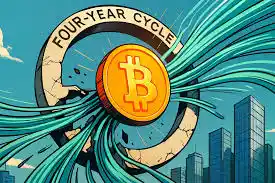
Grayscale's Latest Report: Top 10 Investment Themes for 2026 and the End of the 'Four-Year Cycle'

Grayscale's 2026 Digital Asset Outlook report posits a fundamental shift in the crypto market, moving away from the volatile, retail-driven "four-year cycle" narrative and into an era dominated by institutional capital. The core drivers for 2026 are identified as: 1) rising macro demand for alternative stores of value (e.g., BTC, ETH) due to fiat currency uncertainties, and 2) significantly improved regulatory clarity, including anticipated bipartisan U.S. market structure legislation. The report outlines ten key investment themes for 2026: demand for monetary alternatives; regulatory support; stablecoin expansion post-GENIUS Act; the inflection point for asset tokenization; the need for privacy solutions; blockchain-based answers to AI centralization; DeFi acceleration led by lending; next-gen infrastructure; a focus on sustainable revenue models; and staking becoming a default investment strategy. Grayscale expects a continued institutional bull market, with Bitcoin likely reaching new all-time highs in H1 2026, driven by steady inflows via Exchange-Traded Products (ETPs) rather than speculative retail surges. Two topics are dismissed as "red herrings" for the year: quantum computing's threat and Digital Asset Treasury Companies (DATs). The conclusion emphasizes that the institutional era will widen the gap between assets with clear use cases, compliant access, and sustainable models and those without.

marsbit12/17 07:09

Grayscale's Latest Report: Top 10 Investment Themes for 2026 and the End of the 'Four-Year Cycle'

marsbit12/17 07:09

Stripe for Agents: From Protocol Stack to Payment Ecosystem - An Investment Map for Agents

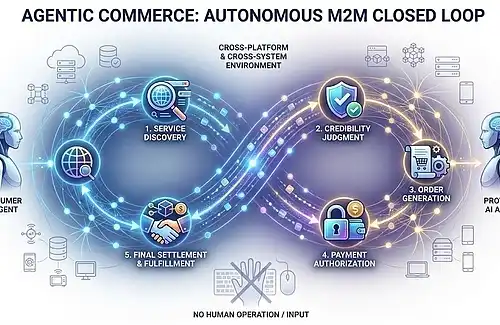
Agentic Commerce represents a transformative shift towards fully autonomous commercial systems where AI agents handle service discovery, trust verification, order generation, payment authorization, and settlement without human intervention. This machine-to-machine (M2M) economy relies on a dual-payment infrastructure: traditional fiat systems (e.g., Stripe, Visa) for regulated and high-value transactions, and stablecoin-based systems (e.g., USDC, x402) for digital-native, micro-payment scenarios like API calls, cross-border payments, and IoT transactions. The protocol stack enabling Agentic Commerce spans six layers: discovery (A2A, MCP), trust (ERC-8004), ordering (ACP), authorization (AP2), payment (AP2 for fiat, x402 for crypto), and fulfillment (still emerging). Key protocols include Google’s A2A for agent interoperability, Anthropic’s MCP for tool integration, OpenAI and Stripe’s ACP for structured ordering, Google’s AP2 for payment authorization, Ethereum’s ERC-8004 for on-chain identity/reputation, and Coinbase’s x402 for stablecoin-based API payments. The ecosystem features projects like Skyfire (identity and payment credentials), Payman (AI-native fund control), Catena Labs (agent identity standards), and Nevermined (micro-payment billing). x402’s Facilitators (e.g., Coinbase CDP, PayAI) are critical for executing on-chain settlements, though the space remains early and competitive. Long-term, Agentic Commerce will operate on two parallel tracks: fiat-based systems for traditional commerce and stablecoin-native protocols like x402 for M2M micro-transactions. Web3’s role is to provide verifiable identity, programmable settlement, and global stablecoin infrastructure, ultimately重构ing economic秩序 through trust, automation, and scalability.

marsbit12/16 12:35
Stripe for Agents: From Protocol Stack to Payment Ecosystem - An Investment Map for Agents

marsbit12/16 12:35

The Economist: The Real Threat of Cryptocurrency to Traditional Banks

The Economist article "The Real Threat Cryptocurrency Poses to Traditional Banks" examines the escalating tensions between the traditional banking sector and the crypto industry. Despite both benefiting from a more favorable regulatory environment, especially following the passage of the GENIUS Act which provided a legal framework for stablecoins, a significant power shift is occurring. Banks' most immediate concern is regulatory arbitrage in stablecoins. Although the GENIUS Act prohibits issuers from paying interest to prevent deposit outflows, companies like Circle circumvent this by sharing revenue with exchanges, which then pay "rewards" to users. Banks are demanding this loophole be closed. Furthermore, crypto firms are breaking into the core of the financial system. In a landmark move, U.S. regulators granted national bank trust charters to five digital asset firms, including Circle and Ripple, allowing them to provide custody services nationwide. The collective impact of these developments poses a profound threat. The core of the banks' dilemma is their waning political influence. Crypto has firmly entrenched itself within the right-wing, anti-establishment political sphere, amassing a massive war chest for lobbying. Banks are no longer the most powerful financial voice in the Republican party. In a ironic twist, they now sometimes find themselves allied with Democratic senators and left-leaning groups who share concerns over stablecoin risks, proving that political alliances in this battle are increasingly unpredictable.

深潮12/16 05:57

The Economist: The Real Threat of Cryptocurrency to Traditional Banks

深潮12/16 05:57

活动图片