# Security Related Articles

HTX News Center provides the latest articles and in-depth analysis on "Security", covering market trends, project updates, tech developments, and regulatory policies in the crypto industry.

Report: Cryptocurrency Owners Lost $30 Million Due to Rising 'Wrench' Attacks Worldwide

**Report: Cryptocurrency Owners Lose $30 Million Due to Rising "Wrench Attack" Threats Worldwide** A new report by Chainalysis highlights the alarming rise of so-called "wrench attacks"—physical crimes like home invasions, kidnappings, and hostage situations targeting cryptocurrency owners—which have resulted in an estimated $30 million in losses. Unlike typical online crypto crimes, these violent, in-person attacks often occur at a victim's doorstep. France has become a global epicenter for this trend. By mid-2026, the country recorded 30 publicly known violent incidents, a significant jump from 19 in all of 2025. French officials have reported over 70 such cases. This surge is linked to major data leaks, where information on wealthy crypto holders—including names, addresses, and asset details—was stolen and sold to criminal groups, fueling targeted attacks. While attacks in France are more frequent, they are also less successful. Only 26% of attempted thefts resulted in a ransom payment by mid-2026, down from 49% in 2025. Attacks have also become more erratic, with criminals increasingly targeting the victim's family or acquaintances instead of the asset holder directly. Once stolen, funds are moved through various channels. Some criminals send assets directly to centralized exchanges (making them easy to trace), while others use decentralized exchanges and bridges to obfuscate trails. A third group appears linked to organized crime, funneling money through laundering networks associated with drug trafficking and terrorism financing. French authorities, via the specialized unit JUNALCO, are treating this as organized crime, having made around 200 arrests and filed 88 charges. The report emphasizes that the risk primarily falls on local residents (93% of French victims were locals), indicating careful planning by attackers using leaked data, social media, or blockchain tracking. The advice for crypto owners is clear: avoid publicly flaunting large holdings, secure asset storage details, and treat any personal data leak as a direct security threat. The latter half of 2026 will reveal if France's countermeasures can curb this violent crime wave.

cryptonews.ru08/06 20:16
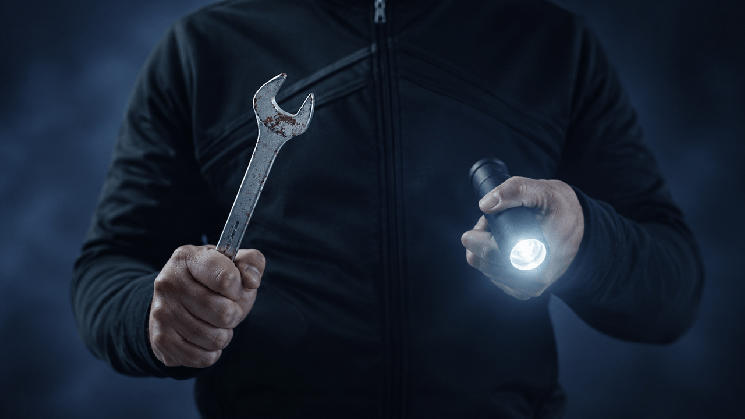
Report: Cryptocurrency Owners Lost $30 Million Due to Rising 'Wrench' Attacks Worldwide

cryptonews.ru08/06 20:16

Security Analyst Points Out Vulnerability in Tether's Blockchain Transaction Freezing Process

A blockchain security analyst has pointed out a vulnerability in Tether's transaction freezing process. Darcy, co-founder of FlashRescue, revealed that targeted funds were drained from a wallet while Tether was in the process of freezing it. This criticism highlights a significant time gap between the freeze request and its final blockchain confirmation, which is managed by a multi-signature wallet mechanism. An analysis of 2,955 Tether freeze events on Ethereum and TRON showed an average delay of 2 hours, 16 minutes, and 15 seconds. During this window, at least 60 addresses managed to completely empty their assets, transferring a total of $20.4 million in USDT, often starting just 14 minutes after the freeze proposal. Another 113 addresses transferred part of their assets, totaling approximately $35.5 million, before the freeze took effect. A notable public example was Tether's action against Iran's central bank in July. Following OFAC sanctions on four TRON wallets holding over $165 million in stablecoins, Tether froze $131 million, but around $34 million had already been moved by the time of the freeze. While Tether is often praised for its speed compared to competitor Circle, which faces criticism for inaction and only freezes wallets based on law enforcement or court orders, this execution gap presents a risk. Tether stated it coordinates directly with investigators during active cases and has collaborated with over 340 agencies across 65 countries, helping freeze assets worth over $4.4 billion. However, analysts warn that once stolen funds are mixed with unrelated money on certain addresses, recovery becomes nearly hopeless as Tether rarely freezes pools with unverifiable origins.

cryptonews.ru08/06 20:10

Security Analyst Points Out Vulnerability in Tether's Blockchain Transaction Freezing Process

cryptonews.ru08/06 20:10

Canadian Users Account for 25% of Losses Related to Coldcard Vulnerability

Canadian Bitcoin users suffered the highest losses, accounting for 25% of the total, from a vulnerability affecting the Coldcard hardware wallet, a situation analysts link to the strong local presence of its parent company Coinkite headquartered in Toronto. Australia followed with 15-20% of losses, while the US and Thailand accounted for 10-15%. Though the exploit hit English-speaking and early Bitcoin-adopting regions hardest, global impact was seen across Western Europe, Latin America, and key African crypto hubs. The total stolen assets reached $116 million. Galaxy Research identified a March 2021 firmware update—specifically the faulty implementation of a new random number generator (RNG)—as the single point of failure. A configuration error rendered the hardware RNG inactive, silently defaulting to a weaker software-based one, which generated private keys with low entropy for over five years before an attacker stole $70 million from 1,200 wallets in 41 minutes. In response, security experts urged manufacturers to eliminate backup RNG mechanisms in production and strictly adhere to validation standards like NIST FIPS 140-3. For incident response, immediate user communication and clear mitigation steps were prioritized alongside rigorous patch testing. For users with compromised seed phrases, a strict protocol was recommended: purchase a new reputable hardware wallet, generate a new seed offline, verify it with a test transaction, transfer all funds to the new setup, *then* attempt to update the original device's firmware. Experts also advised diversifying risk by using hardware wallets from different manufacturers to avoid a single point of failure. The incident sparked a fundamental debate about self-custody security models. Critics argue that offline storage alone isn't foolproof, highlighting that trust is always delegated to third parties, like wallet manufacturers. The consensus is shifting towards multi-vendor setups and mandatory baseline standards like multi-signature or Multi-Party Computation (MPC) wallets. The goal is to move from "trusting one device" to ensuring no single compromised component or entity can move funds, distributing trust across independent organizational and technological failure domains.

cryptonews.ru08/06 13:51

Canadian Users Account for 25% of Losses Related to Coldcard Vulnerability

cryptonews.ru08/06 13:51

活动图片