# Пов'язані статті щодо Precious Metals

Центр новин HTX надає останні статті та поглиблений аналіз на тему "Precious Metals", що охоплює ринкові тренди, оновлення проєктів, технологічні розробки та регуляторну політику в криптоіндустрії.

The End of the Gold Rush? Global Demand for Precious Metals Is Changing

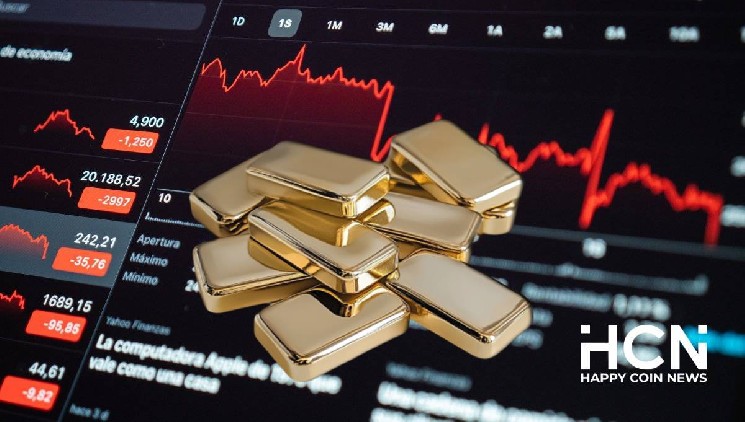
Global demand for precious metals is shifting. Gold started 2026 strongly, surpassing $5,500 per ounce, but experienced a sharp correction to below $4,000 by mid-year. It now behaves more like a risk asset, sensitive to interest rate changes, rather than a traditional safe haven. However, Chinese central bank purchases continue to provide fundamental support, with its gold reserves reaching record highs and approaching 10% of its total forex reserves. Analysts from J.P. Morgan forecast a year-end recovery to the $4,350-$4,650 range. Silver followed a more volatile path, soaring to $120 per ounce early in the year before halving in value, though current prices remain 70% above last year's levels. The industrial sector, particularly solar panel manufacturers (accounting for a fifth of global demand), is responding to high prices and supply deficits by increasing recycling and reducing metal usage per unit. Analysts note the supply deficit is easing due to increased mining investment, with WisdomTree projecting a gradual rise to $70 per ounce by Q2 2027, supported by expected gains in gold. In conclusion, the precious metals market demands in-depth analysis, as prices are driven by a complex mix of industrial demand and central bank policies. Investors are advised to rely on verified analysis, diversify risks, and make decisions based on objective market facts.

cryptonews.ruВчора 17:51

The End of the Gold Rush? Global Demand for Precious Metals Is Changing

cryptonews.ruВчора 17:51

Matrixdock Featured Again in SBMA’s 《Crucible》: Discussing How Tokenisation Enhances Efficiency in the Precious Metals Market

Matrixdock's research article, titled "Why Tokenisation Matters for the Bullion Industry and How Carrying Costs Fit In," has been featured again in the SBMA's industry publication *Crucible*. Authored by Matrixdock lead Eva Meng, the piece examines how tokenisation enhances the efficiency and utility of the precious metals market. The article argues that tokenisation builds upon the accessibility improvements brought by gold ETFs, not by redefining gold's value but by enabling it to function within digital finance. It extends gold's role beyond a portfolio holding, potentially facilitating instant settlement, digital collateral, and operation in 24/7 markets. A key focus is transparently handling the unavoidable carrying costs (storage, insurance) of physical assets like gold and silver. Matrixdock introduces the Fungible Reserve Standard (FRS) framework, based on an "Economic Purity Principle," which aims to reflect these real-world economic costs clearly within the token mechanism, rather than bundling them opaquely. The platform's practical applications are highlighted, including its gold token XAUm and its silver token XAGm, the first built on the FRS framework. As the tokenised gold market surpassed $6 billion in February 2026, the industry's focus is shifting from initial proofs of reserves to broader concerns of market efficiency and capital utilization. Tokenisation is positioning gold and other precious metals to become active components within the evolving digital financial system.

marsbit06/18 09:20

Matrixdock Featured Again in SBMA’s 《Crucible》: Discussing How Tokenisation Enhances Efficiency in the Precious Metals Market

marsbit06/18 09:20

War Trade Unwinding | TradeXYZ Weekend Observations

Weekend markets saw a clear return of risk appetite. Major indices rose broadly, with significant gains in tech and precious metals, while energy sectors fell sharply on the "end of war" narrative. On June 14, oil prices initially rose on reports Iran had not yet finalized a memorandum of understanding. Later, YNET reported Trump might immediately lift the maritime blockade on Iran and the Strait of Hormuz. At 21:30, Trump confirmed on Truth Terminal that a deal with Iran was done, authorizing an immediate end to the US blockade and toll-free opening of the Strait. Iran's deputy foreign minister simultaneously announced an immediate and permanent halt to military actions on multiple fronts. Oil prices had already fallen to weekend boundaries, pre-pricing the news. The S&P 500 subsequently touched 7530. Markets will likely remain in a waiting period until the formal peace deal signing on June 19. At the moment of the deal announcement, gold jumped from ~4,221 to a high of 4,337, and silver from ~67.85 to 70.83, before stabilizing at higher levels. Individual stocks and ETFs like NBIS, RKLB, and LITE performed strongly. NBIS, added to the Nasdaq index, saw a target price increase due to strong AI cloud growth. RKLB, also added to the index, benefited from positive SpaceX valuation sentiment. LITE received a $1,130 target from JPMorgan. SPCX rose quickly after Musk tweeted SpaceX could potentially reach ~$1 trillion in revenue by 2030. In summary, the market shock from the multi-month war is beginning to dissipate. Israel's actions remain the key variable before the June 19 signing. Upcoming events like Fed Chair Warsh's debut and BoJ rate hike expectations will also significantly impact markets this week.

marsbit06/15 22:52

War Trade Unwinding | TradeXYZ Weekend Observations

marsbit06/15 22:52

Gold Plunged Over 4%, Silver Crashed 11%, Did the US Stock Market Plunge Trigger Algorithmic Selling in Precious Metals?

Gold and silver prices plummeted sharply on Thursday, with gold dropping over 4% and silver plunging nearly 11%, amid a broader sell-off in metals triggered by a significant decline in U.S. equities. The Nasdaq fell more than 2%, prompting some traders to liquidate commodity positions—including gold, silver, copper, platinum, and palladium—to cover losses in equities and seek liquidity. A strong dollar and risk-off sentiment contributed to the decline. The sharp and sudden downturn was largely attributed to algorithmic and momentum-driven trading. After a period of sustained gains, metals faced heavy selling pressure as key technical levels were breached, leading to automated sell orders. Some analysts characterized the move as a "vacuum-style drop," typical of systematic trading strategies during periods of market stress. Despite the sell-off, many analysts remain bullish on gold’s longer-term prospects, citing ongoing geopolitical risks, questions around Federal Reserve policy, and a broader shift away from traditional assets. Major banks, including J.P. Morgan and Deutsche Bank, maintain positive year-end targets. Market participants are now closely watching upcoming U.S. economic data, particularly the CPI release, for clues on the Fed’s interest rate path, as lower rates generally support non-yielding assets like precious metals.

marsbit02/13 02:57

Gold Plunged Over 4%, Silver Crashed 11%, Did the US Stock Market Plunge Trigger Algorithmic Selling in Precious Metals?

marsbit02/13 02:57

Silver Faces a 'Delivery Failure' Crisis? March May Be a 'Critical Moment' for Precious Metals

A potential delivery crisis is looming in the silver market, with veteran analyst Bill Holter warning that COMEX could face a physical silver default as early as March 2026. Such an event would destroy the credibility of the current pricing mechanism and trigger a chain reaction spreading to gold and credit markets, potentially causing a systemic financial collapse. Unusually high delivery demand has already emerged, with over 40 million ounces of silver requested for delivery in January—a traditionally non-delivery month—compared to the usual 1-2 million ounces. As the key March delivery month approaches, demand could reach 70-80 million ounces, potentially exhausting COMEX's registered inventory of 110-120 million ounces. This warning comes amid an unprecedented rally, with silver prices surging 154% year-to-date and 40% in January alone. If COMEX fails to deliver, contract values could collapse, undermining trust in paper contracts and triggering a liquidity crisis reminiscent of the 1980 Silver Thursday event. Despite prices exceeding $100/ounce, analysts believe the market remains in early stages, with predictions of $300/ounce or even extreme valuations based on monetary recalibration. Strong industrial demand from solar, EV, and electronics sectors, combined with investment demand as an inflation hedge, contrasts with constrained supply, setting the stage for continued volatility and potential long-term price appreciation.

marsbit01/29 06:24

Silver Faces a 'Delivery Failure' Crisis? March May Be a 'Critical Moment' for Precious Metals

marsbit01/29 06:24

活动图片