The Fed's Interest Rate Decision is Inevitable! Former Senior Fed Advisor Reveals His Forecast for Today!

cryptonews.ruОпубліковано о 2026-07-29Востаннє оновлено о 2026-07-29

Анотація

Former Federal Reserve senior advisor John Faust stated he does not expect the Fed to raise interest rates at the FOMC meeting concluding today. He argued the Fed will not try to win credibility by deliberately surprising markets. In his assessment, Faust noted that Fed Chairman Kevin Warsh has used strong rhetoric on restoring price stability but largely failed to share details on how he plans to achieve it. This information gap has led to various market scenarios. However, Faust believes the reality is simpler: Warsh positions himself as a pragmatic, tough-minded policymaker, placing high importance on monetary policy communication while showing flexibility regarding balance sheet reduction. Faust compared Warsh's approach to the "refined intuitive approach" used by former Chairman Alan Greenspan. Faust stated that, unlike strict policy rules, this approach does not yield clear-cut answers on rate decisions. In current conditions, both a 25-basis-point hike and waiting for the next meeting could be reasonably justified. Aligning with market expectations, Faust predicts the Fed will choose to wait today. He believes the benefit of waiting outweighs the negatives, partly because he agrees that deliberately surprising markets to boost credibility is not a valid factor. Faust also argued there is no substantial macroeconomic difference between hiking today and holding steady, as a 25-basis-point move over eight weeks alone is not economically decisive. He emphasized that the...

Former Senior Fed Advisor John Faust stated that he does not expect the Federal Reserve to raise interest rates at the meeting of the Federal Open Market Committee (FOMC) concluding today. Faust shared the view that the Fed will not attempt to win credibility by deliberately surprising the market.

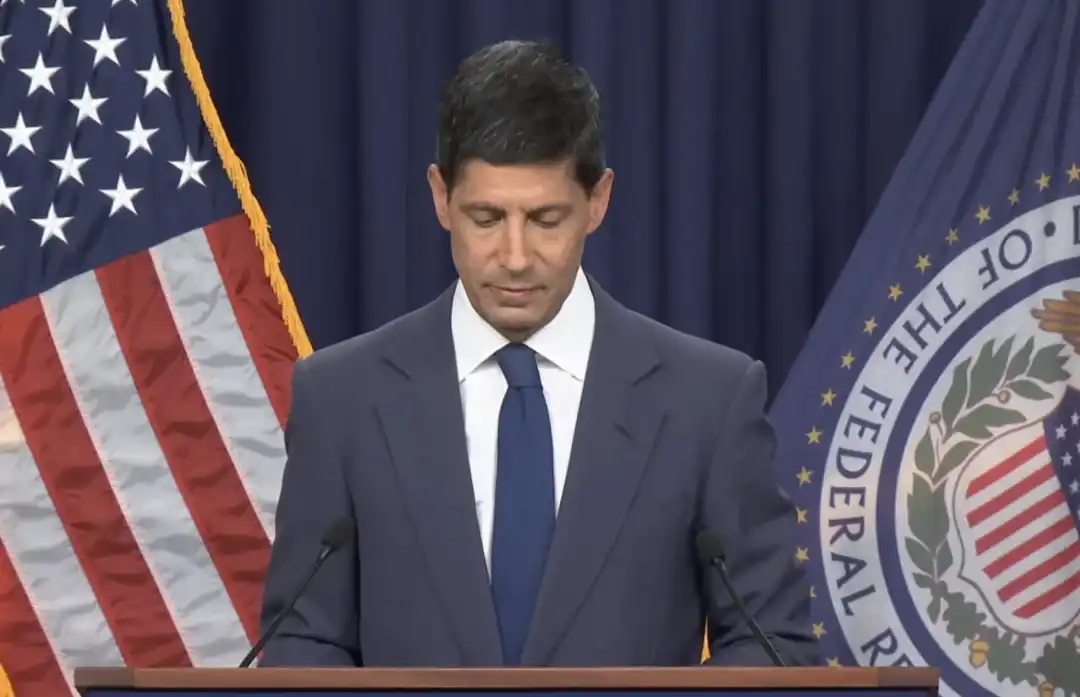
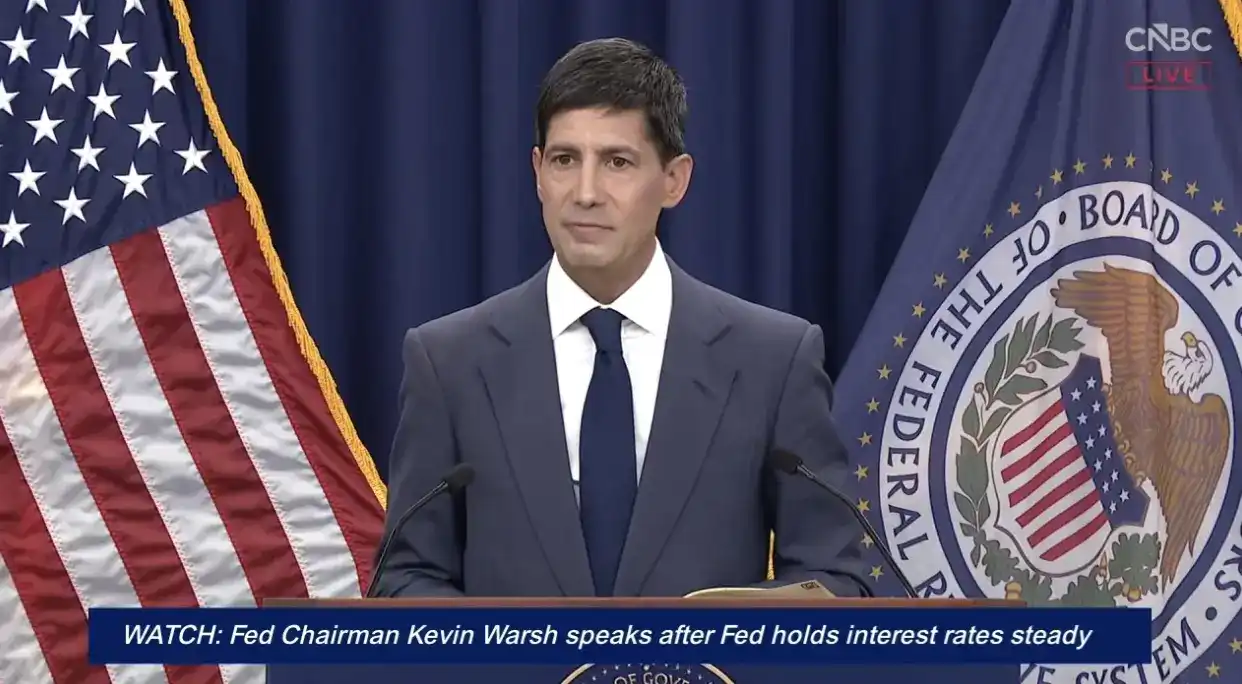
In his assessment today, Faust noted that Federal Reserve Chairman Kevin Warsh used sharp rhetoric about restoring price stability but largely failed to share details on how he plans to achieve this.

Faust stated that this information gap has led to various scenarios emerging in the markets, drawing attention to comments suggesting that Warsh was concealing his hawkish views to avoid a reaction from U.S. President Donald Trump, that FOMC members were constraining Warsh's dovish tendencies, or that the Fed Chairman wanted to surprise the market with a rate hike this week to be able to take a softer stance in the future.

However, according to Faust, the reality is simpler. He notes that Warsh, at least since his confirmation hearings, has positioned himself as a pragmatic, hardline policymaker, adding that the Fed Chairman places great emphasis on monetary policy communication while showing considerable flexibility regarding the scale of balance sheet reduction.

Faust also noted that Warsh did not adhere to strict rules or specific economic models for monetary policy but believed that more effective results could be achieved by improving the decision-making process.

Faust compared Warsh's approach to the political philosophy used during the tenure of former Fed Chairman Alan Greenspan, which David Wessel described as a "refined intuitive approach."

Faust stated that, unlike strict monetary policy rules, this approach does not yield unambiguous outcomes regarding interest rate decisions, and that in the current circumstances, both a 25-basis-point rate hike and waiting for the next meeting could be reasonably justified.

Faust stated that, in line with market expectations, he predicted that the Fed would prefer to wait today, offering the following assessment:

"I think the benefit of waiting outweighs the negative consequences today. One reason for this is that I agree with FOMC Vice Chairman John Williams. I don't believe the possibility of boosting credibility by deliberately surprising the market will play a role in the decision."

Faust also argued that there is no significant macroeconomic difference between the Fed raising interest rates today and keeping the discount rate unchanged. According to Faust, raising or lowering the rate by 25 basis points over eight weeks in itself would not have a decisive economic impact.

All Attention Will Be on Warsh's Statements.

Faust added that what will be important is not the decision itself, but how it is explained to the markets.

Faust noted that Warsh has so far argued that monetary policy should be forward-looking but has not provided clear guidance on economic forecasts or the likely path of interest rate changes, adding that the limits of the Fed's communication strategy are not yet entirely clear.

Faust warned that if the Fed does not explicitly state that grounds for raising interest rates exist, and instead chooses to wait for more data, misinterpretations of the meaning of this decision could spread in the markets.

According to the former Fed advisor, whatever decision is made today, how Warsh explains the monetary policy decisions at the meeting and the subsequent press conference could become the most important information for investors.

*This is not an investment recommendation.

end-content

Пов'язані питання

QWhat is John Faust's prediction for the Federal Reserve's interest rate decision today?

AJohn Faust predicts that the Federal Reserve will not raise interest rates at the FOMC meeting concluding today. He expects the Fed to wait, as the benefits of waiting outweigh the negatives.

QAccording to Faust, what is Chairman Kevin Warsh's approach to monetary policy communication?

AAccording to Faust, Chairman Kevin Warsh places significant emphasis on monetary policy communication but demonstrates greater flexibility regarding the pace of balance sheet reduction. He is described as a pragmatic, hawkish-minded politician.

QWhat does Faust compare Chairman Warsh's policy philosophy to?

AFaust compares Warsh's approach to the political philosophy used during former Fed Chairman Alan Greenspan's tenure, which David Wessel described as an 'exquisite intuitive approach.'

QWhat does Faust say about the macroeconomic impact of a 25 basis point rate change?

AFaust argues that there is no substantial macroeconomic difference between raising rates today or keeping them unchanged. He states that a 25 basis point move over eight weeks does not have a decisive economic impact by itself.

QWhat does Faust believe will be the most important information for investors from today's Fed events?

AFaust believes that regardless of the decision, the most important information for investors will be how Chairman Kevin Warsh explains the monetary policy decisions during the meeting and the subsequent press conference.

Пов'язані матеріали

After R&D Investment Catches Up with the U.S., Is the Sino-U.S. Chip Competition Still Just About Money?

The article examines the significance of recent data showing China's total R&D expenditure, measured by purchasing power parity (PPP), catching up to or slightly surpassing that of the United States in 2024. It argues that while this milestone reflects China's immense capacity to mobilize research resources, the competition in semiconductors now extends far beyond sheer financial input. The analysis highlights key differences: China's R&D is heavily skewed towards experimental development (over 80%), focusing on product engineering and industrialization, whereas the U.S. allocates a proportionally larger share (about 15%) to basic research. Furthermore, leading U.S. semiconductor firms reinvest a significant portion of their substantial global sales revenue into R&D, creating a sustainable commercial innovation cycle that is difficult to replicate. The article emphasizes that semiconductor progress depends on converting R&D into commercially viable products that pass rigorous customer validation and achieve repeat orders, not just on spending levels. It concludes that as China enters the top tier of R&D spenders, the critical challenges shift to improving resource allocation efficiency, fostering long-term basic research, and building effective mechanisms to bridge the gap between laboratory discoveries and reliable, market-ready industrial capabilities.

marsbit1 год тому

After R&D Investment Catches Up with the U.S., Is the Sino-U.S. Chip Competition Still Just About Money?

marsbit1 год тому

Top 10% of American Households Capture 88% of Wealth, How Is the AI Era Cake Divided?

AI Worsens Wealth Inequality as Top 10% of US Families Garner 88% of Stock Gains (2019-2026) A report from the China Finance 40 Forum highlights that the AI boom is significantly widening wealth inequality in the United States. From 2019 to Q1 2026, wealth from directly held stocks by US households nearly doubled from $29 trillion to approximately $55 trillion, with rapid growth concentrated post-2023, coinciding with the AI-driven stock market surge. The distribution of these gains has been starkly uneven. Between 2022 and Q1 2026, the wealth increase of about $21 trillion was captured almost entirely by the wealthiest families: the top 10% secured roughly 88% ($18.5 trillion), while the bottom 50% received only about 1% ($0.2 trillion). This has contributed to a growing disparity in disposable income shares. The report, referencing economic historian Robert Allen, draws parallels to historical technological shifts like the "Engels' Pause" during the First Industrial Revolution, where worker wages stagnated despite productivity gains. It suggests AI could induce a similar period where capital收益 outpace labor income, exacerbating inequality. Huang Yiping of Peking University identifies four mechanisms through which AI impacts income distribution: capital-bias (reducing labor's income share), task polarization (hollowing out middle-skill jobs), skill-based digital divides, and wealth amplification through assets. He warns that if this trend continues, strong supply growth driven by AI could be undermined by persistently weak consumer demand, threatening sustainable economic growth. To address these challenges, the report proposes a three-pronged strategy: 1) Defensive measures like strengthening social safety nets and antitrust enforcement; 2) Empowering workers through education reform and lifelong learning to collaborate with AI; and 3) Rebalancing via policies such as potential taxes on AI超额收益 and mechanisms for broader sharing of technology's benefits, ensuring AI's红利 are more equitably distributed.

marsbit1 год тому

Top 10% of American Households Capture 88% of Wealth, How Is the AI Era Cake Divided?

marsbit1 год тому

Торгівля

Спот
活动图片