Will Terrorist Durov Ban Russian Officials?

cryptonews.ruОпубліковано о 2026-07-31Востаннє оновлено о 2026-07-31

Анотація

Telegram founder Pavel Durov publicly reacted to being labeled a "terrorist" by Russian authorities, stating the designation came after he refused demands for mass surveillance and censorship on the platform. In a Telegram post, he highlighted that this status formally bans him from "publishing information online." Durov concluded with a statement widely circulated: Russian officials "clearly don't understand who can ban whom on the internet." This remark suggests Durov could potentially restrict official Russian government and officials' channels on Telegram, which continue to operate on the platform despite its formal blocking in Russia. The situation parallels previous, slow-moving state directives, like switching officials to domestic cars, contrasted with the current push to migrate all government communication to the Russian-made messenger MAX by 2030. However, reports indicate many officials still use Telegram via workarounds, fearing surveillance on MAX, while alternatives like BiP and KakaoTalk recently became inaccessible in Russia without a VPN. Durov has not specified any immediate actions against state channels. His statement is an initial response, with further developments depending on the authorities' reaction. The dynamic differs from 2020 when Russian regulators lifted a block on Telegram; now, Durov implies control from within the platform itself over the official accounts that persisted through that earlier blockade.

Pavel Durov has publicly responded to the decision of the Russian authorities for the first time. According to the founder of Telegram, the country declared him a "terrorist" precisely for refusing to comply with demands for mass surveillance and censorship on the messenger. The entrepreneur wrote about this in his Telegram channel.

The terrorist Durov drew attention to the wording of the accusation: according to Russian legislation, he is now prohibited from "publishing information on the internet"—this despite the fact that we are talking about the person who created one of the planet's largest messengers. The entrepreneur concluded his statement with a phrase that quickly spread among subscribers: Russian officials "clearly do not understand who can ban whom on the internet."

Earlier, Rosfinmonitoring added Durov to the list of terrorists and extremists. Formally, this entails the freezing of the entrepreneur's accounts and assets in Russia, a ban on most financial transactions, participation in elections, and work with the media. At the same time, the restrictions concern Durov personally, not the legal entity—the company Telegram does not fall under the article.

What Durov Might Have Meant

The phrase about "who can ban whom" does not look like just an emotional remark. Technically, it is the Telegram administration that determines which channels exist on the platform, including the verified accounts of Russian agencies and officials who continue to conduct official communication through the messenger despite its blocking in the country. Such rhetoric indicates the possibility of strict restrictions for state structures. Verified channels of Russian officials and state agencies, which actively use the platform to communicate with the public, could come under attack.

A Similar Story Already Happened—Only with Cars

The situation resembles another story with Russian officials—not about messengers, but about cars. Vladimir Putin stated back in 2023 that all officials and employees of state-owned companies should switch from foreign cars to domestic ones. Two years later, the president himself acknowledged that the order was far from fully implemented—some departments continued to purchase foreign equipment.

A similar scenario is unfolding with messengers, only the implementation speed is higher. The government obligated civil servants and public sector workers to completely switch to the domestic messenger MAX for work communication by 2030, abandoning foreign platforms. At the same time, sources reported that many officials, despite coercion, continue to use the blocked Telegram—they buy separate SIM cards and smartphones, fearing surveillance through MAX.

Parallelly, the number of alternatives for ordinary users is decreasing. At the end of July, the Turkish BiP and South Korean KakaoTalk stopped working without a VPN—both messengers had shown some of the highest growth rates in Russia in recent months precisely as a replacement for the blocked Telegram. No official explanations from Roskomnadzor regarding the outages were received.

The resulting picture is one where citizens are consistently limited in their choice of communication tools and pushed towards a single state platform, while officials themselves continue to use a foreign service, access to which is restricted for others.

Durov has not yet clarified whether he plans to take any action regarding the channels of Russian agencies. His statement remains the first public reaction to the assigned status—the further development of the situation will depend on how the Russian authorities themselves react to it.

AI Opinion

From the perspective of machine data analysis, Durov's current phrase echoes the rhetoric of 2020, when Roskomnadzor itself lifted access restrictions to Telegram, explaining the decision by the founder's willingness to counter terrorism and extremism. The agency then turned a blind eye to its own inconsistency: while the messenger was formally listed as blocked, state channels like RT and Vladimir Solovyov continued to operate in it, and RT's editor-in-chief Margarita Simonyan publicly commented on this with the phrase "if you can't block Telegram, don't block it."

Technically, the situation differs from 2020: back then, the state was fighting for access to the service from the outside, while now Durov is talking about control from within—over the same departmental channels that survived the blocking. This connection can now be severed not only by Roskomnadzor but also by the platform itself. Whether this phrase will remain rhetoric or turn into real restrictions for state channels will be seen in the coming weeks.


Трендові криптовалюти

Пов'язані питання

QWhy was Pavel Durov labeled a 'terrorist' by Russian authorities?

AAccording to Durov, Russian authorities labeled him a 'terrorist' for refusing to comply with demands for mass surveillance and censorship on the Telegram messenger.

QWhat did Pavel Durov imply with his statement 'who can ban whom on the internet'?

ADurov implied that as the administrator of Telegram, he technically has the power to block or ban channels and accounts on the platform, including those belonging to Russian officials and government agencies who use it for official communication.

QWhat are the potential consequences for Russian officials if Durov acts on his statement?

AThe verified channels of Russian officials and government agencies that actively use Telegram to communicate with the public could face restrictions or be banned from the platform.

QWhat is the Russian government's long-term plan for official communication platforms as mentioned in the article?

AThe Russian government has mandated that civil servants and public sector workers must fully transition to the domestic messenger 'MAX' for work communication by 2030, abandoning foreign platforms.

QHow does the current situation with Telegram differ from the 2020 incident mentioned in the article?

AIn 2020, the state was fighting for access to Telegram from the outside (attempting to block it). Now, Durov is talking about control from the inside—over the same government channels that survived the block—meaning the platform itself could potentially sever that connection.

Пов'язані матеріали

Analyzing the Impact of AI on Economic Growth and Productivity

**Title: Analyzing AI's Impact on Economic Growth and Productivity** This article examines three contrasting views on AI's influence on economic growth and productivity. **The Optimistic View** posits that AI, especially through automating R&D ("recursive self-improvement"), could dramatically accelerate growth, even triggering a technological "singularity" with explosive, potentially infinite, economic expansion. **The Moderate/Mainstream View** acknowledges AI's productivity benefits but emphasizes significant real-world constraints that could limit its impact. These include: limited cost savings per task, structural ceilings on which jobs and industries are "exposed" to AI, adoption bottlenecks (e.g., compute, energy, regulatory hurdles), and the "weak link" effect where non-automatable tasks cap overall gains. Consequently, the realized AI dividend may be far lower than optimistic projections, with estimates typically ranging from 0.1% to 1.3% annual productivity growth. **The Pessimistic View** stems from two strands. The first aligns with the moderate view but applies extremely conservative assumptions about task exposure and efficiency gains, yielding minimal projected impact. The second introduces a demand-side critique: if AI primarily replaces rather than augments labor, it could depress labor's share of income, weaken consumer demand, and create a "demand trap" that ultimately stifles growth, unless offset by redistribution policies. **The authors' assessment** is nuanced: * **Short-term (1-2 years):** AI will support growth primarily through investment spending, not significant productivity gains. * **Medium-term (3-5 years):** Three potential paths emerge based on AI demand and bottleneck severity: 1. **"Optimistic Path":** High demand, few bottlenecks. Rapid productivity gains but risk of major job displacement and social conflict without redistribution. 2. **"Moderate Path" (most likely):** High demand but significant, surmountable bottlenecks. Leads to moderate productivity gains, financial market volatility (K-shaped returns), and sectoral job losses. 3. **"Pessimistic Path":** Low demand or severe bottlenecks. Minimal productivity and growth impact, triggering financial market corrections but allowing a smoother societal transition with less labor disruption. * **Long-term:** AI holds potential for a major productivity revolution and prosperity. The conclusion stresses that no path is smooth. Technologically "optimistic" outcomes could be socially detrimental, while "pessimistic" technological diffusion might be more socially stable. Policymakers must monitor developments and prepare balanced responses to manage economic, financial, and social sustainability.

marsbit11 хв тому

Analyzing the Impact of AI on Economic Growth and Productivity

marsbit11 хв тому

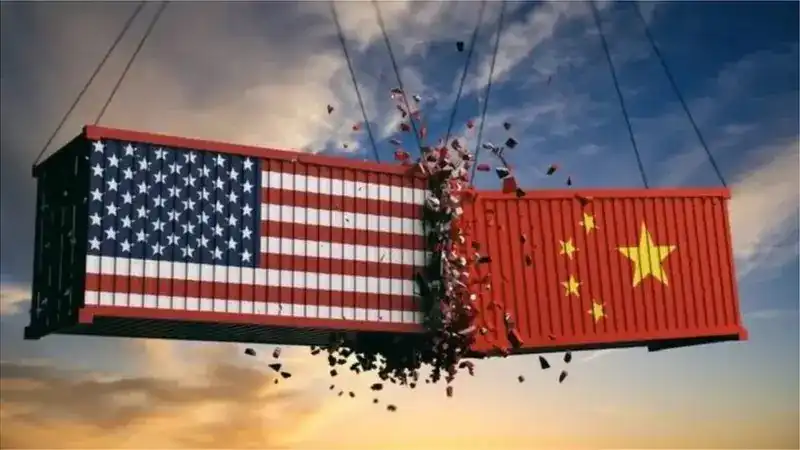
The New Cold War is a Tech Stock War

The New Cold War is a Tech Stock War The article argues that the contemporary geopolitical and economic rivalry between the US and China represents a "New Cold War," but one fundamentally fought through technology and financial markets, not physical barriers or conventional trade. Historically, US dominance was secured through financial systems. The Soviet Union, reliant on the rigid "Transferable Ruble," was ultimately undermined by its dependency on the US dollar for oil trade. Later, Japan's semiconductor challenge was countered not just by tariffs (e.g., Plaza Accord, 301 investigations) but by binding it to US Treasury bonds. China presents a more complex, "embedded" challenger. While it holds vast dollar reserves and US debt like Japan, its industrial base is stronger and more diversified than the Soviet Union's. Surviving the initial 2018 trade war phase, the conflict has evolved into a "tech-financial war." The core battlefield is now the stock market. US tech stocks (AI, semiconductors) are treated as sovereign assets, buoyed by bipartisan national will. China is pushing to strengthen its own financial markets to convert industrial strength into financial power and fund its tech ambitions. Companies like ChangXin (semiconductors), Moonshot AI, and DJI compete not just for market share but as financial proxies for their respective systems. The new paradigm is moving from globally efficient monopolies (Apple, Google) towards companies that achieve monopolistic profits within their respective geopolitical spheres. This competition over "pricing power" and financial valuation in segmented markets defines the current era, making the stock market the primary arena for this tech-centric struggle.

marsbit21 хв тому

The New Cold War is a Tech Stock War

marsbit21 хв тому

RWA Weekly: Ten European Financial Institutions Establish Tokenized Asset Cooperative; Ondo Launches New Execution Network Ondo Network

RWA Weekly: European Banks Form Tokenized Asset Cooperative; Ondo Launches New Execution Network Ondo Network Covering July 24-31, 2026, the RWA sector saw a steady on-chain total value locked (TVL) of $36.8 billion, with holder count hitting a record high. However, stablecoin transfer volumes fell sharply (~30%), indicating low on-chain settlement demand. Key regulatory moves include South Korea advancing stablecoin legislation and a push to scrap crypto taxes, Kenya lowering capital requirements for stablecoin issuers, and Zimbabwe approving seven projects for its crypto sandbox. In project developments, BIS-led Project Agorá successfully tested cross-border payments with tokenized funds across six currencies. Ten major European financial institutions formed the RL1 blockchain cooperative to build tokenized asset infrastructure. Other notable updates: Aviva launched a tokenized dollar liquidity fund on XRPL, POSCO International tokenized commercial invoices on Injective, and a Brazilian farmer used tokenized cattle as collateral for a loan. Additional progress includes BNY Mellon migrating its core transfer agent operations to blockchain, Securitize gaining SEC investment advisor registration, and Tether’s compliant stablecoin USA₮ launching on Celo. Ondo Finance introduced Ondo Network, a new execution layer focused on speed and privacy, moving away from its initial chain plans. An analysis highlights that despite the growing scale of on-chain RWAs (~$32B), approximately 90% remain underutilized in DeFi, pointing to a critical challenge in unlocking liquidity and fostering real-world application beyond mere issuance.

marsbit21 хв тому

RWA Weekly: Ten European Financial Institutions Establish Tokenized Asset Cooperative; Ondo Launches New Execution Network Ondo Network

marsbit21 хв тому

South Korean Stock Market Sees Sharp Rebound After Forceful De-leveraging, SK Hynix Rises 30%

On July 31, South Korean stocks staged a historic rebound. The benchmark KOSPI index surged 18.27%, with chipmaker SK Hynix hitting a 30% gain limit. This followed a brutal, near-40% decline in the KOSPI over the previous month, driven largely by a deleveraging spiral involving leveraged ETFs. Analysts attributed the sharp sell-off to structural liquidity issues rather than deteriorating corporate fundamentals. The rally was triggered by a confluence of positive catalysts. Firstly, strong earnings from U.S. cloud giants Microsoft and Amazon alleviated fears of an "AI bubble burst," boosting global tech sentiment. Secondly, SK Group Chairman Chey Tae-won made a rare personal purchase of SK Hynix shares, seen as a strong vote of confidence. Thirdly, the South Korean government announced a 20 trillion won ($139 billion) AI investment fund. In response to the market turmoil, South Korean regulators are tightening controls on leveraged ETFs, admitting oversight shortcomings. Measures include raising minimum cash保证金 requirements for散户 investors and suspending new product launches. While the rebound signals eased liquidity pressure, analysts note deep structural issues remain. The market's future stability is seen as dependent on global tech capital expenditure trends and memory chip price cycles, with some viewing the surge as a technical correction rather than a definitive trend reversal.

marsbit41 хв тому

South Korean Stock Market Sees Sharp Rebound After Forceful De-leveraging, SK Hynix Rises 30%

marsbit41 хв тому

Торгівля

Спот

Популярні статті

Як купити BAN

Ласкаво просимо до HTX.com! Ми зробили покупку Comedian (BAN) простою та зручною. Дотримуйтесь нашої покрокової інструкції, щоб розпочати свою криптовалютну подорож.Крок 1: Створіть обліковий запис на HTXВикористовуйте свою електронну пошту або номер телефону, щоб зареєструвати обліковий запис на HTX безплатно. Пройдіть безпроблемну реєстрацію й отримайте доступ до всіх функцій.ЗареєструватисьКрок 2: Перейдіть до розділу Купити крипту і виберіть спосіб оплатиКредитна/дебетова картка: використовуйте вашу картку Visa або Mastercard, щоб миттєво купити Comedian (BAN).Баланс: використовуйте кошти з балансу вашого рахунку HTX для безперешкодної торгівлі.Треті особи: ми додали популярні способи оплати, такі як Google Pay та Apple Pay, щоб підвищити зручність.P2P: Торгуйте безпосередньо з іншими користувачами на HTX.Позабіржова торгівля (OTC): ми пропонуємо індивідуальні послуги та конкурентні обмінні курси для трейдерів.Крок 3: Зберігайте свої Comedian (BAN)Після придбання Comedian (BAN) збережіть його у своєму обліковому записі на HTX. Крім того, ви можете відправити його в інше місце за допомогою блокчейн-переказу або використовувати його для торгівлі іншими криптовалютами.Крок 4: Торгівля Comedian (BAN)Легко торгуйте Comedian (BAN) на спотовому ринку HTX. Просто увійдіть до свого облікового запису, виберіть торгову пару, укладайте угоди та спостерігайте за ними в режимі реального часу. Ми пропонуємо зручний досвід як для початківців, так і для досвідчених трейдерів.

533 переглядів усьогоОпубліковано 2024.12.11Оновлено 2026.06.02

Як купити BAN

Обговорення

Ласкаво просимо до спільноти HTX. Тут ви можете бути в курсі останніх подій розвитку платформи та отримати доступ до професійної ринкової інформації. Нижче представлені думки користувачів щодо ціни BAN (BAN).

活动图片