# OpenAI Related Articles

HTX News Center provides the latest articles and in-depth analysis on "OpenAI", covering market trends, project updates, tech developments, and regulatory policies in the crypto industry.

Why Did OpenAI Decide to Make a Phone? ChatGPT Is Taking the Permissions Apple Won't Give

The article discusses OpenAI's surprising move into developing its own AI-powered smartphone, reportedly targeting a 2027 launch. Initially driven by faith that superior AI models alone would secure its dominance—evidenced by ChatGPT's viral success—OpenAI now faces a strategic pivot. Key challenges include slower-than-expected revenue growth and competition from rivals like Anthropic's Claude Code, which successfully monetized a specific, high-value user base (developers) by deeply integrating into workflows. OpenAI recognizes that for ChatGPT to evolve from a conversational tool into a true "AI Agent" that completes tasks (e.g., booking travel, managing files), it needs direct system-level permissions and a default user interface. Currently, as a service integrated into platforms like Apple's iOS and Microsoft's Windows, ChatGPT lacks the necessary access and control ("sovereignty") over hardware, data, and user interactions. Building its own device is seen as a way to give ChatGPT its "first body"—a dedicated terminal where it can operate with full autonomy, bypassing the limitations imposed by partner ecosystems. This shift underscores a broader realization: in the AI Agent era, owning the end-user device and experience is critical to capturing value and maintaining competitive advantage, even if it means directly competing with former allies like Apple.

marsbit05/18 10:19

Why Did OpenAI Decide to Make a Phone? ChatGPT Is Taking the Permissions Apple Won't Give

marsbit05/18 10:19

3 People with 100 AI Programmers, Burning Through $1.3 Million a Month! OpenAI: I'll Foot the Bill

In a striking demonstration of AI-powered development, Peter Steinberger (creator of OpenClaw) shared that his three-person team spent $1.3 million in one month to run approximately 100 AI agents (primarily Codex instances). OpenAI covered the cost. The expenditure consumed 6.03 trillion tokens across 7.6 million requests. Steinberger argues that, with "fast mode" disabled, the cost falls below that of a single engineer while providing significantly greater output. This "cloud programmer army" handles core but tedious software engineering tasks: reviewing pull requests, finding security vulnerabilities, deduplicating issues, fixing bugs, monitoring benchmarks, and even generating PRs after meetings. This shifts AI's role from merely writing code to maintaining the entire collaborative fabric of a project. Steinberger's tool, CodexBar (a macOS menu bar app), tracks usage and costs across various AI coding services, highlighting how token consumption is becoming a key metric—a new "means of production." The experiment poses a profound question: if token cost ceases to be a barrier, how will software development transform? As model prices fall, the capability for small teams to leverage large numbers of AI agents could become commonplace, fundamentally altering the scale and speed of development. The future, Steinberger suggests, is arriving rapidly.

marsbit05/17 06:20

3 People with 100 AI Programmers, Burning Through $1.3 Million a Month! OpenAI: I'll Foot the Bill

marsbit05/17 06:20

ChatGPT Can Manage Your Money for You. Would You Trust It with Your Bank Account?

OpenAI has launched a personal finance tool for ChatGPT, currently in preview for US-based ChatGPT Pro users. This feature allows users to connect their bank and investment accounts (via Plaid, supporting over 12,000 institutions) directly to ChatGPT. It analyzes transactions, generates visual dashboards, and offers conversational financial advice—such as budgeting or planning for major purchases—based on the user's actual data. This move follows OpenAI's acquisitions of fintech startups Roi and Hiro Finance, signaling a strategic push into vertical "super assistant" applications, similar to its earlier health-focused feature. However, the launch has sparked significant privacy concerns. Critics question the safety of granting such sensitive financial access to an AI, especially amid ongoing lawsuits alleging OpenAI shared user chat data with third parties like Meta and Google. OpenAI emphasizes that ChatGPT only reads data (no transaction capabilities), deletes it within 30 days if disconnected, and offers opt-out options for model training. Yet, trust remains a major hurdle. The trend reflects a broader industry shift: AI companies like Anthropic and Perplexity are also targeting high-value, data-rich domains like finance and health. While technically promising, the tool operates in a regulatory gray area—it provides personalized guidance but disclaims formal financial advice or liability. Ultimately, OpenAI's challenge is convincing users to trust an AI with their most private financial information.

marsbit05/16 10:58

ChatGPT Can Manage Your Money for You. Would You Trust It with Your Bank Account?

marsbit05/16 10:58

Breaking: OpenAI Undergoes Major Reorganization, President Brockman Assumes Command

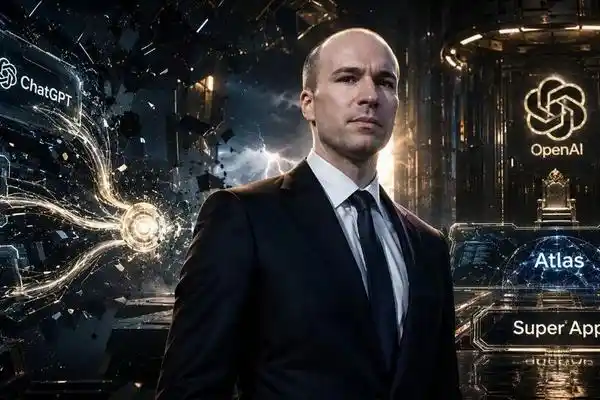
OpenAI has announced a major internal reorganization just months before its anticipated IPO. The company is merging its three flagship product lines—ChatGPT, Codex, and the API platform—into a single, unified product organization. The most significant leadership change involves co-founder and President Greg Brockman moving from a background technical role to take full, permanent control over all product strategy. This follows the indefinite medical leave of AGI Deployment CEO Fidji Simo. Additionally, ChatGPT's longtime lead, Nick Turley, has been reassigned to enterprise products, with former Instagram executive Ashley Alexander taking over consumer offerings. The consolidation, internally framed as a strategic move towards an "Agentic Future," aims to break down internal silos and create a cohesive "Super App." This planned desktop application would integrate ChatGPT's conversational abilities, Codex's coding power, and a rumored internal web browser named "Atlas" to autonomously perform complex user tasks. The reorganization occurs amid significant internal and external pressures. OpenAI has recently seen a wave of high-profile departures, including Sora co-lead Bill Peebles and other senior technical leaders, leading to concerns about a thinning executive bench. Externally, rival Anthropic recently secured funding at a staggering $900 billion valuation, surpassing OpenAI's own. Google's upcoming I/O developer conference also poses a competitive threat. Analysts suggest the dramatic restructure is a pre-IPO move to present a clearer, more focused narrative to Wall Street—streamlining operations and demonstrating decisive leadership under Brockman to counter internal turbulence and intense market competition.

marsbit05/16 07:09

Breaking: OpenAI Undergoes Major Reorganization, President Brockman Assumes Command

marsbit05/16 07:09

Surging 108% on Debut! The Biggest AI Dark Horse of 2026 is Born, Altman Profits 'Passively' Again

Cerebras, an AI chip company known for its wafer-scale "dinner plate-sized" WSE-3 processor, completed a landmark IPO on the NASDAQ in 2026. Its shares surged 108% on the first day of trading, with the valuation reaching approximately $100 billion at its peak. The offering raised $5.55 billion, marking one of the largest U.S. tech IPOs since Uber in 2019. The company's dramatic turnaround was a key driver, moving from a $482 million loss to a $238 million profit in 2025, with revenue growing 76% to $510 million. Major new contracts, including a multi-year deal with OpenAI potentially worth over $20 billion and a deployment agreement with AWS, boosted investor confidence. Founder Andrew Feldman emphasized to investors the coming explosion in AI inference demand, the viability of non-GPU compute, and the perceived overestimation of NVIDIA's CUDA ecosystem moat. The IPO created substantial returns for early investors like Foundation Capital (76x return) and Benchmark (12x return). OpenAI, through a strategic agreement linked to future compute purchases, secured an estimated $1.8 billion in paper gains, while Sam Altman's personal 2017 investment grew roughly tenfold to around $30 million. Cerebras' success is positioned as the opening act for a wave of massive AI-focused IPOs expected in 2026, including potential listings from SpaceX (targeting a $1.75 trillion valuation), OpenAI ($1 trillion), and Anthropic ($900 billion), collectively representing over $3 trillion in potential market value. The article concludes that these moves signal capital is placing foundational bets on the immense compute infrastructure required for the future development of Artificial Superintelligence (ASI).

marsbit05/15 11:20

Surging 108% on Debut! The Biggest AI Dark Horse of 2026 is Born, Altman Profits 'Passively' Again

marsbit05/15 11:20

Listed and Halted, Surge Over 108% in a Single Day, Is Cerebras Really the 'Next Nvidia'?

Cerebras Systems (CBRS), labeled the "next Nvidia," debuted on the NASDAQ on May 14th, 2025. Its stock price surged over 108% from its $185 IPO price, briefly touching $385 before settling around $311. CEO Andrew Feldman claimed the company's wafer-scale AI chips are "58 times larger and 15-20 times faster" than competitors like Nvidia. The company's core innovation is the Wafer Scale Engine (WSE), a massive, dinner-plate-sized chip designed to avoid the bottlenecks of interconnecting multiple GPUs. Its latest system, the CS-3, offers high-performance computing for AI training and inference. While still a niche player with $5.1 billion in 2025 revenue, Cerebras has secured major contracts, most notably a multi-year, over $20 billion computing deal with OpenAI. This partnership is deep: OpenAI is a major customer, a creditor via a $1 billion loan, and holds warrants that could make it a 10-11% shareholder in Cerebras. Despite the hype, the article argues Cerebras is unlikely to dethrone Nvidia soon. Nvidia's ecosystem (CUDA), vast scale, manufacturing efficiency, and diversified product line present a formidable moat. Cerebras faces high costs, production challenges with its giant chips, and competition from AMD, Google, and others. However, strong demand for AI inference and its key partnerships could support its stock price in the short to medium term. In conclusion, Cerebras is positioned as a high-speed specialist in the AI hardware market, not a broad-market replacement for the current industry leader.

Odaily星球日报05/15 10:34

Listed and Halted, Surge Over 108% in a Single Day, Is Cerebras Really the 'Next Nvidia'?

Odaily星球日报05/15 10:34

Is Elon Musk Actually the Victim?

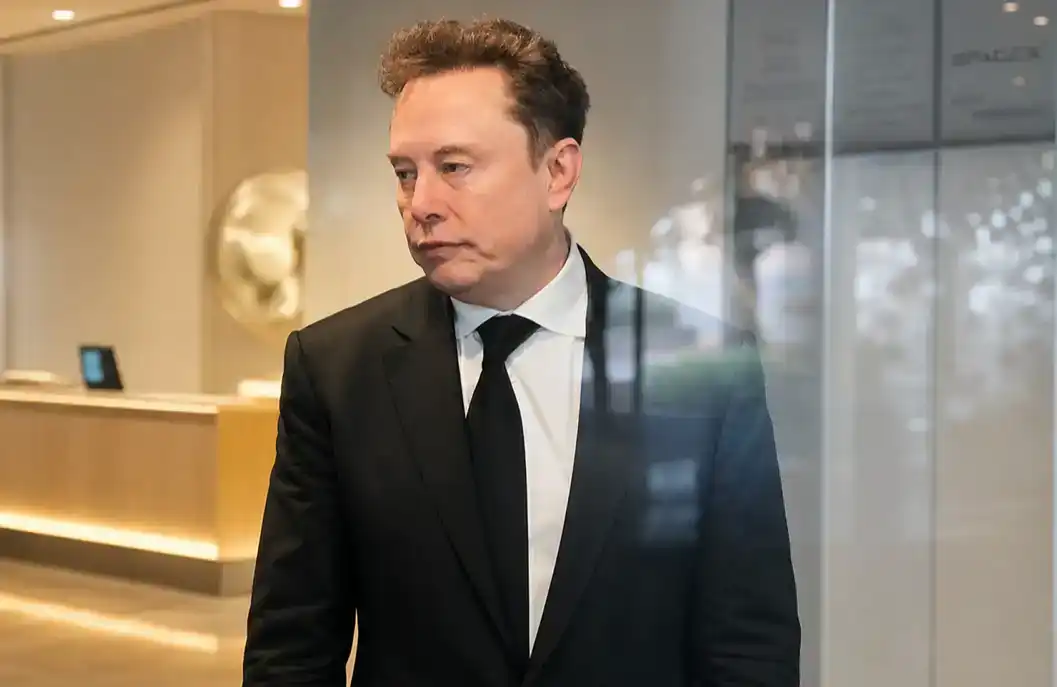
"Victim or Vindicator? Inside the OpenAI Trial That Shattered the Myth." In May 2026, the federal court in Oakland became the stage for deconstructing the carefully curated narrative of OpenAI. The trial revealed a complex reality far removed from its founding ideals. The core dispute centered on whether OpenAI, founded in 2015 as a non-profit dedicated to benefiting "all of humanity," had betrayed its mission by shifting towards a lucrative commercial structure, particularly after its 2019 capped-profit affiliate (OpenAI LP) was established and Microsoft invested $13 billion. Elon Musk, a co-founder and early funder, sued, claiming the organization was "stolen" and turned into a de facto Microsoft subsidiary for private gain. OpenAI countered that Musk's funds were unconditional donations and his lawsuit was driven by a desire for control and regret after leaving to found his own AI venture, xAI. The trial exposed early fractures. Evidence from 2017, years before ChatGPT's success, showed the founders were already grappling with the immense financial demands of pursuing Artificial General Intelligence (AGI). Musk himself had proposed having Tesla fund OpenAI. The court scrutinized whether the founders knowingly crossed a moral line. Greg Brockman's personal diary, entered as evidence, contained entries about wealth goals and anxieties over the company's revenue path, alongside self-reminders about the moral bankruptcy of "stealing" the non-profit. Brockman later testified his OpenAI stake was worth nearly $30 billion. The character of CEO Sam Altman was a key battleground. Musk's legal team cited five individuals, including co-founder Ilya Sutskever and former board members, who had described Altman as dishonest. This highlighted a recurring "trust debt" within OpenAI's leadership, exemplified by the chaotic 2023 boardroom coup and subsequent reinstatement. Altman defended his position, arguing Musk sought to absorb OpenAI into Tesla and that commercial success amplified OpenAI's charitable impact. Testimony from Microsoft CEO Satya Nadella underscored how commercial realities now dominated. While framing Microsoft's massive investment as a way to enlarge the non-profit's funding "pie," texts revealed Nadella pressuring Altman to launch ChatGPT's paid version quickly. Nadella also revealed that during the 2023 crisis, Microsoft was prepared to hire Altman and his team, showcasing the board's diminished power against the gravity of capital, talent, and infrastructure. Ultimately, the trial depicted OpenAI not as a singular act of betrayal but as a gradual, systemic transformation. Its grand AGI mission required a "heavier machine" to sustain it—a machine of computing power (largely from Microsoft), capital, and commercial obligations that inevitably reshaped its priorities. The non-profit board, tasked with guarding the mission, found itself unable to control the commercial juggernaut it had enabled. For the public, the proceedings served as a sobering window into the making of a foundational technology. The AI tools increasingly integrated into daily life—from writing and coding to customer service—are not born from a transparent, purely altruistic process. They emerge from a tangled web of personal ambitions, private negotiations, control struggles, and cloud computing bills. The trial's legacy is the stark realization that as AI becomes societal infrastructure, its steering wheel remains in very few, and very human, hands.

marsbit05/15 09:06

Is Elon Musk Actually the Victim?

marsbit05/15 09:06

Claude's New Policy Abandons Its Most Loyal Agent Users

Anthropic, in a move signaling the end of the "all-you-can-eat" era for AI subscriptions, has separated programmatic usage from its Claude subscription plans. Starting June 15, 2024, usage of the Claude Agent SDK, `claude -p` command, and third-party tools like OpenClaw will no longer draw from subscription limits. Instead, users receive a fixed monthly credit based on retail API prices: $20 for Pro, $100 for Max 5x, and $200 for Max 20x. This change drastically reduces usable capacity for heavy users—previously, their shared subscription limit was worth an estimated $2,000-$5,000 in API value. While Anthropic simultaneously increased Claude Code interactive limits to appease users, the new policy primarily impacts developers running automated, high-frequency agents, pushing their effective costs nearly ten times higher. Seizing the opportunity, OpenAI promptly announced a free two-month migration plan for its Codex enterprise service, which does not differentiate between interactive and automated usage, directly targeting discontented Claude users. This marks an opening salvo in the broader ASI (Artificial Superintelligence) competition, where the final battle is shifting from pure model capability to ecosystem strength, developer loyalty, and infrastructure. The article frames this as a necessary correction of a pricing "loophole" by Anthropic ahead of its IPO, as programmatic calls lack training data value and can incur massive costs. The move underscores a wider industry trend towards consumption-based billing for AI, mirroring the evolution of cloud computing.

marsbit05/15 00:22

Claude's New Policy Abandons Its Most Loyal Agent Users

marsbit05/15 00:22

活动图片