# OpenAI Related Articles

HTX News Center provides the latest articles and in-depth analysis on "OpenAI", covering market trends, project updates, tech developments, and regulatory policies in the crypto industry.

The AI Bull Market Revalues Everything, Including the 'Male Valuation System' in the Dating Market

AI Bull Market Reprices Everything, Including the "Male Valuation System" in the Dating Market A new hierarchy is emerging in dating markets, driven by the AI boom. Men working for AI infrastructure and core companies are now considered top prospects. The article presents a "Dating Desirability Ranking" for men in the AI era. **Top Tier ("Extremely Hot"): NVIDIA & SK Hynix Employees** NVIDIA, viewed as the "oil" of AI, and SK Hynix, a leading HBM memory maker, are in a league of their own. SK Hynix employees, in particular, have become highly sought-after in South Korea's matchmaking scene due to their massive performance bonuses, which averaged ~$65,000 per employee last year and are projected to reach millions. This has led to increased interest in office romances for "economic synergy." **High Tier ("Hot"): Anthropic & OpenAI Employees** Employees at these leading AI labs have seen significant wealth realization through large-scale employee stock sales. Unlike the paper wealth of the dot-com era, substantial amounts have been cashed out, placing their actual wealth far above traditional tech workers. They are considered high-growth, high-volatility assets. **Elite Tier ("Top Tier"): DeepSeek & ByteDance AI Team Members** Fierce competition for AI talent has made employees at these companies highly valuable. ByteDance's valuation has soared with its massive AI investment, leading to significant employee stock appreciation. DeepSeek is also fighting to retain core talent with substantial funding rounds. Being on the "main stage" of AI makes these individuals extremely scarce. **Mid Tier ("NPC"): Samsung & Tencent Employees** Once dominant, these companies are now seen as playing catch-up in the AI race. Samsung has lost ground to SK Hynix in the HBM market, leading to employee strikes demanding better bonuses. Tencent's more cautious AI investment, compared to ByteDance's aggressive spending, and slowing traditional growth raise questions about its future in AI. **Bottom Tier ("Fallen Off"): Traditional Finance Bros & Crypto Bros** Their appeal has diminished as the core wealth distribution shifts to AI. Compared to the massive bonuses and stock windfalls in AI, the traditional allure of finance and the fading "get-rich-quick" narrative of crypto have lost their luster in the current dating market. The AI revolution is not just reshaping industries and stock prices, but also the social and economic perceptions that influence personal markets like dating.

marsbit05/13 13:00

The AI Bull Market Revalues Everything, Including the 'Male Valuation System' in the Dating Market

marsbit05/13 13:00

AI Bull Market Reprices Everything, Including the 'Male Valuation System' in the Marriage Market

The AI boom is redefining value across markets, including the male "valuation system" in the dating scene. A new hierarchy is emerging, based on company valuation, employee income, and industry status within the AI sector. At the top are NVIDIA and SK Hynix employees, dubbed the "T0 version." NVIDIA is the AI world's cash machine, while SK Hynix employees are seeing astronomical bonuses due to HBM demand, making them highly sought-after "AI concept stocks" in Korea's dating market. Next are OpenAI and Anthropic staff, representing the "new elite." Unlike the paper wealth of the past internet boom, these employees are actively realizing significant wealth through stock sales, though their status is considered more volatile. DeepSeek and ByteDance AI team members are rated as "top-tier." Their companies are engaged in fierce talent wars with massive investments, making these employees scarce, high-value players. Samsung and Tencent employees are seen as "NPCs" still searching for their AI "ticket." Samsung has been outpaced by SK Hynix in the memory race, while Tencent's more cautious AI investment contrasts with ByteDance's aggressive strategy, raising questions about their future position. Finally, traditional finance and crypto men are rated at the bottom ("pulled"). Their once-dominant wealth and status are being eclipsed by the new AI-driven economic order and its redistribution of value and opportunity.

Odaily星球日报05/13 12:53

AI Bull Market Reprices Everything, Including the 'Male Valuation System' in the Marriage Market

Odaily星球日报05/13 12:53

Leaving OpenAI, How Much Has Their Net Worth Increased?

Former OpenAI employees have collectively accrued near-trillion dollar valuations through ventures and investments, charting AI's future. The article highlights two main paths: founding high-value companies like Anthropic and Perplexity, or applying insider insights as investors. Leopold Aschenbrenner exemplifies the investor path. After being fired from OpenAI, he leveraged firsthand knowledge of AI's massive energy demands to make hugely successful public market bets on nuclear and fuel cell companies, practicing "cross-industry cognitive arbitrage." Other alumni, like the Zero Shot VC fund founders, use their technical foresight for early-stage investing. Their key advantage lies not just in picking winners, but in knowing which technical approaches are likely dead ends—a "veto list" derived from internal OpenAI experience. Angel investing within the network, as seen with Mira Murati and Sam Altman, operates on deep, pre-existing understanding of a founder's capabilities, reducing due diligence to near zero. This creates an ecosystem bound by a shared belief in AGI's imminent arrival, differing from networks like the "PayPal Mafia" which were built on shared past struggles. The shift of these builders to investors signals a profound conviction: their situational awareness of the AI landscape is now so clear that deploying capital based on that judgment is more efficient than building themselves. They are allocating bets on the future they helped shape from the inside.

marsbit05/13 09:06

Leaving OpenAI, How Much Has Their Net Worth Increased?

marsbit05/13 09:06

Altman Drops Bombshell While Musk is Away: He Once Wanted His Children to Inherit OpenAI

In a California court, Sam Altman testified for the first time in the ongoing legal battle between Elon Musk and OpenAI. Altman made a striking claim: Musk once suggested that control of OpenAI could one day be passed down to his children. This statement reframes the long-standing conflict not as a simple governance dispute but as a foundational power struggle. Altman sought to counter the narrative that OpenAI betrayed its original non-profit, idealistic mission. He argued that from the beginning, it was Musk who sought increasing control over the organization, including a larger equity stake and ultimate decision-making authority. Altman opposed this, citing OpenAI's core principle that AGI should not be controlled by any single individual. He also addressed the key point of contention about OpenAI's shift to a for-profit structure, claiming Musk was aware of and initially supportive of exploring such a model to secure the massive funding needed for advanced AI research. Altman framed the change as a practical necessity, not a betrayal. Further testimony revealed internal concerns after Musk left OpenAI's board, with worries he might take retaliatory action. Altman critiqued Musk's management style as unsuitable for a research lab, damaging morale and culture. Throughout his testimony, Altman's focus appeared to shift from technological idealism to the realities of organizational governance and resource requirements. Regarding his brief ouster in 2023, Altman stated he seriously considered joining Microsoft but ultimately returned because OpenAI was too important to abandon.

marsbit05/13 04:11

Altman Drops Bombshell While Musk is Away: He Once Wanted His Children to Inherit OpenAI

marsbit05/13 04:11

Splashing Out 27 Billion Yuan, OpenAI Establishes New Company to Accelerate AI Deployment

On May 11th, OpenAI announced the formation of a new company, "OpenAI Deployment Company," with an initial investment of over $4 billion (approximately 27.2 billion RMB). This venture aims to help businesses build and deploy AI solutions. OpenAI is also acquiring the AI consulting firm Toromo to rapidly scale the deployment company's capabilities. This new entity, majority-owned by OpenAI, brings together 19 investment, consulting, and system integration partners, led by TPG with co-lead founding partners including Advent International, Bain Capital, and Brookfield. OpenAI's Chief Revenue Officer, Denise Dresser, stated that while AI is becoming increasingly capable, the current challenge lies in integrating these systems into core business infrastructure and workflows. The deployment company is designed to bridge this gap and translate AI capabilities into operational impact. This move comes as OpenAI emphasizes the next competitive phase will depend on the efficiency of deploying AI in real business scenarios. The company reports over 1 million businesses already use its products and APIs. OpenAI is significantly increasing its investments in computing power, with co-founder Greg Brockman stating the company expects to spend $50 billion on compute this year, a dramatic increase from $3 million in 2017. The announcement follows OpenAI's recent completion of a record $122 billion funding round in late March, led by Amazon, Nvidia, and SoftBank, valuing the company at $852 billion post-money. Major strategic investors committed $110 billion as a base for this round. Concurrently, OpenAI is advancing its core model development. It has shifted focus from its Sora video generator to developing advanced robotics and AI models that interact with the physical world. It has also begun allowing select users access to a new model specialized in identifying software vulnerabilities and is reportedly preparing to launch an enhanced image generation model in the coming weeks. According to reports citing founder Sam Altman, OpenAI is considering an IPO as early as 2027, with a potential valuation around $1 trillion.

marsbit05/12 11:40
Splashing Out 27 Billion Yuan, OpenAI Establishes New Company to Accelerate AI Deployment

marsbit05/12 11:40

Cerebras IPO: A $48.8 Billion Valuation—Is the 'Nvidia Challenger' a Bubble or a New King?

Cerebras Systems, positioning itself as an NVIDIA challenger, is going public with a $48.8 billion valuation despite several underlying paradoxes revealed in its S-1 filing. While 2025 revenue grew 76% to $510M and GAAP net income was $237.8M, this profitability relies heavily on a one-time, non-cash accounting gain. Adjusting for this, the company's non-GAAP net loss actually widened to $75.7M. Furthermore, customer concentration remains extreme: 86% of 2025 revenue came from two Abu Dhabi-based entities, MBZUAI (62%) and G42 (24%). Its landmark deal with OpenAI, valued at over $20 billion, creates a complex, nested relationship where OpenAI is simultaneously a major customer, lender, warrant holder, and strategic partner with exclusivity clauses. Cerebras's technical edge in latency-sensitive AI inference is real, with its wafer-scale chip outperforming competitors in benchmarks. However, this advantage is confined to a specific niche, not the broader AI training market dominated by NVIDIA's CUDA ecosystem. With a 95x price-to-sales ratio, the valuation demands flawless execution of the OpenAI contract and massive future revenue growth. Key long-term risks include intense competition from giants like NVIDIA and AMD, a dual-class share structure granting insiders near-total voting control, and ongoing geopolitical uncertainties regarding export controls. The IPO is a pivotal capital markets event for AI infrastructure. As an investment, it represents a high-risk, high-reward bet on the "inference-first" narrative and Cerebras's ability to dominate its specialized segment, underpinned by a valuation that highlights the current fervor in the sector.

marsbit05/12 09:05

Cerebras IPO: A $48.8 Billion Valuation—Is the 'Nvidia Challenger' a Bubble or a New King?

marsbit05/12 09:05

600 People, $66 Billion: The First Major Cash-Out in the Era of Large Models

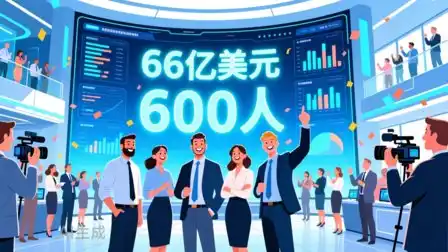
The first systematic "big cash-out" of the AI era occurred in October 2025, when over 600 current and former OpenAI employees sold a total of $6.6 billion in shares via a secondary market. Approximately 75 individuals maxed out a $30 million per-person sale limit, while around 525 others cashed out an average of $8.3 million each. This event, exceeding the scale of any 2024 US IPO, functioned as a "shadow IPO." It marked a radical departure from the traditional Silicon Valley path of waiting for a public listing, instead allowing employees to convert equity to cash after just two years of tenure—a direct retention tool in a fiercely competitive talent market where rivals like Meta have offered packages worth hundreds of millions. This massive liquidity event presents a dual-edged sword for OpenAI. While it helps retain talent, it also risks triggering a brain drain as newly wealthy employees may depart. Furthermore, it creates a dilemma for those who sold: they forfeited potential future gains as the company's valuation soared from $400 billion to $852 billion within months. In stark contrast, employees at rival Anthropic demonstrated greater reluctance to sell during their own secondary offering. The financial narratives of the two labs also diverge sharply. OpenAI, while achieving over $20 billion in annualized revenue by 2025, faces massive projected losses (up to $14 billion in 2026), a long path to cash flow positivity, and significant revenue-sharing payments to Microsoft. Anthropic reports rapid revenue growth, improving gross margins, and a faster path to profitability. OpenAI's trajectory is thus balanced precariously between skyrocketing valuation based on funding narratives and the pressures of sustained financial losses post-cash-out. The event underscores that the AI race has evolved into a capital and human experiment, where immense wealth crystallizes the complex calculations of greed, fear, and ambition within the industry.

marsbit05/12 07:46

600 People, $66 Billion: The First Major Cash-Out in the Era of Large Models

marsbit05/12 07:46

Anthropic and OpenAI Have Single-Handedly Severed the Logic of Pre-IPO Stock Tokenization

The pre-IPO stock token market is experiencing significant turmoil following strong statements from AI giants Anthropic and OpenAI. Both companies have updated their official policies, declaring that any transfer of their company shares—including sales, transfers, or assignments of share interests—without prior board approval is "invalid" and will not be recognized in their corporate records. This means buyers in such unauthorized transactions would not be recognized as shareholders and would have no shareholder rights. A major point of contention is the use of Special Purpose Vehicles (SPVs), which are legal entities commonly used by pre-IPO token platforms to pool investor funds and indirectly acquire shares from employees or early investors. The companies explicitly state they do not permit SPVs to acquire their shares, and any such transfer violates their restrictions. They warn that third parties selling shares through SPVs, direct sales, forward contracts, or stock tokens are likely engaged in fraud or are offering worthless investments due to these transfer limits. This stance directly threatens the core model of many pre-IPO token platforms, which rely on SPV structures. The announcement revealed additional risks within this model, such as complex "SPV-within-SPV" layering that obscures legal transparency, increases management fees, and creates a chain reaction risk of invalidation. Following the news, tokens like ANTHROPIC and OPENAI on platforms like PreStocks fell sharply (over 20%). The market reaction highlights a divergence: while asset-backed pre-IPO tokens plummeted, purely speculative pre-IPO futures contracts, which are bilateral bets on future IPO prices with no claim to actual shares, remained relatively stable as they are unaffected by the transfer restrictions. The industry is split on the implications. Some believe the fundamental logic of pre-IPO token trading is broken if leading companies reject SPV-held shares, potentially causing a domino effect. Others, like Rivet founder Nick Abouzeid, argue that buyers of such unofficial tokens always knowingly accepted the risk of non-recognition by the company. The statements serve as a stark risk warning and a corrective measure for a market where valuations for some AI-related pre-IPO tokens had soared to irrational levels, far exceeding recent funding round valuations.

marsbit05/12 05:04

Anthropic and OpenAI Have Single-Handedly Severed the Logic of Pre-IPO Stock Tokenization

marsbit05/12 05:04

活动图片