# NFT Related Articles

HTX News Center provides the latest articles and in-depth analysis on "NFT", covering market trends, project updates, tech developments, and regulatory policies in the crypto industry.

Collector Crypt's DAU Is Only 800, Yet It's Already One of Crypto's Most Profitable Projects?

"Collector Crypt: A Highly Profitable Crypto Project with Only 800 Daily Active Users?" Collector Crypt (CARDS) is a crypto project tokenizing physical graded trading cards (primarily Pokémon) on Solana, achieving significant real-world profitability and growth. According to a Maelstrom Fund analysis, it generated approximately $53M in annualized profit in May, with a June run-rate nearing $109M, against a $550M FDV. Its core revenue driver is a digital pack-opening 'Gacha' system. The platform bulk-buys cards at a 5-15% discount. Users can open digital packs and choose to keep cards or sell them back to the platform at a 7-15% discount to market price. Most users sell back common cards, creating an efficient model: users get packs with a ~2% positive expected value, while Collector Crypt captures ~4.5% profit. The project aims to disrupt the inefficient $22.2B GMV (Q1 2026) eBay trading card market, which charges sellers 16-20% in total fees. Collector Crypt offers 2% fees, instant settlement, insured custody, and one-click trading. Beyond Gacha, future revenue streams include secondary market trading fees, infrastructure partnerships, and an eBay "snipe" tool. It holds ~$23M in card inventory and ~$10M in cash, and has already begun token buybacks. With a total supply of 2B tokens, effective circulation post-2027 unlocks is estimated at ~1.3B. Trading primarily on DEXs has so far limited large institutional entry. The project is expanding into sports cards and attracting Web2 users. Maelstrom Fund's price target is $4 by summer's end, positioning Collector Crypt at the forefront of migrating collectibles on-chain.

Foresight News06/24 07:02

Collector Crypt's DAU Is Only 800, Yet It's Already One of Crypto's Most Profitable Projects?

Foresight News06/24 07:02

CARDS' Brutal Truth of $535M FDV: Only $43M Net Revenue, Profit Margin Halved

The article deconstructs Collector Crypt (CC), a blockchain-based platform for trading tokenized collectible cards, revealing a significant disparity between its high volume and actual business fundamentals. Key findings include: * CC's cumulative revenue of $635M is misleading; 90.6% is instantly returned to users via card buybacks, leaving only $43M in net revenue (6.7% retention). * Trading activity is minimal, with real secondary market trading below $5M. eBay sales as a percentage of volume have declined for six consecutive quarters. * The platform's user base is highly concentrated, with a few dozen high-frequency wallets driving most of the volume, resembling a "casino" with ~420 daily active players. * As volume shifts to higher-priced card packs, the net profit margin has halved from 11.2% to 5.8%. * Token value capture (via burns and buybacks) totals only $1.4M, just 3.4% of net revenue. Meanwhile, operational wallets have off-ramped $45.7M in USDC. * With a Fully Diluted Valuation (FDV) of ~$535M, the token trades at 7.3x net revenue. The float is only 20.5%, with 72% of the supply allocated to insiders and locked until November 2027. The analysis concludes that while CC has found product-market fit as a high-speed gacha machine, it shows little evidence of evolving into a sustainable collector's marketplace, with minimal value accruing to its CARDS token.

marsbit06/18 11:11

CARDS' Brutal Truth of $535M FDV: Only $43M Net Revenue, Profit Margin Halved

marsbit06/18 11:11

The Brutal Truth Behind CARDS' $535M FDV: Only $43M in Net Revenue and Halved Profit Margins

The article titled "The Brutal Truth Behind CARDS' $535 Million FDV: Only $43 Million Net Revenue, Profit Margins Halved" provides a critical analysis of Collector Crypt (CC), a platform combining physical collectible cards with NFTs in a gacha-style system. Key findings include: * CC has generated $635 million in total user deposits. However, 90.6% ($576 million) is instantly returned to users via automatic card buybacks, resulting in only $43 million in net platform revenue (6.7% retention). * Activity is highly concentrated among dozens of high-frequency wallets, with an average of only ~420 daily active players. * There is minimal secondary market activity for the cards (under $5 million total), indicating the platform functions more as a gambling casino than a collector's marketplace. eBay sales as a percentage of gacha volume have declined for six consecutive quarters. * Despite a tripling in transaction volume, net profit margins have been halved from 11.2% to 5.8% as activity shifts to higher-priced card packs with lower margins. * Value captured by the CARDS token is minimal: only $140,000 (from burns and recent buybacks), representing just 3.4% of CC's cumulative net revenue. In contrast, wallets linked to operational infrastructure have off-ramped $45.7 million in USDC. * The token's ~$535 million Fully Diluted Valuation (FDV) represents a 7.3x multiple of annualized net revenue. Only 20.5% of the token supply is floating, with 72% allocated to insiders and locked until November 2027. The conclusion is that CC has found product-market fit as a high-speed gambling platform for a niche user base, not as a growing collector economy. The token currently captures a negligible share of the platform's revenue.

Foresight News06/18 08:09

The Brutal Truth Behind CARDS' $535M FDV: Only $43M in Net Revenue and Halved Profit Margins

Foresight News06/18 08:09

Buy an NFT First to Get a Ticket? The Largest World Cup Ticket Slump in History

"Ticketing Woes for 2026 World Cup: NFT 'Right-to-Buy' and High Prices Dampen Sales" Despite anticipation for the 2026 FIFA World Cup, with 48 teams and 104 matches across North America, the tournament faces significant unsold tickets, with approximately 180,000 group-stage tickets still available for resale just before kick-off. This unexpected shortfall is attributed to FIFA's controversial new ticketing strategy, which includes an NFT-based "Right-to-Buy" (RTB) system and opaque, dynamic pricing. FIFA introduced RTBs as digital collectibles (NFTs) sold on its FIFA Collect platform. An RTB grants the holder only the right to purchase a ticket for a specific match later, not the ticket itself. This two-step process, criticized for selling "scarcity" first, saw RTBs priced from tens to hundreds of dollars, generating millions in revenue for FIFA. With many tickets remaining available on official channels, the value of these prepaid purchase rights is now being questioned. Compounding the issue are ticket prices, reported to be 2 to 4 times higher than the 2022 Qatar World Cup, and up to 7 times more for marquee matches. FIFA employed dynamic pricing, common in U.S. sports, but lacked transparency on seat availability and exact locations during sales, frustrating global fans facing high travel costs. This has drawn scrutiny from regulators in New York and New Jersey. FIFA's official resale platform also drew criticism for imposing high fees—roughly 10% on sellers and 17% on buyers, allowing FIFA to profit further from secondary market transactions. While FIFA President Gianni Infantino states over 6 million tickets have been sold, the situation highlights a potential disconnect between fan enthusiasm and willingness to pay under an aggressive commercial model.

marsbit06/11 08:59

Buy an NFT First to Get a Ticket? The Largest World Cup Ticket Slump in History

marsbit06/11 08:59

Interview with Macro Master Raoul Pal: The Economic Singularity Is Approaching, Don't Get Off the Train Easily in the Next Four Years

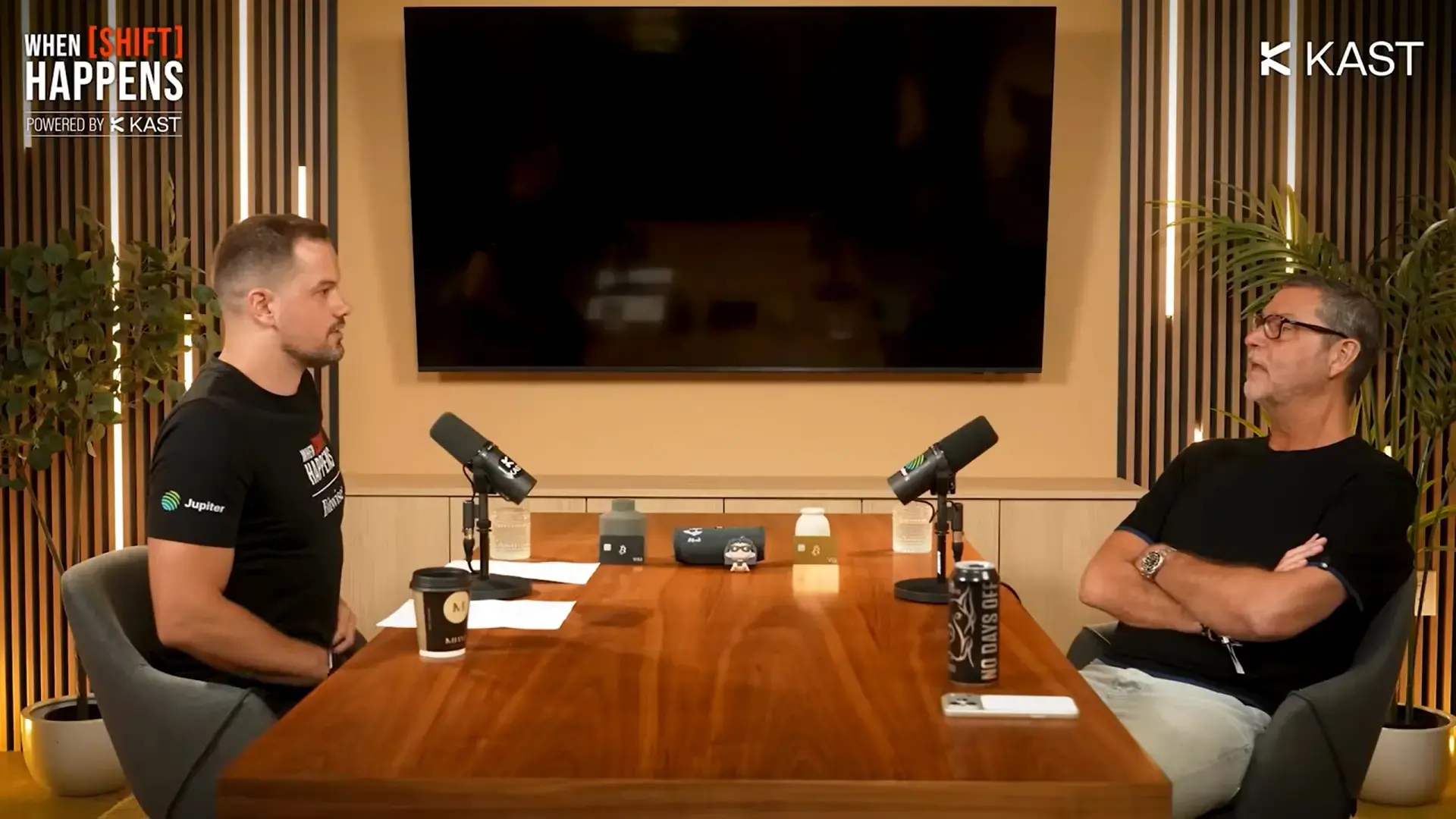
Macro investor Raoul Pal discusses the approaching "Economic Singularity," driven by the unprecedented capital race in AI between the US and China. He argues this competition, focused on turning energy into intelligence, will not stop until the system can no longer handle the speed of technological growth. Pal remains bullish on crypto, viewing it as having superior risk-adjusted returns long-term. He believes crypto's total addressable market is now "infinite" due to the future proliferation of AI agents operating on-chain. Pal sees the recent Bitcoin pullback to $60k as a normal, painful correction within a bull market, not a bear trend. He advocates a "buy and hold" strategy over trading, as long-term holders historically outperform. His buys during dips include SUI and Zcash. He states Layer 1 smart contract platforms (like ETH, SOL, SUI) will capture most crypto value as they are the foundational infrastructure for the future digital economy and AI agent activity. While DeFi faces security challenges, he sees this pushing for better products and notes DeFi is ideally suited for AI agents. He is also launching an NFT fund, betting on a revival of the sector as crypto wealth grows. Pal concludes that with massive trends like fiat debasement, financial migration to blockchain, and exploding global liquidity, investors should accumulate crypto assets and hold for the next four years, not sell. He assigns a 70% probability to this highly bullish outcome, citing regulatory progress, institutional adoption of stablecoins, and crypto's current undervaluation relative to assets like the Nasdaq.

marsbit05/29 07:50

Interview with Macro Master Raoul Pal: The Economic Singularity Is Approaching, Don't Get Off the Train Easily in the Next Four Years

marsbit05/29 07:50

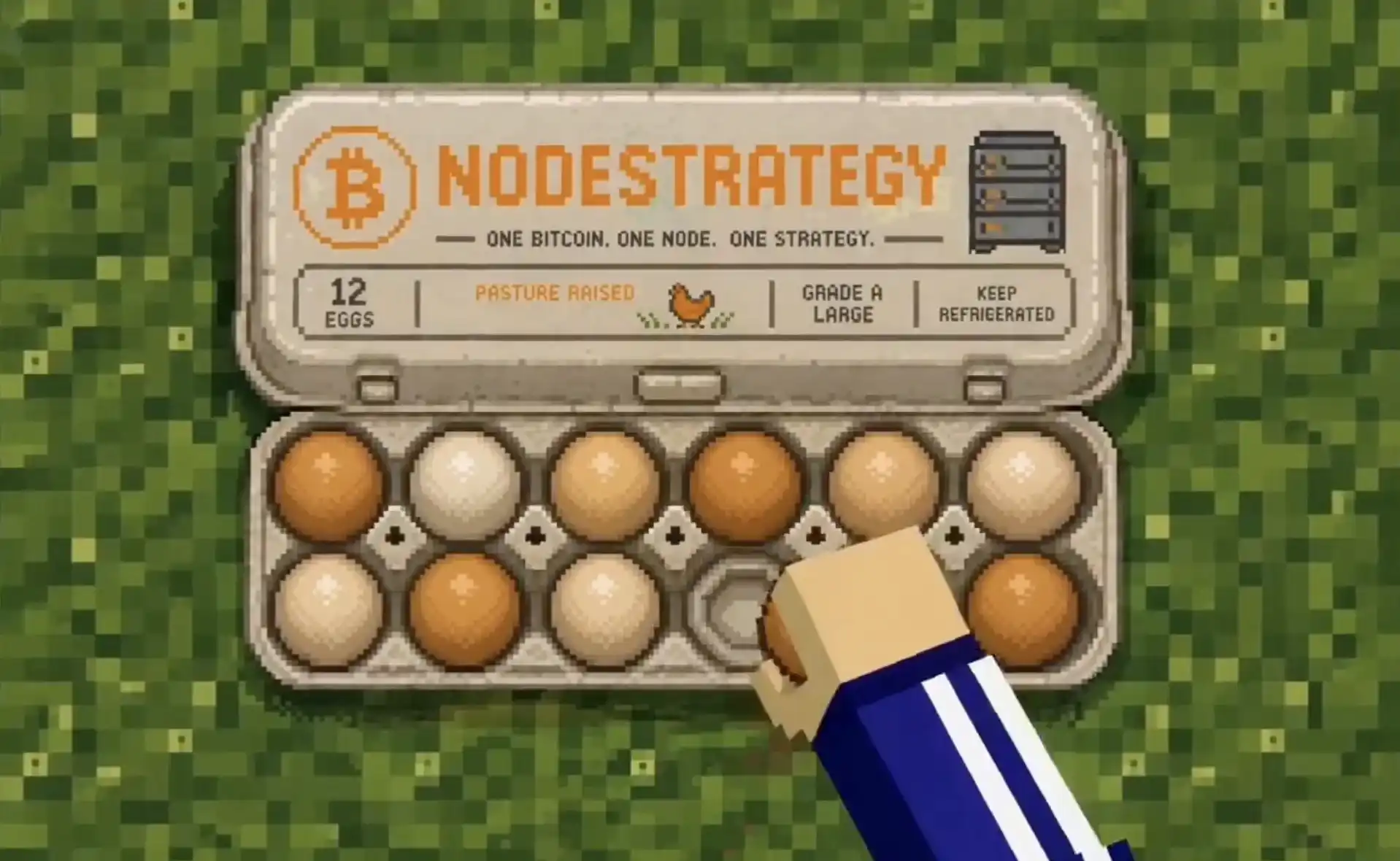
NodeStrategy: The First Ordinals DAT Project, Bringing the Strategy Treasury Narrative to NFTs

**Summary: The Fundamental Flaws of NodeStrategy, the 'First Ordinals DAT'** NodeStrategy presents itself as the first Ordinals Digital Asset Treasury (DAT) on Bitcoin. Its model mirrors MicroStrategy's treasury narrative but for NFTs, specifically targeting the NodeMonkes collection (not officially affiliated). The project's core mechanism is a four-step flywheel: a 10% fee on all trades (90% to treasury, 10% to radFi/Bound marketplace) is used to buy NodeMonkes. These NFTs are then listed for sale on Satflow, with 100% of the sale proceeds used to buy back and burn the project's token, NODESTRAT, aiming to create a perpetual value cycle. However, the design contains critical, self-defeating flaws: 1. **Platform Lock-In:** As a Bitcoin Rune, NODESTRAT lacks smart contract functionality and cannot natively enforce the 10% fee. The fee can only be collected on the radFi/Bound marketplace itself. This makes the entire flywheel dependent on a single platform. If liquidity moves elsewhere, fee revenue drops to zero, halting the mechanism. 2. **Self-Suffocating Economics:** The 10% fee acts both as the flywheel's fuel and a major drag on demand. A buy/sell roundtrip incurs a 20% cost, creating a massive hurdle for traders. This strangles the very trading volume needed to generate fees. 3. **Ineffective Value Support:** The flywheel is starved. Low daily volume (~$9K) generates minimal fees for NFT purchases. The NFT "ladder" sales are slow and unpredictable (only 39 total sold), meaning buybacks are infrequent. While 30.77% of the supply has been burned, this supply reduction cannot lift price without corresponding demand, which is suppressed by the high transaction tax. 4. **Meaningless NAV:** The Net Asset Value (NAV), currently at a 0.46x discount to market cap, is merely a marketing figure. There is no redemption mechanism for token holders to claim the underlying NodeMonkes assets. Price is set by market liquidity flows, not by this theoretical backing. In essence, NodeStrategy's design forces its revenue source (trading fees) to simultaneously cripple the demand and liquidity required for its own success, trapping the project in a stagnant state.

marsbit05/25 05:28

NodeStrategy: The First Ordinals DAT Project, Bringing the Strategy Treasury Narrative to NFTs

marsbit05/25 05:28

活动图片