# NFT Related Articles

HTX News Center provides the latest articles and in-depth analysis on "NFT", covering market trends, project updates, tech developments, and regulatory policies in the crypto industry.

Weekly Selection丨Epic Stock Market Volatility, Changxin Tech's IPO Reshapes Storage Landscape, Saylor Aims to Re-Anchor STRC Around September 8th

PANews Weekly Digest: Market Turmoil, Tech Breakthroughs, and Crypto Developments. The week saw significant volatility across global markets. South Korea's KOSPI index experienced extreme turbulence, including multiple trading halts, largely driven by sharp declines in AI hardware stocks like SK Hynix. In contrast, China's Changxin Xinqiao (CXC) achieved a landmark IPO with a market cap surpassing 4 trillion yuan, marking a major success for the domestic DRAM industry after a decade of losses. In the crypto and Web3 space, several key narratives emerged. AI is driving demand for new infrastructure, with projects like AI agent wallets and programmable payments gaining traction, attracting interest from firms like Coinbase. The Bitcoin mining sector is pivoting, with companies like MARA focusing on energy management as electricity becomes a core AI-era asset. Meanwhile, the RWA (Real World Assets) sector faces a "utilization puzzle," with hundreds of billions in on-chain assets remaining dormant. Notable market movements included a historic single-day surge of over 17% for the KOSPI index and a significant migration of $16.5 billion in staked ETH within the Lido ecosystem. Michael Saylor announced a target to re-peg the STRC stablecoin around September 8th. Other highlights include discussions on Ethereum's ambitious 2030 roadmap for scaling and privacy, analysis showing high protocol revenues not always translating to token price gains, and warnings from Citi about potential extreme commodity price shocks by late 2026.

marsbit08/01 01:46

Weekly Selection丨Epic Stock Market Volatility, Changxin Tech's IPO Reshapes Storage Landscape, Saylor Aims to Re-Anchor STRC Around September 8th

marsbit08/01 01:46

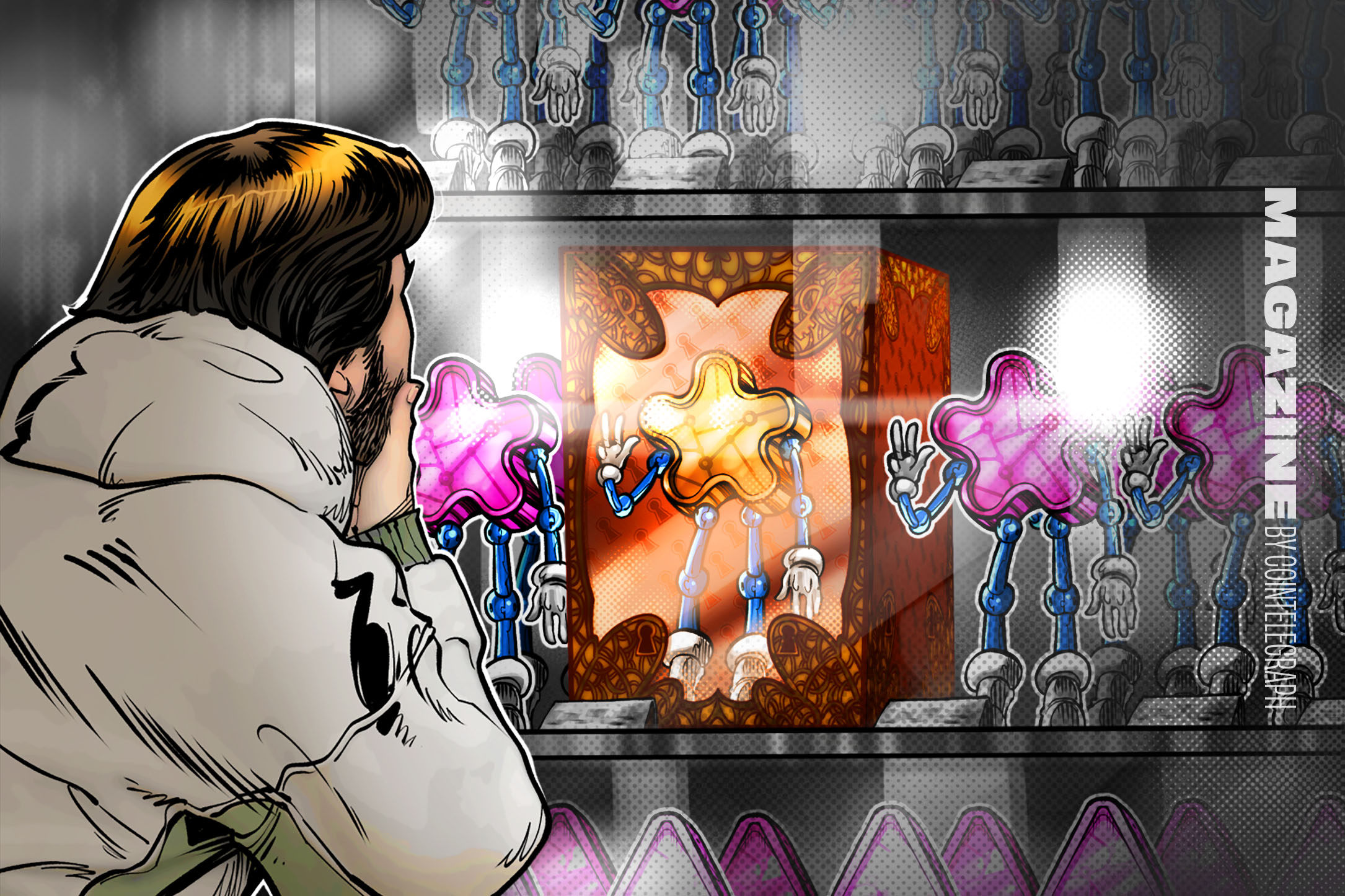
Deep Dive into FWA: An Intriguing Experiment Turning NFTs into "On-Chain Gachapon"

A Deep Dive into FWA: The “On-Chain Gacha” Experiment for NFTs Fake World Assets (FWA), created by TokenWorks, introduces an innovative “NFT gacha machine” fully operating on-chain. Users can deposit eligible NFTs paired with ETH (called Backing) to create a Position, acting as a prize pool. Others can then pay a uniform Acquisition Price for a chance to win a random NFT from the pool. The core mechanism features a reverse probability system: Positions with lower Backing have a higher chance of being selected, serving as common prizes, while high-Backing Positions are rare “jackpots.” The acquisition price is calculated based on the harmonic mean of all Backings, keeping entry costs low. When a Position is won, the purchaser must choose: keep the NFT or accept the Standing Bid (85% of the Backing, claimable in ETH or $FWA tokens), returning the NFT to the original depositor. The protocol involves two main roles. Depositors provide liquidity (NFT + ETH), earning a share of fees from each draw, distributed equally per active Position, plus potential $FWA rewards. Purchasers pay to spin the gacha, receiving $FWA rewards for participation. A special “Crown” reward goes to the Position with the highest Backing. The $FWA token has a fixed supply and is initially obtainable only through protocol participation (depositing or purchasing), with external buying disabled early on to reduce sell pressure. Its value is supported by a built-in buy pressure: when purchasers opt for the $FWA settlement on a Standing Bid, the protocol uses the backing ETH to buy $FWA from the market. Revenue for the protocol comes from a 1% fee on each draw, a 1% settlement fee when an NFT is kept, and the 15% discount from Standing Bid settlements (currently allocated to the protocol). The design cleverly blends Uniswap-style liquidity provision, gacha mechanics, and tokenomics to create a novel, self-regulating marketplace for NFT liquidity and engagement.

marsbit07/30 11:56

Deep Dive into FWA: An Intriguing Experiment Turning NFTs into "On-Chain Gachapon"

marsbit07/30 11:56

Weekly On-Chain Data Review: Robinhood Chain Explodes, FWA Goes Viral, Mantle Doubles Down on RWA

**Chain Data Weekly Digest: Vault Regulation, Robinhood Memecoin Surge, and FWA's NFT Gamble** * **Vault Managers Face SEC Scrutiny:** SEC Commissioner Hester Peirce warned that some DeFi Vault strategies could trigger investment advisor regulations. This may lead to licensing requirements, potentially sidelining smaller managers while bringing more traditional finance firms on-chain. The industry debates whether Vaults are purely code-driven or resemble discretionary portfolio management. * **Robinhood Chain's Memecoin-Led Boom:** Despite its initial RWA focus, Robinhood Chain has seen explosive early growth driven by memecoin trading and launchpads, which now dominate its DEX volume. The chain facilitates memecoin trading via tokenized stock pairs. It boasts over $800M in on-chain assets, $5B in stablecoin market cap, and strong fee revenue, positioning it as a consumer trading hub. * **FWA Revives NFT Activity with a Gamble:** The Fake World Assets (FWA) protocol, a gachapon-style system on Ethereum where users pay to randomly win deposited NFTs, has rapidly captured 10% of Ethereum's mainnet gas consumption in its first week. It demonstrates how simple, consumer-facing mechanics can reignite NFT engagement, attracting a broad user base. * **CEX Consolidation & DEX Growth:** The closures of BitMEX and BitMart highlight intense central exchange (CEX) competition and consolidation. Meanwhile, the DEX/CEX spot trading volume ratio hit a record high of 24.3% in July, signaling a shift of trading activity and innovation to on-chain venues. * **Mantle's RWA Focus at 3 Years:** Celebrating its third anniversary, Mantle Network is solidifying its role as a "full-stack distribution layer" for tokenized real-world assets (RWA). It ended Q2 with $1.2B in DeFi TVL, $955M in stablecoin market cap, and a growing suite of native RWA trading infrastructure like Fluxion and xChange.

marsbit07/29 08:16

Weekly On-Chain Data Review: Robinhood Chain Explodes, FWA Goes Viral, Mantle Doubles Down on RWA

marsbit07/29 08:16

In 2026, Over 60 Cryptocurrency Companies and Projects Ceased Operations Amid Bankruptcies, Bear Market, and Hacker Attacks Tearing the Industry Apart

In 2026, over 60 cryptocurrency companies and projects ceased operations due to bankruptcies, a bear market, and hacker attacks that fragmented the industry. The downturn began after Bitcoin retreated from its October 2025 all-time high, leading to deteriorating finances, widespread layoffs, and stalled funding rounds. Closures affected all sectors, including exchanges, blockchains, wallets, NFT platforms, DeFi protocols, and gaming projects. Reasons cited included security vulnerabilities, failed license applications, unsustainable tokenomics, and simply failing to find a market. Key closures included derivatives exchange BitMEX, institutional platform Blockfills, and miner Poolin filing for bankruptcy. Several Layer 1 and 2 blockchains (e.g., Powerloom, Botanix, Sophon) shut down due to lack of user demand. Major DeFi protocols like Radiant Capital and Carrot Finance halted operations following major hacks. Multiple wallets (Secondfi, Ctrl Wallet) closed after security breaches. NFT marketplace Foundation and several blockchain games also terminated services. Analysis points to three recurring pressures: security vulnerabilities, regulatory hurdles (e.g., MiCA license rejections), and economic unsustainability where products failed to attract sufficient users or revenue despite initial funding. This wave of shutdowns highlights a market-wide consolidation driven by a harsh economic climate and operational failures.

cryptonews.ru07/28 18:32

In 2026, Over 60 Cryptocurrency Companies and Projects Ceased Operations Amid Bankruptcies, Bear Market, and Hacker Attacks Tearing the Industry Apart

cryptonews.ru07/28 18:32

The 800x Golden Dog, "Gacha" Saves NFT Trading

Title: 800x Golden Dog: How 'Gacha' Mechanics Are Rescuing NFT Trading In the past month, the on-chain TCG (Trading Card Game) narrative, centered around "gacha" or loot box mechanics, has emerged as a major crypto-native revenue generator, second only to platforms like Hyperliquid and pump.fun. Recently, this trend hit Ethereum with Fake World Assets (FWA). Within just over a week, FWA generated approximately $1.3 million in revenue, ranking 15th in the past week's crypto app earnings. Its token, $FWA, surged from an initial market cap of ~$47,550 to a peak of ~$38.8 million—an 800x gain. Meanwhile, Collector Cards' token $CARDS declined significantly from its previous highs. FWA, developed by the team behind "PunkStrategy," operates as an NFT gacha system with a built-in token flywheel. Users deposit NFTs paired with ETH as liquidity into pools. Each deposit creates a personal pool; more ETH deposited lowers the chance of the NFT being "won" in a draw. Players spend ETH to "draw" (gacha). If they get an undesirable NFT, they can instantly sell it back to the original depositor at an 85% discount, generating income for the depositor. A 1% fee is taken on each draw and on depositor earnings when an NFT is kept. The key to FWA's momentum is its token $FWA. It cannot be bought directly externally. The primary way to acquire it is by playing the gacha and choosing to receive $FWA (instead of ETH) when selling back an unwanted NFT. This mechanism creates constant buy pressure for $FWA as players engage, especially during its price ascent. Early participants who held $FWA benefited massively from subsequent inflows. This contrasts with projects like Collector Cards, which, despite strong revenues, suffer from perceived low token utility beyond buybacks. In conclusion, while FWA's flywheel design—linking speculative token gains directly to NFT trading activity—has driven rapid growth, its sustainability is questionable. The model relies heavily on continuous $FWA price appreciation to offset the inherent negative expectancy of each draw. When price momentum stalls, activity will likely decline. The case highlights that in crypto markets, pure profitability narratives can be fleeting; understanding the relationship between attention, token buy pressure, and sustainable mechanics is crucial to avoid speculative pitfalls.

marsbit07/28 01:56

The 800x Golden Dog, "Gacha" Saves NFT Trading

marsbit07/28 01:56

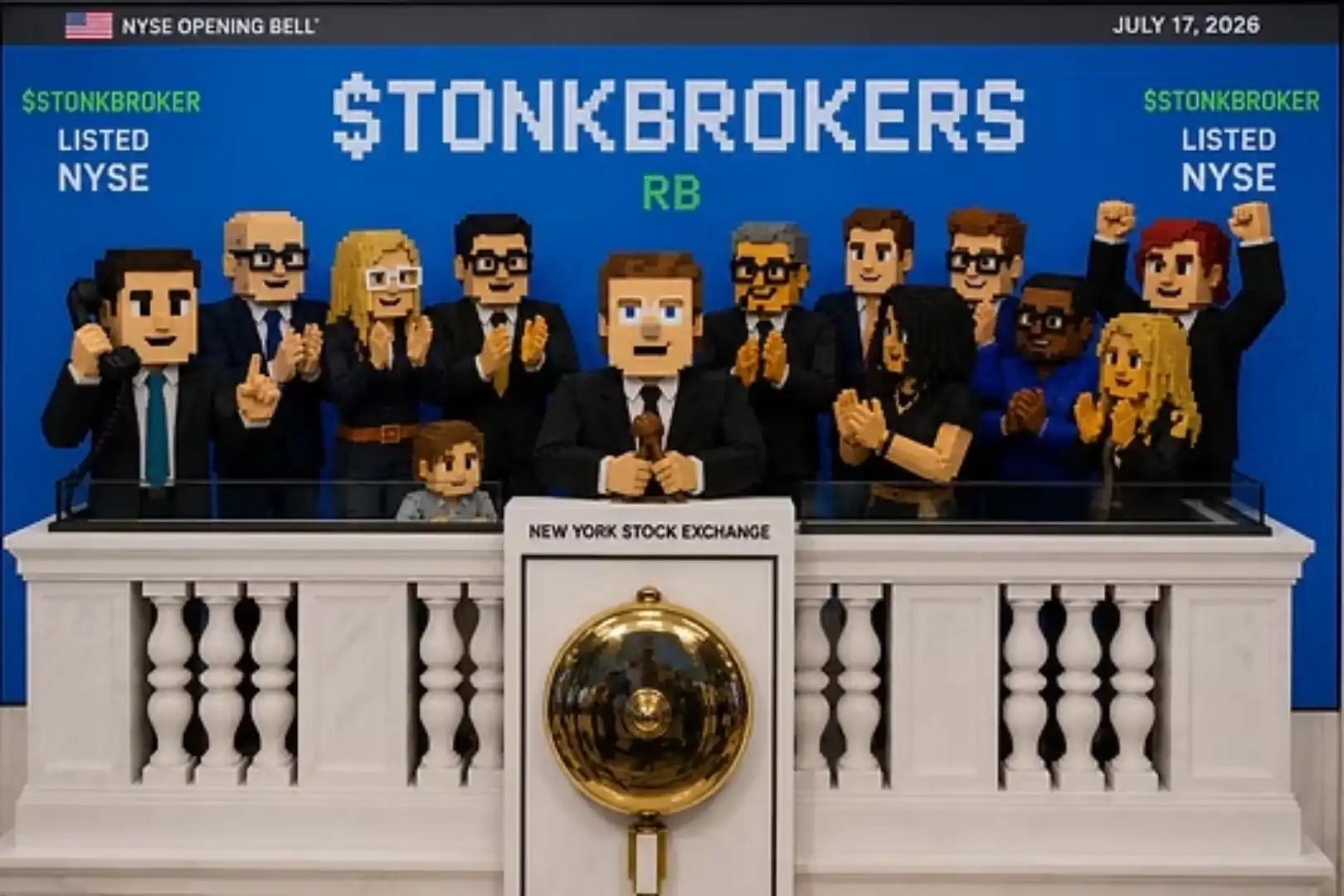
NFTs That Can Earn Stock Tokens? What Exactly is StonkBrokers?

Title: How StonkBrokers Connects NFTs to Stock Token Earnings StonkBrokers is an NFT project from the Web3 development team Clutch Labs (CLUTCH) built on Robinhood Chain. It consists of 4,444 "pixel broker" NFTs. Unlike typical NFTs, each one is linked to an ERC-6551 token-bound account, meaning it functions as its own wallet capable of holding assets like stock tokens. The project's ecosystem includes: 1. **STONKBROKER (ERC-20 Token)**: The fungible token connected to the NFTs via the Anvil AMM. Users can trade tokens for NFTs at a base rate of 666,666 STONKBROKER (plus ETH fees). 2. **NFT Activation & Rewards**: NFT holders must spend STONKBROKER tokens to "activate" their NFT into one of five tiers, which determines their weight in receiving stock token rewards. These rewards are funded by 70% of the ETH trading fees generated on the Anvil AMM. 3. **Lending**: NFTs can be used as collateral to borrow STONKBROKER tokens. 4. **Future Products**: The roadmap includes the Stonk Launcher (a token launchpad) and the Stonk Exchange (a "vote-directed DEX" based on Uniswap V3), scheduled for late July and August 2026, respectively. The project aims to provide NFTs with ongoing utility as active financial agents rather than static collectibles. Its token (STONKBROKER) and NFT collection have seen significant price increases recently. However, the project's long-term viability depends on successful product delivery, sustainable protocol revenue, and navigating risks like market volatility, smart contract security, and the nascent Robinhood Chain ecosystem.

Foresight News07/21 02:21

NFTs That Can Earn Stock Tokens? What Exactly is StonkBrokers?

Foresight News07/21 02:21

活动图片