# Loss Related Articles

HTX News Center provides the latest articles and in-depth analysis on "Loss", covering market trends, project updates, tech developments, and regulatory policies in the crypto industry.


Strategy Sells BTC at Loss, Trump Media Cuts Crypto Business, Grayscale Withdraws Altcoin ETFs: Crypto Market Experiences Sharp Retreat Within a Week

In a single week, three key players in the crypto world pulled back simultaneously, signaling a market-wide retreat. MicroStrategy sold 1,690 BTC at a loss to repurchase its discounted preferred shares. Trump Media reported a quarterly net loss of $238.1 million, largely due to a $190.4 million crypto asset impairment, and announced a scaling back of its crypto ambitions. Grayscale withdrew its filings for spot ETFs tied to Cardano (ADA), Polkadot (DOT), and Hedera (HBAR) within minutes. Individually, these are company updates; together, they point to a sharp ebb tide in crypto. However, in this industry, such contractions are not an end but a prelude. Unlike traditional markets, crypto lacks institutional buffers. Its cleansing happens violently through price crashes and leverage implosions, which are painful but necessary to purge weak hands—speculators, over-leveraged entities, and undisciplined corporate buyers—and transfer their holdings to stronger ones. Previous cycles washed out retail and projects, laying groundwork for DeFi and institutional products like spot Bitcoin ETFs. The current phase targets corporate and institutional excess. MicroStrategy's sale shows even "forever holders" face balance sheet realities. Trump Media's retreat highlights the perils of undisciplined corporate treasury management. Grayscale's product pruning reflects a cooling institutional appetite for altcoins beyond BTC and ETH. This painful process creates a cleaner market structure. It shifts the focus from speculative narratives to fundamentals like cash flow and asset quality. As weak hands exit, selling pressure subsides, paving the way for sustainable growth. The last cycle built ETFs on FTX's ashes. This one may forge a more mature, resilient foundation from the lessons of the corporate "buy-the-dip" era. The path forward, while uncertain, holds promise for a healthier market.

marsbit08/11 03:33

Strategy Sells BTC at Loss, Trump Media Cuts Crypto Business, Grayscale Withdraws Altcoin ETFs: Crypto Market Experiences Sharp Retreat Within a Week

marsbit08/11 03:33

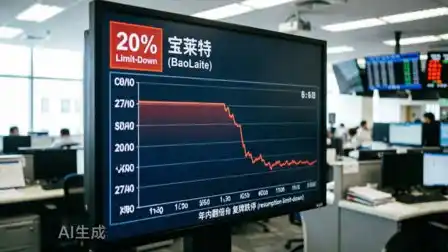
Stock Price Doubles Within the Year, Plummets 20% After Resumption, Baolai Medical's 'Chip Backdoor Listing' Script Ends

On August 10, 2026, BPL (300246.SZ) resumed trading after a nearly week-long suspension and immediately fell by a 20% limit-down. This plunge was triggered by the termination of a planned controlling stake transfer, dashing earlier market speculation. In January 2026, Zhejiang Quwei Zhihe Partnership entered as a significant shareholder, sparking hopes. Investors speculated that its backer, Weigu Information—a specialized "little giant" company in high-reliability solid-state storage chips—might be seeking a backdoor listing through BPL. This "cross-industry restructuring" expectation fueled a strong rally, with BPL's stock price more than doubling in 2026 prior to the halt. However, the deal was called off on August 7, directly causing the sharp sell-off. Underlying BPL's vulnerability is its fundamentally weak business. The company, a medical device firm, is mired in losses, having reported three consecutive years of net losses totaling over 200 million yuan. Its core hemodialysis business is squeezed by government procurement price cuts, while growth in its patient monitor segment has stalled. Furthermore, BPL faces imminent debt pressure with convertible bonds worth approximately 218 million yuan due in September 2026, and its current stock price is far below the conversion price. The failed control transfer may represent a delayed release of negative news, but BPL's core challenges remain: reversing operational losses and addressing its urgent liquidity crisis.

marsbit08/10 13:11

Stock Price Doubles Within the Year, Plummets 20% After Resumption, Baolai Medical's 'Chip Backdoor Listing' Script Ends

marsbit08/10 13:11

Moore Threads, Having Just Raised 8 Billion, Is Already Planning a Hong Kong IPO

On August 9th, Moore Threads announced plans for a Hong Kong IPO alongside a strong first-half 2026 earnings report. Listed on the Shanghai STAR Market in December 2025 as the "first domestic GPU stock," the company raised 8 billion yuan. Its stock price initially surged but has since fallen 40% from its peak. This decline followed market concerns over its use of substantial idle raised funds for low-risk financial products instead of promised projects. The company's H1 2026 revenue reached 1.74 billion yuan, a 147.4% year-over-year increase, already surpassing its full-year 2025 revenue. This growth is attributed to strong demand for AI and full-feature GPUs, particularly its Kuae AI computing clusters. Despite the revenue surge, Moore Threads remains unprofitable on a non-GAAP basis, with a net loss of 115 million yuan after adjustments. R&D and sales expenses grew significantly. The proposed Hong Kong listing aims to support its global strategy, attract international talent, and improve corporate governance, following the path of other Chinese tech firms pursuing dual listings. However, its港股 IPO valuation may face challenges as international investors could benchmark it against peers like Biren Technology, potentially demanding a discount. In summary, while Moore Threads is expanding rapidly and strategically seeking a港股 listing for global growth, it continues to face profitability challenges amid high costs and market skepticism about its capital allocation and valuation.

marsbit08/10 12:48

Moore Threads, Having Just Raised 8 Billion, Is Already Planning a Hong Kong IPO

marsbit08/10 12:48

活动图片