# Globalization Related Articles

HTX News Center provides the latest articles and in-depth analysis on "Globalization", covering market trends, project updates, tech developments, and regulatory policies in the crypto industry.

Justin Sun’s Interview with Hurun Report: A New Order and Certainty for Value Flow in the Era of Transformation

In an interview with *Hurun Report*, Justin Sun, founder of TRON, discussed the evolution of the Web3 industry as it moves from initial exploration to large-scale adoption. He emphasized that the core value of blockchain lies in building an open and inclusive internet of value, enabling anyone globally to transfer and use funds efficiently and at low cost, regardless of location or access to banking. Sun highlighted that projects with lasting impact are those built on genuine demand and real-world usage. He pointed to the stablecoin payment ecosystem as the most mature and scalable application currently, noting that TRON has rapidly become one of the world's largest stablecoin networks. The circulation of USDT on TRON has surpassed $86.3 billion, driven by actual use cases such as cross-border transfers and daily payments, demonstrating strong network effects. Regarding strategy, Sun outlined a methodology combining data-driven iteration, rapid execution, and user-centric focus. He cited the decision to partner with Tether to launch TRC-20 USDT as a key strategic move, based on an assessment of market trends and long-term potential, which has become a significant growth engine for the TRON ecosystem. On globalization, Sun stressed the importance of local compliance and cultural adaptation, noting that success in different markets depends on deep understanding and local partnerships. He also addressed the convergence of AI and blockchain, describing it as a transformative direction where blockchain provides decentralized infrastructure for AI, while AI enhances the intelligence and user experience of blockchain systems. For industry participants and young entrepreneurs, Sun advised continuous learning and adaptability in a fast-changing environment, focusing on building irreplaceable core strengths rather than spreading resources too thinly. Through infrastructure development, global strategy, and technological foresight, TRON aims to advance the practical implementation and evolution of the value internet.

marsbit05/28 07:47

Justin Sun’s Interview with Hurun Report: A New Order and Certainty for Value Flow in the Era of Transformation

marsbit05/28 07:47

Chinese Young Man's AI Short Goes Viral Abroad! Hollywood Director Searches Online: Wants to Hire Him

A young Chinese creator, Mx-Shell, an amateur filmmaker from Yunnan with no formal film training, has gone viral internationally with his AI-generated short film "Zombie Scavenger." Created independently in about 10 days using the Chinese AI video tool Seedance 2.0 at a minimal cost, the film features a robot cowboy in a post-apocalyptic world. Its unique atomic-punk style and cinematic quality caught the attention of Hollywood. The film initially gained little traction on Chinese platform Bilibili. However, after PJ Ace, founder of LA-based AI studio Genre.ai, shared it on X (formerly Twitter), praising it as "one of the best short films I've seen in recent years," it quickly garnered millions of views overseas. PJ Ace then publicly sought to hire the unknown director, sparking a cross-platform search. The creator, who doesn't speak English, was unaware of the overseas buzz until Chinese internet users relayed the message. Connection was eventually made via a QQ email address shared in Bilibili comments, and Mx-Shell received a job offer from the Hollywood director. The article highlights this as a case of "talent export." It argues that while China's competitive AI tool market lowers technical barriers, true success still relies on individual creativity, aesthetic judgment, and narrative skill—qualities Mx-Shell demonstrated. His story exemplifies how AI tools can empower previously unseen creators with compelling ideas to reach a global audience, even if initial recognition sometimes comes from abroad before reverberating back home.

marsbit05/14 07:33

Chinese Young Man's AI Short Goes Viral Abroad! Hollywood Director Searches Online: Wants to Hire Him

marsbit05/14 07:33

South Korea's Crypto Tax Countdown Begins: Escalating Three-Way Game Between CEXs, Retail Investors, and Regulators

South Korea's National Tax Service has initiated final preparations to implement a virtual asset tax starting January 2027, with reporting for comprehensive income tax due by May 2028. The tax applies a 22% rate on annual profits exceeding 2.5 million KRW from transfers and leasing, affecting an estimated 13.26 million people. To enforce this, authorities plan to collect data from major domestic exchanges like Upbit and Bithumb and launch a comprehensive virtual asset analysis system. This move follows two previous postponements and signifies a shift towards institutionalized management. The plan also involves international data sharing under the OECD's CARF framework from next year to curb capital flight. However, tensions exist between regulators and exchanges over data sharing and new anti-money laundering rules. The industry, represented by DAXA, opposes proposed regulations requiring the reporting of all cross-border transfers over $6,800 as suspicious, arguing it renders AI risk systems useless and creates an impractical administrative burden. Given Korea's market—comprising 30% of global volume with 85% in altcoins and dominated by retail speculation—the tax could reduce short-term speculative trading and stabilize the domestic market by limiting capital outflows. Its implementation may also influence global crypto regulatory and taxation models, serving as a significant case study for other jurisdictions.

marsbit05/08 14:32

South Korea's Crypto Tax Countdown Begins: Escalating Three-Way Game Between CEXs, Retail Investors, and Regulators

marsbit05/08 14:32

Wearing Slippers, Drinking Hot Water, Practicing Baduanjin: This Generation of Foreigners Collectively 'Diagnosed' as Chinese

An article from The New York Times Chinese website explores the viral TikTok trend where Western users humorously "diagnose" themselves as Chinese by adopting certain lifestyle habits. These include wearing slippers indoors, practicing the exercise Ba Duan Jin, using pillow covers, drinking hot water (often with apples, red dates, or goji berries), and embracing aunty-style floral cotton jackets. What began as a joke evolved into a popular meme, with users enthusiastically sharing their "very Chinese moments" and exploring details like whether to peel apples or switch to pears. While some Chinese-American influencers act as cultural arbiters, promoting practices like hotpot dinners or traditional medicine, others criticize the trend for oversimplifying and fetishizing Chinese culture. The phrase "diagnosed as Chinese" is particularly contentious, evoking racist stereotypes heightened during the COVID-19 pandemic. Despite this, the trend reflects a surprising shift towards admiration, with users praising China’s high-speed rail, electric vehicles, and affordable healthcare. The article notes that this fascination coexists with political tensions, such as the potential TikTok ban in the U.S., which drove users to Chinese app Xiaohongshu. Ultimately, the trend highlights both a romanticized vision of Chinese life and the complex dynamics of cultural exchange on social media.

比推03/20 19:18

Wearing Slippers, Drinking Hot Water, Practicing Baduanjin: This Generation of Foreigners Collectively 'Diagnosed' as Chinese

比推03/20 19:18

Three CZs, Three Different Stories

Three individuals share the initials "CZ" but represent vastly different paths in the era of globalization. The first, Chen Zhi, epitomized the lawless, gray-area entrepreneurship of the mid-2010s. Operating from Cambodia, he built a transnational fraud network, generating up to $30 million daily through scams and forced labor. His empire, built on exploiting regulatory gaps and weak international cooperation, collapsed in 2026 when he was arrested and repatriated to China, signaling the end of an era of unregulated profiteering. The second, Changpeng Zhao (CZ), founder of Binance, represents the tech-entrepreneurial era. A technologist at heart, he built the world's largest cryptocurrency exchange through product excellence and innovation. Unlike Chen Zhi, his venture created value but eventually faced escalating regulatory scrutiny. In 2023, Zhao and Binance pleaded guilty to U.S. charges, resulting in a $4.3 billion fine and his resignation as CEO. His story illustrates that technological innovation must ultimately adapt to regulatory frameworks to survive. The third, CZ Chen, a Millennial and COO of AI firm Manus, represents a new model of success in the AI age. As a skilled professional, she achieved rapid wealth and influence by joining the right company at the right time. Manus, hailed as the first通用 AI Agent, was acquired by Meta in 2025. However, the deal faced review by Chinese authorities, highlighting that her success is now intertwined with geopolitical tensions between major powers. Together, these three stories reflect the evolving interplay between individual ambition and the shifting landscapes of regulation, technology, and global politics.

marsbit01/09 11:55

Three CZs, Three Different Stories

marsbit01/09 11:55

2026 Investment Framework: The End of Globalization, AI Supply-Demand Mismatch, and the Silver Frenzy

Investment Framework 2026: End of Globalization, AI Supply-Demand Mismatch, and Silver’s Surge The author outlines a macro investment framework centered on three key themes: the end of globalization, accelerating resource nationalism, and the rise of AI-driven structural shifts. The portfolio returned 131%, largely due to significant long positions in gold and silver. Silver markets are experiencing extreme volatility and a potential supply squeeze, with prices influenced by COMEX contango, LBMA backwardation, and Asian export restrictions. Investment strategies include calendar spreads and butterfly options on silver. Other positions include shortening duration, adding crash protection via SPY, shorting student loan servicers, and going long on tin miners and Japanese banks. Key thematic drivers: - Globalization’s end: Resource nationalism rises; Monroe Doctrine 2.0 emerges; metal inflation continues while oil may face oversupply. - China’s challenges: Banking system fragility, hidden real estate losses, and rising religious dissent. - AI acceleration: Compute demand will vastly outstrip supply by 2035. Two phases: near-term oversupply (2025–2027) followed by demand explosion (2028–2030+) as agentic AI matures. - Domestic US issues: Government shutdown risks, student debt crises, and the societal impact of AI and GLP-1 drugs. Investment opportunities include copper, tin, photonics, nuclear energy, natural gas, and compute infrastructure. Markets face pressure from Japanese monetary normalization and private credit illiquidity. Core view: AI demand is real, energy and metal markets are shifting, and policy changes are accelerating. Short-term cash flow gaps may cause volatility, but long-term thematic bets remain valid.

marsbit01/09 08:48

2026 Investment Framework: The End of Globalization, AI Supply-Demand Mismatch, and the Silver Frenzy

marsbit01/09 08:48

Global Wealth Transfer: The Disruption and Restructuring of Investment Strategies in the Next Decade

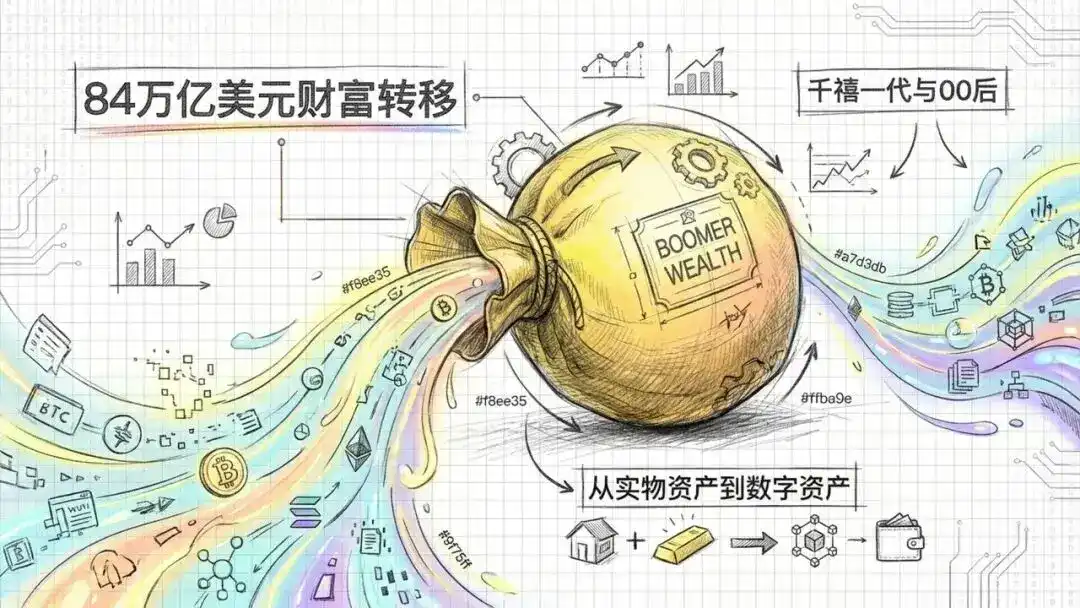
Global Wealth Transfer: A Decade of Disruption and Reinvention in Investment Strategy We stand at a historical inflection point. The three pillars of past prosperity—demographic dividends, globalized supply chains, and broad-based technological progress—are collapsing simultaneously. This article analyzes the profound implications for wealth and investment from 2026 to 2035. A core driver is a global "fertility strike," exemplified by South Korea's record-low fertility rate (0.72) and Japan's plummeting births. This is fueled by socio-economic pressures, such as the "4B Movement" (No dating, marriage, sex, or children) and widespread "economic nihilism" among youth, who find traditional paths to prosperity blocked. Coupled with "climate anxiety," this leads to a conscious societal contraction with dire macroeconomic consequences: permanent labor shortages, collapsing demand for traditional goods, and the impending failure of pension systems. This sets the stage for the largest intergenerational wealth transfer in history—$84 trillion to Millennials and Gen Z. As "digital natives" deeply distrustful of traditional finance, these heirs will not follow their parents' investment playbook. They are poised to fuel a digital asset explosion, viewing cryptocurrencies as a hedge against fiat devaluation and a tool for financial emancipation. Concurrently, "de-dollarization" trends and the tokenization of real-world assets (RWA) will reshape finance. Furthermore, the AI and robotics revolution will exacerbate inequality through a "Technological Cantillon Effect." Wealth generated by AI will primarily benefit the owners of capital (data, models, compute power), not laborers, widening the wealth gap. Therefore, traditional diversification is obsolete. The prescribed strategy is a "barbell approach": * **Offensive End:** Concentrate on beneficiaries of the tech monopoly (AI giants), digital scarcity (Bitcoin), and emerging markets with healthier demographics. * **Defensive End:** Hedge against chaos with prediction markets (e.g., Kalshi for event risk), select real estate, and gold. Assets to avoid include labor-intensive services and traditional consumer stocks reliant on population growth. The next decade will be a "Great Filter," offering highly differentiated alpha returns. One must become a shareholder in technology or a winner in the new financial casino, or risk becoming a footnote to this disruptive era.

marsbit12/31 02:41

Global Wealth Transfer: The Disruption and Restructuring of Investment Strategies in the Next Decade

marsbit12/31 02:41

活动图片