# Finance Related Articles

HTX News Center provides the latest articles and in-depth analysis on "Finance", covering market trends, project updates, tech developments, and regulatory policies in the crypto industry.

Standard Chartered Takes Over USDC Onboarding; Circle Cedes Control for Scale

Standard Chartered and Circle have announced a partnership where institutional clients can now mint and redeem USDC directly through Standard Chartered's existing banking infrastructure, eliminating the need for separate accounts with Circle. Initially launching in the Dubai International Financial Centre (DIFC), this service represents the first time a Global Systemically Important Bank (G-SIB) is offering such direct, integrated access. This move effectively "translates" USDC into a standard banking option, opening the door for major institutional capital like pension funds and sovereign wealth funds that require the trust, compliance, and risk frameworks of a major bank. For Circle, this is a strategic trade: ceding some direct client relationships to leverage Standard Chartered's vast distribution network, thereby potentially massively scaling USDC's circulation and its core interest revenue model. For Standard Chartered, it's a chance to offer a new digital asset service without building the underlying stablecoin infrastructure. The partnership signals a significant shift in the stablecoin narrative. Rather than bypassing traditional finance, stablecoins are becoming integrated into it, with major banks like Standard Chartered positioning themselves at the crucial entry point. The focus is moving from legitimizing stablecoins to determining how value and pricing power will be distributed among issuers, banking channels, and regulatory frameworks in this new, converging landscape.

marsbit07/04 00:02

Standard Chartered Takes Over USDC Onboarding; Circle Cedes Control for Scale

marsbit07/04 00:02

BIS Report Compliance Observations: The True Risks of Stablecoins Go Beyond 'De-pegging'

The BIS report, "Anchoring trust in money: innovation beyond stablecoins," highlights that the primary risks of stablecoins extend beyond potential de-pegging. It argues that the core challenge is whether stablecoins can be integrated into a financial system that is identifiable, monitorable, accountable, and regulatable. While acknowledging efficiency gains like faster payments and programmability, BIS emphasizes that money requires an institutional framework—including legal certainty, liquidity support, and financial integrity controls—which many stablecoins currently lack. The report details compliance risks, noting that while blockchain transactions are transparent, address visibility does not equate to identity or purpose clarity. This creates a systemic risk as pseudonymity, non-custodial wallets, and cross-chain bridges can undermine AML/CFT controls. Furthermore, these risks can spill over into the traditional financial system through on- and off-ramps. The future direction, per BIS, is not to prohibit innovation but to embed regulatory rules—such as identity verification and transaction screening—directly into the technological infrastructure of tokenized finance. The key takeaway for compliance is that any new financial instrument must clearly address questions of customer identification, transaction monitoring, accountability, and cross-border rule consistency to be viable as a mainstream payment tool.

marsbit07/03 16:22

BIS Report Compliance Observations: The True Risks of Stablecoins Go Beyond 'De-pegging'

marsbit07/03 16:22

They Waited 7 Years for This Money

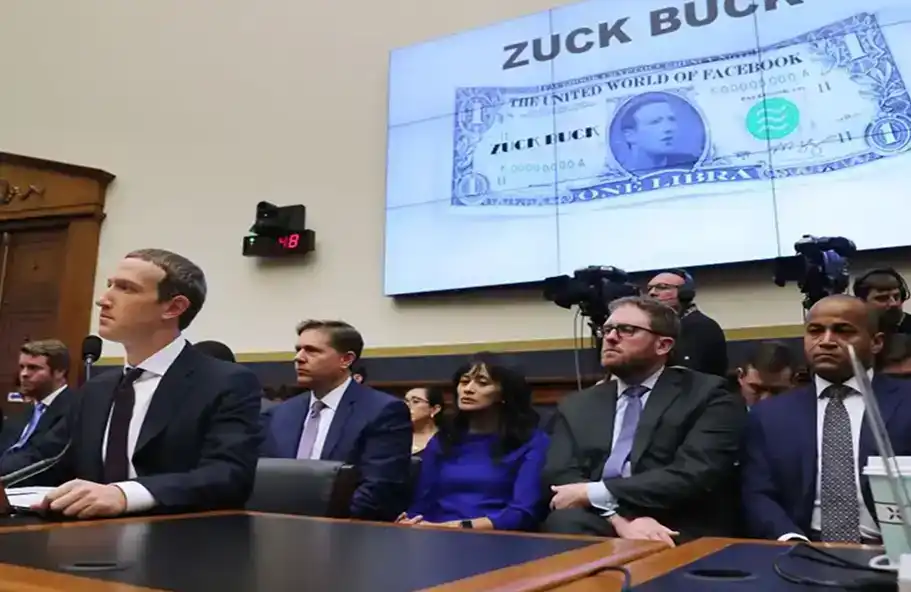
The article discusses the significant drop in share price of Circle, known as the "first stablecoin stock," triggered by the announcement of a new alliance including Visa, Stripe, Mastercard, Coinbase, BlackRock, Google, IBM, and Ripple. This alliance plans to launch Open USD, a USD stablecoin, later this year. Key to the market reaction is Open USD's plan to distribute reserve-generated profits to its adopters, directly challenging Circle's core revenue model from USDC's reserve interest. The piece draws a parallel to Facebook's 2019 Libra (later Diem) project, which involved many of the same companies. Libra failed due to regulatory pressure, its association with Facebook's controversial reputation, and overly ambitious global currency narratives. However, the underlying desire of these major financial and tech firms to create a new digital payment infrastructure persisted. Over seven years, the landscape changed: clearer US stablecoin regulations (GENIUS Act), mature blockchain infrastructure, and companies gaining practical experience with crypto payments. Open USD presents a more modest, compliance-focused narrative—a settlement tool and enterprise payment rail rather than a revolutionary global currency. While the new alliance poses a serious threat to Circle's profitability and exclusivity, it faces challenges typical of large consortia: slow decision-making and complex profit-sharing. USDC's established liquidity, trust, and integrations provide Circle with significant defenses. The market's reaction is seen partly as an emotional overreaction but also a necessary reevaluation of Circle's business model from a unique "stablecoin era ticket" to a "strong issuer" in a competitive commodity market. Ultimately, the core ambition from the Libra era remains: to digitize the movement of dollar value on the internet and capture the adjacent commercial opportunities. The lesson learned is to pursue this goal not as a high-profile, platform-led revolution, but as a quiet, utility-focused infrastructure play.

marsbit07/01 10:41

They Waited 7 Years for This Money

marsbit07/01 10:41

活动图片