# Fed Related Articles

HTX News Center provides the latest articles and in-depth analysis on "Fed", covering market trends, project updates, tech developments, and regulatory policies in the crypto industry.


Ethereum Network Fees Drop 62%: Is ETH Price at Risk?

Ethereum network fees have dropped 62% over the past 30 days, raising questions about potential risks to ETH’s price. Despite this decline, the network shows resilience through strong layer-2 growth and maintained price support levels. Key data from Nansen indicates a significant cooling in Ethereum base-layer activity, with fees falling more sharply than on competing chains like Solana. However, layer-2 solutions such as Base and Polygon have seen substantial transaction volume growth—108% and 81%, respectively—suggesting that Ethereum’s expanding ecosystem remains dynamic. Ethereum’s recent upgrade, Fusaka, may have contributed to lower fees by improving rollup efficiency. Meanwhile, ETH’s price rose over 11% amid softer U.S. employment data, though it remains 32% below its August peak. On-chain metrics show reduced activity in decentralized applications (DApps). DEX trading volume on Ethereum fell to $13.4 billion from $23.6 billion four weeks earlier, and DApp revenue hit a five-month low. Total value locked (TVL) in Ethereum DApps also declined, dropping from $100 billion to $76 billion over two months. Still, Ethereum maintains a dominant 68% market share among smart contract platforms. Perpetual futures funding rates held near 9%, reflecting balanced leverage market sentiment. Broader institutional and regulatory developments, including positive comments from former SEC commissioner Paul Atkins on blockchain adoption, may support longer-term confidence. In summary, while Ethereum’s base-layer demand has softened, strong layer-2 growth and ongoing ecosystem development suggest underlying strength. Current data does not indicate fundamental weakness in ETH’s market structure.

cointelegraph_中文12/10 08:55

Ethereum Network Fees Drop 62%: Is ETH Price at Risk?

cointelegraph_中文12/10 08:55

Bitcoin Hits New High Since Mid-November. What About Other Cryptocurrencies?

On the evening of December 9th, Bitcoin (BTC) reached $94.4k, marking its highest price since mid-November. As of the next day, it was trading around $92.6k with a 2.5% daily gain. The total cryptocurrency market cap grew 2.8% to $3.16 trillion. Ethereum (ETH) saw a significant rise of 6.4%, trading near $3.3k. Other top-10 cryptocurrencies also advanced, with Cardano (ADA) leading the group with an 8.6% surge. The top gainer in the top-100 was FET, up 10.5%, while Bitcoin Cash (BCH) was the biggest loser, down 1.8%. U.S. spot Bitcoin ETFs recorded a net inflow of $151 million on December 9th, the largest for December so far, while Ethereum funds attracted $177 million, a high since late October. These inflows are seen as a potential signal of returning liquidity to the crypto market, with some analysts viewing it as a catalyst for Bitcoin to reach around $100k by year-end, though others are more cautious, expecting growth no earlier than next year. The Crypto Fear and Greed Index improved from 22 to 26, moving out of "extreme fear" into "fear," indicating reduced panic but a market still inclined to sell. Analysts at Wintermute noted that cryptocurrencies have recently shown resilience to negative factors. Key upcoming events that could determine market direction include the U.S. Fed's and the Bank of Japan's interest rate decisions on December 10th and 19th, respectively.

RBK-crypto12/10 08:37

Bitcoin Hits New High Since Mid-November. What About Other Cryptocurrencies?

RBK-crypto12/10 08:37

12.10 Today's Market: Why the Rise? BTC\SOL\ETH\BNB\AAVE\DASH\SYRUP\Mubarakah Operation Analysis

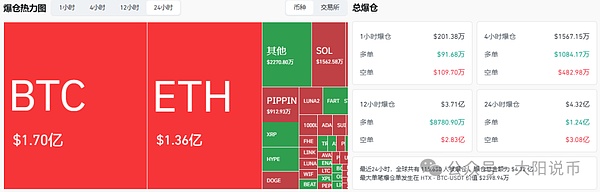
Crypto Market Analysis - December 10: In the past 24 hours, 115,623 traders were liquidated, totaling $432 million, with the largest single liquidation on HTX's BTC-USDT at $23.99 million. Market sentiment appears stable with lower turnover, suggesting investors are awaiting key events like the upcoming Fed and BOJ interest rate decisions. Key technical levels: - **BTC**: Support at 91,400–90,300; breakdown may test 88,700 or 86,800. Holding above 94,200 could push toward 95,000–96,200. - **SOL**: Support at 133.4; break may target 129.7 or 125.3. Resistance at 141.7, with upside to 146–148 if held. - **ETH**: Resistance at 3,375; above that targets 3,444. Support at 3,150, with potential dips to 3,010 or 2,960. - **BNB**: Key level at 887; holding may lead to rebound toward 905–926. Failure to hold 898 may see a drop to 878, 870, or 857. The article emphasizes long-term value investing over short-term technical signals, citing assets like BTC, ETH, and BNB as fundamentally strong. SYRUP protocol is noted for strong fundamentals with $2.2B in deposits and consistent inflows. ZEC is up over 20%, with advice to take profits. DASH shows a bullish head-and-shoulders pattern, potentially targeting 64 if it breaks 53.86. AAVE remains a DeFi leader with over $10B TVL, highlighting its strong moat. A hack involving He Yi’s WeChat promoting Mubarakah led to a pump-and-dump, netting millions.

金色财经12/10 07:07

12.10 Today's Market: Why the Rise? BTC\SOL\ETH\BNB\AAVE\DASH\SYRUP\Mubarakah Operation Analysis

金色财经12/10 07:07

Fed Rate Cut Tonight Almost Certain, This Meeting More Like a 'Political Pressure Test'!

This week's Federal Reserve policy meeting is set to be one of the most contentious in recent years. With key economic data missing due to a 43-day U.S. government shutdown, the meeting has evolved into a stress test of the Fed’s independence and decision-making process. Market expectations for a rate cut have surged from 30% to 97%, reflecting both data uncertainty and growing political influence. Internally, the Fed is deeply divided, with a 4-4 split among key officials between holding rates and cutting. The dot plot shows a rare "bimodal distribution," with 7 officials favoring no change and 8 supporting a 50-basis-point cut. Doves point to a weakening labor market—unemployment rose to 4.3% in August, a four-year high—while hawks emphasize persistent inflation, with core PCE at 2.7%, above the 2% target. Political pressure has intensified, notably through appointments like Stephen Milan, who voted for a deeper cut just one day into his role, aligning with former President Trump’s public demands. The upcoming Fed leadership transition adds further uncertainty, as officials may be positioning for future roles. Amid data gaps and political interference, the Fed faces a complex risk-management dilemma: balancing concerns over slowing employment against inflation risks and soaring government debt interest costs. Communication challenges are heightened by internal divisions, forcing the Fed to rely more on high-frequency and alternative data. This meeting may mark a shift toward a new monetary policy framework where data scarcity and political pressure become persistent challenges to the Fed’s independence.

marsbit12/10 02:29

Fed Rate Cut Tonight Almost Certain, This Meeting More Like a 'Political Pressure Test'!

marsbit12/10 02:29

Retail Investors Are Leaving, What Will Drive the Next Bull Market?

A significant market correction has seen Bitcoin drop 28.57% from $126,000 to $90,000, causing panic, liquidity drying up, and widespread deleveraging. However, structural positives are emerging: the U.S. SEC plans an "Innovation Exemption" in January 2026 to ease compliance, and the Federal Reserve is expected to end quantitative tightening and begin rate cuts, potentially boosting risk assets. The previous retail and leverage-driven bull cycle is unlikely to repeat. While over 200 companies hold $115 billion in crypto via Digital Asset Treasury (DAT) strategies, this represents less than 5% of the crypto market and is insufficient to fuel the next bull run. Instead, three key institutional pipelines are being established: 1. **Institutional Entry via ETFs and Infrastructure**: Global Bitcoin and Ethereum ETFs provide a standardized investment channel. Improved custody and settlement solutions (e.g., from BNY Mellon, Anchorage Digital) enable efficient capital deployment. Pension funds and sovereign wealth funds may soon allocate 1-3% to crypto, potentially moving trillions of dollars. 2. **Real World Assets (RWA) Tokenization**: Tokenizing traditional assets (bonds, real estate) onto blockchains could grow the RWA market from $309 billion today to $4-30 trillion by 2030. Protocols like MakerDAO using U.S. Treasuries as collateral bridge DeFi with traditional finance, offering stable yields and reducing volatility. 3. **Infrastructure Upgrades**: Layer 2 solutions reduce transaction costs and times, crucial for institutional scale. Stablecoins, with a $1.66 trillion market cap and $4 trillion in on-chain volume, have become pillars for cross-border payments and liquidity, especially as regulators mandate full reserve backing. Short-term, Fed policy and SEC rules may drive a speculative rebound in early 2026. Medium-term, gradual institutional capital will provide stability. Long-term, RWA integration could structurally anchor crypto to global finance, enabling sustainable, trillion-dollar growth. The market's evolution from speculation to infrastructure marks its path to maturity.

marsbit12/09 19:39

Retail Investors Are Leaving, What Will Drive the Next Bull Market?

marsbit12/09 19:39

活动图片