# Ecosystem Related Articles

HTX News Center provides the latest articles and in-depth analysis on "Ecosystem", covering market trends, project updates, tech developments, and regulatory policies in the crypto industry.

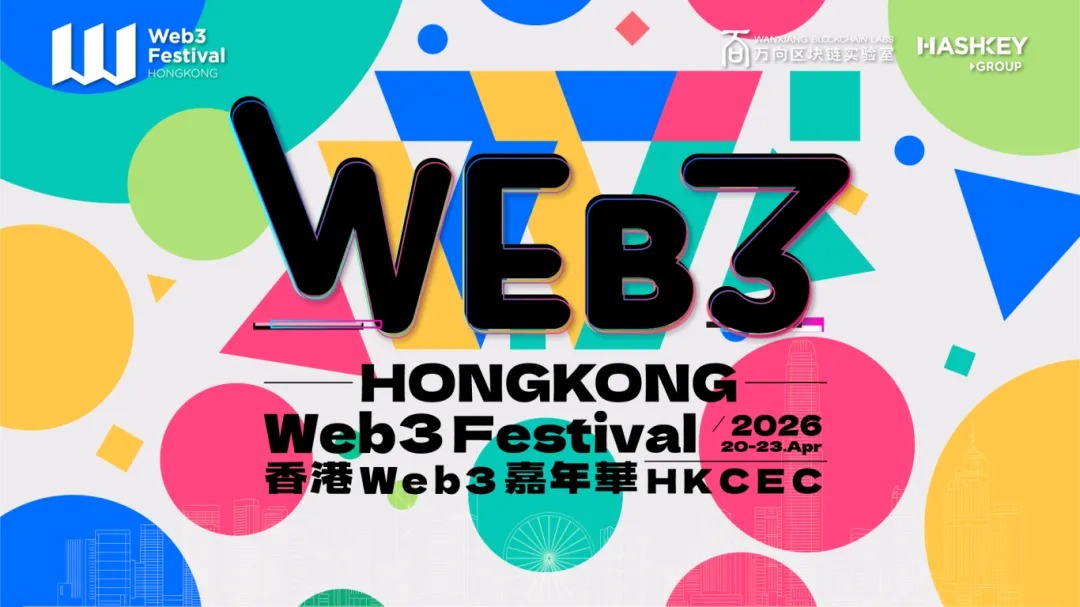
Chen Maobo and Others Revealed as First Batch of Guests for the 2026 Hong Kong Web3 Carnival!

The 2026 Hong Kong Web3 Carnival, co-organized by Wanxiang Blockchain Lab and HashKey Group, will take place from April 20 to 23, 2026, at the Hong Kong Convention and Exhibition Centre. This annual event aims to bridge traditional and innovative sectors while connecting Eastern and Western global perspectives. Confirmed speakers include prominent figures such as Paul Chan Mo-po, Financial Secretary of the Hong Kong SAR; Xiao Feng, Chairman of Wanxiang Blockchain and HashKey Group; and other industry leaders from Solana Foundation, MatrixPort, and Animoca Brands, among others. The event is supported by strategic partners like the Hong Kong Trade Development Council and sponsors including OKX Web3 and Qtum. The carnival has attracted significant cross-industry interest, with over 500 executives from traditional finance and实体 industries registered by December 2025, highlighting its role in fostering dialogue between Web3 innovation and established sectors. Since its inception in 2023, the Hong Kong Web3 Carnival has grown into one of the world's most influential crypto summits, with past editions drawing over 100,000 attendees, 350 projects, and 1,200 speakers. The 2026 edition will continue to leverage Hong Kong’s unique position to deepen global integration of technology, business models, and regulatory practices, while providing a platform for local developers and projects to gain international exposure.

比推12/19 03:28

Chen Maobo and Others Revealed as First Batch of Guests for the 2026 Hong Kong Web3 Carnival!

比推12/19 03:28

2026 Hong Kong Web3 Carnival Unveils First Batch of Guest Lineup

The 2026 Hong Kong Web3 Carnival, co-organized by Wanxiang Blockchain Lab and HashKey Group, will take place from April 20 to 23 at the Hong Kong Convention and Exhibition Centre. This annual event, now in its fourth consecutive year, aims to bridge traditional and innovative sectors while connecting Eastern and Western global perspectives. Prominent confirmed speakers include John Lee, Financial Secretary of the Hong Kong SAR; Xiao Feng, Chairman of Wanxiang Blockchain and HashKey Group; Solana Foundation President Lily Liu; and other key industry leaders. The event is supported by strategic partners such as the Hong Kong Trade Development Council and sponsors including OKX Web3, Qtum, and SlowMist. The carnival has already attracted over 500 high-level executives from traditional finance and real-world asset sectors, indicating strong cross-industry interest. It serves as a critical platform for high-net-worth individuals and core decision-makers to explore Web3 opportunities. Since its inception in 2023, the event has grown into one of the most influential crypto conferences globally, with over 120,000 attendees, 350 projects, and 1,200 speakers across its previous editions. It continues to foster a global ecosystem, leveraging Hong Kong’s unique position to connect Asian markets with international resources, driving integration of technology, business models, and regulatory practices. The 2026 Hong Kong Web3 Carnival aims to not only showcase the future of Web3 but also actively shape it through collaboration and innovation.

深潮12/19 02:28

2026 Hong Kong Web3 Carnival Unveils First Batch of Guest Lineup

深潮12/19 02:28

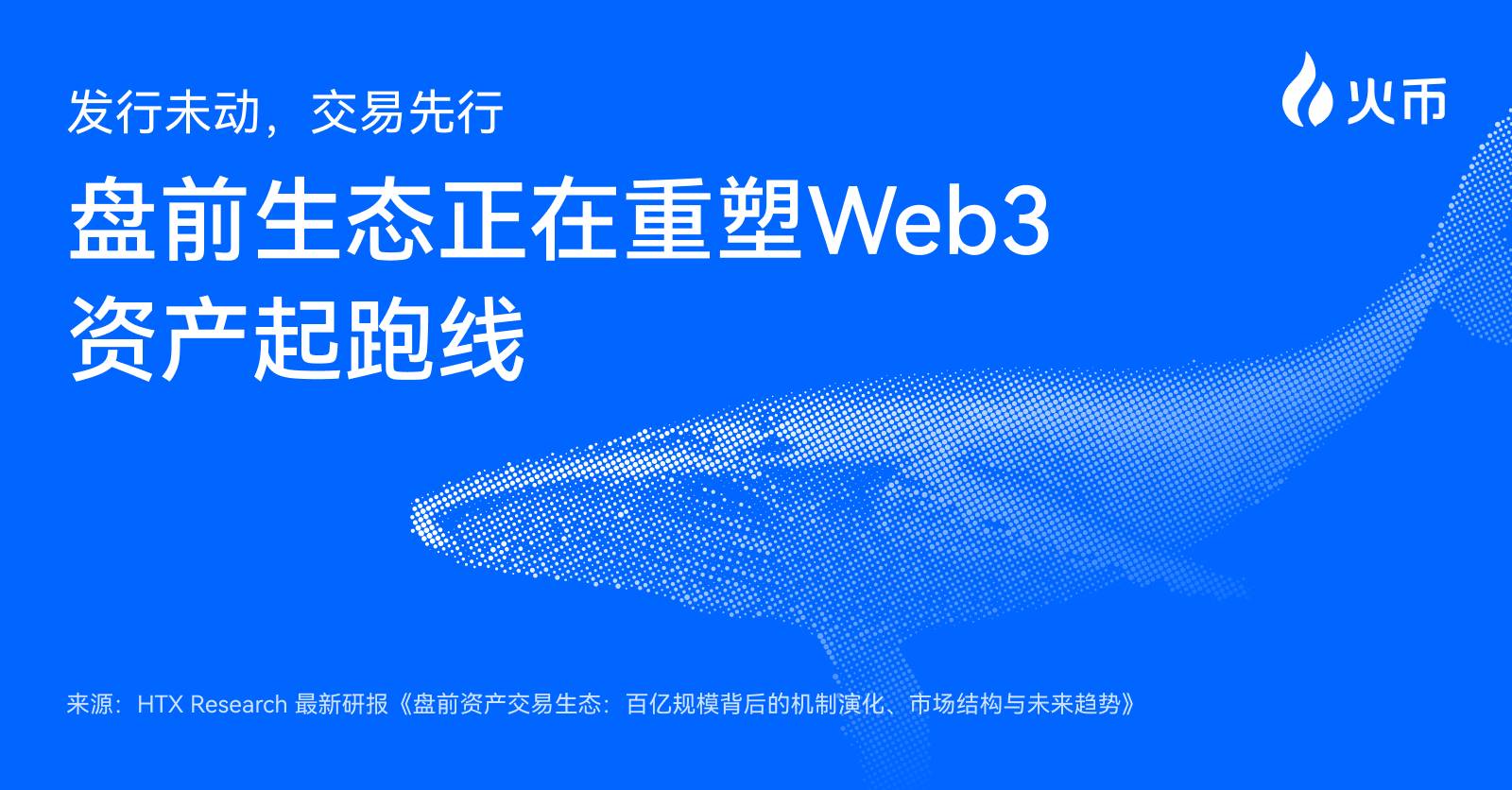
HTX Research's Latest Report Deciphers Pre-Market Trading Ecosystem: How a Hundred-Billion-Dollar Market Reshapes the Starting Line of Web3 Assets

HTX Research, the dedicated research arm of HTX, has released a new report titled "Pre-Market Trading Ecosystem: Mechanism Evolution, Market Structure, and Future Trends Behind a Ten-Billion Scale." The study systematically examines the formation, asset structures, and major models of the pre-market trading ecosystem in crypto, as well as its profound impact on project issuance and exchange systems. The report highlights the emergence of a "1.5-level market" that bridges primary and secondary markets, driven by tightened funding conditions and extended token generation event (TGE) timelines. This pre-market allows early contributions and future expectations to be transformed into tradable instruments. Three core asset structures form this ecosystem: pre-market OTC, spot, and perpetual contracts tied to future token value; tradable points systems linked to airdrop incentives; and NFT-based rights such as whitelist spots and early access passes. Together, these create a multi-layered pre-trading system. HTX has actively explored this space, launching pre-market perpetual contracts for assets like WLFI before their official listings. While pre-market has reached a multi-billion dollar scale with strong growth potential, it also faces challenges including thin liquidity, information asymmetry, and a lack of standardized regulations. Ultimately, pre-market trading is evolving from a grey-area activity into a structured, institutionalized market layer that is reshaping project launches, exchange strategies, and early user participation in crypto.

marsbit12/18 08:57

HTX Research's Latest Report Deciphers Pre-Market Trading Ecosystem: How a Hundred-Billion-Dollar Market Reshapes the Starting Line of Web3 Assets

marsbit12/18 08:57

Public Chains 2025: The Bustle Belongs to the Casino, the Desolation to the Ecosystem

The 2025 public blockchain landscape reveals a stark divide between hype and reality, with a severe concentration of value and widespread "zombification" of projects. Analysis of DeFiLlama's on-chain fee data exposes a critical structural issue: the crypto space is dominated by a "profit concentration and long-tail zombie" era. Notable examples highlight this crisis. Algorand, a chain with a $1 billion market cap and advanced technology, generated a mere $17 in daily fees, while Cardano, a top-10 asset, saw only around $6,000. These "classic chains" are likened to empty, expensive cities with no real economic activity. The biggest value capturers are not the most technologically elegant chains. Tron leads with $1.24 million in daily fees, succeeding as a low-cost payment rail for USDT transfers—crypto's only true mass-adoption use case. Solana ($600k daily) thrives as a high-frequency casino for meme coins and speculation, and Base ($105k daily) demonstrates that distribution (via Coinbase) is more critical than pure technology. The only validated business models generating significant fees are low-cost payments, high-frequency speculation, and, to a lesser extent, Ethereum's asset settlement layer. The VC-driven model is failing. New chains like Sui, Sei, and Starknet, which raised hundreds of millions, show a severe disconnect between their high valuations and meager daily fee revenue (ranging from $320 to $12,000). Their lifecycle often follows a "pump and dump" pattern: VC funding -> airdrop farming -> token listing -> user exodus -> collapsed on-chain activity. The industry suffers from a massive oversupply of block space with a dire lack of killer applications. The article concludes that investors must shift from valuing narratives to scrutinizing financials. They should avoid "zombie coins" with high valuations and negligible fees, focus on chains with organic, fee-generating demand, acknowledge that distribution and community are now more valuable than pure tech, and see through the VC subsidy game. This is a necessary market correction; only by paying for real, generated value—not promised future stories—can the industry achieve healthy growth.

比推12/18 06:36

Public Chains 2025: The Bustle Belongs to the Casino, the Desolation to the Ecosystem

比推12/18 06:36

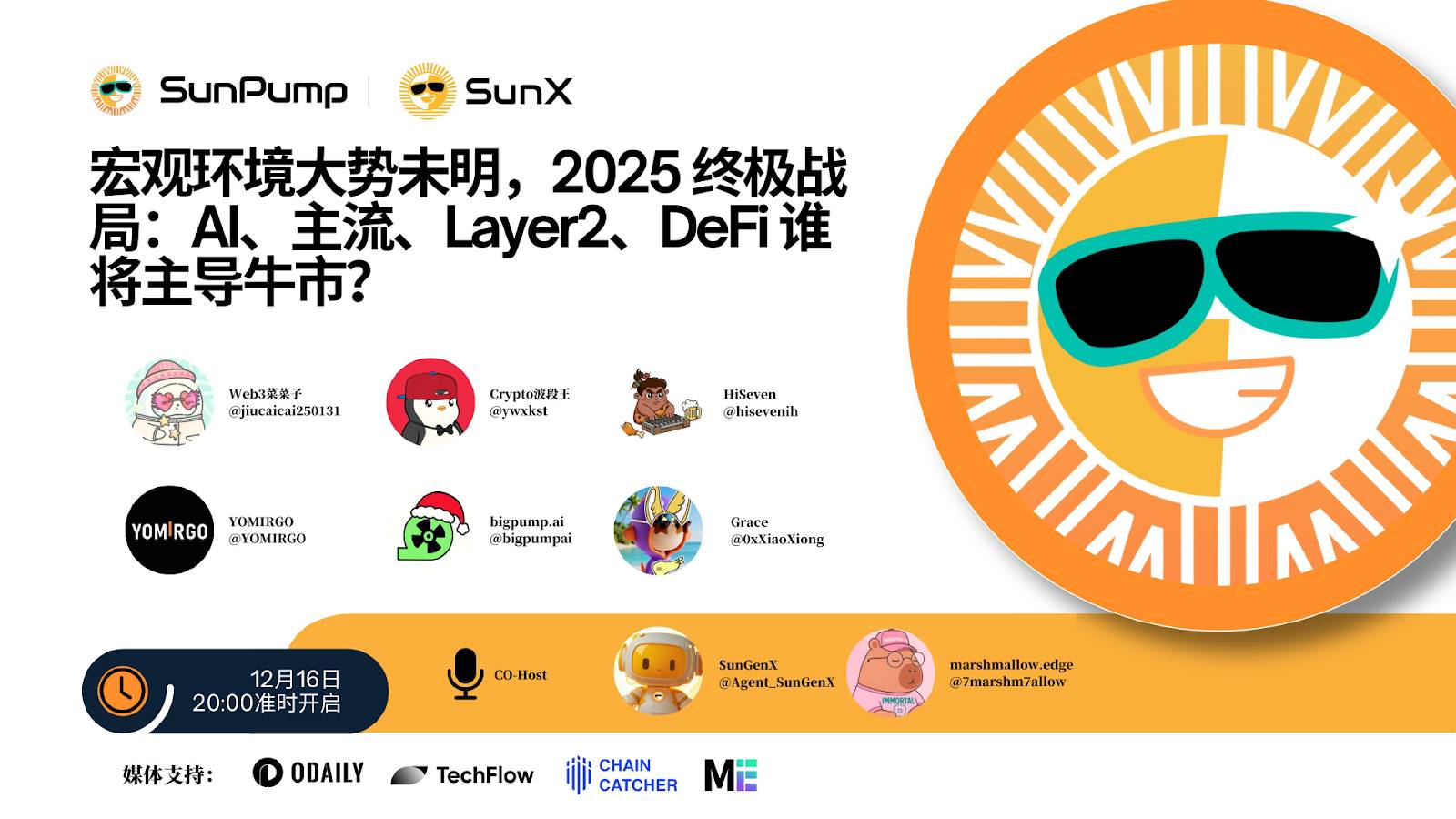
Space Review | 'Ecological Synthesis' Becomes the New Engine: Decoding the Value Creation Model Beyond Track Rotation

"Crypto Market 2025: Decoding the 'Ecosystem Synthesis' Value Creation Engine" Amidst macroeconomic uncertainty and shifting monetary policy, the 2025 crypto market is witnessing a fundamental restructuring of value logic beyond mere sector rotation. Industry observers highlight that "smart money" is proactively positioning for the next bull cycle, seeking narrative anchors capable of absorbing future liquidity—before consensus forms and prices surge. True market leaders must demonstrate cross-cycle resilience, ecological scalability, and sustained liquidity accumulation. Unlike transient trends, enduring narratives leave behind functional infrastructure and economic systems. The TRON ecosystem emerges as a prime case study in synergistic value creation. Its high-throughput, low-cost base supports over 250 million accounts, while its status as a major stablecoin network ensures deep liquidity pools—evidenced by leading protocol revenues ($6.16M in 7 days). TRON’s "positive flywheel" integrates DeFi, AI, Memes, and cross-chain applications through composable protocols: users mint USDD, earn yield on JustLend, and provide liquidity on SunSwap in seamless cycles. Deflationary tokenomics (e.g., SUN/JST buybacks) and infrastructure expansion (like AI agent SunAgent and meme generator SunGenX) create a self-reinforcing loop—attracting developers, users, and capital while resisting cyclical volatility. This model exemplifies how integrated ecosystems may define the next paradigm of crypto value creation.

深潮12/17 12:17

Space Review | 'Ecological Synthesis' Becomes the New Engine: Decoding the Value Creation Model Beyond Track Rotation

深潮12/17 12:17

Bitcoin Hyper Raises $29.5M — Market Believes Bitcoin's Development Will Extend Beyond the Main Network

Bitcoin faces a core paradox: its growing value as a "trust base" increases the desire to use it for payments, DeFi, and on-chain products, but its base layer is slow, limited, and expensive. This has reignited the 2025 narrative around Bitcoin Layer 2 (L2) solutions, driven by user experience demands and economic concerns over low transaction fees threatening miner revenue post-halving. Against this backdrop, projects like Bitcoin Hyper are gaining significant attention and investment. It recently raised $29.5 million in a presale by betting on a specific technical approach: integrating the Solana Virtual Machine (SVM) to create a high-speed Bitcoin L2. Its promise is extremely low-latency smart contract execution, potentially "faster than Solana," targeting DeFi, gaming, and high-frequency use cases. Architecturally, it follows a modular design where Bitcoin L1 provides base-layer security while computations are off-chain in L2. A key compromise is its use of a single trusted sequencer, introducing centralization risks, but the market currently seems to prioritize speed and ecosystem growth over perfect decentralization. The substantial investment signals strong demand for the narrative of combining Bitcoin's security with fast, scalable smart contracts, with success ultimately hinging on bridge quality, real-world performance, and developer adoption.

bitcoinist12/16 18:03

Bitcoin Hyper Raises $29.5M — Market Believes Bitcoin's Development Will Extend Beyond the Main Network

bitcoinist12/16 18:03

When Breakpoint Becomes a 'Festival': Why Solana Still Puts Builders Center Stage

Breakpoint 2025 in Abu Dhabi marked a significant evolution for the Solana ecosystem—from a developer-focused gathering into a global “festival” of builders, capital, and cultural energy. Authored by Abhitej, a long-time Solana builder, the piece reflects on whether the event has retained its builder-first ethos amid rapid scaling and institutional interest. Unlike traditional conferences, Breakpoint felt open, decentralized, and intentionally designed to reduce hierarchy. It balanced the presence of developers, founders, creators, and investors without letting any group dominate. The agenda emphasized short, high-signal talks and demos, giving more people visibility. Solana’s culture stands out for rejecting elitism—anyone building something meaningful, no matter how small, gets a platform. The ecosystem embraces what works, from DeFi and infrastructure innovation to memecoins, learning from both successes and failures. Despite market turbulence, Breakpoint 2025 felt grounded in product-building, with mature discussions on scalability, cost, and real-world use cases. The energy was optimistic yet pragmatic—a celebration of creation, not extraction. While some insular “Solana-only” attitudes persist, the overall vibe was collaborative and forward-moving. Abu Dhabi’s setting contributed to the event’s inclusive, international atmosphere. Breakpoint has outgrown the conference model—it’s now a cultural festival embodying the open, builder-centric spirit of the next internet.

marsbit12/16 13:53

When Breakpoint Becomes a 'Festival': Why Solana Still Puts Builders Center Stage

marsbit12/16 13:53

活动图片