# Digital Transformation Related Articles

HTX News Center provides the latest articles and in-depth analysis on "Digital Transformation", covering market trends, project updates, tech developments, and regulatory policies in the crypto industry.

When Billions Begin to Operate Everything by Voice, How Far is ‘All Assets on Chain’?

In June 2026, WeChat began a limited rollout of "Xiaowei," its native AI assistant. This move is more than an upgrade to a smarter chatbot; it signals a crucial step from "universal internet access" toward the broader vision of "full asset tokenization." Xiaowei, powered primarily by WeChat's in-house WeLM model, demonstrates four key capabilities: 1) direct voice/web chat control of app functions, 2) automated access to mini-programs for services, 3) instant comprehension and summarization of complex documents like PDFs, and 4) generating functional mini-program prototypes from simple natural language requests. This represents a fundamental shift from GUI (Graphical User Interface) to LUI (Language User Interface), eliminating friction in human-digital interaction. The rollout is pivotal because it brings AI Agents to China's massive user base with zero friction—no new app downloads or accounts needed. This "seamless access" mirrors past platform revolutions like the App Store or WeChat Mini-Programs, potentially unlocking a global AI Agent market projected to grow from $7.92 billion in 2025 to nearly $295 billion by 2035. The article argues that China's internet evolution has moved from "connecting everyone" to "putting all services online." The next phase is "tokenizing all assets"—a concept broader than just Real World Assets (RWA) like real estate. It encompasses tokenizing personal assets like social influence, attention, and credit history. RWA tokenization itself is forecast to explode from $35 billion in 2025 to over $500 billion in 2026. The convergence of ubiquitous AI Agents and rapidly tokenizing assets points to a future paradigm for wealth management. Your AI Agent could autonomously manage a globally diversified, tokenized portfolio based on your preferences. Initiatives like EXIO Group's full-stack RWA services aim to lower investment barriers, paralleling WeChat's democratization of AI access. In conclusion, the launch of Xiaowei is not merely a technical upgrade but a historic inflection point. It marks AI Agents' transition from niche tools to essential utilities and accelerates the movement toward a future where voice commands seamlessly interact with tokenized value, redefining humanity's relationship with the digital and financial worlds.

marsbit06/25 00:12

When Billions Begin to Operate Everything by Voice, How Far is ‘All Assets on Chain’?

marsbit06/25 00:12

a16z: In the AI Era, Company Competition for Talent Starts with Job Title Naming

The article discusses how companies in the AI era are competing for talent through strategic "title arbitrage," or the renaming of key roles to reflect and attract new, high-value capabilities. It uses Palantir's creation of the "Forward-Deployed Engineer" (FDE) as a prime example. This title reframed client-facing technical work from a peripheral "implementation" role into a core, high-status engineering function. The move was strategic, allowing Palantir to attract talent that blended technical skill with business acumen and to dominate the market's perception of this capability. The piece argues that job titles are an organizational language that signals the value and authority of certain work. Effective new titles, like "Data Scientist" or "Site Reliability Engineer," emerge when a role's strategic importance genuinely outgrows its old name. Conversely, mere title inflation without substantive change is ineffective. For AI companies, particularly in B2B, this is a crucial strategy. AI transformation creates new high-leverage roles (e.g., "Legal Engineer," "GTM Engineer") that combine domain expertise with technical automation. By naming these roles, a company can help clients internally legitimize these change-makers. This, in turn, builds market mindshare, associating the company with the new capability. In conclusion, as AI blurs the lines between product and service, the ability to accurately name and organize the critical, client-adjacent work that defines product learning will be a key competitive advantage. The first to define this new organizational language plants a flag in the market's mind.

marsbit06/24 12:20

a16z: In the AI Era, Company Competition for Talent Starts with Job Title Naming

marsbit06/24 12:20

6 Questions to Understand the Business Trends of AI

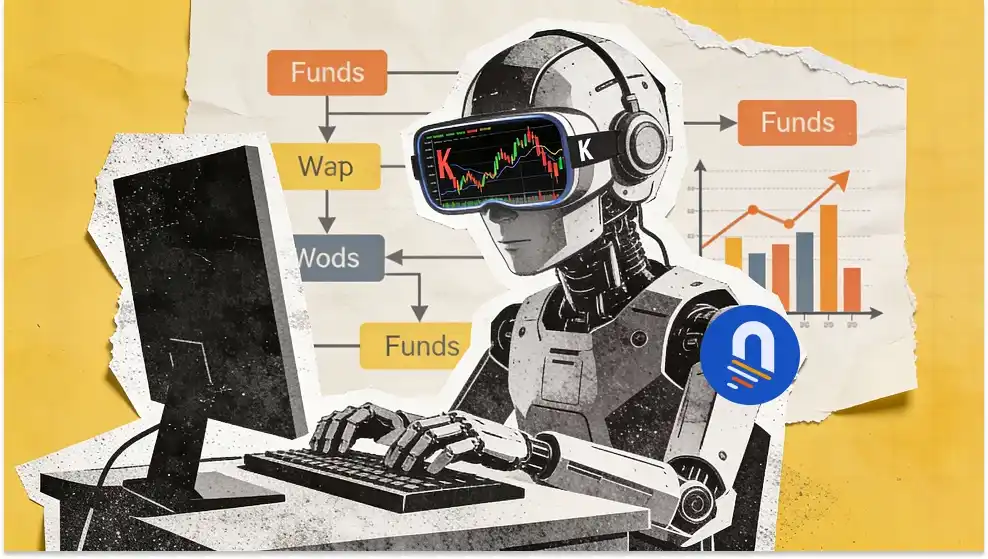
The AI industry has entered its "summer" phase, according to a six-dimensional scoring framework assessing its development cycle. Each dimension—narrative vs. delivery, system connectivity, delivery capability, ROI rationalization, common industry trends, and capital environment—scores 1 point, totaling 6 points. This places the industry firmly in summer (5-7 points), characterized by a coexistence of grand promises and tangible deliverables, with increasing pressure to demonstrate value and profitability. Key signals mark this shift. ByteDance's Doubao launched paid subscriptions, while OpenAI introduced an advertising platform. These moves are driven by dual forces: immense cost pressures from scaling user bases and massive compute requirements, and the maturation of commercial opportunities. Major players like Anthropic report explosive growth, highlighting AI's transition into core productivity infrastructure. For businesses, the path forward involves three strategic steps. First, identify a small, high-impact use case to quickly demonstrate a closed-loop value proposition, such as automating customer service or content generation. Second, systematically replicate successful pilots across the organization by standardizing processes, building shared AI capabilities, and aligning talent, incentives, and leadership. Finally, move beyond simply adding AI to existing workflows and undertake systemic reconstruction—redesigning processes for parallel AI-human collaboration, implementing real-time dashboards, and establishing automated trigger chains. The era where storytelling alone secured funding is over. The focus has shifted to delivering measurable efficiency gains, cost savings, and new revenue streams, as evidenced by real-world implementations in companies like Semir, Anta, and Midea. Success now depends on starting with a focused proof point, scaling it organization-wide, and ultimately allowing AI to redefine operational paradigms.

marsbit05/31 00:21
6 Questions to Understand the Business Trends of AI

marsbit05/31 00:21

The AI Industrial Revolution: Where Are We Now?

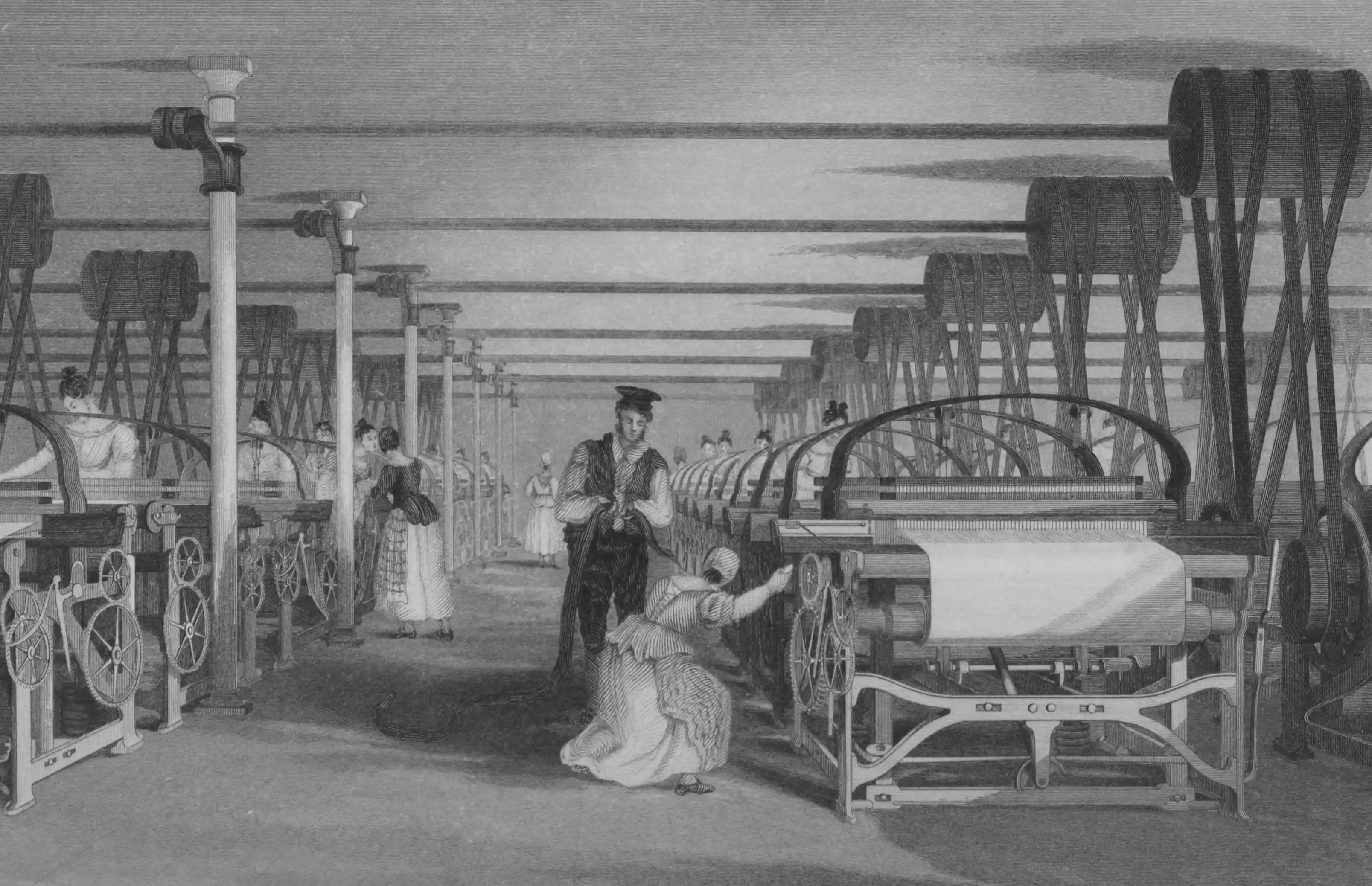
This article explores the current stage of the AI industrial revolution, arguing we are still merely attaching new tools to old workflows rather than fundamentally redesigning production. The author compares this to the early Industrial Revolution, where factories simply replaced waterwheels with steam engines without changing their core structure. Similarly, today we embed AI chat windows into existing software but leave organizational processes unchanged. While massive investment floods into AI infrastructure (data centers, chips), akin to railway manias of the past, the real transformation lies in "dismantling the old workshop"—reorganizing companies around AI. Examples include Notion's use of hundreds of AI Agents and Y Combinator's experiments with self-improving AI systems that operate autonomously. The author notes a critical gap: while China has vast AI user growth, few companies have rebuilt core workflows. AI is beginning to impact entry-level jobs, and early adopters are gaining a compounding advantage. The conclusion is that the pivotal moment will not be the invention of better models, but when organizations decide to tear down old structures and rebuild around AI, shifting the bottleneck from human coordination to computing power. The future workplace and job titles are yet to be defined, but the imperative is to move away from legacy processes and position oneself where the new "railway" is being built.

marsbit05/27 01:32

The AI Industrial Revolution: Where Are We Now?

marsbit05/27 01:32

a16z Crypto Partner: Crypto is Being Repackaged by Financial Institutions, Potential Far Exceeds Imagination

In this article, Guy Wuollet of a16z Crypto explores why traditional financial institutions are increasingly adopting blockchain technology. He questions the term "digital assets," pointing out that most modern assets are already digital. However, he argues that the core infrastructure of finance remains surprisingly undigitized, relying on fragmented systems and manual reconciliation. The key driver for Wall Street's adoption, according to Wuollet, is not the ideological principles of decentralization but a pragmatic need to solve complex coordination problems among multiple, often distrustful, parties. Blockchain offers a neutral, shared system where asset ownership is embedded directly in the software, eliminating the need for separate ledgers and reducing settlement times and costs. As crypto technology is integrated into traditional finance, it loses some of its countercultural edge but gains mainstream legitimacy. More importantly, it brings the powerful software concept of *composability* to finance. When financial assets exist on a shared, programmable infrastructure, they can be easily combined, extended, and integrated, enabling faster innovation and new applications. In essence, crypto is being "repackaged" as critical infrastructure by large institutions. While this integration involves compromises, the underlying transformative potential—inheriting capabilities like composability—may ultimately be far greater than these institutions initially anticipated.

marsbit05/08 16:28

a16z Crypto Partner: Crypto is Being Repackaged by Financial Institutions, Potential Far Exceeds Imagination

marsbit05/08 16:28

Meituan CEO Wang Xing: The Impact of AI Agent on Me is Greater Than That of ChatGPT

At a management meeting on March 13, 2026, Meituan CEO Wang Xing shared his perspectives on the development of artificial intelligence (AI), emphasizing that the impact of AI will far exceed that of the entire internet. He metaphorically compared mobile internet to traditional internet as "roses and peonies," while describing the relationship between AI and the internet as "monkeys and flowers," underscoring AI's significantly greater scale and influence. Wang stressed that both companies and individuals should actively embrace the AI wave. He expressed that AI Agents have had a more profound impact on him than ChatGPT. Having experienced the transition from the internet to mobile internet, Wang firmly believes that the changes brought by AI will be even more substantial—not only generating higher productivity but also deeply transforming organizational and work models. He highlighted that the digitization of the physical world is a critical foundation for AI. Although current large AI models are becoming increasingly intelligent, they still face limitations in accessing real-time information in practical applications. For instance, even if Einstein were a secretary, he might not know if a restaurant has available seats when making a reservation—not due to a lack of intelligence, but because of information constraints. To adapt to this transformation, Meituan has launched multiple AI applications and developed its own large-scale models. Wang also revealed that in 2025, Meituan will increase investment in real-world information systems. During this year's Spring Festival, the company introduced an AI search product called "Ask Xiaotuan" to enhance user service experience.

marsbit03/13 08:49

Meituan CEO Wang Xing: The Impact of AI Agent on Me is Greater Than That of ChatGPT

marsbit03/13 08:49

活动图片