# Custody Related Articles

HTX News Center provides the latest articles and in-depth analysis on "Custody", covering market trends, project updates, tech developments, and regulatory policies in the crypto industry.

BIT Makes First Appearance After Brand Upgrade, Hosts 'Trust in Digital Finance' Industry Event in Singapore

BIT (formerly Matrixport) held its first industry event, "Trust in Digital Finance," in Singapore on March 27, 2026, following its recent rebranding. The event brought together global financial institutions and digital asset industry representatives to discuss governance standards, compliance frameworks, and operational infrastructure as the sector becomes increasingly institutionalized. Cynthia Wu, Co-Founder and Chief Commercial Officer, highlighted the approval of U.S. spot Bitcoin ETFs in early 2024 as a key turning point, attracting more mainstream institutional capital. This has elevated requirements for platforms and infrastructure, making custody architecture, compliance, and operational transparency essential rather than optional. Chief Brand Officer Wendy Sun explained that the rebrand to BIT—which stands for "Bridge Into Tomorrow," "Build on Integrity and Trust," and "Build It Together"—reflects the group’s vision to advance digital finance infrastructure collaboratively and trustworthily. Discussions also centered on BIT’s recently published Trust Whitepaper, which outlines a trust framework covering risk governance, multi-jurisdictional compliance, custody security, and independent auditing. Cactus Custody CEO Daniel Lee and Chief Compliance Officer Christopher Liu elaborated on its practical implementation, including SOC audits and ISO certifications. BIT, headquartered in Singapore, is a global digital asset financial services group with over $6 billion in assets under management and a valuation exceeding $1 billion. It holds regulatory licenses in multiple jurisdictions, including Singapore, Hong Kong, Switzerland, the UK, the U.S., and Bhutan.

marsbit03/27 08:12

BIT Makes First Appearance After Brand Upgrade, Hosts 'Trust in Digital Finance' Industry Event in Singapore

marsbit03/27 08:12

Who Are the Real Winners in the 'Tokenization' Narrative?

The article explores the real beneficiaries of the tokenization narrative and concludes that nearly everyone stands to gain, though the timing, reasons, and mechanisms differ significantly. Retail investors benefit through democratized access, as tokenization removes systemic barriers that previously excluded them from high-yield assets like private credit. They can now invest with small amounts, trade 24/7, access global assets, and use programmable capital in DeFi strategies. Issuers gain from faster, cheaper, and broader fundraising. Tokenization reduces settlement times from weeks to minutes, lowers operational costs through smart contracts, and enables innovative product designs like tranched risk products and dynamic yield mechanisms. Institutions are drawn to tokenization for its operational efficiencies: near-instant settlement (T+0) reduces counterparty risk, frees up capital, and cuts costs. Major players like BlackRock, JPMorgan, and Goldman Sachs are already implementing tokenized solutions for these advantages. Infrastructure builders—such as custodians, compliance providers, and data oracles—are positioned to become the foundational layer of a multi-trillion-dollar market, akin to "picks and shovels" in a gold rush. Emerging markets experience a transformative impact, as tokenization and stablecoins offer financial inclusion to billions. They provide access to dollar-denominated assets, inflation-resistant savings, low-cost remittances, and real-time payroll, often for the first time. Risks remain: tokenization doesn’t eliminate asset quality risks, guarantee liquidity, or replace sound legal structures. Success depends on robust infrastructure, regulation, and operational integrity. In the short term, institutions and issuers benefit most from efficiency gains. Mid-term, infrastructure providers will capture value. Long-term, retail investors and emerging market users gain the most through full financial inclusion.

marsbit03/20 10:16

Who Are the Real Winners in the 'Tokenization' Narrative?

marsbit03/20 10:16

Matrixdock FRS Standard: From Gold to Silver, How Is the On-Chain Reserve Asset System Evolving?

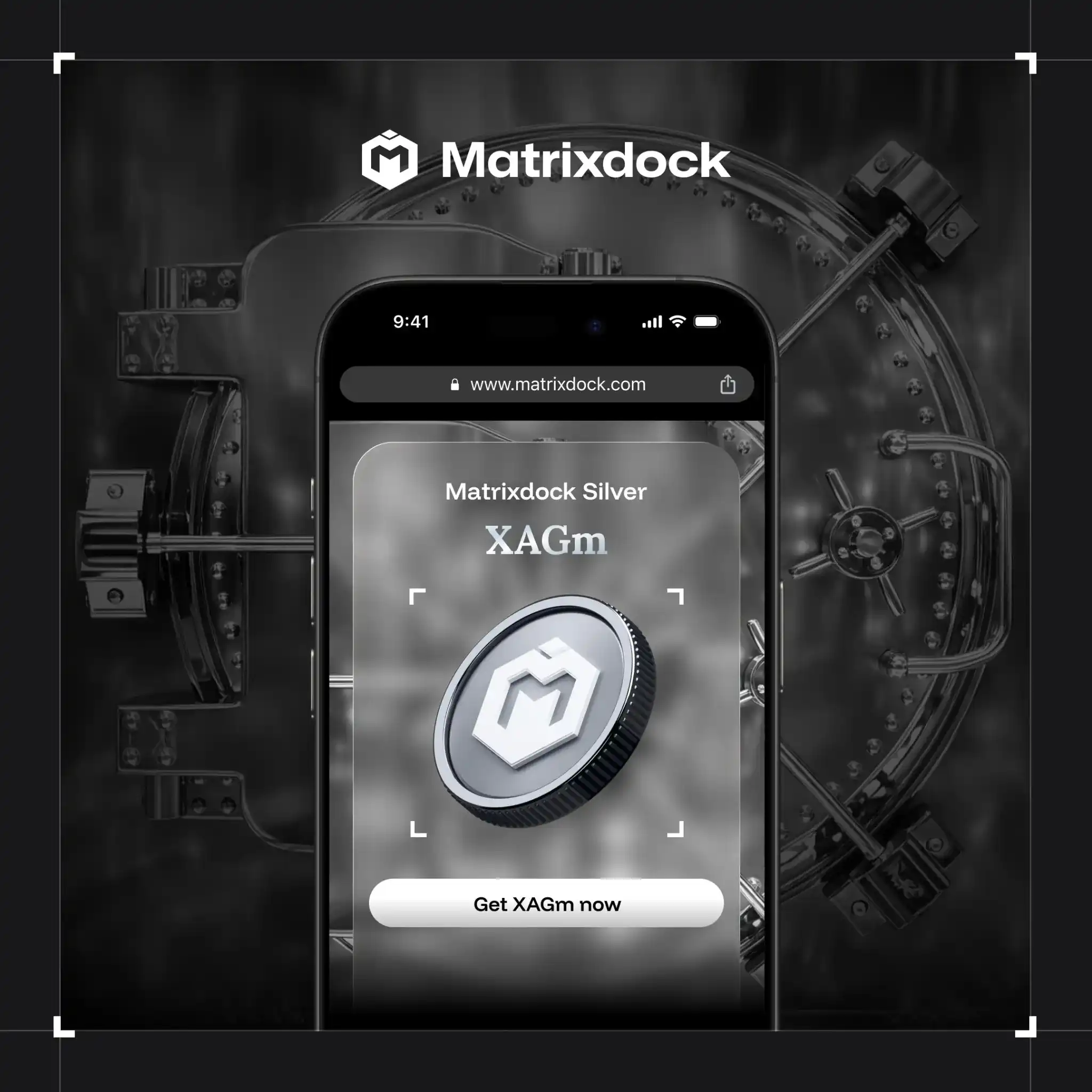
The article discusses the evolution of on-chain real-world assets (RWA), shifting focus from simple asset tokenization to establishing sustainable and verifiable operational frameworks for long-term on-chain existence. It introduces Matrixdock’s FRS (Fungible Reserve Standard), a mechanism that encodes the economic attributes of reserve assets—like custody and operational costs—directly into the token structure. Unlike traditional mapping approaches, FRS maintains a deterministic relationship between the reserve asset, token supply, and operational costs over time. It adjusts the quantity of underlying assets per token to reflect costs structurally, without charging external fees or extracting profits. The piece highlights the extension from gold—a stable reserve asset—to more volatile and cyclical silver, demonstrating how FRS provides a consistent operational framework regardless of asset type. Matrixdock’s XAGm, a silver-backed token, is presented as a practical implementation of FRS, using LBMA-standard silver bars held in institutional vaults. Finally, the article introduces the concept of a “Reserve Layer”—a structured system of diverse, high-quality assets operating under a unified mechanism to support on-chain finance. The broader implication is that RWA’s future depends not on tokenization alone, but on robust, verifiable, and sustainable on-chain operational frameworks.

marsbit03/19 09:50

Matrixdock FRS Standard: From Gold to Silver, How Is the On-Chain Reserve Asset System Evolving?

marsbit03/19 09:50

The Bitcoin Inheritance Challenge: How to Help Your Family Recover Your Assets?

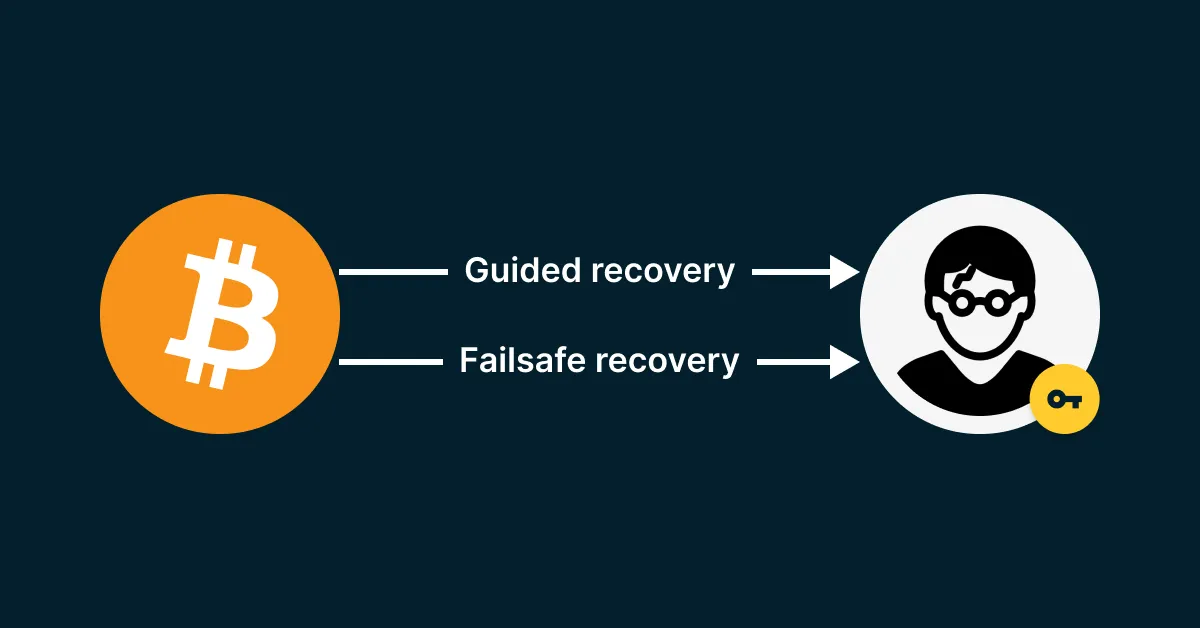
Self-custody of Bitcoin fundamentally changes estate planning. A robust inheritance plan must protect assets during the owner’s lifetime while ensuring designated individuals can recover them after death. Bitcoin’s key advantage—bypassing banks and custodians—also complicates inheritance, as the network only recognizes cryptographic keys, not legal documents. Key challenges include balancing security and accessibility, managing technical complexity for non-expert heirs, preserving privacy, and ensuring long-term viability. Common solutions include: 1. Custodial Inheritance: Relies on exchanges or institutions, sacrificing self-custody benefits for familiar legal processes. 2. DIY Inheritance: Ranges from simple seed-phrase handovers to complex multisig setups. High autonomy but requires technical competence from heirs. 3. Assisted Custody: Uses a service provider for multisig setup and recovery guidance, improving usability but depending on the provider’s longevity. 4. On-Chain Collaborative Inheritance: Combines assisted recovery with on-chain fallbacks (e.g., timelocks), ensuring access even if the provider fails. The strongest plans integrate a smooth, guided recovery path with a durable on-chain backup. Regular testing and updates are crucial. Inheritance isn’t just a technical issue—it must align with legal frameworks and family circumstances. Ultimately, a well-designed Bitcoin inheritance plan ensures assets remain secure, private, and recoverable for generations.

比推03/18 12:38

The Bitcoin Inheritance Challenge: How to Help Your Family Recover Your Assets?

比推03/18 12:38

活动图片