Changxin Technology's market value has stabilized at 4 trillion yuan.
In the article "Changxin Goes Public, Hefei Earns 1 Trillion: The Development Logic of Chinese Cities Has Changed," Zhengjieju introduced the story of Changxin and Hefei, along with the underlying development logic of Chinese cities it embodies.
From a capital investment perspective, Changxin has given Hefei a more distinct industrial identity.
A successful precedent exists.
Investment institutions are now closely watching Hefei, focusing on integrated circuit-related companies, searching for the next "Changxin."
Similar cases are unfolding in other cities.
For robot company financing, Shenzhen is often an unavoidable stop; for AI startups, Beijing is more likely to enter the capital's field of vision; biopharmaceutical projects are heavily concentrated in Suzhou.
In the past, the venture capital industry always believed in the saying: investing is investing in people.
Now, venture capital is shifting from "selecting people" to "selecting cities."
01
The Golden Age of Internet Venture Capital
Early-stage venture capital typically didn't focus on how many assets a company owned or how much money it could make at the moment.
They cared more about the entrepreneur at the helm.
Before founding Meituan, Wang Xing experienced repeated failures.
He created Xiaonei.com, Fanfou, Hainei.com; some were sold, others forced to shut down, none bringing him true fame and success.
In 2010, Meituan was just established.
At that time, group-buying websites were blooming everywhere, with thousands of similar companies emerging in China at their peak. Who would survive was anyone's guess.
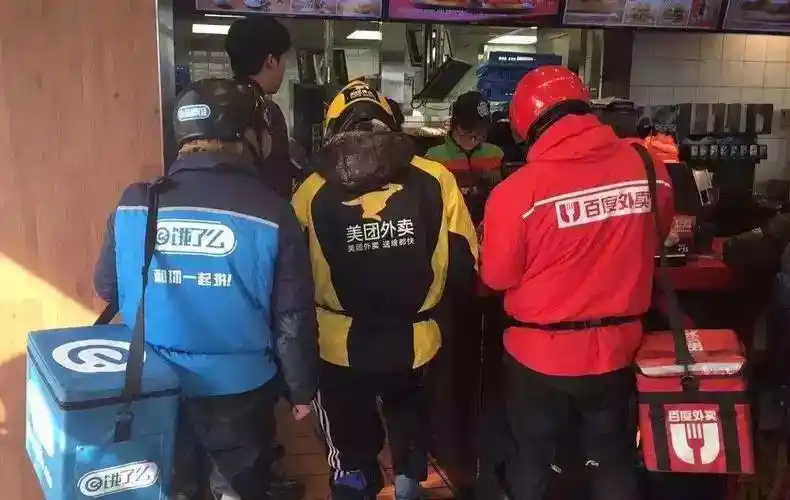
The early food delivery battle: Meituan, Ele.me, and Baidu fiercely competed.
Yet, that same year, Sequoia Capital China became Meituan's sole investor in the Series A round.
Neil Shen later recalled that during his first meeting with Wang Xing, they barely discussed specific operational numbers, focusing more on the industry's future and vision.
Meituan back then didn't have today's food delivery empire or the later nationwide network of 7 million riders.
Sequoia was willing to bet largely because of the judgment and execution capabilities Wang Xing demonstrated in his past several ventures.
Projects can be restarted, but the accumulated insights of an excellent entrepreneur don't easily disappear.
William Li's founding of NIO shares similarities.
In 2014, just after NIO's founding and before producing a single mass-market car, a group of well-known entrepreneurs and investment institutions like Richard Liu (JD.com founder), Li Xiang (Li Auto founder), Tencent, and Hillhouse Capital had already invested.
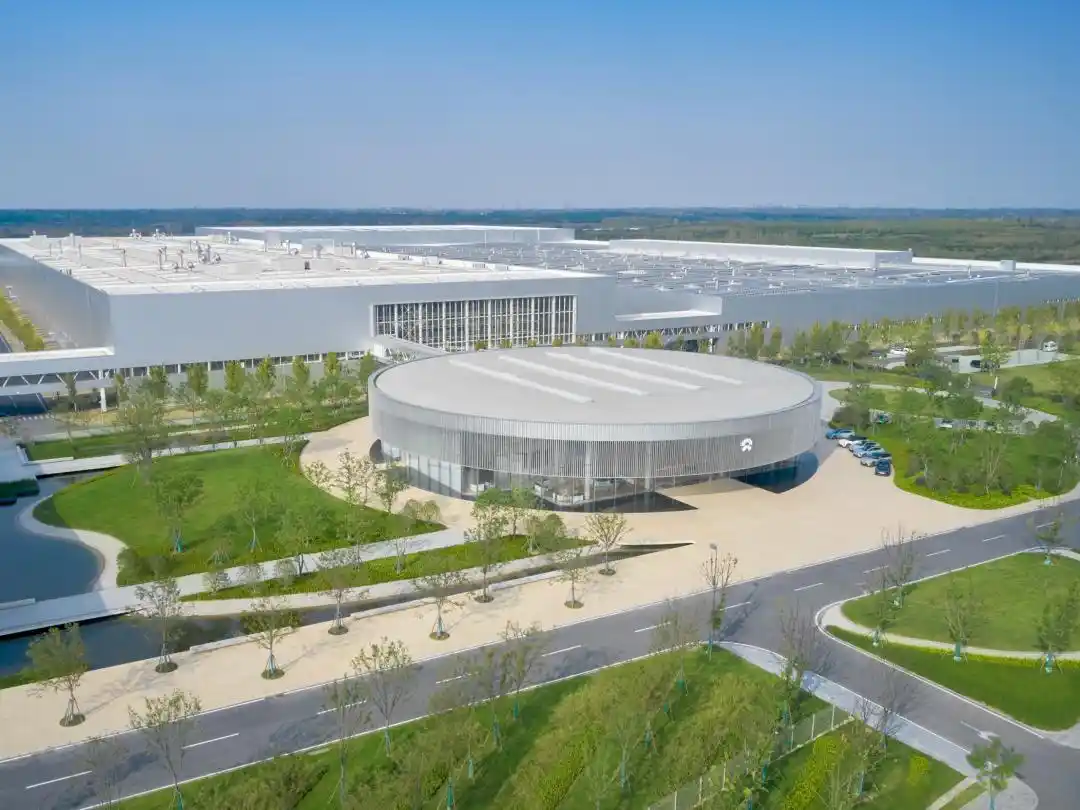
NIO's Hefei factory.
Capital was willing to believe in William Li because of his accumulation over the past decade.
Before NIO, Bitauto, which he founded, was already listed in the US.
He also participated in founding and investing in dozens of companies around the internet and automotive industries, accumulating deep experience in car sales, user services, and industrial resources.
Thus, NIO, while a new company, was not helmed by a completely inexperienced newcomer.
In Li Xiang's case, the "investing in people" aspect is even more pronounced.
In 2019, as the Li ONE was about to enter mass production, the company's cash was running low.
During that period, Tesla's and NIO's stock prices were falling, and the market was extremely pessimistic about new energy vehicles.
Li Xiang later recalled meeting 150 investors during that time, still failing to secure funding.
The one who finally stepped in was precisely Wang Xing, whom he had once turned down.
In August 2019, Li Auto completed a $530 million Series C round, with Wang Xing personally investing approximately $285 million.
Subsequently, Meituan and Wang Xing participated multiple times in Li Auto's financing rounds, investing a cumulative total of about $1.15 billion.
Why was Wang Xing willing to believe in Li Xiang amidst industry pessimism?
From PopPai.com to Autohome to Li Auto, Li Xiang had been continuously entrepreneuring for over 20 years.
These hands-on experiences proved Li Xiang's product capability and industry judgment better than any polished business plan.
Later, when Li Xiang discussed this past event, he choked up several times talking about Wang Xing, calling him the "greatest benefactor" throughout his entrepreneurial journey.
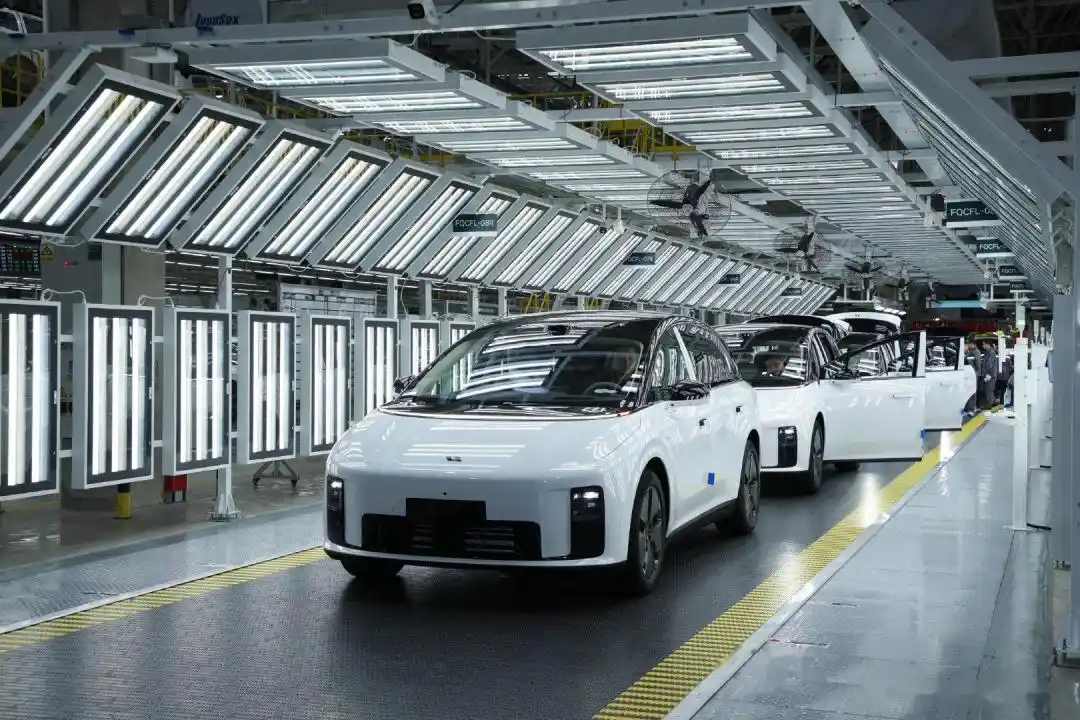
Li Auto production line.
Although William Li and Li Xiang entered the automotive manufacturing industry successively, the foundation of their fame was rooted in the internet era.
Wang Xing, William Li, and Li Xiang constitute a microcosm of the golden age of China's internet venture capital.
A survey of 885 venture capitalists by scholars from Stanford University and other institutions showed that 95% of respondents considered the management team an important investment factor.
For investment institutions, evaluating a person typically involves examining their entrepreneurial history, industry insights, core team, resource mobilization ability, and resilience to persevere through downturns.
These are difficult to write into financial statements but may determine how far a company ultimately goes.
In the internet era, this investment approach was indeed highly effective.
ByteDance started in Beijing's Jinqiu Jiayuan, and Alibaba was born in Hangzhou's Lakeside Garden.
For internet entrepreneurship, a few dozen programmers creating a product could rapidly serve users nationwide.
While the company's location mattered, what truly determined life or death was often the entrepreneur's vision and leadership.
02
Hard Tech Pushes Cities to the Forefront
In the internet era, an entrepreneur's idea could spawn a company.
As long as the person was excellent enough and the model could work, capital dared to bet.
In the hard tech era, the situation has become more complex.
Building robots involves motors, reducers, sensors, controllers, batteries, and precision machining; doing AI also relies on algorithm talent, computing power, data, and application scenarios.
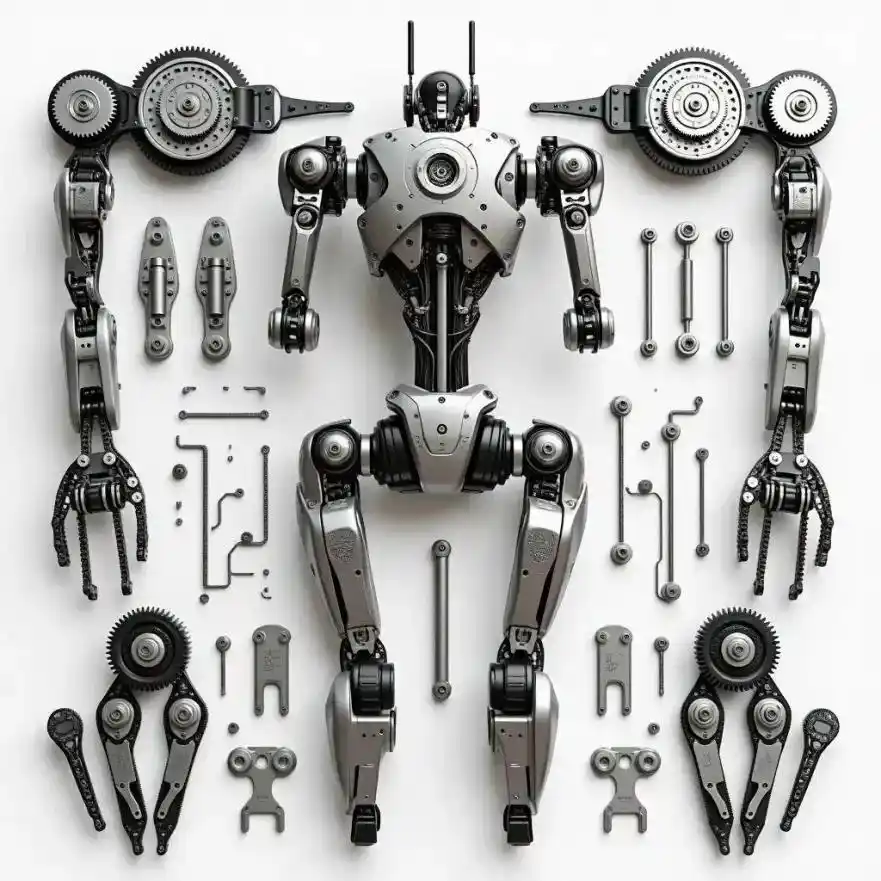
Main components of humanoid robots.
The entrepreneur's idea is important, but these resources are difficult for a single entrepreneur to solve alone; they are more distributed across cities and industry chains.
Investment institutions' evaluation of companies has accordingly expanded to include the city they are located in.
Mentioning robots, many first think of Unitree Robotics and Hangzhou, but the truly significant player is Shenzhen.
Shenzhen clusters a large number of motor, sensor, controller, and precision machining companies. Components needed for robot R&D can be procured locally, prototypes can be rapidly trial-produced, and surrounding factories provide application scenarios.
In 2025, Shenzhen's robot industry output value reached 242.6 billion yuan, a year-on-year increase of 20.56%.
That year, Shenzhen produced 194,900 sets of industrial robots, accounting for about 1/4 of national output; service robot production reached 7.9665 million sets, about 2/5 of the national total.
The complete industry chain has nurtured a batch of companies like Ubtech, Jaka Robotics, Leju Robotics, LimX Dynamics, and Zhongqing Robotics, naturally attracting significant capital attention.
In 2023, Ubtech listed on the Hong Kong Stock Exchange, raising about HKD 1 billion; a year later, Jaka Robotics listed on the HKEX, raising about HKD 752 million.
By the end of 2025, Shenzhen had gathered 34 listed robot companies and 9 unicorn companies.
Another case is Beijing's AI industry.
Wang Huiwen, co-founder of Meituan, once drew a box on a Beijing map for AI investments, roughly south of Tsinghua University, east of Peking University, west of Xueyuan Road, and north of Dazhong Temple.
Reviewing his own investments, he found projects falling within this box generally performed better.
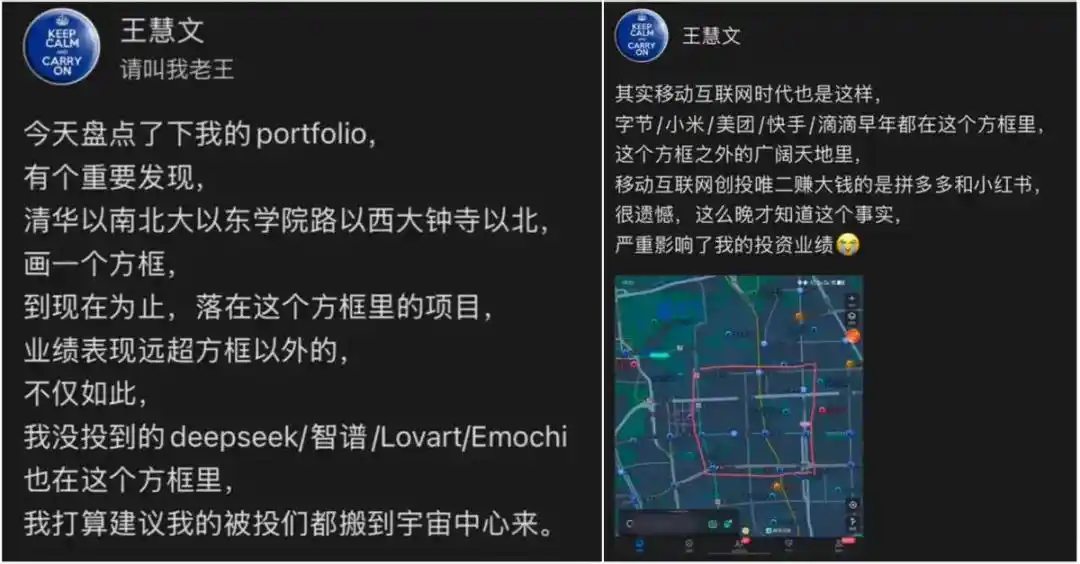
Wang Huiwen reviewed his own investment situation.
Within this range are companies like Zhipu AI, Moonshot AI, DeepSeek, ModelBest, Shengshu Technology, and Galaxy General.
Some of these companies are already listed, others are on the way to listing.
Looking further back, companies like ByteDance, Xiaomi, Meituan, Kuaishou, and Didi also grew up nearby in their early years.
The most valuable aspect of this box is precisely the accumulated density of talent and innovation over many years.
Tsinghua University, Peking University, the Chinese Academy of Sciences, and numerous tech companies continuously supply the surrounding area with engineers, entrepreneurs, and technological achievements.
Capital is investing not just in an AI company, but also in the entire innovation network of Haidian behind it.
Besides hard tech itself becoming increasingly reliant on cities, what also drives capital to look at cities is the change in capital structure.
Data shows that in 2025, state-owned capital accounted for 90.2% of LP contributions in the private equity market.
Among them, local state-owned capital and government guidance funds have become important forces.
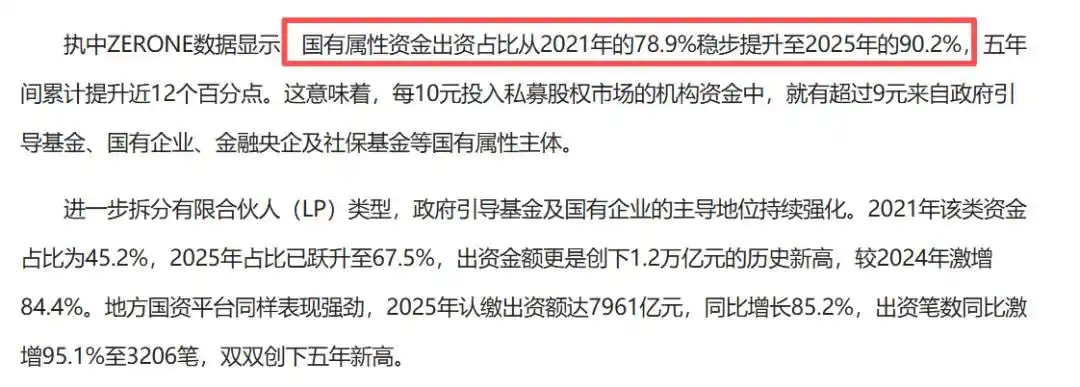
State-owned LPs: From Core Force to Absolute Dominance.
When local state-owned capital invests in a company, it's not just calculating financial returns, but also considering whether the project can land locally, bring employment, and attract upstream/downstream companies.
This kind of patient capital is willing to accompany companies through R&D, trial production, and market validation.
Local state-owned capital taking the lead also signals the market, attracting follow-on social capital.
With local state-owned capital paving the way and social capital following, the city's weight in investment decisions also increases.
03
Seeking Higher Win Rates Amid Uncertainty
The shift from investing in people to investing in cities expands the scope of capital's examination, but the underlying logic remains the same.
The essence of venture capital is to seek a higher probability of success amidst great uncertainty.
In the past, excellent entrepreneurs like Wang Xing, William Li, and Li Xiang could increase a company's probability of success.
Today, a city with a solid industrial foundation makes it easier for companies to survive.
When judging entrepreneurs, investors first look at resumes.
Cities also have their own resumes. Whether there are leading companies locally, whether the industry chain is complete, whether scientific achievements can be commercialized, and whether talent is willing to stay are all important dimensions for venture capital decisions.
More importantly, it's the ability to organize resources.
Excellent entrepreneurs can bring together technology, talent, capital, and customers.
Cities with robust industrial capabilities can also connect universities, labs, manufacturing firms, funds, and application scenarios.
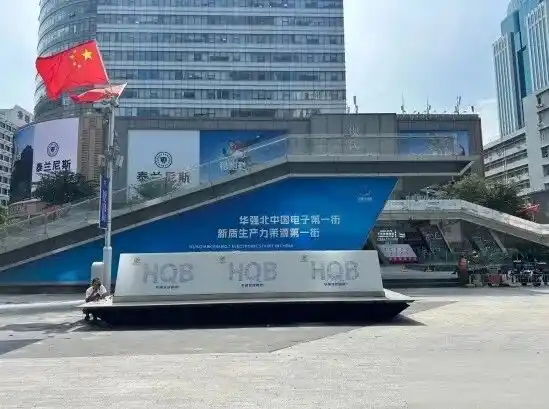
Shenzhen's Huaqiangbei clusters over 5,000 component suppliers and is becoming a source of new quality productive forces.
Whether these links can connect is particularly critical for either the entrepreneur or the city.
Furthermore, capital also examines long-term credibility.
Whether an entrepreneur can weather industry downturns, or a city can maintain industrial direction and policy continuity, essentially tests resilience.
Hefei spent 10 years betting on Changxin. A city frequently chasing trends can hardly reassure long-term capital.
Looking at capital flows illustrates this change better. In 2025, Jiangsu, Guangdong, Beijing, Shanghai, and Zhejiang saw 6,611 investment events. Among China's 34 provincial-level regions, these five areas attracted nearly 3/4 of all investment events.
Capital is not flowing evenly to all places but is increasingly concentrated in cities that can continuously produce projects.
Venture capital shifting from "selecting people" to "selecting cities" does not mean capital no longer values entrepreneurs.
Because the basic unit of innovation is expanding from an individual, a company, to a city's industrial ecosystem.
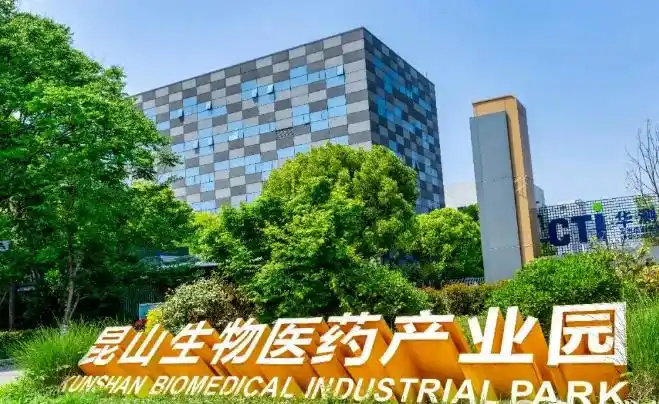
Kunshan Biopharmaceutical Industrial Park.
The scope of venture capital due diligence has also expanded from the entrepreneur to include both the entrepreneur and the city they are in.
So, how should major cities gain capital's favor?
First, give capital something to invest in.
Beijing's development of AI, Shenzhen's development of robotics, including Shanghai's semiconductors and Suzhou's biopharmaceuticals, all have a foundation of talent and industrial accumulation built over many years.
A city can hardly become the center for all hot industries simultaneously.
Writing a dozen hot industries into a plan makes it difficult to form a real advantage.
Concentrating resources to strengthen one or two directions and creating industrial benchmarks also makes it easier for capital to form a clear memory.
Once the industrial direction is clear, capital ultimately needs to land on specific companies.
Projects forming a pipeline give capital continuous space for investment.
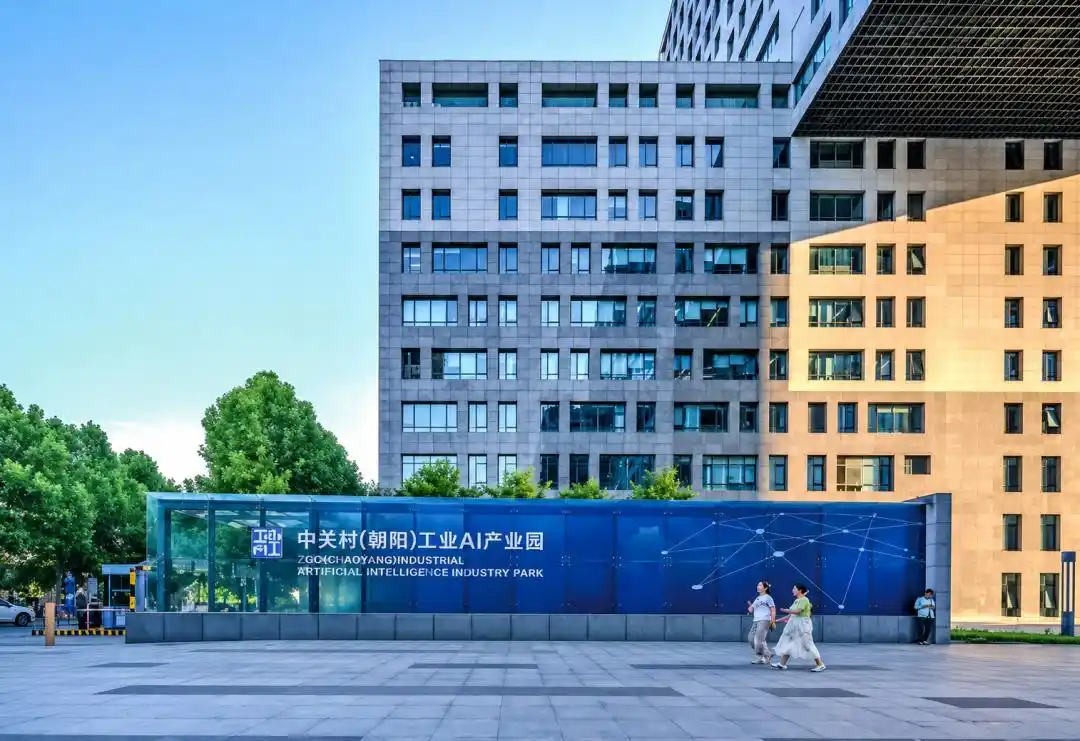
Beijing's Zhongguancun Industrial AI Park clusters many AI companies.
Some companies have just completed technical verification and need early-stage investment; others already have orders and are preparing to expand production.
Sorting out these projects clearly, allowing investment institutions to quickly find companies matching their risk appetite, gives capital a real place to act.
Second, make capital dare to invest.
Investment institutions look at both projects and whether the city has past success stories, stable policies, and a reliable business environment.
If policies change frequently or requirements like reinvestment ratios are too high, it can dampen social capital's enthusiasm.
CVSource data shows that in 2017, the average reinvestment multiple requirement for government guidance funds was 2.6x.
Meaning, for every 1 yuan of government funding received, the fund had to invest 2.6 yuan locally. By 2025, many places had reduced this to 1x or even lower.
For example, Changsha Economic Development Zone's Science and Technology Innovation Mother Fund dropped to 0.4x, Jingdezhen State-Owned Holding Industry Mother Fund dropped to 0.6x.
Locally reducing rigid constraints on capital also leaves more space for market-oriented investment.
Only when capital can truly stay put do new industries have a chance to take root locally.
A single venture capital investment can be enough to catalyze a leading company, revitalize an industry chain, and even influence a city's future.
Are China's major cities prepared to be chosen by capital?
References:
[1] Earning nearly 400 million yuan per day, how did Hefei "calculate" a domestic storage giant.
[2] Shenzhen's robot industry annual output value exceeds 240 billion yuan, a year-on-year increase of 20.56%, reaching a historic high - Shenzhen Development and Reform Commission website.
[3] 2025 private equity market LP contributions reached 1.82 trillion yuan, a year-on-year increase of 43%.
This article is from the WeChat public account "Zhengjieju" (ID: zhengjieclub), author: Zhengjieju.