# Custody Related Articles

HTX News Center provides the latest articles and in-depth analysis on "Custody", covering market trends, project updates, tech developments, and regulatory policies in the crypto industry.

Can You Really 'Get' Your Gold? The Custodial Geography Blind Spot Behind Tokenized Gold

The article challenges the common perception that tokenized gold is a globally uniform asset class, arguing that its true value and functionality are intrinsically tied to the physical location and legal jurisdiction where the underlying gold is stored. Unlike stablecoins, whose value is based on fungible financial assets like treasury bills, tokenized gold represents a legal claim to a specific physical asset in a specific location. This makes the geography of custody not a minor detail, but a core component of the asset itself. The price stability of a tokenized gold product is maintained not by technology, but by arbitrage mechanisms that require the efficient, low-cost redemption of physical gold. This arbitrage is only feasible if the gold is stored in the same region as the user, avoiding complex cross-border logistics, legal hurdles, and delays that can erase profit margins. Consequently, the credibility of a product's price peg depends on the efficiency of its local redemption infrastructure. The author posits that tokenized gold will not converge into a single global market but will instead become regionalized. For institutional users in places like Singapore or Hong Kong, gold stored locally—within their familiar legal, regulatory, and market infrastructure—is a fundamentally different and more usable asset than gold stored in London or Zurich. This local embeddedness is critical for practical uses like serving as collateral or passing regulatory audits. The central question for investors shifts from "Is this token backed by gold?" to "Can I actually *get* the gold when it matters?" The article concludes that the ultimate test of a tokenized gold product is not its stated backing but its practical accessibility within the user's own market and legal system during a crisis.

marsbit04/21 08:40

Can You Really 'Get' Your Gold? The Custodial Geography Blind Spot Behind Tokenized Gold

marsbit04/21 08:40

Franklin Templeton's Latest Research: How to Understand RWA Tokenization

Franklin Templeton's research explores the rapid growth and structural evolution of real-world asset (RWA) tokenization, which has expanded from $5 billion in 2023 to over $25 billion by early 2026. This surge is driven by clearer regulations and greater trust in blockchain technology. RWA tokenization covers assets like stocks, bonds, commodities, and real estate, distinguishing them from native cryptocurrencies. The market saw a turning point as tokenization expanded from government bonds to equities, with early movers like Robinhood, Kraken, and Ondo launching tokenized stock offerings. Traditional institutions, including DTCC, NYSE, and Nasdaq, have since announced significant tokenization initiatives, signaling a major shift in securities processing. The article identifies three tokenization models: 1. **Digital Native Tokens**: Direct ownership of the underlying asset with on-chain settlement (e.g., Franklin Templeton’s money market fund). 2. **Synthetic Asset Tokens**: Indirect economic exposure via special purpose vehicles, allowing broader DeFi utility but limited investor rights. 3. **Digital Mirror Tokens**: Tokenized receipts of off-chain assets, with legacy settlement systems and restricted transferability. Synthetic tokens are permissionless, requiring only KYT checks, while digital native and mirror tokens require full KYC/AML compliance. Each model offers distinct advantages in transparency, utility, and efficiency compared to traditional systems. Tokenization is driving convergence between crypto and traditional finance, with wallets emerging as a universal financial interface.

marsbit04/14 11:35

Franklin Templeton's Latest Research: How to Understand RWA Tokenization

marsbit04/14 11:35

In-Depth Reconstruction of the $285 Million Drift Hack: How Should DeFi Governance Move Beyond "Amateur Hour"?

On April 1, 2026, Drift Protocol, the largest perpetual futures DEX on Solana, suffered a catastrophic hack resulting in a loss of $285 million. The attack, attributed to a sophisticated social engineering campaign rather than a technical exploit, unfolded over several months. Hackers first infiltrated Drift’s internal circles by posing as a legitimate market maker, building trust over time. They then exploited Solana’s "Durable Nonce" feature to trick core team members into blindly signing transactions that granted administrative control. A critical vulnerability was introduced when Drift migrated to a 2/5 multisig structure without a timelock, allowing instant execution of privileged transactions with just two signatures. The attackers finally triggered the attack by adding a fake token (CVT) to the whitelist, manipulating its oracle price, and using it as collateral to drain the protocol’s treasury. The incident highlights fundamental flaws in DeFi governance, including overreliance on multisig mechanisms that lack intent verification and are vulnerable to social engineering. It underscores the misalignment between retail-grade security tools and institutional-scale treasury management. The hack signals the need for a security paradigm shift in DeFi, including adoption of Hardware Security Modules (HSMs) for key management, intent-based policy engines for transaction validation, and professional third-party custody solutions to ensure institutional-grade safety.

marsbit04/13 12:00

In-Depth Reconstruction of the $285 Million Drift Hack: How Should DeFi Governance Move Beyond "Amateur Hour"?

marsbit04/13 12:00

Dialogue with Bloomberg ETF Analyst: Why Bitcoin ETF Holders Did Not Sell During the 50% Plunge

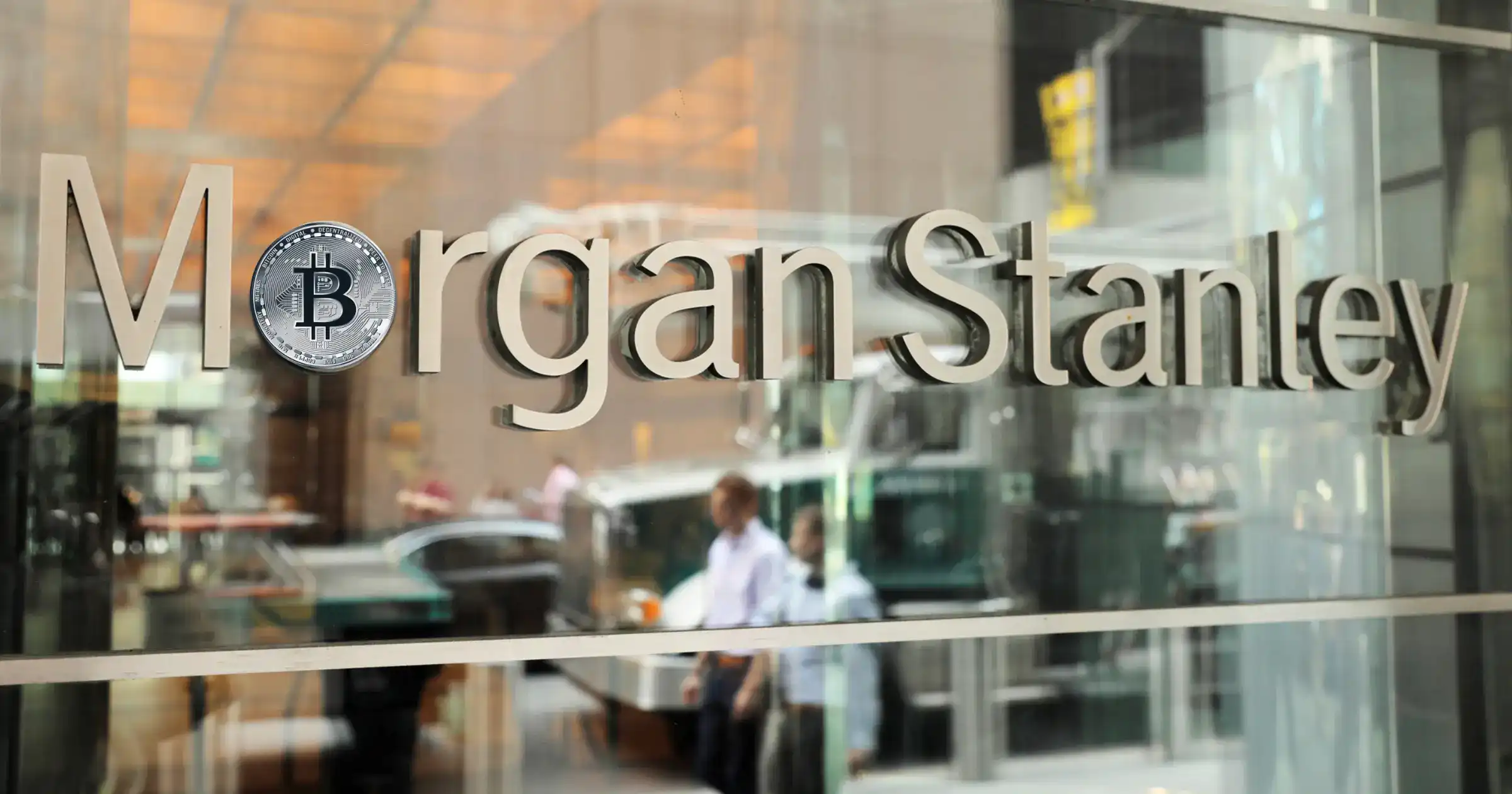
In a recent interview on Coin Stories, Bloomberg Intelligence Senior ETF Analyst James Seyffart discussed the resilience of Bitcoin ETF holders, who largely held their positions despite a 50% price drop, contrary to expectations of panic selling. Seyffart noted that while there was a $9 billion outflow from Bitcoin ETFs starting October 10, it was minor compared to the $250-300 billion inflows prior, and outflows have since reversed by $20-25 billion. He attributed this "diamond hands" behavior to educated investors who understand Bitcoin’s volatility and typically allocate only a small portion (e.g., 1-5%) of their portfolios, leading to rebalancing rather than selling during dips. The conversation also covered the entry of major institutions like Morgan Stanley, which is launching its own Bitcoin ETF, leveraging its vast client assets. Seyffart highlighted the growing efficiency of ETFs, with physical redemptions now allowed, potentially enabling direct Bitcoin transfers to holders in the future. However, he expressed concern over the concentration of Bitcoin custody with Coinbase. Additionally, Seyffart discussed the inverse flow trends between Bitcoin and Gold ETFs recently, with Bitcoin acting more like a risk-on growth asset. He remains optimistic about Bitcoin ETFs eventually surpassing Gold ETFs in size due to Bitcoin’s diverse use cases. Finally, he emphasized the importance of diversification in the current volatile market, where traditional hedges have largely failed, and cash.

marsbit04/05 03:43

Dialogue with Bloomberg ETF Analyst: Why Bitcoin ETF Holders Did Not Sell During the 50% Plunge

marsbit04/05 03:43

活动图片