# Crypto Related Articles

HTX News Center provides the latest articles and in-depth analysis on "Crypto", covering market trends, project updates, tech developments, and regulatory policies in the crypto industry.

Prediction Markets: An Extended Form of Binary Options?

After observing prediction markets, it is increasingly evident that they share significant similarities with binary options. In many respects, prediction markets can be viewed as an extended form of binary options. Both utilize binary (yes/no) contracts where the price fluctuates between 0 and 1, reflecting the market's consensus probability of an event occurring. For instance, a price of 0.7 indicates a perceived 70% likelihood. At expiration, the contract settles at 1 if the event occurs and 0 otherwise—mirroring the payoff structure of binary options. The core of both systems lies in forecasting binary outcomes and using market prices to estimate event probabilities. They aggregate collective intelligence, allow speculation, and enable risk management. However, differences exist: prediction markets cover a broader range of verifiable events (e.g., weather, elections, or box office results) with flexible timeframes, while binary options are primarily focused on short-term financial asset movements (e.g., stocks or currencies). Additionally, binary options are often more speculative and face stricter financial regulations in regions like the EU and the US. Prediction markets, though currently less regulated (especially in crypto), emphasize accuracy and may eventually come under regulatory scrutiny due to concerns like market manipulation. These distinctions could lead to divergent regulatory and developmental paths in the future.

marsbit12/22 12:05

Prediction Markets: An Extended Form of Binary Options?

marsbit12/22 12:05

The $45 Million 'Invisible' Hunter: Cat Sister's Trading Evolution

"Pickle Cat," an anonymous crypto trader known by a green cucumber cat avatar, has earned up to $45 million in profits on Binance Futures, topping the platform’s "smart money" leaderboard. In a recent interview, she shared her evolution from high-frequency trading—which she calls "fake hard work"—to low-frequency, low-leverage swing trading. Early on, she realized that her intense, short-term trading underperformed a simple Bitcoin buy-and-hold strategy. Her approach now centers on macro trends rather than technical indicators. She views crypto as highly sensitive to macro liquidity cycles and real interest rates, noting that the market is shifting from retail-driven sentiment to institutional accumulation. She predicts a slow bull market led by institutions, potentially lasting until Q1 2026. Cat emphasizes that discipline isn’t learned but earned through painful experiences like blowups. She advises traders to understand their psychological tendencies—for example, using high pain tolerance to hold winning positions longer. She also highlights narrative shifts in crypto, from ICOs and DeFi to NFTs and memecoins, and sees prediction markets as a promising frontier. Her advice to retail traders is clear: avoid high-frequency or news-based trading, focus on longer-term swings, and accept that small losses are necessary for learning. Ultimately, she defines winning not by profits alone, but by the ability to preserve gains and improve one’s life.

marsbit12/22 11:01

The $45 Million 'Invisible' Hunter: Cat Sister's Trading Evolution

marsbit12/22 11:01

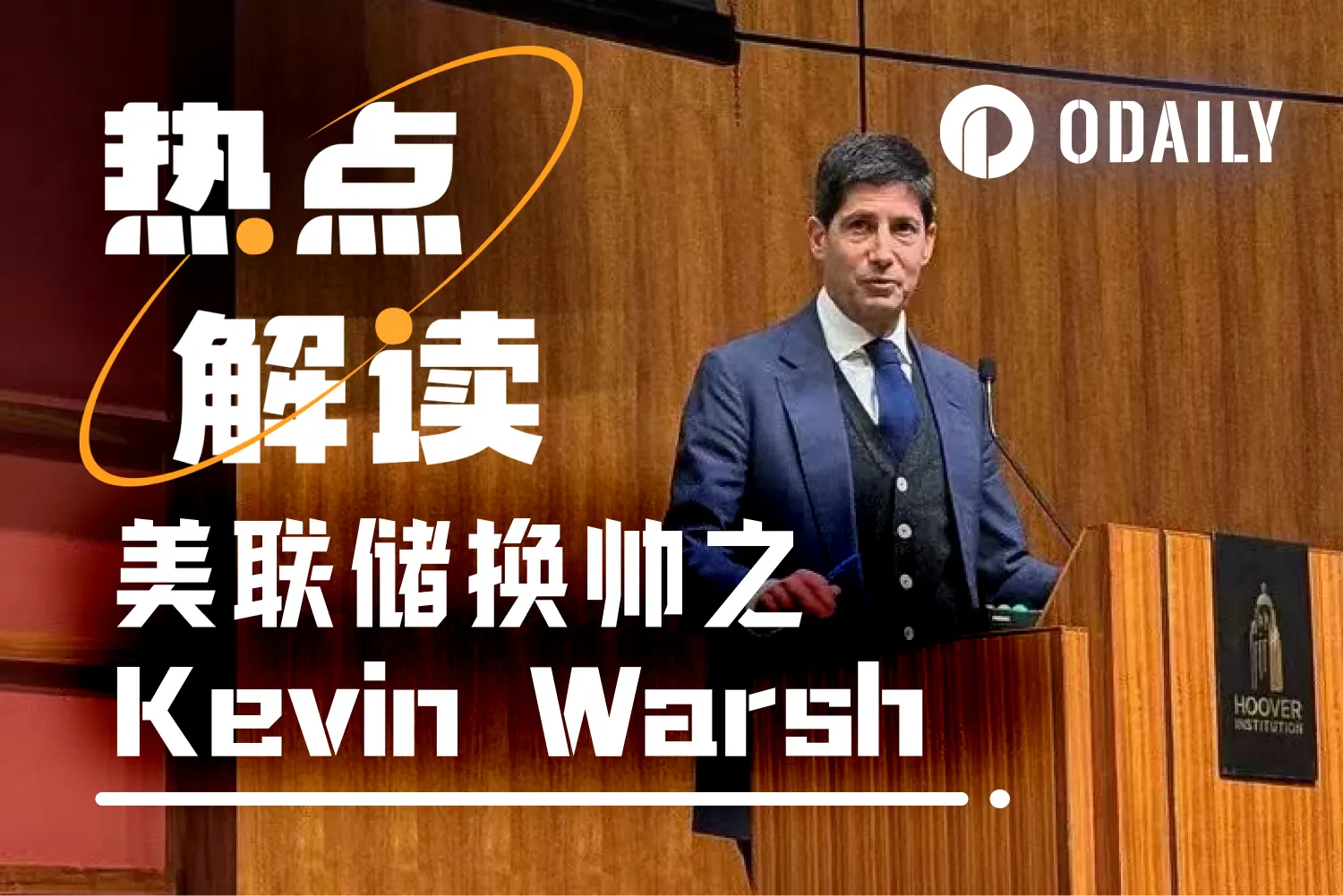
Bitcoin's 'Strict Headmaster' Arrives? If He Takes the Helm at the Fed, the Crypto Party Could End Abruptly

The article discusses the potential implications of Kevin Warsh, a former Federal Reserve governor and Wall Street insider, becoming the next Fed Chair. Unlike other candidates like Kevin Hassett, who is seen as favoring lower interest rates and easier monetary policy, Warsh represents a more disciplined approach. Having worked at Morgan Stanley and experienced the 2008 financial crisis firsthand, Warsh is highly sensitive to systemic risks and liquidity issues. Warsh’s policy stance combines aggressive quantitative tightening (QT) with moderate interest rate cuts. He aims to control inflation by reducing the money supply and restoring the dollar’s credibility, while also easing corporate financing costs. This approach could challenge risk assets like cryptocurrencies, which have thrived in an era of abundant liquidity. If appointed, Warsh could bring stricter regulation to crypto, particularly stablecoins, potentially requiring full cash or short-term debt reserves. He opposes a retail central bank digital currency (CBDC) on privacy grounds but supports a wholesale CBDC for interbank settlements. While his policies may pressure crypto in the short term, they could also foster more institutional adoption and real-world asset (RWA) integration in the long run. However, the article notes that political pressures—especially from a Trump administration seeking lower rates and economic growth—could ultimately influence Warsh’s decisions, regardless of his personal beliefs.

Odaily星球日报12/22 09:27

Bitcoin's 'Strict Headmaster' Arrives? If He Takes the Helm at the Fed, the Crypto Party Could End Abruptly

Odaily星球日报12/22 09:27

Buying Seafood with USDT in Vietnam: Has Web3 Truly Achieved Mass Adoption?

In Vietnam, a country consistently ranked among the top in global cryptocurrency adoption, the author explores whether Web3 and crypto payments have achieved mass adoption beyond reports and whitepapers. During a two-week trip, the author avoided formal industry events and instead tested crypto payments in everyday scenarios like spas, street food stalls, and taxi rides. Key observations include: - Many local merchants prefer cash over international cards due to high fees and tax avoidance, creating an opening for stablecoins like USDT. - Using Bitget Wallet, the author successfully paid via VietQR—Vietnam’s ubiquitous payment QR system—at many locations, with transactions feeling nearly as seamless as Alipay. - However, a failed payment at a seafood restaurant revealed compatibility issues between crypto wallets and older, non-standard QR systems, highlighting remaining technical barriers. - Public perception of crypto remains mixed: in northern cities like Hanoi, it is often associated with crime and gambling, while southern hubs like Ho Chi Minh City show more enthusiasm, with young people trading or developing crypto projects in cafes. - Despite low visible crypto infrastructure (e.g., few Bitcoin ATMs), underlying adoption is significant, driven by a young, tech-savvy population eager for financial mobility. The author concludes that Vietnam’s combination of demographic youth, high mobile internet use, and informal financial vitality makes it a fertile ground for Web3 growth, though real-world usability and cultural acceptance vary widely. The journey continues into southern Vietnam for deeper exploration.

深潮12/22 08:50

Buying Seafood with USDT in Vietnam: Has Web3 Truly Achieved Mass Adoption?

深潮12/22 08:50

活动图片