# Crypto Related Articles

HTX News Center provides the latest articles and in-depth analysis on "Crypto", covering market trends, project updates, tech developments, and regulatory policies in the crypto industry.

"Fat Apps" Are Dead, Welcome to the Era of "Fat Distribution"

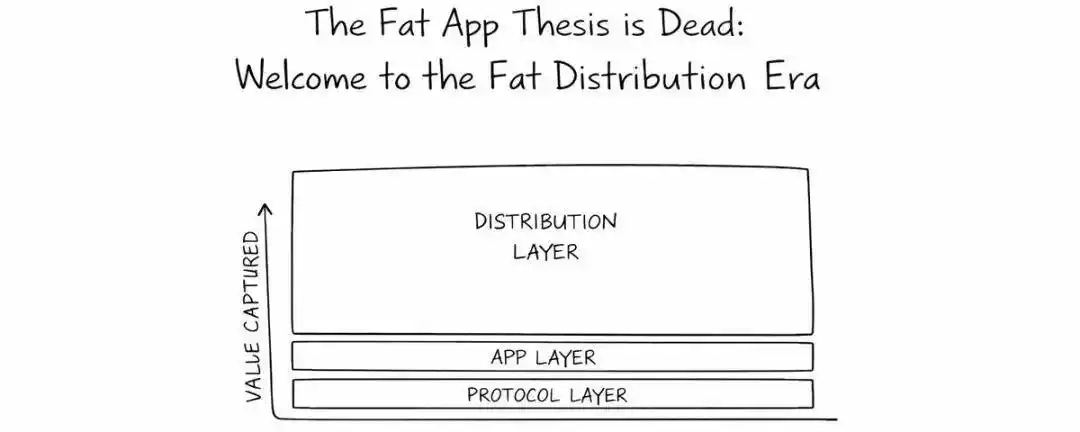
The article "Fat Apps Are Dead, Welcome to the Era of Fat Distribution" argues that crypto applications are becoming commoditized infrastructure, shifting value from the applications themselves to the distribution channels and front-end interfaces that control user access. The author traces the evolution of value accumulation theories in crypto, from the 2016 "Fat Protocol" thesis (value accrues to base layers like Ethereum) to the 2022 "Fat App" thesis (value accrues to applications like Uniswap that built liquidity and user experience). By 2025, the thesis has shifted again. Excessive investment in infrastructure has led to diminishing returns; technical improvements (e.g., minor reductions in oracle costs or interest rate optimizations) are now imperceptible to end-users. Users prioritize familiar interfaces over marginally better backend performance. Consequently, applications like Aave and Morpho are increasingly focusing on B2B partnerships, embedding their services as backends within other platforms (e.g., traditional fintech apps like Robinhood). The author posits that convincing an existing platform to integrate a feature is far easier than onboarding millions of new users to complex, native crypto workflows. A case study illustrates this: Coinbase directs its users' borrowing activity to Morpho on Base, even though competitors offer better rates, because the seamless, integrated user experience within the Coinbase app is more valuable to customers than optimizing for cost. The article concludes that while some apps will remain B2C, the new competitive moat is no longer liquidity or crypto-native UX, but rather control over distribution. The platforms that own the front-end and user relationships will capture the majority of the value.

marsbit12/19 07:55

"Fat Apps" Are Dead, Welcome to the Era of "Fat Distribution"

marsbit12/19 07:55

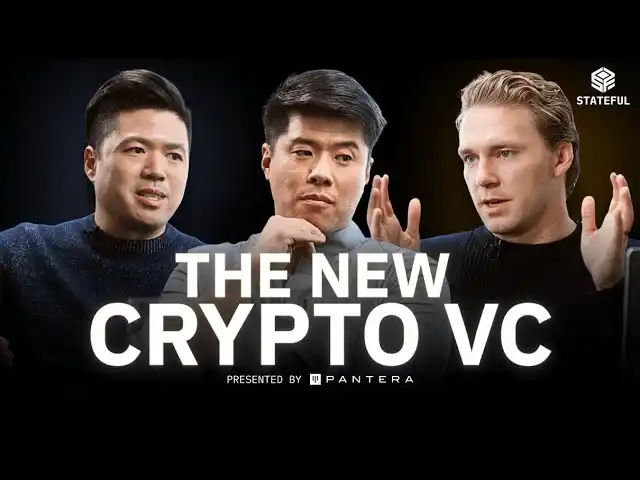
Pantera Partner: The Return of Professionalism and Rationality in Crypto VC, Where Is the Next Investment Hotspot?

Pantera Capital partners Paul Veradittakit and Franklin Bi discuss the current state and future trends of crypto venture capital. Despite a record $34 billion in total funding this year, deal volume has halved compared to 2021-2022, signaling a market shift toward professional, institutional capital focused on later-stage projects with rigorous due diligence. They attribute the previous "metaverse" and "altcoin" speculation frenzy to low interest rates and excess liquidity, which funded many unsustainable projects. The market is now rationalizing. Key developments include a clearer exit path via IPOs (e.g., Circle) and the emergence of Digital Asset Treasuries (DATs), which are actively managed vehicles for yield generation. DAT competition will hinge on execution and asset growth. Future investment themes include: - **Tokenization**: A multi-decade trend enabling programmable assets and new financial products, with stablecoins as a killer app. - **ZK-TLS (Zero-Knowledge TLS)**: Crucial for verifying off-chain data authenticity without exposing raw data, enabling new applications. - **Consumer/Prediction Markets**: Platforms like Polymarket offer democratized information discovery and entertainment. In a "bull or bear" segment: - **Stocks**: Divergent views on Robinhood (bullish for integration) vs. Coinbase (bullish for global institutional expansion). - **Payment Chains**: Skepticism about user lock-in vs. potential for optimized chains. - **Privacy**: Debate on whether it's a feature (bearish) or a investable vertical (bullish for enterprise solutions). Additional insights: - Token lockups should align investors and founders to ensure long-term commitment. - The "L1 war" isn't over; value capture mechanisms and user activity will determine winners.

marsbit12/19 07:39

Pantera Partner: The Return of Professionalism and Rationality in Crypto VC, Where Is the Next Investment Hotspot?

marsbit12/19 07:39

Dialogue with Christian, a Post-00s Fintech Entrepreneur: Craving Iteration Speed and Mutual Candor, Financial Mindset Matters More Than Choices, 'Young People Should Have Awe'

Amid a challenging 2025, Christian, the 00-year-old founder of fintech startup Infini, reflects on a year marked by a major security breach and a strategic pivot. The company shifted from consumer-focused crypto services to B2B financial infrastructure, emphasizing payment solutions and stablecoin integration. Christian stresses that the core value in fintech isn't just efficiency but trust, earned through rapid iteration, transparent service, and 24/7 responsiveness. He believes financial products should empower users with financial literacy and risk awareness, rather than just offering investment options. Infini’s new direction focuses on building a "financial OS" to help global entrepreneurs—especially solo developers and small teams—receive payments and manage capital easily, reducing dependency on traditional banking. Christian also shares management insights: prioritize speed, curiosity, and radical honesty within teams. He admires Revolut’s execution speed and high standards, and draws inspiration from historical leaders like Emperor Taizong of Tang for their strategic decisiveness and ability to integrate talented but strong-willed individuals. Despite a tough year, he views these challenges as crucial lessons in resilience, team alignment, and maintaining long-term vision.

marsbit12/19 07:13

Dialogue with Christian, a Post-00s Fintech Entrepreneur: Craving Iteration Speed and Mutual Candor, Financial Mindset Matters More Than Choices, 'Young People Should Have Awe'

marsbit12/19 07:13

Zhao Changpeng's Year-End Report: Ten Questions on Binance, Regulation, and the Future of Crypto

CZ, founder of Binance, shares his reflections and insights in a year-end Q&A. He discusses his post-clemency sense of vindication and his current focus on four key areas: Giggle Academy (a free education platform serving 90,000 children), YZ Labs (a $10B ecosystem fund investing in crypto projects), mentoring BNB Chain entrepreneurs, and advising governments on crypto regulation. He highlights significant growth metrics: BNB Chain’s 600% annual transaction growth, 2M daily active users, and Binance’s 200M users. On investment strategy, he rejects the "horse race" approach, advocating instead for an "open garden" model that supports multiple strong teams to foster competition and innovation. CZ breaks down stablecoin evolution: 1.0 (basic, non-yielding tokens like USDT), 1.5 (yield-bearing but adoption-limited, e.g., Ethena’s USDe), and 2.0 (ideal state combining yield, liquidity, and compliance). He notes improved regulatory openness globally. He emphasizes mission-driven founders with long-term commitment and stamina, dismissing short-term profit seekers. On AI trading agents, he argues successful strategies won’t be sold widely due to market saturation effects. For RWA tokenization, he sees potential in national asset tokenization for resource development and notes crypto’s suitability for AI/agent economies. CZ advises BNB Chain to focus on relentless building, comparing it to a long marathon. His final message: he isn’t defined by his content, embodying a calm, persistent ethos.

比推12/19 06:44

Zhao Changpeng's Year-End Report: Ten Questions on Binance, Regulation, and the Future of Crypto

比推12/19 06:44

From U.S. Stocks to On-Chain: The Next Structural Opportunity Is Brewing

The article discusses the potential impact of tokenized US stocks on the cryptocurrency market, arguing against the view that tokenized equities will entirely drain liquidity from the crypto space. While acknowledging that some crypto funds may flow into tokenized stocks, the author emphasizes that asset tokenization (including stocks, bonds, and gold) could significantly increase on-chain asset volume. This, combined with crypto’s composability and potential improvements in scalability and privacy, may lead to an explosion in on-chain transactions—attracting not only crypto-native funds but also traditional stock market participants. The piece suggests that tokenized assets won’t remain static on-chain; instead, they will interact with DeFi, derivatives, prediction markets, and other crypto-native applications. This could create new opportunities and even new sectors, similar to how perps and prediction markets emerged in previous cycles. Although the era of broad "altcoin seasons" may be over, high-quality crypto projects—especially those in infrastructure like DeFi, oracles, privacy, digital identity, and wallets—could still thrive. The convergence of tokenized traditional assets and crypto composability might spark innovative combinations, such as crypto AI agents or new financial instruments. Ultimately, the author believes that the next cycle will bring new "version winners," distinct from past cycles, and that while the wild west of crypto is fading, significant opportunities remain for innovative projects that leverage on-chain liquidity and composability.

比推12/19 06:15

From U.S. Stocks to On-Chain: The Next Structural Opportunity Is Brewing

比推12/19 06:15

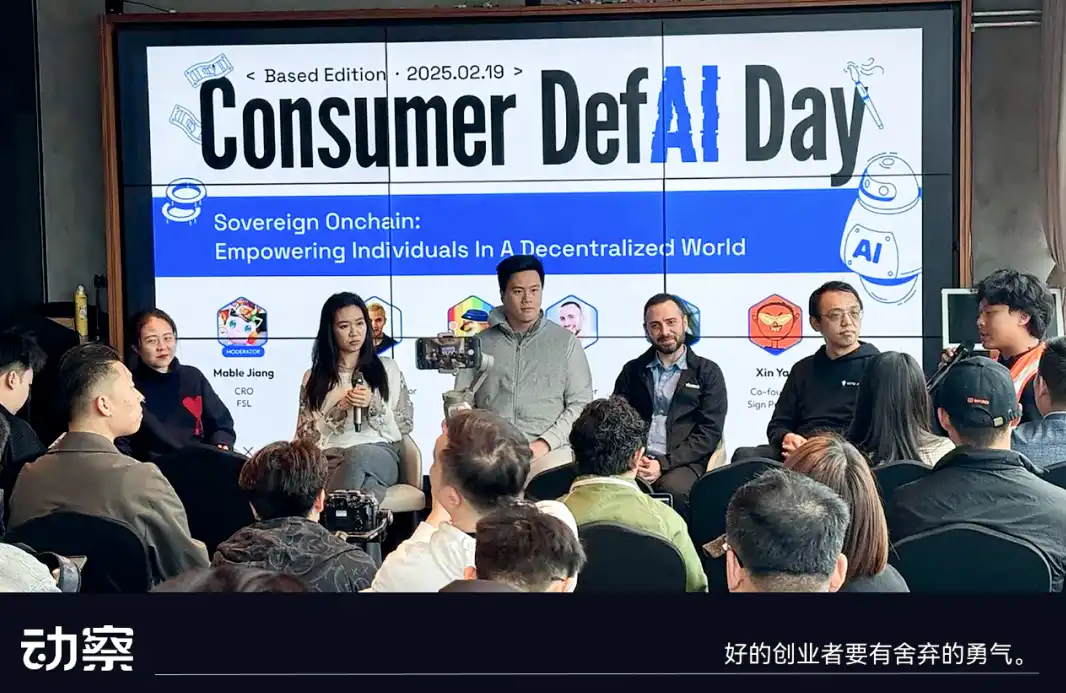
Dialogue with Gate Founder Han Lin: Optimistic About 2026, and Why He Believes 'We Won't Return to a Deep Bear Market'

In a recent interview, Gate.io founder Lin Han shared his optimistic outlook on the crypto market, macroeconomic trends, and the evolving regulatory and technological landscape. He argued that the market is unlikely to return to a severe bear phase, citing strong macroeconomic conditions, expected monetary easing, and sustained institutional interest. While acknowledging potential risks like an AI sector correction, he emphasized that AI's tangible applications differentiate it from past tech bubbles. Han discussed the minimal impact of the recent October 11 market crash, attributing market resilience to ample stablecoin liquidity. He highlighted the industry-wide adoption of Proof of Reserves (PoR) post-FTX, advocating for enhanced methods incorporating zero-knowledge proofs and third-party audits. On emerging trends, he noted the resurgence of privacy-focused protocols like Zcash and the rapid growth of Perpetual DEXs (e.g., Hyperliquid), driven by improved blockchain infrastructure, lower costs, and better wallet experiences. He anticipates increased regulatory scrutiny on DeFi platforms in the future. Regarding Gate.io's strategy, Han emphasized a dual focus: expanding its Web3 ecosystem, as user activity migrates on-chain, and strengthening its global compliant exchanges, including its recently launched U.S. platform. He ruled out aggressive layoffs, reflecting Gate's consistent operational approach, and expressed long-term ambitions for a public listing following continued compliance efforts. He dismissed DATs (Digital Asset Trusts) as unsustainable and commented on the challenges of new stablecoin issuance due to strong network effects favoring incumbents like USDT. Finally, he addressed market manipulation concerns, noting improved exchange risk controls, and defended Gate's remote-work culture as aligned with the fast-paced, global nature of the crypto industry.

marsbit12/19 05:14
Dialogue with Gate Founder Han Lin: Optimistic About 2026, and Why He Believes 'We Won't Return to a Deep Bear Market'

marsbit12/19 05:14

活动图片