# Compliance Related Articles

HTX News Center provides the latest articles and in-depth analysis on "Compliance", covering market trends, project updates, tech developments, and regulatory policies in the crypto industry.

New Fire Research Institute: Rising Middle East Tensions and Capital Outflows Put Short-Term Pressure on the Crypto Market

New Fire Institute Research: Crypto Market Under Short-Term Pressure Amid Rising Middle East Tensions and Capital Outflows **Market Recap:** US military strikes in the Middle East escalated tensions, driving oil prices and US Treasury yields higher while pressuring Asian risk assets. Against a backdrop of weaker gold and a strong US dollar, crypto market risk appetite faced external pressure. The total stablecoin market cap has shrunk by $10 billion since May, with a net outflow of $7.7 billion in June alone. Trading volume on South Korea's top five crypto exchanges hit a near-2.9-year low. Despite broad market pressure, Robinhood's L2 network saw over $70 million in ETH bridged in its first week, boosting optimism for the Ethereum ecosystem. Circle's approval to establish a US national trust bank also injected confidence into long-term compliant funding channels. A correction signal in the AI sector is notable, with US AI stocks pulling back over 30% from recent highs. Macro-geopolitical risks and shrinking on-chain liquidity suggest the crypto market is in a short-term, 'risk-off' defensive phase, with Bitcoin price fluctuating in a 'high-value range'. **Outlook:** The US Senate will review the *CLARITY Act* on July 20th, with its direction potentially reshaping the industry's compliance framework. Key debates center on ethics restrictions for government officials in crypto, developer liability, and stablecoin rewards. Escalating Middle East tensions could reignite inflation concerns, impacting Fed policy expectations. The Bank of Japan's likely rate hold in July may temporarily ease liquidity pressure from yen carry trades. Monitoring oil prices and the strong dollar's impact on risk assets is crucial. Notably, Hyundai Motor became the first major South Korean firm to adopt internal stablecoin transfers, accelerating the trend of traditional giants embracing Web3. **Market View:** The market is currently in a state of 'macro risk-off versus price action博弈'. With momentum limited by Middle East tensions and capital outflows, and with significant regulatory developments pending, sidelined capital is adopting a wait-and-see approach. The market is likely to maintain range-bound, liquidity-seeking consolidation in the near term.

marsbit07/16 03:06

New Fire Research Institute: Rising Middle East Tensions and Capital Outflows Put Short-Term Pressure on the Crypto Market

marsbit07/16 03:06

The Controversial Issue of the CLARITY Act in the Digital Markets: Should Stablecoins Be Allowed to Generate Yield?

Controversy Over the CLARITY Act: Should Stablecoins Be Allowed to Generate Yield? This article examines the ongoing debate in U.S. regulation regarding whether stablecoins should be permitted to generate interest for holders. It traces the regulatory evolution from the GENIUS Act, which imposed a blanket prohibition on issuer-paid stablecoin yield to protect traditional banking, to the recent bipartisan Tillis-Alsobrooks compromise on the CLARITY Act. The compromise introduces a key distinction: strictly prohibiting "passive yield" (rewards for merely holding) while potentially allowing "activity-based yield" tied to specific on-chain actions like providing liquidity or governance participation. A critical "economic equivalency test" is proposed to determine if a reward is functionally equivalent to a bank deposit interest payment. The analysis highlights significant implementation challenges for regulators. It questions their capacity to perform the nuanced, substantive reviews required to differentiate between genuine activity-based rewards and cleverly disguised passive interest schemes within complex DeFi protocols and smart contracts. The article concludes that this shift represents a move from regulating specific entities ("entity-based regulation") to overseeing entire financial behaviors and ecosystems ("ecosystem-based regulation"). This transition, while aiming for market stability, may signal the end of the crypto industry's earlier unconstrained "wild west" era.

marsbit07/15 10:40

The Controversial Issue of the CLARITY Act in the Digital Markets: Should Stablecoins Be Allowed to Generate Yield?

marsbit07/15 10:40

From TrueFi to Elara: Why the Next Stop for On-Chain Finance is Liquidity Infrastructure?

From TrueFi to Elara: Why On-Chain Finance's Next Stage is Liquidity Infrastructure? The article analyzes the evolving focus in decentralized finance, shifting from narrative-driven expansion to robust, operationally sound infrastructure. The author, drawing from experience at TrueFi and building Elara, argues that early DeFi incorrectly assumed technological superiority alone would force adoption. Instead, financial systems evolve through workflow compatibility. Traditional finance prioritizes stability and predictability, creating intentional "viscosity" (friction) through controls, which slows execution but ensures durability. Crypto-native systems minimized friction for rapid experimentation and iteration but often lacked operational safeguards, leading to reflexive liquidity that can disintegrate under stress. The core insight is that sustainable on-chain finance cannot rely solely on isolated products like RWA lending or token incentives. The real opportunity lies in a coordinated financial architecture for liquidity management, collateral coordination, and capital deployment. Elara is presented as an example of this next-generation "programmable treasury infrastructure"—a yield-bearing, dollar-pegged collateral asset designed for capital efficiency and operational flexibility within fragmented digital markets. A key architectural decision separates liquidity from yield generation, allowing the collateral to remain liquid and programmable while accruing value. The funding environment has also shifted. Investors now prioritize operational proof—working systems, integrations, and controls—over visionary narratives. Competitive advantage comes from building systems that endure under real market conditions, not just launching quickly. Ultimately, the path forward is not a sudden replacement of traditional finance but a selective hybridization. Lasting infrastructure will combine the iterative speed of digital assets with the control architecture of traditional finance. Systems like Elara are built to operate efficiently in today's low-viscosity crypto markets while embedding the operational discipline—compliance, reporting, risk management—required to eventually support institutional capital as it gradually integrates with on-chain settlement rails. The focus is not on who launches first, but on who can build infrastructure capable of managing both high-speed digital-native liquidity and the slower, more deliberate flow of institutional capital.

marsbit07/15 08:32

From TrueFi to Elara: Why the Next Stop for On-Chain Finance is Liquidity Infrastructure?

marsbit07/15 08:32

Japan RWA, Stablecoin, and BNB Ecosystem Closed-Door Exchange Meeting Held in Tokyo

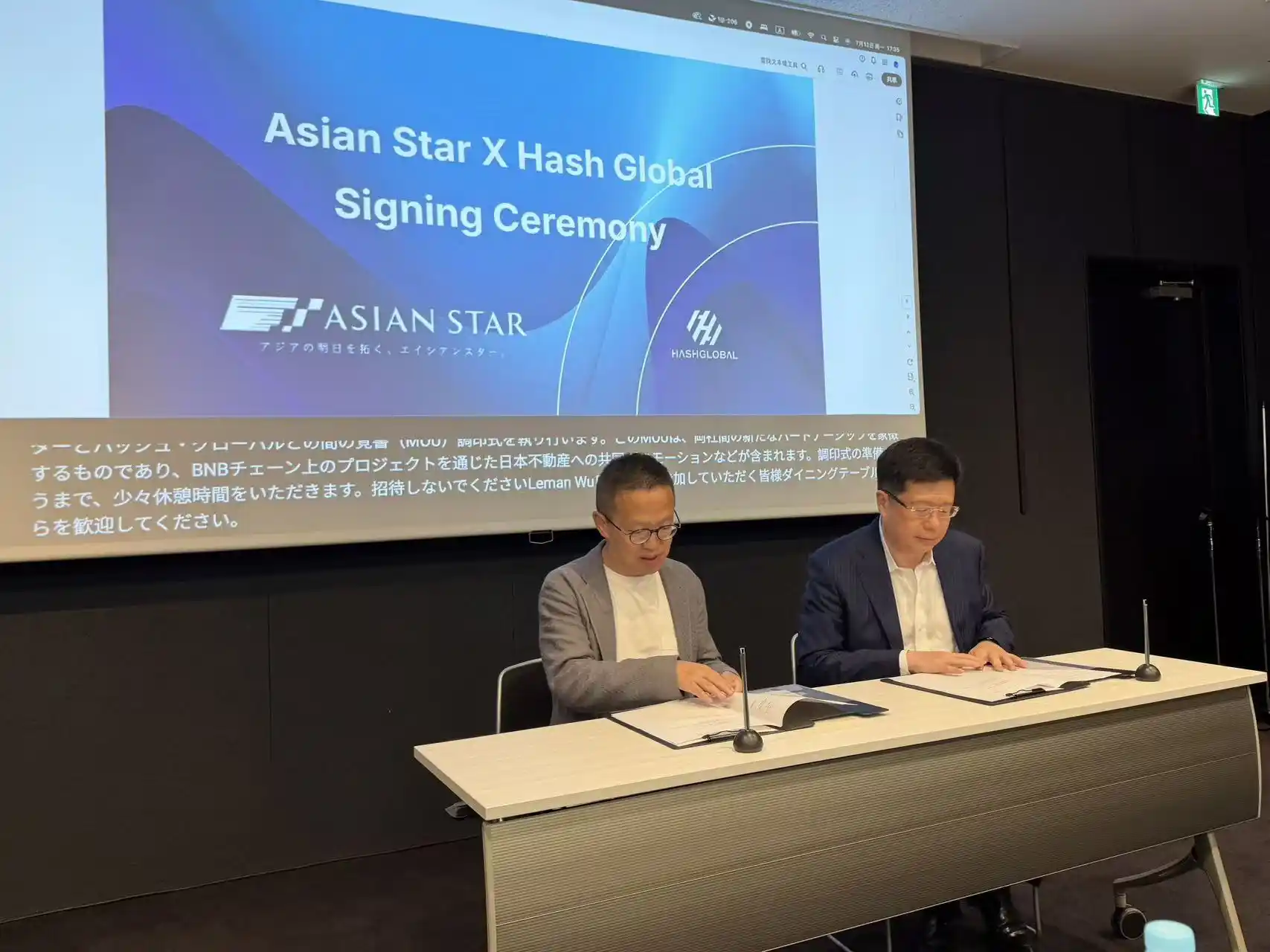
On July 13, 2026, during WebX, the "Japan RWA, Stablecoin, and BNB Ecosystem Closed-Door Exchange" was held in Tokyo. Organized by ASIAN STAR and co-hosted by Hash Global, with BNB Chain as the blockchain ecosystem partner, the event brought together Japanese traditional financial institutions, listed companies, real asset holders, stablecoin issuers, and Web3 infrastructure teams. Discussions centered on tokenizing real-world assets (RWA), stablecoin settlement, global distribution, and institutionalized on-chain finance. Speakers highlighted Japan's high-quality assets, such as real estate and REITs, and emphasized that RWA success depends on compliance, governance, valuation, and investor protection—not just tokenization. The industry is shifting from defining RWA to achieving scale, where tokenized assets must enable real financial activities like collateralization and lending. BNB Chain was presented as providing global distribution, stablecoin ecosystems, and on-chain liquidity infrastructure. A key synergy framework was proposed: combining Japanese asset quality and compliance with dollar/yen stablecoins and BNB Chain's global network. While Japan's security token market has seen issuance, greater connection to global Web3 liquidity is needed. Panels agreed that liquidity stems from trusted underlying assets, clear regulation, licensed partners, and robust distribution—not from tokenization alone. Compliance enables institutional capital entry. Stablecoins were identified as a crucial settlement layer for connecting Japanese assets to global capital, requiring trust, licensing, and reliable fiat channels. For initial RWA pilots, key elements include licensed partners, compliance tools, custody, investor suitability checks, stablecoin settlement, and real global distribution plans. The event concluded with ASIAN STAR and Hash Global signing a strategic MOU to collaborate on a Japanese real estate fund project within the BNB Chain ecosystem, exploring compliant issuance, on-chain settlement, and liquidity. The discussion marks a step towards building institutional-grade financial infrastructure for Japanese assets in the global Web3 space.

marsbit07/15 06:29

Japan RWA, Stablecoin, and BNB Ecosystem Closed-Door Exchange Meeting Held in Tokyo

marsbit07/15 06:29

活动图片