# Collaboration Related Articles

HTX News Center provides the latest articles and in-depth analysis on "Collaboration", covering market trends, project updates, tech developments, and regulatory policies in the crypto industry.

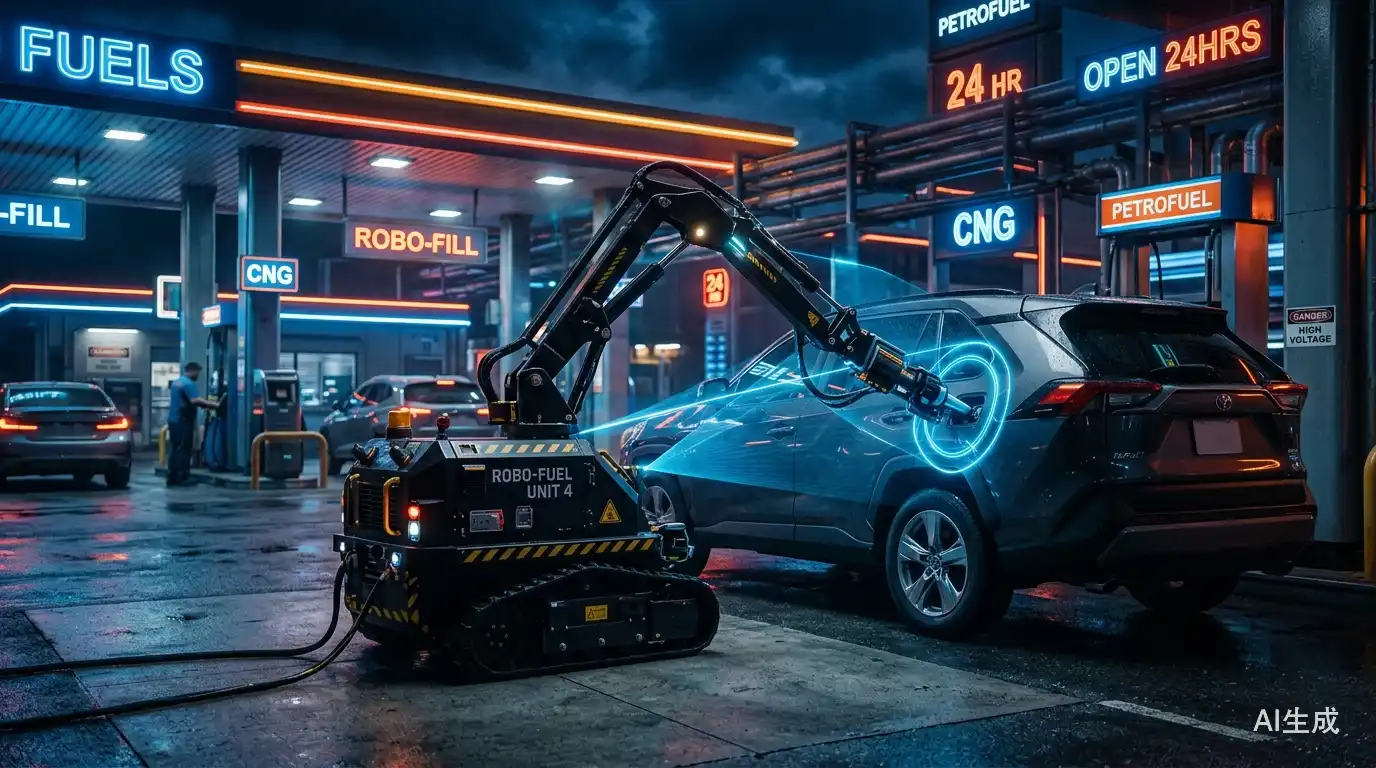
The Evolution of Order in the AI & Web3 Era: The Competitive Dimensions and Exploratory Path of m&W

The article explores the evolution of order in the AI & Web3 era, framing the competition around establishing new foundations for human-AI collaboration. It argues that as AI Agents become core economic participants, the existing Web3 infrastructure—focused on assets, identity, and decentralized governance—is insufficient. The core challenge shifts to building trust, assessing complex contributions, and creating fair value distribution among diverse human and AI actors. The analysis positions the m&WDAO project within this landscape by comparing it to existing paradigms: Colony (human-centric DAO governance), SingularityNET (AI service exchange), Gitcoin Passport (Sybil-resistant identity), and Farcaster/Lens (open social graphs). m&W's distinct path, termed EcoFi (Ecological Finance/Order), aims to integrate these layers. Its three-phase evolution is outlined: 1) **m&W 1.0: Credit Anchoring** - filtering high-quality "Builder" nodes and converting their contributions into non-transferable SBTs (Soulbound Tokens) as a bedrock of trust. 2) **m&W 2.0: Collaborative Economy** - deploying the EcoFi protocol to enable verified, complex task collaboration with a hybrid AI/human judgment system for valuation and dispute resolution, creating a closed-loop value system. 3) **m&W 3.0: Intelligent Order** - where human-originated SBT credit enables trusted AI Agent "digital twins" to participate in a mature human-AI co-creation economy. The conclusion asserts that while other projects solve discrete problems (proving identity, governing contributions, exchanging AI capabilities), m&W's ultimate mission is to address the foundational question of a new socio-economic order for the coming era of human-AI collaborative networks.

链捕手Yesterday 03:17

The Evolution of Order in the AI & Web3 Era: The Competitive Dimensions and Exploratory Path of m&W

链捕手Yesterday 03:17

Tsinghua AI Mathematician Emerges: From Intuition to Theorem, Contributing to an 84-Page Quantum Algorithm Paper

Tsinghua University’s Intelligent Industry Research Institute (AIR) has developed an AI mathematician agent named AIM, designed not just to solve math problems but to actively participate in early-stage research. In a recent study, researchers collaborated with AIM to develop "Sign Embedding Quantum Algorithms," resulting in an 84-page paper on quantum algorithms for matrix equations and functions. The research began with a human researcher's intuition: can rational approximation serve as a design principle for quantum algorithms? AIM helped expand this idea into multiple candidate research directions. Human researchers then filtered and focused on the most promising path. AIM assisted in organizing theorems, generating proof drafts, and performing complexity analysis, while humans maintained oversight, auditing assumptions and refining derivations. This case illustrates a human-AI collaborative workflow: AI rapidly explores and expands research avenues, generates draft materials, and aids in checking derivations; human researchers provide critical judgment on direction, value, and validity. The process emphasizes "high-throughput candidate generation + human value gating + AI-assisted audit and repair + human final integration." The resulting quantum algorithm framework offers a unified approach to several matrix problems, advancing quantum linear algebra under more general conditions. This work suggests AI's role in theoretical research is evolving from task-specific assistance to supporting the entire research lifecycle—enhancing exploration and efficiency while keeping human expertise central to guiding inquiry and ensuring rigor. *Paper & System Links:* - AIM application report: https://arxiv.org/abs/2606.24899 - Quantum algorithm paper: https://arxiv.org/abs/2604.25333 - AIM repository: https://github.com/TheoryFoundry/AIMv2

marsbit07/10 02:53

Tsinghua AI Mathematician Emerges: From Intuition to Theorem, Contributing to an 84-Page Quantum Algorithm Paper

marsbit07/10 02:53

Finding the Next Wang Tao

Hong Kong's deep-tech startups are crossing the Shenzhen River to scale up. On July 2nd, six university spin-off teams presented at the "X-Day" Xili Lake Roadshow in Nanshan, Shenzhen. Their projects spanned next-gen battery materials, quantum dot displays, robotics AI, digital sports, smart airports, and AI-powered fall prevention for the elderly. This reflects a growing trend: Hong Kong's academic research is increasingly seeking industrial application and commercialization within the Greater Bay Area, with Shenzhen being a primary destination. These startups exemplify the "fusion+" model—leveraging Hong Kong's strengths in fundamental, globally-connected research ("0 to 1") and Shenzhen's robust manufacturing ecosystem and market access for scaling ("1 to 100"). Examples include SuFang New Energy (high-energy-density battery materials), PuLang Quantum (quantum dot films in high-end displays and vehicles), and BuGu Health (AI-based fall risk screening). Platforms like the HKU Youth Innovation Academy and HKUST BlueBay are establishing physical bridges for this cross-border innovation. The discussion highlights a clear division of labor: Hong Kong provides the seeding ground for cutting-edge technology, while Shenzhen offers the pathway to产业化. As these connections strengthen through initiatives like the Xili Lake Roadshow, the region aims to foster the next generation of global tech leaders like DJI's Wang Tao.

marsbit07/07 00:54

Finding the Next Wang Tao

marsbit07/07 00:54

Claude Engineer Finally Unveils Fable 5's Ultimate Strategy, Teaching You How to Bridge the Information Gap with AI Models

This article, titled "Claude Engineer Finally Releases Fable 5 'Skill-Burning' Guide, Teaching How to Bridge the Information Gap with Models," details a blog post by Claude Code engineer Thariq Shihipar. The core concept is the "information gap" or "unknowns"—the disconnect between a user's instructions (the "map") and the actual task requirements (the "territory"). The article argues that with powerful models like Claude Fable 5, work quality depends on the user's ability to identify and clarify these unknowns. Shihipar categorizes unknowns into four types: Known Knowns (explicit instructions), Known Unknowns (awareness of gaps), Unknown Knowns (implicit, unstated knowledge), and Unknown Unknowns (unforeseen issues). The blog provides a framework for addressing these gaps throughout the workflow: * **Before Implementation:** Techniques include "Blindspot Scanning" to uncover Unknown Unknowns, brainstorming/prototyping for visual or complex tasks, having Claude ask clarifying questions, using reference code/examples, and creating implementation plans. * **During Implementation:** Maintaining an "implementation notes" file for Claude to document deviations and decisions made due to encountered edge cases. * **After Implementation:** Creating summary documents for review and having Claude generate quizzes to ensure the user fully understands the completed changes. The article concludes that as models become more capable, the key to success is systematically discovering and defining these unknowns through low-cost methods like prototyping and planning, allowing for more effective collaboration.

marsbit07/06 00:14

Claude Engineer Finally Unveils Fable 5's Ultimate Strategy, Teaching You How to Bridge the Information Gap with AI Models

marsbit07/06 00:14

Domestic First Explosion-Proof Certification, World's First Fueling Brain Solution: How Did They Secure Two 'Firsts'?

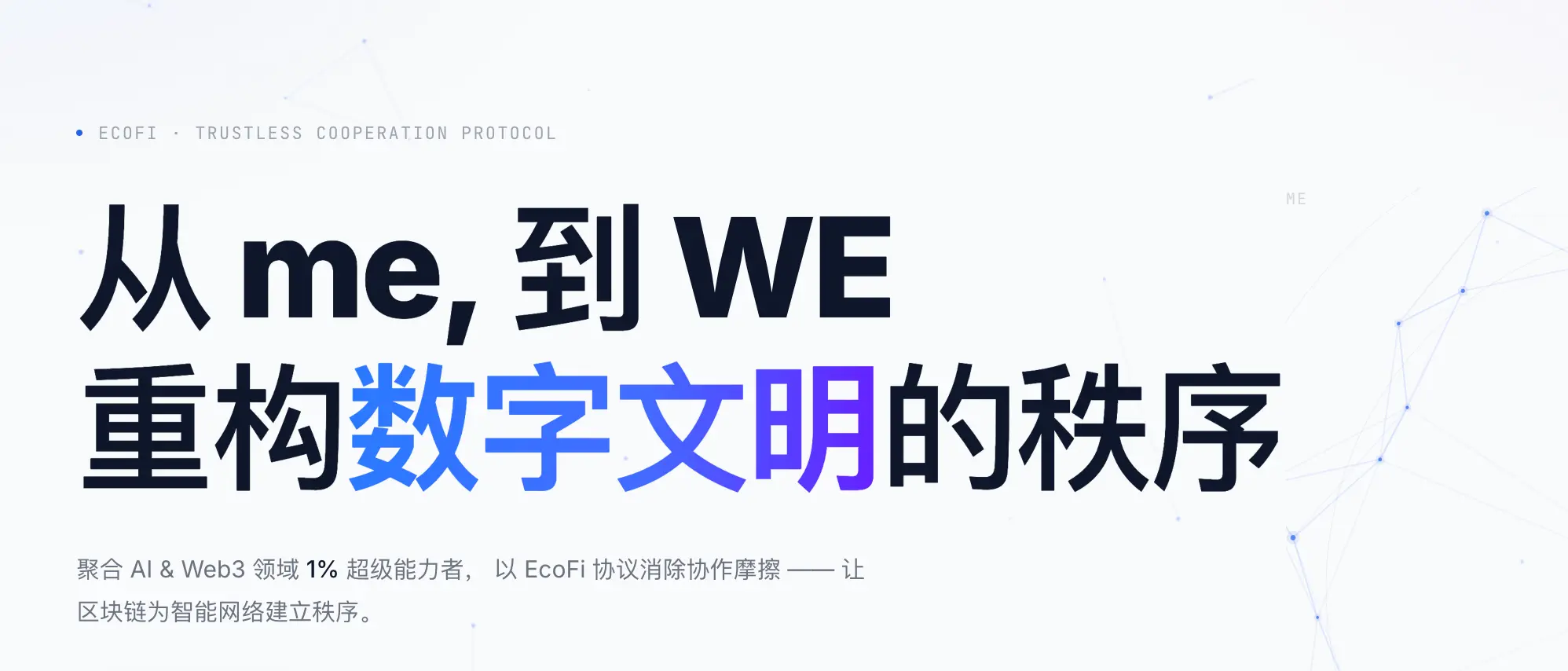
China's embodied AI sector is booming, with over ¥37 billion in funding this year. The focus has shifted decisively to real-world application, particularly in hazardous, repetitive tasks humans should avoid. A key, often prohibitive, barrier to entry for robots in environments like gas stations and oil fields is obtaining explosion-proof certification, requiring meticulous hardware and circuit design from the ground up. The article explores three main application areas. At gas stations, the challenge lies in executing a long, precise sequence of actions (opening caps, handling the fuel nozzle) with millimeter accuracy across diverse car models. For facility inspections, robots need sustained autonomous patrols combined with real-time anomaly detection and response. Port scenarios introduce the complexity of multi-robot coordination. Addressing the core challenge of long-horizon tasks, the piece highlights a technical breakthrough: a "world model"-driven approach. This enables predictive planning, allowing the AI to visualize the desired end-state (e.g., nozzle returned, cap closed) and work backward to synthesize intermediate visual frames. This "imagination" of the task trajectory, as implemented in the H-GAR architecture, guides action generation, significantly reducing cumulative error in multi-step operations. The three-step H-GAR process involves generating a coarse action draft, synthesizing target-conditioned observation frames, and then refining actions based on visual context and a memory of past successful motions. The conclusion emphasizes that success in specialized, safety-critical fields requires long-term commitment and deep integration of the "embodied brain" (AI) with a purpose-built, certified physical "body." Mastering this brain-body-data闭环 (closed-loop) is positioned as a crucial competitive advantage for commercialization.

marsbit06/26 03:49
Domestic First Explosion-Proof Certification, World's First Fueling Brain Solution: How Did They Secure Two 'Firsts'?

marsbit06/26 03:49

Apple Finally Admits, Siri Is Getting Old

In a significant shift, Apple has rebranded Siri to "Siri AI" at WWDC 2026, acknowledging the assistant's limitations after years of stagnation. The company announced a deep partnership with Google, leveraging Gemini's model capabilities to train its new Apple Foundation Models. This collaboration extends Apple's Private Cloud Compute to Google Cloud and Nvidia GPUs for the first time. The article traces Siri's history from its groundbreaking 2011 debut to its subsequent confinement within Apple's closed ecosystem, prioritizing control and privacy over expansive functionality. While Apple integrated AI into its hardware and systems over the years (e.g., Neural Engine, Core ML), it missed the paradigm shift brought by generative AI models like ChatGPT. Facing pressure, Apple restructured its AI leadership and opted to license Google's Gemini technology—reportedly paying around $1 billion annually—to power the revamped Siri. The strategy involves "distilling" knowledge from the large Gemini model into smaller, on-device models. Apple also plans to use Google Cloud's Nvidia GPUs for complex cloud inference tasks. The core vision for "Apple Intelligence" is a system-level assistant that reduces cognitive load: summarizing notifications and emails, drafting context-aware replies, and retrieving relevant information across apps. Siri gains a dedicated app with memory and cross-device sync. However, this AI push comes with hardware requirements, potentially excluding older iPhones. A major challenge is China, where Apple Intelligence will likely be a different product due to local regulations, requiring partnership with a domestic AI provider. The article concludes by questioning the future of personal AI, noting that true understanding involves more than data access—it requires knowing where to stop. Apple's partnership marks a humble beginning in its quest to build a genuinely helpful, yet respectful, personal assistant.

marsbit06/09 07:16

Apple Finally Admits, Siri Is Getting Old

marsbit06/09 07:16

活动图片