dYdX Changes Brand and Starts Anew: Can This Collaboration with Robinhood Succeed?

marsbitPublished on 2026-07-02Last updated on 2026-07-02

Abstract

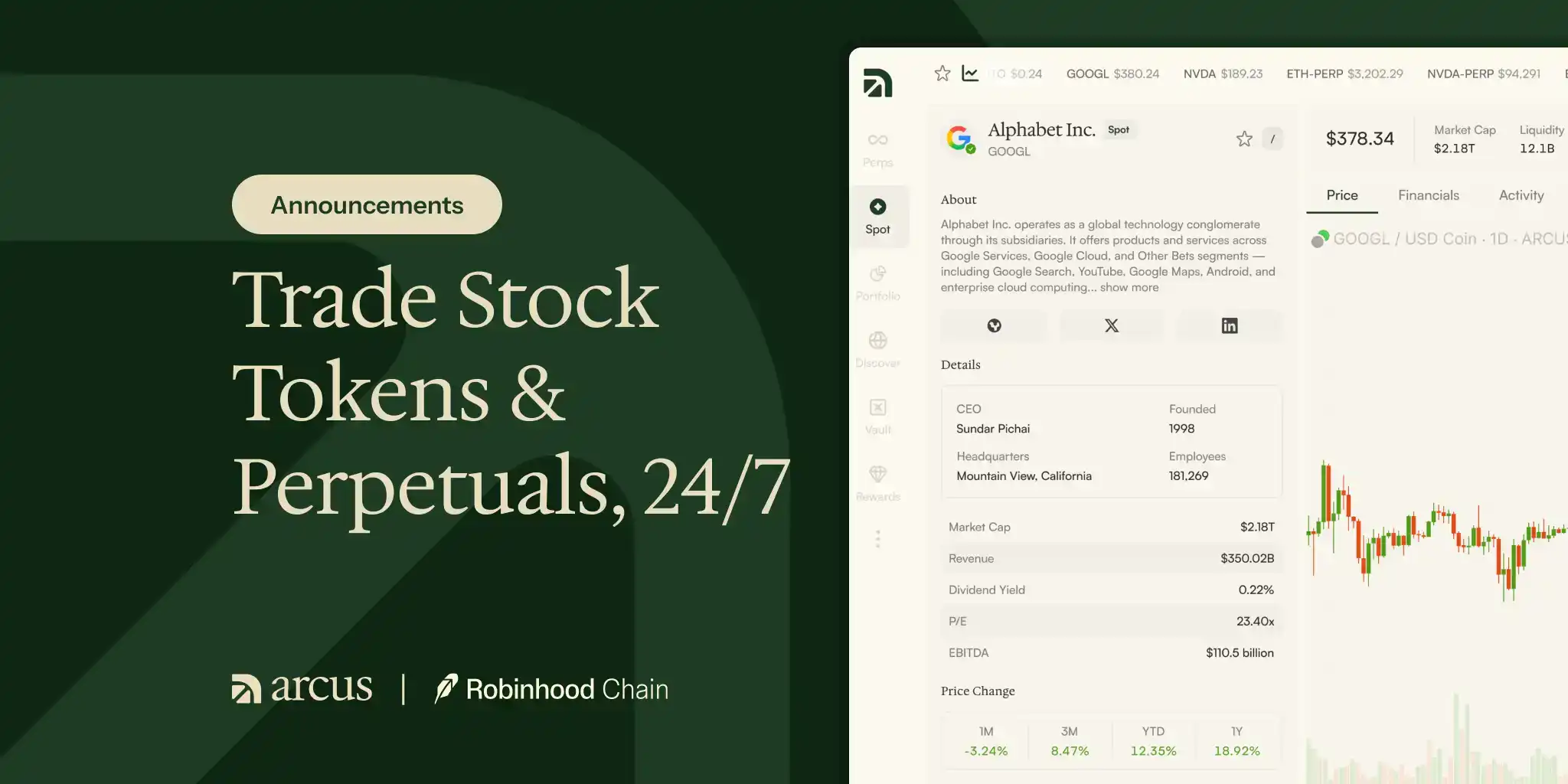
On July 1st, Arcus, a DEX co-developed by dYdX Labs and Robinhood Crypto, launched its Beta version. Deployed on the newly public mainnet Robinhood Chain (an L2 built on Arbitrum tech), Arcus offers 24/7 spot trading for 95 tokenized stocks with 0% fees on the web and plans to introduce cross-asset perpetual contracts. Key future features include access to Pre-IPO investments (like OpenAI) and using tokenized stocks as collateral for perpetual trading. This new platform represents a separate product line for the dYdX team, not an iteration of the dYdX Chain. It aims to leverage Robinhood's nearly 28-million-strong user base for retail access while applying dYdX's DeFi expertise to the RWA (Real World Assets) sector, enabling global, round-the-clock trading of traditional assets like stocks and commodities. The launch follows dYdX v4's struggles with performance and tokenomics after moving to a fully decentralized model. While the dYdX Chain continues to operate independently with community support, Arcus is positioned as a parallel, platform-focused venture by the core team. Although no official token plans for Arcus have been announced, market expectations for a potential new token or airdrop are high.

On July 1, Arcus, a DEX jointly created by dYdX Labs and Robinhood Crypto, officially launched its Beta version. The platform is deployed on Robinhood Chain and supports spot trading for 95 tokenized stocks, with plans to launch cross-asset perpetual contracts. Arcus is not an iterative product of dYdX Chain but a new product line developed by the dYdX team. Simultaneously, Robinhood Chain, an L2 built on the Arbitrum technology stack, has officially launched its public mainnet.
Before the announcement, the DYDX token surged from $0.15 to $0.24. After the announcement was made public, it fell to $0.13 this morning, erasing all gains. Its current market capitalization is $115 million, with an FDV of $136 million.

Future Plans: Staking Tokenized Stocks and Participating in Pre-IPO

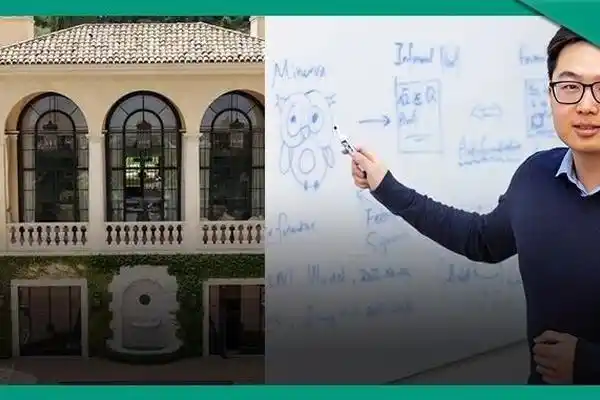
According to the dYdX website, Arcus is strategically driven by dYdX founder Antonio Juliano, who serves as a board member, with Eddie Zhang as CEO and Founder. Eddie Zhang is the President of dYdX and previously co-founded and served as CEO of Pocket Protector.

Arcus's core selling points include a 24/7 trading environment with no market time restrictions, combined with self-custody, institutional-grade liquidity, and high-performance execution. Currently launched features include:

· Perpetual Contracts: Already on the testnet, targeting whales, market makers, and professional traders. Public testing will follow.

· Spot Trading: 95 Stock Token markets are open, with no waiting for listings. Coverage includes 80+ U.S. and international large/small-cap stocks, indices (e.g., SPY, QQQ), commodities (from precious metals to energy markets), and crypto assets (BTC, ETH, SOL, etc.). Web spot trading fees are 0%, with no commissions.

· Liquidity & Execution: Deep liquidity provided by institutional market makers, supporting API trading (order management, account data, market data).

· Funding & Access: Supports instant deposits via cash or cryptocurrency, with future support for Apple Pay, Google Pay, etc. An iOS App is coming soon. The platform emphasizes permissionless and unrestricted access but explicitly excludes users from the U.S., Canada, the U.K., and other restricted jurisdictions.

Features to be launched or in Beta:

· Pre-IPO Access: Early investment access to hot private companies like OpenAI before they go public.

· Tokenized Stocks as Collateral: In the future, users can use their tokenized stock holdings as collateral for perpetual trading, enabling cross-asset strategies (e.g., long Apple while shorting oil).

A Fresh Start After Being Marginalized?

Since its launch in 2018, dYdX has been a pioneer among Perp DEXs, with cumulative trading volume exceeding $1 trillion. However, the v4 version, while achieving full decentralization, made compromises in performance and user experience. Coupled with heavily criticized tokenomics, this led to its rapid marginalization.

Arcus leverages Robinhood Chain's nearly 28 million clients (across 38 countries and three continents) to provide a retail-level traffic entry point for Arcus. Robinhood Wallet users in 120+ countries/regions can access Stock Tokens and conduct spot trading via DEXs like Arcus. Furthermore, the application explicitly prioritizes entry into the Arcus ecosystem for dYdX traders, stakers, validators, and participants.

Arcus is designed as a community-owned protocol, combining dYdX's DeFi innovation expertise with Robinhood's proficiency in financial product creation.

In simple terms, the dYdX team has not abandoned its original chain. Instead, it seeks breakthroughs in the RWA sector and the 24/7 global trading scene through this new project. Traditional financial markets are constrained by opening hours and geography. By bringing assets like stocks, indices, and commodities on-chain, Arcus enables round-the-clock trading, productivity unlocking (lending, collateralization), and DeFi integration.

The launch of Arcus does not affect the independent operation of dYdX Chain. dYdX v4 remains a community-owned, fully open-source protocol, with user funds and positions fully accessible on dYdX Chain.

The dYdX Foundation has confirmed ongoing support for the chain. Arcus is more like a "parallel product" incubated by dYdX Labs, driven by the original core team but positioned to focus on the trading platform itself rather than full ecosystem governance.

Currently, the Arcus website and official channels have not announced specific token plans or timelines. However, given dYdX's history of notable airdrops, market participants generally hold expectations for potential new tokens or airdrops from Arcus.


Trending Cryptos

Related Questions

QWhat is the name of the new platform launched by dYdX Labs and Robinhood Crypto, and on which chain is it deployed?

AThe new platform is called Arcus. It is deployed on the Robinhood Chain.

QAccording to the article, what is one of the core selling points of the Arcus platform?

AA core selling point of Arcus is providing a 24/7 trading environment without market time restrictions, combined with self-custody, institutional-grade liquidity, and high-performance execution.

QWhy was dYdX v4 described as being 'marginalized,' according to the article?

AThe dYdX v4 version was marginalized because, while achieving full decentralization, it compromised on performance and user experience, and its tokenomics were widely criticized.

QWhat future feature of Arcus will allow users to use tokenized stock holdings as collateral?

AA future feature of Arcus will allow users to use their tokenized stock holdings as collateral for perpetual trading, enabling cross-asset trades.

QDoes the launch of Arcus affect the operation of the dYdX Chain?

ANo, the launch of Arcus does not affect the independent operation of the dYdX Chain. The dYdX v4 protocol remains community-owned and fully accessible.

Related Reads

The Largest Upgrade Since The Merge? How Glamsterdam Will Affect Ethereum?

Ethereum's next major upgrade, Glamsterdam (combining consensus layer "Gloas" and execution layer "Amsterdam"), is scheduled for late 2026 and considered the most significant overhaul since The Merge. It aims to fundamentally enhance L1 performance and architecture to prepare for substantial capacity increases. The upgrade centers on three core changes: 1. **Enshrined PBS (ePBS - EIP-7732):** Integrates the Proposer-Builder Separation directly into the protocol, eliminating reliance on external relays. This extends the window for processing execution payloads, allowing nodes more time to handle larger blocks and more data, paving the way for a higher Gas Limit. 2. **Block-Level Access Lists (BALs - EIP-7928):** Provides a pre-declared "map" in the block header of all state data (accounts, storage) that transactions will access and modify. This enables potential parallel transaction processing and faster state synchronization for nodes. 3. **Gas Repricing (EIP-8037):** Overhauls the gas model to more accurately reflect the real resource costs for nodes. It separates computation costs from state storage costs, making operations that create permanent state data (like new accounts) more expensive, while computation-heavy operations become relatively cheaper. These changes work together to solve the trilemma of scaling: giving nodes more time to process larger blocks (ePBS), reducing execution bottlenecks (BALs), and controlling unsustainable state growth (Gas Repricing). The goal is a credible path to a higher Gas Limit (e.g., 200M gas) without compromising decentralization by overburdening node hardware. For users: * Transaction fees for simple transfers may decrease and become more stable due to increased block space, but state-intensive operations (contract deployment) may cost more. * Gas estimation by wallets will improve in accuracy. * L2 data posting costs could become more stable long-term due to increased Blob capacity. * EIP-7708 will standardize logs for ETH transfers, improving tracking for wallets and exchanges. Node operators must upgrade clients, but ETH holders need take no action. In essence, Glamsterdam doesn't just raise the block size limit; it re-engineers Ethereum's core block production, execution, and economic models to enable sustainable, decentralized scaling.

marsbit43m ago

The Largest Upgrade Since The Merge? How Glamsterdam Will Affect Ethereum?

marsbit43m ago

Robinhood Chain Mainnet Goes Live: Can Stocks Finally Be Moved Into Wallets?

Robinhood has officially launched its public mainnet, Robinhood Chain, along with stock-like tokens, the USDG yield product, and a DeFi lending portal. This marks a significant shift where a major online broker is integrating its user interface, regulatory compliance, self-custody wallet, and on-chain protocols into a single, streamlined experience. The goal is to simplify access to stock exposure, stablecoin yields, collateralized lending, and AMM trading for mainstream users. Eligible non-U.S. users can hold these "Stock Tokens"—structured as tokenized debt securities—in the Robinhood Wallet for 24/7 exposure to assets like U.S. stocks or ETFs. U.S. users can access an estimated ~7% APY on dollar-backed USDG through the Robinhood Earn program via self-custody wallets, with lending infrastructure powered by Morpho protocol. Built as a Layer 2 on Arbitrum, Robinhood Chain leverages existing DeFi protocols like Uniswap. The core strategy is not to reinvent DeFi but to channel Robinhood's large traditional finance user base (27.4 million funded customers as of Q1 2026) into on-chain finance, lowering the technical barriers. However, key limitations exist. The stock tokens are not direct equity ownership and are unavailable in the U.S. and some jurisdictions due to regulatory constraints. The ~7% yield is variable and carries inherent DeFi risks, not guaranteed principal protection. Furthermore, while AMMs enable trading, price discovery for major stocks will likely remain anchored in traditional markets like NASDAQ for the foreseeable future. Ultimately, Robinhood Chain is an early experiment in "on-chain brokerage." Its success will depend on real-world metrics like trading volume, sustained user migration to self-custody, stable yield performance, and regulatory feedback, rather than its launch narrative.

marsbit1h ago

Robinhood Chain Mainnet Goes Live: Can Stocks Finally Be Moved Into Wallets?

marsbit1h ago

Circle CEO Responds to OUSD Challenge: Stablecoin Market Is 'Winner-Takes-All', Consortium Model Doomed to Fail

Circle CEO Jeremy Allaire addresses market concerns following the announcement of the Open USD (OUSD) stablecoin project backed by 140 global companies. Allaire argues the stablecoin market exhibits "winner-takes-all" dynamics due to powerful network effects. He cites USDC's near-decade lead in three key areas: 1) **Application Integration & Protocol Development**: Thousands of integrated services and protocols (like CCTP) create utility and lock-in for developers and users. 2) **Liquidity Network Effects**: A deeply embedded, globally distributed liquidity infrastructure across primary and secondary markets, built over years. 3) **Regulatory Integration**: Extensive licensing and compliance groundwork ensuring USDC's acceptance in major markets like Europe and Japan. Allaire challenges OUSD's proposed advantages. He contends that promises of free redemption, while appealing, face market realities where such models can become exit routes for other stablecoins. He also questions the feasibility of fully distributing all revenue to an alliance, stating it would "starve" the critical infrastructure investments needed for scale and utility. Furthermore, he expresses skepticism about large alliance governance models, noting they often lead to slow decision-making and misaligned incentives. While welcoming OUSD to the ecosystem, Allaire reaffirms confidence in USDC's dominant position, backed by its long-term infrastructure investments and strong partnerships, including its ongoing collaboration with Coinbase.

marsbit1h ago

Circle CEO Responds to OUSD Challenge: Stablecoin Market Is 'Winner-Takes-All', Consortium Model Doomed to Fail

marsbit1h ago

Circle CEO Responds to OUSD Challenge: Alliance Model Doomed to Fail, It's a 'Winner-Takes-All' Game

Circle CEO Jeremy Allaire addresses the challenge posed by the new Open USD (OUSD) stablecoin project, backed by 140 global companies. He argues that the stablecoin market exhibits "winner-take-all" characteristics, where USDC's near-decade-long lead in application integrations, global liquidity, and regulatory compliance secures its dominant position. Allaire outlines three key network effects underpinning USDC's strength: 1) Extensive integration as an internet protocol layer, 2) Deep, globally distributed liquidity networks, and 3) Deep integration with global policy and regulatory frameworks. He cites data showing USDC facilitated 80% of on-chain USD stablecoin transaction volume in Q1 2026. He directly counters OUSD's proposed advantages: 1) "Free minting and redemption" may not be sustainable against market realities, which USDC addresses via contractual mechanisms. 2) "Sharing all revenue" risks starving the infrastructure of necessary investment for growth and reliability. 3) A "consortium model" often leads to slow innovation and poor coordination compared to focused, independent operators like Circle. Allaire reaffirms Circle's strong partnership with Coinbase and notes that Circle continues to collaborate with many OUSD founding members. He concludes by welcoming OUSD to the ecosystem while expressing confidence in USDC's entrenched network advantages and continued expansion.

Odaily星球日报2h ago

Circle CEO Responds to OUSD Challenge: Alliance Model Doomed to Fail, It's a 'Winner-Takes-All' Game

Odaily星球日报2h ago

Trading

Spot

Hot Articles

How to Buy DYDX

Welcome to HTX.com! We've made purchasing dYdX (DYDX) simple and convenient. Follow our step-by-step guide to embark on your crypto journey.Step 1: Create Your HTX AccountUse your email or phone number to sign up for a free account on HTX. Experience a hassle-free registration journey and unlock all features.Get My AccountStep 2: Go to Buy Crypto and Choose Your Payment MethodCredit/Debit Card: Use your Visa or Mastercard to buy dYdX (DYDX) instantly.Balance: Use funds from your HTX account balance to trade seamlessly.Third Parties: We've added popular payment methods such as Google Pay and Apple Pay to enhance convenience.P2P: Trade directly with other users on HTX.Over-the-Counter (OTC): We offer tailor-made services and competitive exchange rates for traders.Step 3: Store Your dYdX (DYDX)After purchasing your dYdX (DYDX), store it in your HTX account. Alternatively, you can send it elsewhere via blockchain transfer or use it to trade other cryptocurrencies.Step 4: Trade dYdX (DYDX)Easily trade dYdX (DYDX) on HTX's spot market. Simply access your account, select your trading pair, execute your trades, and monitor in real-time. We offer a user-friendly experience for both beginners and seasoned traders.

2.6k Total ViewsPublished 2024.03.29Updated 2026.06.02

How to Buy DYDX

Discussions

Welcome to the HTX Community. Here, you can stay informed about the latest platform developments and gain access to professional market insights. Users' opinions on the price of DYDX (DYDX) are presented below.

活动图片