# CLARITY Act Related Articles

HTX News Center provides the latest articles and in-depth analysis on "CLARITY Act", covering market trends, project updates, tech developments, and regulatory policies in the crypto industry.
Global Crypto Regulation "Closing the Net": Hong Kong, EU, US Simultaneously Take Action, Is the Compliance Window Closing?

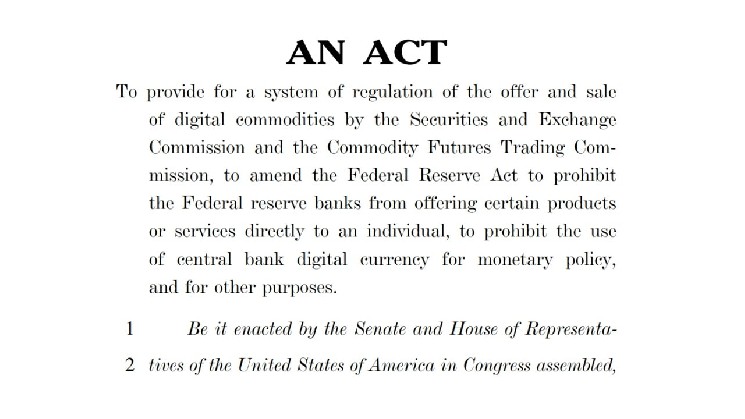
Global Crypto Regulation Tightens: Hong Kong, EU, and US Simultaneously Enforce Rules, Closing the Compliance Window? The global virtual asset regulatory landscape is shifting from rule-making to enforcement. Recent moves by Hong Kong, the EU, and the US signal a coordinated push towards market restructuring based on licensing, product classification, custody, and client segmentation. **Hong Kong**'s SFC issued a circular on "Relevant Stablecoins" on May 27, formally establishing a two-tier regulatory architecture where the HKMA oversees issuance and the SFC oversees trading and distribution. This creates differentiated, often lighter-touch, rules for compliant, licensed stablecoins compared to other virtual assets, fitting into a broader strategy to develop stablecoins as settlement infrastructure, tokenized securities as investment products, and licensed VATP platforms as distribution channels. The **European Union** is approaching a critical deadline, with the MiCA transition period ending on July 1. After this date, unlicensed Crypto-Asset Service Providers (CASPs) must cease serving EU clients. With only about 210 authorized CASPs across 23 member states so far, a significant market consolidation is expected, as the application process now takes 6-9 months. In the **United States**, the CLARITY Act passed a key Senate committee vote on May 14. This landmark bill aims to clarify jurisdiction between the SEC and CFTC, establish registration rules for trading platforms and custodians, and create a federal framework for stablecoin regulation. A key compromise prohibits "passive yield" on stablecoin balances but allows "activity rewards" tied to specific functions like payments. The convergence of these regulatory actions highlights a fundamental shift: stablecoins, with a payment volume rivaling major card networks, are being treated as critical financial infrastructure rather than unregulated digital assets. The core message is clear: compliance is transitioning from an operational cost to a mandatory license for market access, determining which players will participate in the next phase of the digital asset economy.

marsbit06/03 13:51

Global Crypto Regulation "Closing the Net": Hong Kong, EU, US Simultaneously Take Action, Is the Compliance Window Closing?

marsbit06/03 13:51

Senior Analyst Dialogue: What Powell's Departure and Warsh's Appointment Mean for Crypto?

The podcast episode "Powell Is Out, Warsh Is In: What It Means for Crypto" features an analysis by Noelle Acheson on the macro-economic landscape and its implications for crypto. Key discussion points include: * **Equity-Bond Divergence:** Acheson highlights a significant and growing disconnect between stock and bond markets. While bond yields rise globally, signaling tighter financial conditions, equities are driven by AI-related hype and speculation, reminiscent of the 1999 dot-com bubble. * **'Bliss Trade' and Systemic Fragility:** The discussion explores the concept of a structural, cross-party government expectation to provide fiscal support ("Bliss Trade"), which underpins risk asset valuations and carries its own systemic vulnerabilities. * **Inflation Outlook:** Acheson argues that inflation is not meaningfully declining, citing core CPI stagnation and attributing the trend to de-globalization, tariffs, and geopolitical tensions like the Strait of Hormuz crisis. * **Powell's Legacy:** Powell's tenure receives mixed marks. While his defense of Fed independence is noted, he is also criticized for overseeing the "de-banking" of crypto firms in 2023 and initially misjudging inflation. * **Outlook for Warsh:** Expectations for the incoming Fed Chair, Kevin Warsh, are measured. While he may aim to reduce Fed balance sheet size and forward guidance, market realities and the FOMC will likely constrain his ability to enact significant policy shifts, particularly rate cuts. * **Crypto as a Macro Asset:** Bitcoin's role is framed as a hedge against currency debasement, benefiting from expectations of monetary stimulus. However, its maturation as a macro asset means it now competes with other high-volatility investments like AI stocks, potentially limiting near-term price catalysts. * **Market Structure & Tokenization:** The potential Clarity Act is seen as more beneficial for assets like Ethereum than Bitcoin, which already has relative regulatory clarity. Concerns are raised about "innovation exemptions" for tokenization if they enable third-party derivatives that encourage pure speculation over capital formation. In conclusion, the analysis suggests crypto markets lack a near-term positive catalyst and are caught between competing macro narratives, with significant underlying fragilities in traditional markets.

marsbit05/22 09:29

Senior Analyst Dialogue: What Powell's Departure and Warsh's Appointment Mean for Crypto?

marsbit05/22 09:29

活动图片