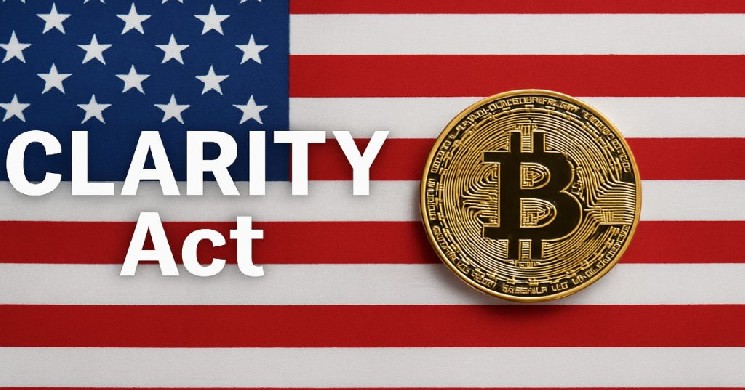
# CLARITY Act Related Articles

HTX News Center provides the latest articles and in-depth analysis on "CLARITY Act", covering market trends, project updates, tech developments, and regulatory policies in the crypto industry.
Morning Post | Digital Bank Fasset Completes $51M Series B Funding; Jane Street Increases Holdings in Ethereum ETFs and Galaxy Digital in Q1; SATA to Pay Cash Dividend Starting June 16

"ChainCatcher" News Summary: **Key Developments:** - **Jane Street**: Q1 saw significant reductions in Bitcoin ETF holdings alongside increased positions in Ethereum ETFs and Galaxy Digital. - **Morgan Stanley**: Substantially boosted Bitcoin ETF exposure in Q1, with holdings in BlackRock's IBIT surging 174%. The bank also initiated positions in a Solana ETF and increased Ethereum ETF holdings while exiting XRP ETF positions. - **CME Group**: Plans to launch Nasdaq CME Cryptocurrency Index Futures (subject to regulatory review) on June 8th, offering exposure to a basket of top cryptocurrencies. - **Fasset**: The stablecoin-focused digital bank completed a $51 million Series B round with investors including SBI Group. It facilitates over $32 billion in annual transactions across 125 countries. - **SATA Dividend**: Strive's perpetual preferred stock (SATA) will begin paying cash dividends daily starting June 16th, a first for a U.S.-listed security, offering an effective annualized yield of ~13.88%. - **Consensys**: Has delayed potential IPO plans until autumn due to unfavorable market conditions. - **CLARITY Act**: Bipartisan negotiations stalled, with Democrats remaining divided over specific provisions. **Market Trends:** - **Meme Tokens**: GMGN data shows top-traded tokens on ETH, Solana, and Base chains over the past 24 hours, including HEX, SHIB, PEPE, TROLL, and others. **Featured Analysis:** Articles explore Kraken's acquisition of payment infrastructure company Reap, how the proposed CLARITY Act could uniquely benefit Ethereum, the rapid valuation growth of AI firm Anthropic, and the strategic rationale behind Circle's new ARC token alongside its public stock (CRCL).

链捕手05/15 01:40

Morning Post | Digital Bank Fasset Completes $51M Series B Funding; Jane Street Increases Holdings in Ethereum ETFs and Galaxy Digital in Q1; SATA to Pay Cash Dividend Starting June 16

链捕手05/15 01:40

Wall Street's 'Compliance Hunt': The Great Stablecoin Reserve Migration

In a concentrated move over the past week, several Wall Street giants have advanced their tokenized money market fund initiatives, signaling a strategic shift driven by impending U.S. stablecoin regulations. JPMorgan Chase launched its second such fund, JLTXX, on Ethereum, explicitly targeting future stablecoin issuer reserve needs. Concurrently, Franklin Templeton partnered with Kraken to integrate its BENJI tokenized funds onto the exchange platform for use as collateral and cash management tools. BlackRock further solidified its position by filing for two new tokenized funds with the SEC, aiming to convert its massive traditional stablecoin custody business into a tokenized model. These parallel developments represent a multi-pronged institutional "compliance hunt" to capture future crypto liquidity. BlackRock and JPMorgan are focusing on the backend, preparing to serve as the core reserve and settlement infrastructure for compliant stablecoins as outlined by the GENIUS Act. This act defines strict "qualified reserve asset" requirements for stablecoin backing while prohibiting interest payments to holders. Franklin Templeton and Kraken, however, are exploiting a potential regulatory gap. By offering a tokenized fund (BENJI) that is not a stablecoin, they aim to provide yield-bearing, collateralizable digital cash instruments, circumventing GENIUS Act's ban on stablecoin yield. The impending CLARITY Act, which will delineate digital asset market structure, is seen as a complementary piece to GENIUS. Its treatment of passive income could solidify the niche for instruments like BENJI. With conservative market size estimates for tokenized money market funds reaching hundreds of billions by 2030, Wall Street institutions are positioning themselves early, using on-chain settlement as a key competitive differentiator to offer superior liquidity and composability for the next generation of dollar reserves.

marsbit05/13 05:15

Wall Street's 'Compliance Hunt': The Great Stablecoin Reserve Migration

marsbit05/13 05:15

How Significant a Variable Will the CLARITY Act Be for the 2026 Midterm Elections?

Title: "The CLARITY Act" as a New Variable in the 2026 Midterm Elections Encryption regulation is emerging as a new variable in the 2026 U.S. midterm elections. According to a HarrisX survey, a bipartisan majority of registered voters supports the U.S. maintaining leadership in digital finance and the passage of the CLARITY Act. This legislation aims to define regulatory boundaries between the SEC and CFTC for digital assets, establish registration rules for exchanges and custodians, and enhance consumer protection. Political impact is significant: 37% of voters said they would be more inclined to support a senator who votes for the bill, resulting in a net electoral gain of +20 percentage points. Notably, 47% of voters indicated they would consider voting for a candidate outside their preferred party if that candidate supports the CLARITY Act while their own party does not. This cross-party appeal is even stronger among cryptocurrency holders and voters familiar with digital assets. The survey found that while general awareness of digital assets is limited, there is strong, bipartisan voter demand for clear federal rules. 70% of voters believe the U.S. should have passed clear crypto legislation already, and 62% deem it important for the U.S. to set global digital finance rules. Concerns about national security and the offshore concentration of crypto exchanges (8 of the top 10 are headquartered outside the U.S.) further drive support for federal action. Currently, 52% of voters support the CLARITY Act after hearing a neutral description, versus 11% opposed. Support is bipartisan, with net approval rates of +48 among Republicans, +43 among Democrats, and +32 among independents. The findings suggest that for candidates, supporting the CLARITY Act is a net political positive, offering a pathway to engage young voters, crypto holders, and swing voters. The core question in crypto regulation for U.S. politics is shifting from "whether to regulate" to "who can mobilize votes with it."

marsbit05/10 01:08

How Significant a Variable Will the CLARITY Act Be for the 2026 Midterm Elections?

marsbit05/10 01:08

活动图片