# Bubble Related Articles

HTX News Center provides the latest articles and in-depth analysis on "Bubble", covering market trends, project updates, tech developments, and regulatory policies in the crypto industry.

Big Short Prototype: Trillion-Dollar AI Investment Started on the Wrong Path from the Beginning

Michael Burry draws a parallel between a 19th-century case study and modern AI development to argue that the current path of large language models (LLMs) is fundamentally flawed. He references an 1880 article from the Smithsonian about Melville Ballard, a deaf man who, without formal language, engaged in complex abstract reasoning about the origins of the universe, life, and God. This story demonstrates that true reasoning and understanding exist prior to and independent of language. Burry contends that by prioritizing language processing over the development of genuine reasoning capabilities, LLMs are merely creating sophisticated mirrors of data, not true understanding. They operate in an intermediate zone, simulating reasoning but lacking the innate rational capacity that precedes language. This "language-first" approach, driven by immense computational brute force, leads to inherent flaws like hallucinations and an inability to achieve real comprehension. The proposed solution is a shift towards a "reasoning-first" architecture, which would focus on compressing information and utilizing System 2 reasoning to drastically reduce computational needs. Burry suggests that true AI must pass a "Ballard Test": demonstrating rational thought without language. He concludes by linking this technological critique to a cyclical pattern of speculative investment booms, comparing the current AI hype to the 19th-century mining speculation in San Francisco, warning of an inevitable bust if the foundational approach isn't corrected.

marsbit03/02 06:57

Big Short Prototype: Trillion-Dollar AI Investment Started on the Wrong Path from the Beginning

marsbit03/02 06:57

OpenAI Is Turning AI into a Nuclear Arms Race That Ordinary People Can't Afford

In a record-breaking funding round, OpenAI has secured $110 billion, raising its post-money valuation to $840 billion. This investment, led by Amazon, NVIDIA, and SoftBank, marks the largest-ever private tech funding and signals a new phase in the global AI race—one defined by extreme capital concentration and geopolitical significance. The scale of funding dwarfs the GDP of many mid-sized nations and equals nearly half of NVIDIA’s annual revenue. It also accounts for more than half of all AI startup funding in 2025, accelerating an industry-wide arms race in compute, talent, and model development. This capital influx, however, risks widening the gap between giants and smaller players, potentially stifling innovation and increasing market consolidation. Strategic investors are not merely providing capital: Amazon’s $50 billion commitment includes an eight-year, $100 billion cloud expansion deal. SoftBank’s $30 billion staged investment serves as both a hedge and a bridge for future sovereign wealth entrants. NVIDIA’s $30 billion replaces an earlier partnership promise and effectively locks up its advanced GPU supply, creating a closed loop that sidelines competitors. Despite ChatGPT reaching 900 million weekly active users and 50 million paid subscribers, OpenAI’s burn rate remains high. It spent $0.62 for every dollar earned in 2025, with cumulative cash burn projected to hit $1150 billion by 2029. At the same time, its market share is eroding amid rising competition from Google’s Gemini and Musk’s Grok. Facing mounting financial pressure, OpenAI is eyeing a potential IPO in Q4 2026. The offering could mark either the peak of the AI investment bubble or the beginning of the AGI era—but for now, the world watches as OpenAI races against capital, competition, and time.

marsbit02/28 11:46

OpenAI Is Turning AI into a Nuclear Arms Race That Ordinary People Can't Afford

marsbit02/28 11:46

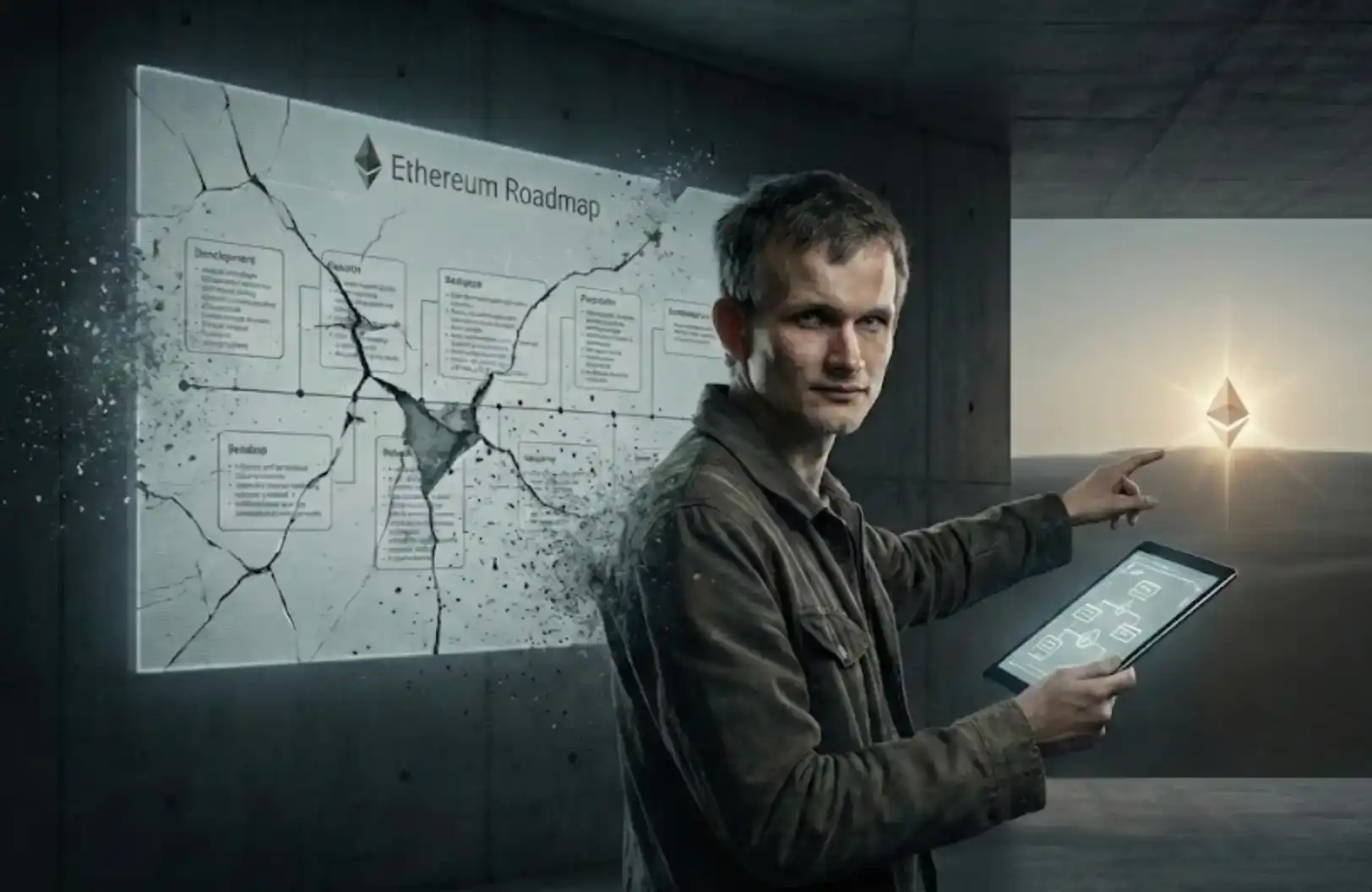
Five Years Later, Vitalik Overturns the Future He Set for Ethereum

Five years after championing Layer 2 (L2) scaling as Ethereum's future, Vitalik Buterin has dramatically reversed his position, declaring that L2s have largely failed to fulfill their original vision of "branded sharding." In a pivotal post, he argued that most L2 solutions remain highly centralized, reliant on multi-signature bridges and sequencers, and thus are not truly extending Ethereum's security or decentralization. The initial push for L2s was a survival response to Ethereum's cripplingly high fees and congestion during the 2021 DeFi and NFT boom, when competitors like Solana gained traction. However, despite massive venture funding—with projects like Arbitrum, Optimism, and Starknet raising billions—progress toward full decentralization (Stage 2) has been slow. Many operate more like centralized databases, prioritizing control and regulatory compliance over Ethereum's core values. Meanwhile, Ethereum itself has scaled significantly. Through upgrades like EIP-4844 and increased gas limits, L1 transaction fees have plummeted by over 99%, often costing just cents. This reduces L2's cost advantage and exposes their drawbacks: bridge vulnerabilities, fragmented liquidity, and complex user experiences. Vitalik now urges L2s to pivot from mere scaling to providing unique functional value—like privacy, ultra-fast finality, or application-specific optimizations—that L1 cannot easily offer. He reframes L2s as a spectrum of specialized "plugins" rather than essential scaling layers. This shift signals a market consolidation where only L2s with genuine utility and decentralization will survive, ending an era of inflated valuations and "ghost chain" projects. Ethereum is reclaiming its sovereignty by becoming scalable on its own terms.

marsbit02/04 05:52

Five Years Later, Vitalik Overturns the Future He Set for Ethereum

marsbit02/04 05:52

活动图片