# AI Related Articles

HTX News Center provides the latest articles and in-depth analysis on "AI", covering market trends, project updates, tech developments, and regulatory policies in the crypto industry.

ECB says correction is likely regardless of whether today's prices are rational or not

Five economists from the European Central Bank (ECB) published an analysis stating that a correction in stock market valuations is probable, regardless of whether current prices are rational or not. The analysis highlights that the valuation of US companies, measured by the CAPE ratio, is near its historical peak, with prices also elevated in the eurozone, albeit less so. It presents both rational and behavioral explanations for high valuations. The rational view suggests extreme uncertainty about new technologies (like AI) creates an "option value" justifying high price-to-earnings ratios, as seen with companies like Nvidia. However, as adoption spreads, the associated risk becomes systemic and undiversifiable, potentially leading to price corrections even without a drop in earnings. From a behavioral perspective, overconfident investors may drive prices above fundamentals; a loss of this confidence could trigger a sharp market decline. The economists note significant exposure for the eurozone's financial stability. Euro area households hold approximately €440 billion in US tech stocks, primarily through funds like ETFs. A market correction could force fund liquidations, creating a self-reinforcing sell-off cycle. They warn that such a correction is particularly risky as policymakers may have limited monetary or fiscal space to mitigate the fallout. While the eurozone's internal situation appears less strained than in 2000—with lower P/E ratios and growing digital investment—its markets remain vulnerable to a US sell-off due to high correlation. An AI-related downturn in the US would therefore likely impact the eurozone as well. The views expressed are the authors' own and do not necessarily reflect the ECB's position.

cryptonews.ru2 days ago 05:19

ECB says correction is likely regardless of whether today's prices are rational or not

cryptonews.ru2 days ago 05:19

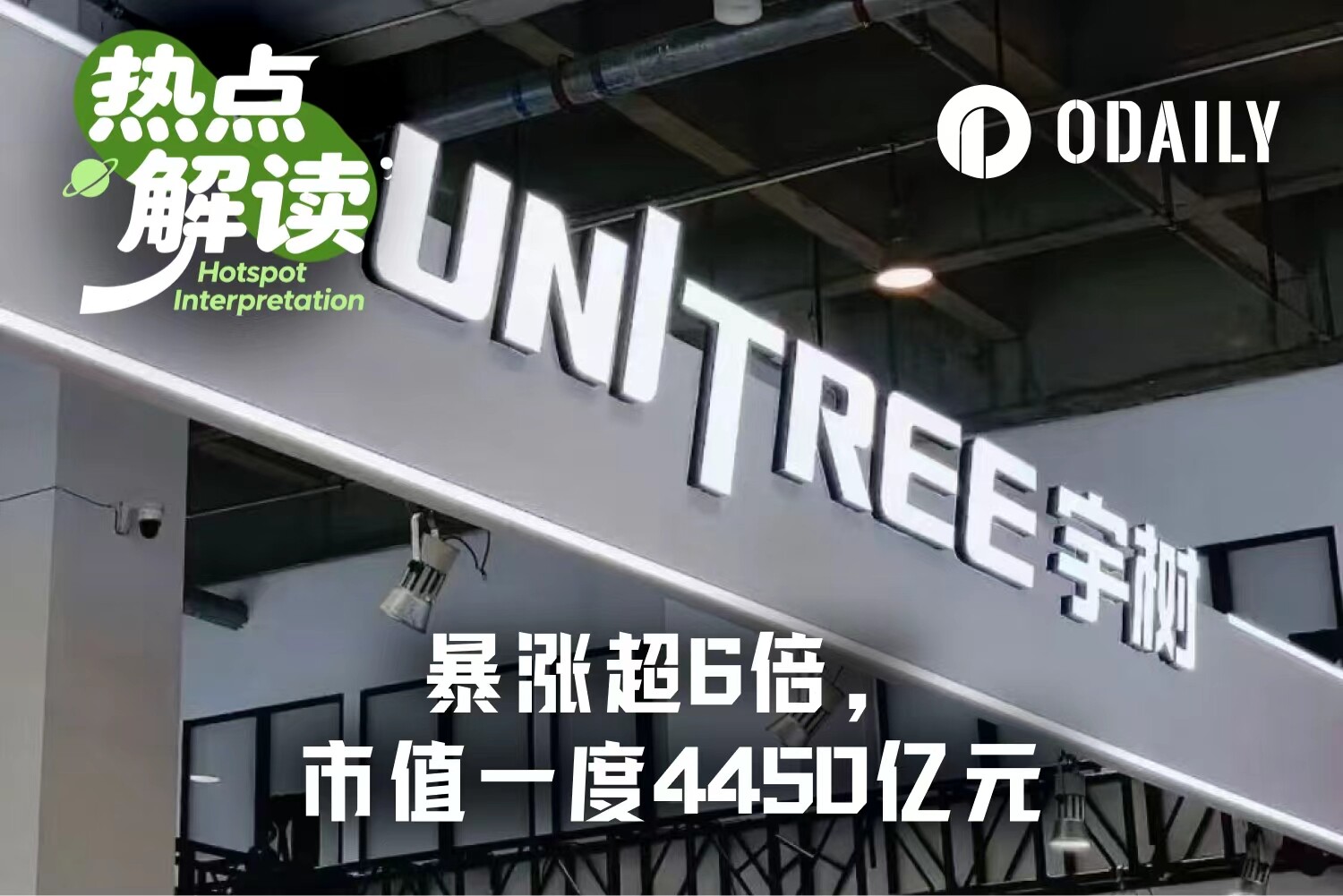
After Changxin, Yushu Takes the Lead: The Value and Weight of the First Humanoid Robot Stock

On August 19, 2026, Unitree Robotics (688836.SH), known as China's "first humanoid robotics stock," officially listed on the Shanghai Stock Exchange's STAR Market. The stock opened at 1,100 yuan, a surge of 629.44% from its 150.80 yuan IPO price, with its market capitalization briefly reaching 445 billion yuan. This highlights intense market enthusiasm for the humanoid robot sector. The IPO was characterized by high demand and low circulation, with only 7.44% of shares initially tradable. This scarcity, coupled with strong investor interest (record-high participation and a low 0.0181% lottery win rate), contributed to the dramatic price surge. Founder Wang Xingxing, holding over 31% of shares, saw his wealth exceed 110 billion yuan, making him China's wealthiest "post-90s" entrepreneur. Major institutional backers like Meituan, DeepSeek, Tencent, and Sequoia China also reaped substantial gains. Key to the valuation is Unitree's status as a profitable company in a field where many competitors are not. In 2025, it achieved 600 million yuan in adjusted net profit and delivered over 5,500 humanoid robots, ranking first globally in shipments. However, over 70% of its humanoid revenue still comes from R&D and education, with industrial applications accounting for only about 9%, indicating early-stage commercialization. The company faces competition from global players like Figure AI (est. $39-40B valuation), Boston Dynamics, and Tesla's Optimus, as well as domestic rivals like Zhiyuan and Ubtech. To become the "global humanoid robotics leader," its market cap would need to exceed 500 billion yuan. Market opinions on its future are divided: optimists cite its profitability, leading shipments, and strategic tie-up with DeepSeek; the cautious point to high valuations and unproven mass-market adoption; a neutral view expects a post-surge consolidation into an "earnings verification phase." Risks include high valuation digestion pressure, slower-than-expected commercialization in industrial/household settings, potential US FCC regulatory impacts on new models, intense competition, rapid technological iteration, and short-term stock volatility. The IPO marks a significant milestone, but Unitree's path to becoming a global leader remains challenging.

Odaily星球日报2 days ago 04:36

After Changxin, Yushu Takes the Lead: The Value and Weight of the First Humanoid Robot Stock

Odaily星球日报2 days ago 04:36

Token Economy Surges, Have Ordinary People Got a Slice of the Pie?

Token Frenzy: Is the Average Person Getting a Piece of the Pie? As AI adoption soars in China, daily Token consumption—the basic unit for AI text processing—has skyrocketed, exceeding 140 trillion. This "Token economy" is often measured like GDP, touted as a sign of progress. However, this metric primarily reflects supply-side activities: corporate investment, infrastructure scaling, and platform revenues. The crucial question of whether this growth translates into tangible benefits for ordinary citizens—higher wages, better jobs, improved public services, or increased leisure—remains largely unanswered. The article argues there's a fundamental mismatch. Policy, exemplified by subsidies in Beijing's Yizhuang district, often stimulates "demand" by incentivizing companies to consume more Tokens (an intermediate business cost), rather than by boosting household income or final consumer spending. This creates a closed loop where growth in Token usage justifies further production capacity expansion, without necessarily extending value to the broader population. Several disconnects are highlighted. High Token usage doesn't equal completed tasks, increased profits, or macroeconomic productivity gains. Even when corporate efficiency improves, the benefits may not trickle down due to existing economic structures favoring investment over household consumption. The risk is that AI, a genuinely productive technology, becomes another tool for supply-side expansion within a system adept at measuring output (like server capacity and call volumes) but less focused on distributing the gains widely. Drawing a parallel to Henry Ford's assembly line, the piece notes that Ford's revolution combined ruthless production efficiency with a social compact (higher wages, stability) that enabled mass consumption. Today's "Token economy" narrative enthusiastically champions the first part—process re-engineering and cost reduction—but lacks a credible mechanism for the second: ensuring that productivity gains lead to broader societal welfare. The ultimate challenge is not whether Tokens have value, but whether their economic benefits can escape a system that excels at building supply but struggles to cultivate its own demand.

marsbit2 days ago 03:47

Token Economy Surges, Have Ordinary People Got a Slice of the Pie?

marsbit2 days ago 03:47

Overnight Global Shock: Why Did AI Stocks Plunge Across the Board?

Overnight, U.S. AI-related stocks fell sharply, with the Nasdaq down 1.33% and the Philadelphia Semiconductor Index plunging nearly 5%. Panic spread globally, dragging down Asia-Pacific markets. Key negative drivers included: 1. **Geopolitical Tension & Macro Pressure:** Escalating U.S.-Iran tensions pushed oil prices higher, fueling inflation fears and expectations of prolonged high interest rates. Rising bond yields pressured high-valuation, capital-intensive AI stocks, especially as soaring AI infrastructure financing costs became evident. 2. **AI Commercialization Concerns:** OpenAI's Q2 results showed slowing revenue growth and widening losses, dampening market optimism about near-term AI application profitability. This shifted investor focus from pure capital expenditure narratives to actual commercial returns. 3. **Supply Chain Uncertainty:** U.S.-South Korea semiconductor investment disputes intensified. Market fears that Korean memory giants (Samsung, SK Hynix) face a dilemma—either divert capital to costly U.S. production or risk trade barriers—disrupted the critical HBM memory sector, amplifying sell-offs via leveraged ETFs. While long-term AI demand remains, the market is now scrutinizing real profitability, financing costs, and supply chain stability rather than paying premiums for unchecked growth stories. For markets like China's A-shares, the impact is primarily sentiment-driven, requiring distinction between short-term panic and fundamental deterioration.

marsbit2 days ago 03:46

Overnight Global Shock: Why Did AI Stocks Plunge Across the Board?

marsbit2 days ago 03:46

Ten Years, Wang Xingxing's Comeback: Unitree Valued at 400 Billion

Over a decade ago, Wang Xingxing, a 29-year-old with a passion for robotics but little funding, demonstrated his struggling robot dog to investors in Hangzhou. In 2019, with his company Unitree nearly out of cash, he captured the attention of Sequoia Capital China's managing director Li Yannan. Despite initial skepticism about the niche market for robot dogs, Wang's vision and deep technical conviction led Sequoia to make an initial seed investment. This marked a turning point. Following Sequoia's lead, a wave of prominent investors including Meituan, Tencent, Alibaba, and various venture capital and state-backed funds joined subsequent funding rounds. Wang's relentless focus and Unitree's technological advancements propelled the company to become a global leader in humanoid robotics. On August 19th, 2027, Unitree Robotics debuted on Shanghai's STAR Market as the first listed humanoid robotics company in China. Its shares skyrocketed over 500% at opening, reaching a market valuation of approximately 400 billion yuan. Wang Xingxing became one of the wealthiest individuals of his generation on the exchange, while Sequoia China, having invested across multiple rounds, remained a major shareholder. The story is celebrated as a classic outlier's triumph—a founder without elite credentials achieving success through pure belief and perseverance. Unitree's IPO is seen as a major milestone for China's embodied AI industry, providing a valuation benchmark and accelerating the sector's maturation. As Wang once stated, he aims to be "a small boat riding the mighty torrent of technology." His journey symbolizes the beginning of a new narrative for Chinese robotics on the global stage.

marsbit2 days ago 02:21

Ten Years, Wang Xingxing's Comeback: Unitree Valued at 400 Billion

marsbit2 days ago 02:21

Manufacturing's Share Drops Below 25%: Is Hangzhou Unconcerned?

Hangzhou is entering a critical phase of industrial restructuring. While its manufacturing-to-GDP ratio has fallen below 25%, the city is not alarmed. Instead, it is strategically navigating a dual focus: advancing advanced manufacturing and expanding its service sector, particularly producer services. Recently, the city celebrated the IPO of a humanoid robotics company, seen as a milestone in moving beyond its e-commerce era. Simultaneously, it set an ambitious target for its service sector: to exceed 2 trillion yuan in value by 2030, with producer services making up over 60%. Data shows a clear trend: the service sector's share of GDP has risen to 75.3%, while manufacturing's share has declined to around 20.1%. This shift revives the debate on whether a strong service sector weakens a city's manufacturing "foundation." Hangzhou's approach challenges the notion of a fixed manufacturing "red line" near 25%. The city argues that the quality and integration of industries matter more than simple ratios. Its strategy is "using software to drive hardware," leveraging its core strengths in digital economy and producer services—like R&D, software, and supply chain management—to empower and add value to manufacturing. This is embodied by its emerging "AI era" companies, whose innovation in Hangzhou feeds into national industrial chains. The city believes that for a hub like Hangzhou, the key is not merely boosting visible manufacturing output, but strengthening the "invisible" competitive edge provided by high-end producer services, which ultimately determine manufacturing profitability. National policy is also shifting from insisting on a "stable" manufacturing share to acknowledging a "reasonable" range, allowing for quality-focused development. Hangzhou's future industrial blueprint aims for a manufacturing share above 22% of GDP by 2027, coupled with a dominant, high-value service sector. The goal is not to choose between manufacturing and services, but to deeply integrate them, using advanced services as the accelerator for next-generation manufacturing.

marsbit2 days ago 01:56

Manufacturing's Share Drops Below 25%: Is Hangzhou Unconcerned?

marsbit2 days ago 01:56

U.S. Stock Market Trends (August 19th): AI Hardware Rally Loosens, Long-Term Bond Yields Challenge Tech Valuations

U.S. stocks weakened further on Tuesday, with major indices hitting two-week lows for a third consecutive session. Pressure centered on the AI hardware sector, as the previously rebounding Philadelphia Semiconductor Index fell sharply. Meanwhile, persistently high long-term Treasury yields and rising oil prices fueled by Middle East tensions prompted a cautious reassessment of high-valuation tech assets. Key closing data: The S&P 500 fell 0.69%, the Dow Jones dropped 0.22%, and the Nasdaq declined 1.33%. The 10-year Treasury yield hovered near 4.70%, while the 30-year yield briefly touched a new high since 2007 before settling around 5.28%. WTI crude rose to $84.94. The chip sector led the decline, with the Philadelphia Semiconductor Index dropping about 5%. Losses spread across memory, optical communication, and AI infrastructure stocks. This shift indicates investor focus is moving from chasing AI demand momentum to evaluating valuations and earnings timing. The "Magnificent Seven" stocks showed mixed performance, with pressure more concentrated on AI hardware than software giants. The market is observing whether capital will rotate back to large-cap tech, sustaining the internal AI sector rotation, or if the broader AI trade is entering a cooling phase. Chinese stocks were mostly weaker, with the Nasdaq Golden Dragon China Index down about 1%. Baidu's stock fell sharply post-earnings due to profit pressure from AI investments, while Alibaba gained. Persistently high long-term bond yields and rising oil prices are re-emerging as key anchors for U.S. stock pricing, constraining valuation multiples for AI-related companies. Corporate events, including earnings from Home Depot and AI financing news like Anthropic's reported credit line expansion, continue to highlight cost and capital expenditure pressures. Focus for the coming sessions: 1) Whether the 30-year Treasury yield stabilizes below 5.30%, and 2) The market's ability to absorb the chip sector sell-off, determining if it's a pre-earnings consolidation or the start of a broader AI hardware cool-down.

marsbit2 days ago 01:41

U.S. Stock Market Trends (August 19th): AI Hardware Rally Loosens, Long-Term Bond Yields Challenge Tech Valuations

marsbit2 days ago 01:41

Lei Jun Reports Xiaomi's Q2 Performance, Phone Premiumization Takes Effect, While Automotive and AI Continue 'Burning Cash'

Xiaomi released its Q2 2026 financial results, showing mixed performance. Total revenue was approximately 108.9 billion yuan, down 6.1% year-over-year, while adjusted net profit fell 42.6% to about 6.2 billion yuan. The company's core smartphone business saw a 7.5% decline in revenue to 42.1 billion yuan, primarily due to lower shipment volumes, partially offset by a record high average selling price (ASP) which rose 25.9%. Xiaomi's global smartphone market share held steady at third place. Its AIoT platform connected over 1.16 billion devices, a 17.4% increase. Despite pressures on traditional revenue streams, Xiaomi continues heavy investment in new growth areas. Its innovation segment, encompassing smart electric vehicles and AI, generated 24.9 billion yuan in revenue (up 17.1%), but reported an operating loss of 2.6 billion yuan. Capital expenditure for these businesses reached 2.4 billion yuan in Q2. Vehicle deliveries grew 28.2% to 104,199 units, with cumulative deliveries for the SU7 series surpassing 500,000 units by mid-August. The company also highlighted significant R&D spending of 9.2 billion yuan for the quarter. On the technology front, Xiaomi announced several AI and software developments, including the new Xiaomi HyperOS 4, the "Super Xiaoai 2.0" assistant, and advancements in its MiMo large language model and robotics platform. The company noted its first-generation self-developed chip, the Xuangjie O1, has surpassed one million units shipped across three products, with a new generation chip soon to be released. Management acknowledged that memory price increases impacted low-end phone sales more severely but expects the trend to moderate.

marsbit2 days ago 23:56

Lei Jun Reports Xiaomi's Q2 Performance, Phone Premiumization Takes Effect, While Automotive and AI Continue 'Burning Cash'

marsbit2 days ago 23:56

Wall Street Analyst Predicts SpaceX Stock Price Drop to $75

A Wall Street analyst from Phillip Securities, Glenn Tumm, has issued a "Sell" recommendation for SpaceX stock (SPCX), maintaining a 12-month price target of $75. This implies a potential 46.6% drop from the current price of $140.50. The bearish outlook is based on the company's significant capital expenditures, reliance on temporary cloud service contracts, and customer concentration in its AI services, suggesting a need for longer-term commitments to support its valuation. This stance contrasts sharply with the broader Wall Street consensus. An average of 31 analysts polled by TipRanks sets a 12-month price target of $232.35, implying 64% upside, with the highest forecast at $800 and the lowest at $75. The report follows SpaceX's impressive Q2 2026 results, where total revenue surged 92% year-over-year to $7.8 billion. Starlink subscriber count doubled to 12 million, driving communications revenue up 66% to $4.3 billion. AI-related revenue skyrocketed 247% to $2.6 billion, fueled by new cloud services and infrastructure deals. Despite the strong earnings, SPCX shares fell over 4% in the last 24 hours, reducing the company's market cap to $1.9 trillion. The stock had initially jumped over 17% post-earnings but faced resistance near $149. The analyst concludes that SpaceX's future trajectory hinges on securing more long-term contracts with its AI and Starlink customers. Success could validate Wall Street's bullish forecasts, while failure may render the recent stock rebound temporary.

cryptonews.ru2 days ago 22:34

Wall Street Analyst Predicts SpaceX Stock Price Drop to $75

cryptonews.ru2 days ago 22:34

活动图片