# AI Investment Related Articles

HTX News Center provides the latest articles and in-depth analysis on "AI Investment", covering market trends, project updates, tech developments, and regulatory policies in the crypto industry.

Insiders Betting on Musk Are Reaping 'Historic Returns'

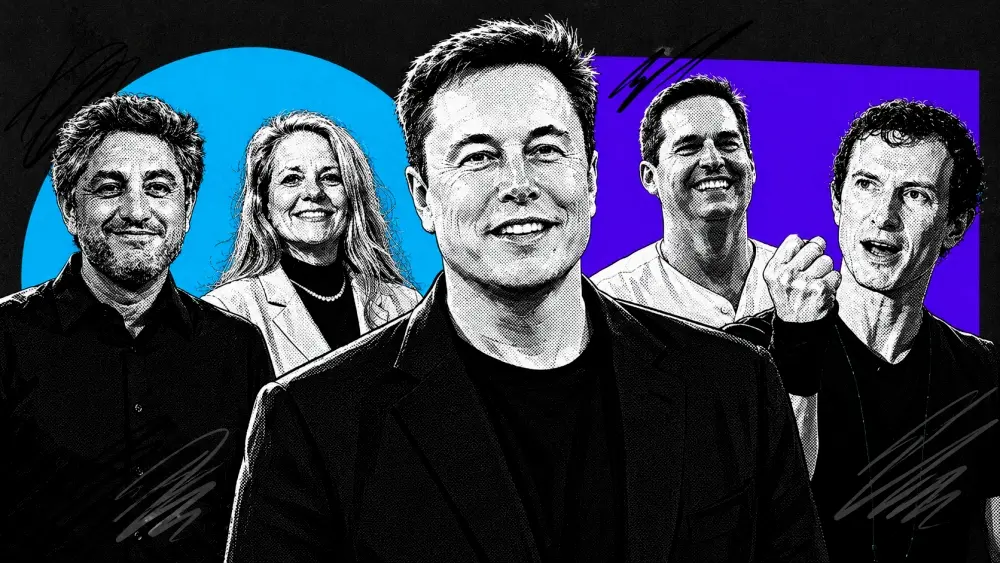
The largest IPO in history is imminent as SpaceX, led by Elon Musk, is set to price its offering on June 12. At a targeted valuation near $2 trillion, this event will mint new billionaires from Musk's inner circle of long-time allies, rewarding their loyalty with unprecedented returns. Key beneficiaries include Antonio Gracias, Musk's close friend and confidant, who holds a 7.3% stake potentially worth over $140 billion, making him the second-largest individual shareholder. Gwynne Shotwell, President and COO since 2002, holds shares valued at roughly $2 billion. Bret Johnsen, the CFO, holds stock worth approximately $1.4 billion. Luke Nosek, a PayPal co-founder and early investor, stands to gain about $5.3 billion. The IPO filing also reveals complex and controversial financial arrangements. SpaceX has guaranteed nearly $20 billion in payments from xAI's subsidiary to Gracias's Valor Equity Partners for AI hardware leases—deals auditors flagged as "failed sale-leaseback" transactions, forcing SpaceX to record them as debt. Despite rapid revenue growth, SpaceX is not profitable, posting a $49 billion loss in 2025 and a $4.3 billion loss in Q1 2026. Capital expenditures are soaring, with over 60% directed toward AI. Public investors will inherit these losses, significant debts, and a governance structure heavily controlled by insiders, including a provision granting Musk up to a billion additional shares if one million people live on Mars.

链捕手05/26 07:41

Insiders Betting on Musk Are Reaping 'Historic Returns'

链捕手05/26 07:41

Bezos, Schmidt, Powell Jobs: The Three AI Investment Philosophies of Silicon Valley's Old Money

Jeff Bezos, Eric Schmidt, and Laurene Powell Jobs, three prominent figures from Silicon Valley's "old money," are deploying massive personal fortunes into AI, but with distinctly different investment philosophies reflecting their visions for the future. Eric Schmidt, the former Google CEO, approaches AI as a geopolitical and infrastructural arms race. Through his family office, Hillspire, he invests heavily in defense AI companies, energy infrastructure (like Bolt Data & Energy to power data centers), and space launch capabilities (Relativity Space). For Schmidt, the ultimate AI advantage lies in physical resources—energy, transport, and military application—framing it as a national competition requiring state-level strategy and endurance. Jeff Bezos is building a vertically integrated, full-stack AI empire. His bets span the model layer (via Amazon's massive investment in Anthropic), the application layer (through investments like Perplexity), and now, the physical execution layer. His new venture, Project Prometheus, with $6.2 billion, aims to inject AI into manufacturing, creating a closed loop from AI chips and cloud compute (AWS) to real-world production, potentially for Amazon's own ventures like the Kuiper satellite network. In contrast, Laurene Powell Jobs adopts a more subtle, human-centric approach through her Emerson Collective. Her AI investments focus on specific, positive-impact applications—such as AI for healthcare (Proximie, Atropos Health), education (Curipod), and European AI sovereignty (Mistral AI). A key, high-profile bet was her early backing of Jony Ive's design firm LoveFrom and its spin-off, io, an AI hardware device company later acquired by OpenAI. Her philosophy prioritizes improving human-machine interaction and addressing societal needs over sheer scale or control. These three strategies—Schmidt's focus on state-level infrastructure and security, Bezos's pursuit of end-to-end industrial integration, and Powell Jobs's emphasis on human-centered design and applied solutions—represent fundamentally different wagers on what will define the next decade of AI. While the eventual winner is unknown, the sheer scale of this capital migration from internet-era giants is already reshaping the industry's trajectory.

marsbit05/14 08:11
Bezos, Schmidt, Powell Jobs: The Three AI Investment Philosophies of Silicon Valley's Old Money

marsbit05/14 08:11

a16z Weekly Chart: Tech Giants Rely on 'Side Hustle' Investments for Income, Great AI Products Can Sell Out in a Day

a16z Weekly Charts: Four Counterintuitive Signals in Tech 1. **Super Platforms' "Other Income"**: Amazon and Google recorded exceptionally high "other income" in Q1, largely from unrealized gains in their private investment portfolios (e.g., Amazon's Anthropic stake). This contributed to over one-third of their net profit, far above the historical 5-10%. The broader trend shows tech capital expenditure is now the primary driver of US GDP growth, accounting for 55% of all business investment. 2. **AI-Generated eBook Proliferation**: Since ChatGPT's launch, monthly eBook releases on Amazon have tripled to over 300,000, flooding the platform with AI-generated content. However, research indicates this has also increased the volume of "decent" books, providing a net gain in consumer surplus by 2025. AI tools have particularly boosted productivity for established authors. 3. **Call Center Jobs Defy AI Replacement**: Contrary to predictions, call center employment in the Philippines has grown steadily from 1.15 million in 2016 to 1.9 million in 2025, with further growth projected. In the US, customer service job postings are outperforming the overall market. The key reason: the full cost of voice AI agents remains roughly equal to human agents (~$92 vs. ~$90 per day). Cases like Klarna show initial replacement can lead to quality issues and re-hiring. 4. **Rapid Adoption of AI Mobile Apps**: AI app downloads, revenue, and user time spent on mobile nearly doubled year-over-year in Q1. The market is highly dynamic, with new products like Codex quickly surpassing incumbents like Claude Code in daily installs. In the B2B space, enterprises are using multiple AI vendors, with less than 20% relying on a single supplier, indicating no winner-takes-all dynamic yet.

marsbit05/09 04:38

a16z Weekly Chart: Tech Giants Rely on 'Side Hustle' Investments for Income, Great AI Products Can Sell Out in a Day

marsbit05/09 04:38

$500 to Buy OpenAI Stock: Silicon Valley's Most Respectable Liquidity Invitation

Silicon Valley's largest venture capital platform, AngelList, has launched a new fund called USVC, allowing U.S. retail investors to buy into high-profile AI companies like OpenAI, Anthropic, and xAI with a minimum investment of $500—no accredited investor status required. Promoted by AngelList co-founder Naval Ravikant, the fund is framed as an opportunity for ordinary people to access high-growth private tech investments traditionally reserved for VCs. However, critics argue it functions more like an exit vehicle for early insiders. USVC acquires shares not through primary rounds but largely via secondary transactions—purchasing stakes from early investors, VC funds, and employees looking to cash out at peak valuations. With companies like xAI heavily weighted in the portfolio, the fund effectively channels retail money into providing liquidity for insiders who entered at much lower valuations. The fund’s structure raises concerns: shares are illiquid, with no secondary market, and buybacks are limited and discretionary. The actual annual fee reaches 3.61%, far above the advertised 1% management fee. This model parallels the "low float, high fully diluted valuation" strategy seen in crypto, where early investors profit by selling to latecomers at inflated prices. The timing—alongside similar moves by platforms like Robinhood—suggests that Silicon Valley’s sudden interest in retail inclusion may be less about democratizing access and more about securing exits for insiders.

marsbit04/23 05:31

$500 to Buy OpenAI Stock: Silicon Valley's Most Respectable Liquidity Invitation

marsbit04/23 05:31

$700 Billion Poured into AI, Americans Taste the Bitter Fruit of Inflation First

A Federal Reserve analysis from the St. Louis Fed argues that AI optimism itself is a driver of inflation. The "news shock" of AI's revolutionary potential causes households and businesses to increase spending and investment in anticipation of future gains, pushing demand beyond current supply and creating inflationary pressure. This is supported by a Deutsche Bank experiment where AI models (dbLumina, Claude, ChatGPT-5.2) assessed a 20-40% probability that AI would raise inflation in the next year, citing surging demand for data centers, semiconductors, and electricity. They saw only a 5% chance of AI significantly reducing inflation. Massive capital expenditure underscores this demand. Amazon, Microsoft, Google, and Meta are projected to spend a combined ~$663B in 2026, a fourfold increase in four years. A significant portion funds power-hungry data centers. For example, OpenAI's "Stargate" project plans a 10-gigawatt capacity, equivalent to the entire electricity load of 16 Vermont states. U.S. data center electricity consumption is forecast to triple by 2030. While AI could eventually boost productivity and be disinflationary long-term, current data shows no such productivity jump. The U.S. economy now faces a cycle: massive AI investment fuels inflation, delays interest rate cuts, raises financing costs—yet the investment continues to accelerate. The outcome hinges on whether these AI models will ultimately make the economy more efficient, a question that remains unanswered.

marsbit04/02 11:03

$700 Billion Poured into AI, Americans Taste the Bitter Fruit of Inflation First

marsbit04/02 11:03

活动图片