# Сопутствующие статьи по теме Agents

Новостной центр HTX предлагает последние статьи и углубленный анализ по "Agents", охватывающие рыночные тренды, новости проектов, развитие технологий и политику регулирования в криптоиндустрии.

Learn Codex with the "Morning Briefing": Six Replicable Levels of Use

This article introduces a "Morning Briefing" as a simple, progressive framework for learning to effectively use Codex (an AI assistant), moving from basic information gathering to a more sophisticated, autonomous work partner. It outlines six actionable levels: **Level 1: Basic Information Query.** Start by simply asking Codex to check your Slack, Gmail, and Calendar to summarize what needs your attention today. **Level 2: Personalization with an Agents File.** Create a persistent file containing your default preferences for the briefing's format and content, so it's consistently useful. **Level 3: Automation.** Set the briefing to run automatically every weekday morning, creating a reliable starting point for your day. **Level 4: Project-Specific Briefings.** Instead of one overwhelming summary, create separate, dedicated threads for different projects (e.g., a launch, recruitment), each with its own focused briefing. **Level 5: Drafting Follow-Up Actions.** Elevate the briefing from a summary to an action starter by having it draft replies, prepare meeting notes, or highlight stalled decisions—ready for your review. **Level 6: Building a Memory System (Vault).** Integrate a knowledge vault (a structured file system) where important recurring information (project statuses, key people, decisions) is stored and updated. The briefing consults this vault to provide richer context and learns over time. The approach's strength is its incremental nature. Each level teaches a core Codex capability (connectors, personalization, automation, project context, assisted work, persistent memory) within a familiar, practical workflow, avoiding overwhelming theoretical concepts. It transforms a simple daily check-in into a personalized, evolving work operating system.

marsbit11 ч. назад

Learn Codex with the "Morning Briefing": Six Replicable Levels of Use

marsbit11 ч. назад

YC Partner: How to Build a Self-Evolving AI-Native Company

YC Partner Tom Blomfield argues that the future lies in building AI-native companies designed as self-evolving systems, not just applying AI to traditional, hierarchical "Roman legion" structures. The core idea is to extract and codify all organizational knowledge—scattered across emails, Slack, documents, and human minds—into a central, AI-readable "company brain." This enables the creation of recursive AI loops that sense changes (from emails, support tickets, data), make decisions, execute via tools, and learn from feedback, all with minimal human intervention. YC exemplifies this with an agent that monitors failed queries, autonomously diagnoses the issue (e.g., needing a new database or index), writes code, submits it for review, and deploys fixes—optimizing the company while founders sleep. This shift redefines organizational structure: the bottleneck becomes token usage and context quality, not headcount. Middle management for coordination is largely obsolete. The critical human roles are individual contributors (ICs) and those handling high-risk, real-world judgments at the system's edge. Key steps include recording all organizational activity for AI, creating self-improving artifacts (like an AI-generated, living handbook), and treating internal software as temporary and disposable, while preserving valuable business context and data. The fundamental question for founders is whether to build their company as this new type of intelligent, self-optimizing system from the start.

marsbit16 ч. назад

YC Partner: How to Build a Self-Evolving AI-Native Company

marsbit16 ч. назад

Agents Capital Markets: How Will Autonomous Agents Secure Financing?

Agents Capital Markets: How Will Autonomous Agents Raise Capital? Within a decade, autonomous software agents—legal entities capable of signing contracts, holding bank accounts, and generating revenue—will create their own capital markets. These markets will feature rating agencies, underwriters, indices, and brokers, mirroring traditional public equity markets. Agents will perform routine services like marketing, logistics, and customer support at a fraction of human-operated costs, creating massive economic pressure for adoption. Four converging forces ensure this outcome: 1) Overwhelming cost advantages, with AI inference costs plummeting; 2) Existing, revenue-generating agent companies (e.g., Sierra, Harvey) proving market demand; 3) Established legal frameworks (e.g., Wyoming's memberless LLCs) enabling algorithmic management; and 4) A vast pool of yield-seeking private credit capital ready to fund new asset classes. The capital stack for agent companies will be multi-layered, evolving through stages: venture equity for early infrastructure, programmatic working capital advances (similar to Shopify Capital), revenue-based financing (RBF), and finally, institutional slate financing—pooling many agents to diversify risk, attracting large firms like Apollo. Tokenization will act as a settlement layer, enhancing liquidity, not an origination model. Objections regarding regulation, human oversight, or comparisons to SaaS are addressed: regulation will adapt, full autonomy will dominate for efficiency, and agents are distinct as legal entities that own their cash flows and liabilities. Due diligence shifts from founder assessment to analyzing code, contracts, and auditable operational history. The current bottleneck is not capital supply or demand but the intermediate institutional layer—standardized contracts, rating methodologies, and audit frameworks. The final constraint—reliance on human capital allocation—will be severed when agents can algorithmically access funding based on their performance. This transforms agents from software curiosities into fundable blocks of the real economy, unleashing their full productive potential. The rope is loosening.

marsbitВчера 05:39

Agents Capital Markets: How Will Autonomous Agents Secure Financing?

marsbitВчера 05:39

Agents Capital Markets: How Will Autonomous Agents Get Funded?

"Agents Capital Markets: How Autonomous Agents Will Raise Capital" Within a decade, specialized capital markets will emerge for AI Agents—software entities with legal personhood that perform work, earn revenue, and need capital. Unlike today's AI companies (like Sierra or Harvey) backed by traditional VC, these future *Agent companies* will be autonomous, legally-recognized entities (e.g., Wyoming memberless LLCs) that directly own assets, sign contracts, and incur liabilities. The driving forces are fourfold: 1) **Overwhelming economics** (Agent companies can deliver services at 85-90% lower cost than human firms); 2) **Proven demand** (current Agent operators already generate billions in revenue); 3) **Existing legal frameworks** enabling algorithmically-managed companies; and 4) **Massive, yield-seeking capital pools** (e.g., private credit) looking for new, uncorrelated assets. Agent capital markets won't rely on one model but a multi-layered "stack" matching different growth stages: 1) VC equity for early human-led builders; 2) Programmatic working capital advances (like Stripe Capital); 3) Revenue-based financing (RBF); 4) Slate financing (pooled funds for many Agents, similar to Hollywood); and 5) Tokenization as a secondary settlement layer, not a primary funding source. The ultimate shift is from funding constrained by human decision-makers to capital flowing algorithmically based on an Agent's auditable performance, contract book, and cash flows. This transition will be enabled by standardized infrastructure—rating methodologies, contracts, indices—turning Agents from software experiments into a foundational, financeable sector of the economy. The constraints are loosening; the opportunity is here.

链捕手Вчера 05:15

Agents Capital Markets: How Will Autonomous Agents Get Funded?

链捕手Вчера 05:15

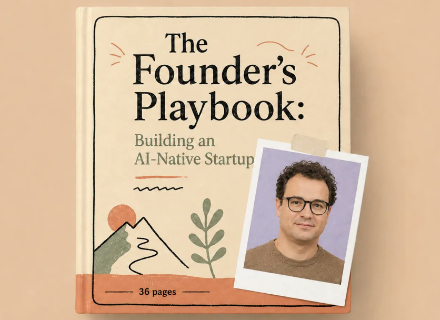
Anthropic Founder's Handbook: How to Build an AI-Native Company!

Anthropic has released "The Founder's Playbook: How to Build an AI Native Company," a guide that reimagines the startup lifecycle (Ideation, MVP, Launch, Scale) for 2026-era AI capabilities. The core thesis is that AI is fundamentally changing how ideas become reality, shifting the founder's role from an individual contributor to an orchestrator of AI agents. This lowers execution barriers, allowing domain experts (e.g., in medicine, law, education) to build products without deep technical skills, as AI can handle prototyping, coding, research, and operations. However, the playbook warns that easier prototyping increases the risk of building products no one needs, emphasizing that validation, not just building, is critical. It highlights that AI enables small teams to possess capabilities once reserved for large organizations, compressing functions like development, marketing, and support. This challenges traditional competitive advantages based on organizational size. For AI-native companies, sustainable moats will not come from the AI model alone but from deep domain knowledge, user data flywheels (behavioral fingerprints from real usage), and workflow lock-in that makes switching costly. Ultimately, the guide signals a shift in focus from raw model capability to how AI fundamentally reshapes company structure, processes, and competitive strategy. An AI-native company is defined not by using AI tools but by embedding AI into its core operational DNA from inception.

marsbitВчера 03:54

Anthropic Founder's Handbook: How to Build an AI-Native Company!

marsbitВчера 03:54

In the AI Era, How to Onboard Without Starting from Scratch

In the AI era, onboarding new employees often resembles a botched relay race baton handoff, where the organization maintains speed while the newcomer starts from zero. The author, after joining Ramp, argues the core problem is a lack of accessible, shared organizational "context"—the collective knowledge from meetings, documents, Slack discussions, and decisions. Instead of relying on slow, manual onboarding or isolated AI tools, the solution is building a continuously updated "company brain." This system acts as a central, AI-native knowledge base that absorbs all company signals. The author describes building a prototype using an Obsidian vault powered by Claude, fed by automated meeting transcripts and notes, and topped with reusable agent "skills." The current enterprise AI approach, deploying specific workflow agents, is likened to the "chatbot era"—useful but disconnected. The real gap is the absence of a shared brain that all agents and employees can access from day one. The future lies in making context layer infrastructure the priority: write context first, then install tools; record every meeting; build the wiki before the dashboard. When new hires, AI agents, and even customers can immediately access this living company brain, the costly "ramp-up" period becomes obsolete. True organizational speed is achieved when maximum velocity and seamless context transfer happen simultaneously.

marsbit05/17 06:03

In the AI Era, How to Onboard Without Starting from Scratch

marsbit05/17 06:03

The AI Agent Era Accelerates Its Arrival: Questflow Defines a New Paradigm of Financial Intelligence with On-Chain AI Brokerage

The AI Agent era is accelerating, with the CB Insights AI 100 list highlighting global investment confidence. The focus has shifted from whether AI works to its speed of deployment and ability to manage complex workflows, with autonomous AI Agents driving this transformation. At the forefront is Questflow, a Singapore-based startup redefining financial intelligence through its on-chain AI brokerage. Unlike tools that merely provide data dashboards, Questflow deploys AI Agents that proactively scan markets, form judgments, and execute trades via a conversational interface—operating 24/7 without requiring manual confirmation for each decision. This embodies the new AI paradigm of agents capable of executing multi-step workflows autonomously. Questflow's mission is to democratize institutional-grade trading intelligence. Historically reserved for the ultra-wealthy, this capability is now accessible starting from just $1 through Questflow's "AI Clone + Copy Trade" model. The platform charges only a 1% execution fee, aligning its incentives directly with users and eliminating traditional management or performance fees. The timing is opportune, aligning with key trends identified by CB Insights: the scalable deployment of AI Agents, accelerated AI adoption in financial services, and the maturation of on-chain infrastructure. With robust liquidity on platforms like Hyperliquid and Polymarket, alongside advancements in AI reasoning and non-custodial wallet security, Questflow is positioned to merge the roles of broker, fund, and exchange into a single, accessible platform for millions.

链捕手05/11 13:19

The AI Agent Era Accelerates Its Arrival: Questflow Defines a New Paradigm of Financial Intelligence with On-Chain AI Brokerage

链捕手05/11 13:19

Your Claude Will Dream Tonight, Don't Disturb It

This article explores the recent phenomenon of AI companies increasingly using anthropomorphic language—like "thinking," "memory," "hallucination," and now "dreaming"—to describe machine learning processes. Focusing on Anthropic's newly announced "Dreaming" feature for its Claude Agent platform, the piece explains that this function is essentially an automated, offline batch processing of an agent's operational logs. It analyzes past task sessions to identify patterns, optimize future actions, and consolidate learnings into a persistent memory system, akin to a form of reinforcement learning and self-correction. The article draws parallels to similar features in other AI agent systems like Hermes Agent and OpenClaw, which also implement mechanisms for reviewing historical data, extracting reusable "skills," and strengthening long-term memory. It notes a key difference from human dreaming: these AI "dreams" still consume computational resources and user tokens. Further context is provided by discussing the technical challenges of managing AI "memory" or context, highlighting the computational expense of large context windows and innovations like Subquadratic's new model claiming drastically longer contexts. The core critique argues that this strategic use of human-centric vocabulary does more than market products; it subtly reshapes user perception. By framing algorithms with terms associated with consciousness, companies blur the line between tool and autonomous entity. This linguistic shift can influence user expectations, tolerance for errors, and even perceptions of responsibility when systems fail, potentially diverting scrutiny from the companies and engineers behind the technology. The article concludes by speculating that terms like "daydreaming" for predictive task simulation might be next, continuing this trend of embedding the idea of an "inner life" into computational processes.

marsbit05/11 00:15

Your Claude Will Dream Tonight, Don't Disturb It

marsbit05/11 00:15

AI Agent Practical Guide: How to Power an Entire Company with Three Intelligent Agents?

AI Agent Implementation Guide: How to Use Three Intelligent Agents to Run an Entire Company? Every solopreneur faces the same bottleneck: too much work for one person, yet not enough revenue to hire three full-time employees at $60,000 each. These roles—market research, content creation, and daily operations—are essential and often consume the founder's time. The smartest entrepreneurs are now "building" AI agents for these jobs instead. Using Claude, MCP servers, and agentic workflows, you can build three specialized AI agents: 1. **Research Agent:** Acts as a full-time market intelligence analyst. It proactively monitors competitors, tracks industry trends, identifies opportunities, and delivers a concise weekly briefing. It requires a knowledge base of competitors and market data, tools like web search APIs and access to your files, and a workflow that runs automatically every Monday. 2. **Content Agent:** Manages your entire content production pipeline from ideation to publishing. It generates topics, drafts content, edits for your specific brand voice, repurposes content across platforms, and schedules posts. Key steps include feeding it your best writing samples to learn your style and implementing quality checks to ensure content meets your standards before you add your unique "soul" to it. 3. **Operations Agent:** Serves as your chief of staff, handling time-consuming administrative tasks like email triage, meeting preparation, and generating weekly reports. By connecting to your email, calendar, and project management tools, it can compress hours of daily work into a 15-minute review. The crucial step is enabling these agents to collaborate as a team. A shared knowledge base allows them to work together; for example, the research agent flags a competitor's new feature, the content agent creates a response, and the operations agent drafts a related email to clients. Financially, three human employees cost around $180,000 annually plus overhead, while three AI agents primarily cost your Claude subscription and setup time. While agents lack human judgment, creativity, and empathy, they can handle 70-80% of the workload for these core roles in a startup's first 12-18 months. The guide recommends building one agent per week: start with research, then content, then operations. In three weeks, you can have a 24/7 AI-powered team instead of working alone.

marsbit05/08 05:49
AI Agent Practical Guide: How to Power an Entire Company with Three Intelligent Agents?

marsbit05/08 05:49

Conversation with Mai-Lan from AWS: The Next Battlefield for S3 – How to Handle the Data Consumption Surge in the Agent Era

The explosive rise of Agent AI, exemplified by OpenClaw in China, is putting unprecedented pressure on cloud data infrastructure. Unlike human engineers, Agents consume data in an "extremely active and aggressive" parallel fashion, launching tens to hundreds of queries simultaneously, leading to exponentially higher call frequencies and throughput. Mai-Lan Tomsen Bukovec, VP of Technology at AWS, emphasizes that cost-effectiveness in this data layer is now a decisive factor for customers building Agent systems. To address this, AWS is positioning its foundational Amazon S3 service, now 20 years old, as the critical data platform for the Agent era. Recent key innovations include: **S3 Table** with native Apache Iceberg support, enabling Agents to efficiently interact with structured data via familiar SQL; **S3 Vector**, which introduces vectors as a native type for building contextual data and serving as a shared "memory space" for AI systems; and the newly launched **S3 Files**, which provides a POSIX-compliant file system interface over S3, allowing Agents to interact with data through the familiar paradigm of files and directories. These enhancements are designed to meet the unique data interaction patterns of Agents, which are trained on models already proficient with SQL, file systems, and contextual vectors. By unifying these access methods on the scalable, durable, and cost-efficient S3 foundation, AWS aims to provide the data backbone capable of supporting the next wave of hyper-scale, high-frequency Agent applications.

marsbit05/08 04:17

Conversation with Mai-Lan from AWS: The Next Battlefield for S3 – How to Handle the Data Consumption Surge in the Agent Era

marsbit05/08 04:17

活动图片