# Agentic AI Related Articles

HTX News Center provides the latest articles and in-depth analysis on "Agentic AI", covering market trends, project updates, tech developments, and regulatory policies in the crypto industry.

The Right Way to Use Skills: 5 Reflections After Anthropic Publicly Shared Its Internal Methodology

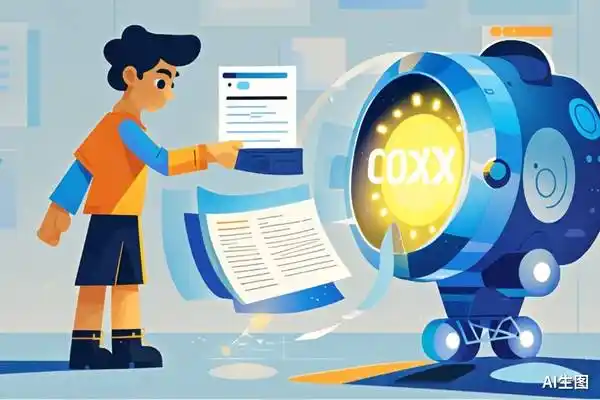
A deep dive into Anthropic's internal methodology for building effective AI "Skills" reveals five key insights for maximizing their value. First, Skills should focus on capturing "Gotchas" and tacit organizational knowledge—like common pitfalls and undocumented rules—rather than restating general information the AI already knows. Second, think of Skills as a form of "Context Engineering"; they are best structured as folders, not monolithic documents. A core `SKILL.md` file should act as a navigational index, progressively pulling in detailed references, examples, and assets only as needed to avoid overwhelming the model's context window. Third, whenever possible, automate repetitive tasks with scripts. This preserves the model's reasoning capacity for judgment and analysis, while scripts reliably handle the execution, saving tokens and improving accuracy. Instructions within a Skill provide the "why" and the expert judgment, while scripts provide the concrete "how." Fourth, a Skill's description is critical and often misunderstood. It should not be a list of features but a routing rule that clearly signals *when* the Skill should be triggered based on user intent and common phrasing. Finally, as Skills scale from personal tools to team-wide assets, management is crucial. Anthropic advocates for a lightweight, organic approach: let new Skills spread organically within small groups first. Those that prove genuinely useful through adoption naturally graduate to a formal marketplace, ensuring the curated library contains only high-value, battle-tested tools.

marsbit06/08 09:06

The Right Way to Use Skills: 5 Reflections After Anthropic Publicly Shared Its Internal Methodology

marsbit06/08 09:06

Countdown to the AI Bull Market? Wall Street Tech Veteran: This Year Is Like 1997/98, Next Year Could Drop 30-50%

"AI Bull Market Countdown? Wall Street Veteran: This Year Feels Like 1997/98, Next Year Could Drop 30-50%" In an interview, veteran tech analyst Dan Niles draws parallels between the current AI boom and the 1997-98 period of the internet boom, suggesting the bull run isn't over yet. The core new driver is identified as "Agentic AI," which performs multi-step tasks and consumes vastly more computing power than conversational AI. This shift is expected to boost demand for cloud infrastructure and benefit CPU makers like Intel and AMD, potentially pressuring GPU leader Nvidia. However, Niles warns of significant short-term overbought conditions in semiconductors. His central warning is for a potential major market correction of 30-50% starting in early 2027. Drivers include a slowdown from high growth comparables, the outsized capital demands of companies like OpenAI, and a wave of massive tech IPOs sucking liquidity from the market. A J.P. Morgan survey of 56 global investors aligns with this view, finding that 54% expect a >30% U.S. stock correction by 2027. Among mega-cap tech, Niles favors Google due to its full-stack AI capabilities and cash flow, expresses concern about Meta's user growth, and sees potential for Apple's AI Siri and foldable iPhone. Niles advises investors to be nimble, hold significant cash, and closely monitor the conflicting signals from equities, oil prices, and bond yields, which he believes cannot all be correct simultaneously.

marsbit05/13 08:33

Countdown to the AI Bull Market? Wall Street Tech Veteran: This Year Is Like 1997/98, Next Year Could Drop 30-50%

marsbit05/13 08:33

OpenAI Post-Training Engineer Weng Jiayi Proposes a New Paradigm Hypothesis for Agentic AI

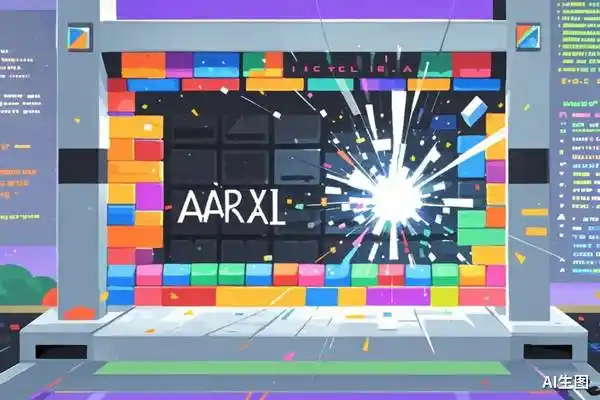
OpenAI engineer Weng Jiayi's "Heuristic Learning" experiments propose a new paradigm for Agentic AI, suggesting that intelligent agents can improve not just by training neural networks, but also by autonomously writing and refining code based on environmental feedback. In the experiment, a coding agent (powered by Codex) was tasked with developing and maintaining a programmatic strategy for the Atari game Breakout. Starting from a basic prompt, the agent iteratively wrote code, ran the game, analyzed logs and video replays to identify failures, and then modified the code. Through this engineering loop of "code-run-debug-update," it evolved a pure Python heuristic strategy that achieved a perfect score of 864 in Breakout and performed competitively with deep reinforcement learning (RL) algorithms in MuJoCo control tasks like Ant and HalfCheetah. This approach, termed Heuristic Learning (HL), contrasts with Deep RL. In HL, experience is captured in readable, modifiable code, tests, logs, and configurations—a software system—rather than being encoded solely into opaque neural network weights. This offers potential advantages in explainability, auditability for safety-critical applications, easier integration of regression tests to combat catastrophic forgetting, and more efficient sample use in early learning stages, as demonstrated in broader tests on 57 Atari games. However, the blog acknowledges clear limitations. Programmatic strategies struggle with tasks requiring long-horizon planning or complex perception (e.g., Montezuma's Revenge), areas where neural networks excel. The future vision is a hybrid architecture: specialized neural networks for fast perception (System 1), HL systems for rules, safety, and local recovery (also System 1), and LLM agents providing high-level feedback and learning from the HL system's data (System 2). The core proposition is that in the era of capable coding agents, a significant portion of an AI's learned experience could be maintained as an auditable, evolving software system.

marsbit05/11 00:17

OpenAI Post-Training Engineer Weng Jiayi Proposes a New Paradigm Hypothesis for Agentic AI

marsbit05/11 00:17

活动图片