# Acquisition Related Articles

HTX News Center provides the latest articles and in-depth analysis on "Acquisition", covering market trends, project updates, tech developments, and regulatory policies in the crypto industry.

How Did the Idealism of Western Founders Get 'Taken Over' by Chinese Buyers?

Over the course of two days, two major decentralized social protocols, Lens Protocol and Farcaster, were acquired—by Mask Network and Neynar, respectively. Combined, these protocols had raised over $200 million, with Farcaster recently valued at $1 billion. This follows the earlier acquisition of Steem by Tron in 2020, meaning two out of three prominent decentralized social protocols are now been taken over by Chinese-led teams. The author explores why Chinese buyers are stepping in. One reason may be pricing: these acquisitions often target once-prominent projects now in decline. For instance, Farcaster’s monthly revenue has dropped over 95%, and Lens has only 50,000 monthly active users. Another factor is cultural: while Western founders often approach decentralized social with idealism—emphasizing user-owned data and censorship resistance—Chinese acquirers tend to view it as a business opportunity, prioritizing usability and growth over ideology. Suji Yan, founder of Mask Network, explicitly aims to move “decentralized social from the lab to daily life.” However, past acquisitions like Steem—which led to a community fork—highlight risks when new ownership clashes with original values. The piece questions whether true decentralization is possible when protocols can be sold, suggesting that technical decentralization doesn’t prevent centralized commercial control. Ultimately, the piece argues that the vision for a better social infrastructure remains, but the builders and operators may increasingly be pragmatic, commercially-driven teams—many from China.

比推01/22 12:42

How Did the Idealism of Western Founders Get 'Taken Over' by Chinese Buyers?

比推01/22 12:42

Web3 Social: Still Dominated by the Chinese

In a span of two days, two major decentralized social protocols, Lens Protocol and Farcaster, changed ownership. Lens was taken over by Mask Network, led by Chinese founder Suji Yan, while Farcaster was acquired by Neynar, one of its clients. Combined, these protocols had raised over $200 million, with Farcaster valued at $1 billion last year. This follows the earlier acquisition of Steem by Tron’s Justin Sun in 2020, meaning two out of three prominent decentralized social protocols are now been taken over by Chinese-led teams. The author suggests that Western founders often approach decentralized social with idealism—emphasizing user-owned data and censorship resistance—while Chinese acquirers tend to view it as a business opportunity. Both Lens and Farcaster have seen declining engagement, making them attractive targets for pragmatic operators focused on usability rather than ideology. However, past acquisitions like Steem—which led to a community fork—highlight the risks of centralized control over “decentralized” protocols. Mask Network has framed its role as “stewardship” rather than outright ownership, but the very idea of a “decentralized” protocol being acquired raises questions about how much these platforms are truly user-governed. Ultimately, the piece questions whether these acquisitions will lead to a more practical and widely adopted social web or simply repeat past conflicts between idealism and commercial reality.

marsbit01/22 04:11

Web3 Social: Still Dominated by the Chinese

marsbit01/22 04:11

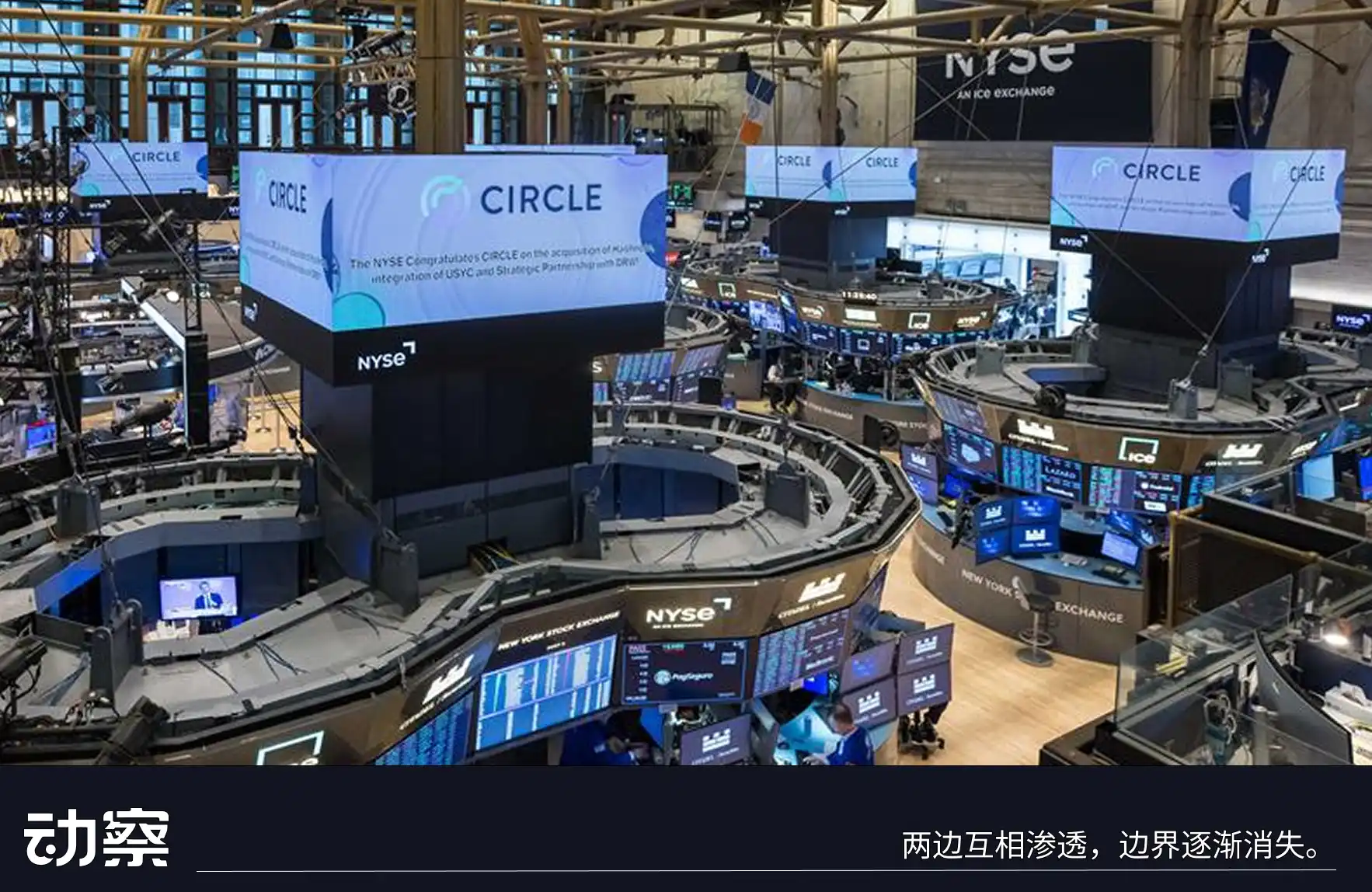
The Year Token Economics Were Debunked

The year 2025 is portrayed as a turning point where the fundamental economic model of crypto tokens was invalidated. The passage of regulatory frameworks like the CLARITY Act in the US forced projects to choose between being classified as a security (under the SEC) or a commodity (under the CFTC), with most falling into the former category. This led to a crisis of "coin rights" (币权). A key trend emerged: traditional financial institutions began acquiring crypto companies, but only for their technology and talent, explicitly excluding the associated tokens from deals. Examples include Circle's acquisition of Interop Labs (without the AXL token) and similar moves by Kraken and Coinbase. This shattered the investor narrative that buying a project's token was equivalent to owning equity, as tokens held no legal claim to a company's assets or profits. Simultaneously, major DeFi protocols like Aave and Uniswap faced internal conflicts. Aave's developers were accused of diverting front-end fees from the community treasury, while Uniswap had to implement complex legal structures to distribute fees to token holders without attracting SEC scrutiny. This highlighted a core dilemma: providing token dividends risked being classified as a security, while avoiding regulation meant tokens remained valueless. The article concludes that the crypto industry is being assimilated into traditional finance, but this "fusion" means value is flowing toward legally recognized entities—companies, equity, and licenses—rather than to token holders. Tokens, like American Depositary Shares (ADS), may remain as tradable rights, but they lack the legal protections and claims of traditional equity, marking the end of an era for the original token economy promise.

marsbit01/21 06:06

The Year Token Economics Were Debunked

marsbit01/21 06:06

Just Spent 250 Million to Buy Companies, Then Laid Off 30%: Polygon Is Changing Its Way of Survival

Polygon, a major blockchain scaling solution, has laid off approximately 30% of its workforce while simultaneously spending $250 million to acquire two companies: Coinme, a licensed crypto-fiat exchange with an extensive US ATM network, and Sequence, a wallet infrastructure and cross-chain routing provider. This strategic pivot signals a shift away from its core Layer-2 (L2) business, where it faces intense competition from dominant players like Base, and toward building a comprehensive stablecoin payment infrastructure called the "Open Money Stack." The acquisitions provide critical pieces for this new direction: Coinme offers regulatory licenses and on-ramps/off-ramps, while Sequence provides the technical backend for seamless cross-chain transactions. The goal is to target B2B clients like banks and payment providers. This move is seen as a necessary "blood change." Polygon's previous strategy, focused on enterprise adoption and NFTs, yielded limited long-term results. In the crowded L2 space, it struggled against competitors with superior user distribution, such as Base, which is integrated with Coinbase's massive user base. The new focus on stablecoin payments is a promising but highly competitive market, with giants like Stripe, PayPal also making significant investments. While Polygon CEO claims this puts them in competition with Stripe, the company is betting on an open infrastructure model versus Stripe's more closed ecosystem. The strategy carries risks. Coinme has faced regulatory penalties in the past, and Polygon is entering a field with well-established traditional finance players. However, success could transform Polygon from a protocol reliant on tokenomics into a profitable company with real revenue streams, a rarity in crypto. The core challenge is that the window for crypto-native companies to capture this market is narrowing as traditional finance accelerates its adoption of blockchain technology.

marsbit01/16 04:54

Just Spent 250 Million to Buy Companies, Then Laid Off 30%: Polygon Is Changing Its Way of Survival

marsbit01/16 04:54

活动图片