Keel Infrastructure Corp., formerly known as Bitfarms, led the group with a 29.13% increase, trading at $4.10 per share, up $0.92 from the day's opening as of 2:00 PM Eastern Time on Thursday. Nebius Group N.V. followed closely behind, rising 28.52% to reach $190.50. Shares of Cipher Digital Inc. climbed 28.30%, while IREN Limited rose 27.36% to $37.33.
The gains were not limited to market leaders. Whitefiber shares appreciated by 27.35%. SharonAI Holdings shares rose by 26.86%. Bloom Energy shares increased by 26.04%, and Sandisk Corporation shares jumped by $244.33 per share—a 24.05% surge that pushed the stock price above the $1,260 mark.
Broad Gains in Mining Company Stocks
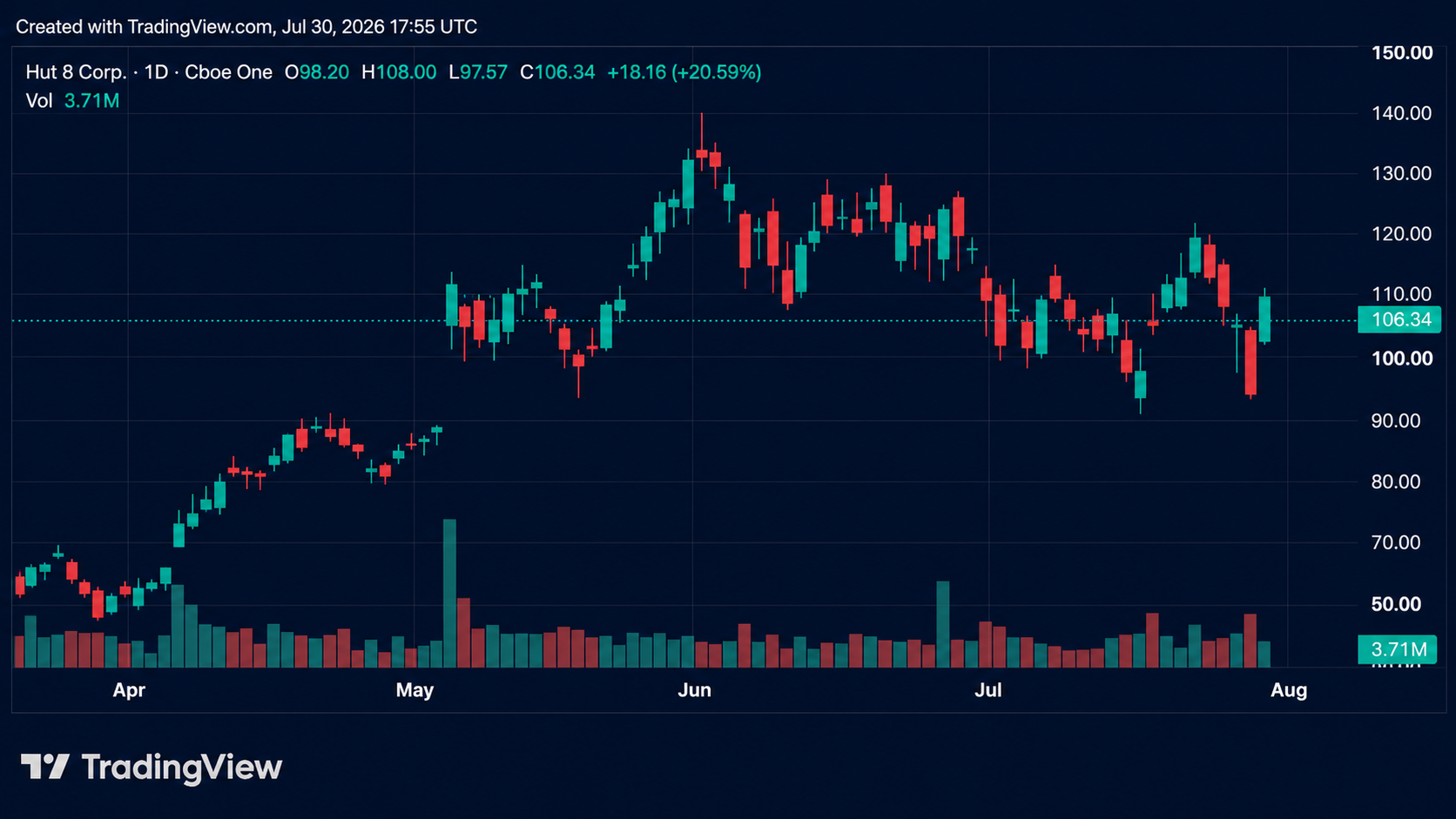
Shares of Riot Platforms rose 23.46% to $22.52. Bitdeer Technologies shares increased by 21.91%. Coreweave shares climbed 21.83% to $74.10. Core Scientific shares advanced 20.97%, and Hut 8 rose 20.69%, trading at $106.43.
Cleanspark shares gained 20.23%. Terawulf added 19.44%. Applied Digital shares rose 19.07%. Solaris Energy Infrastructure shares climbed 18.94%, while shares of MARA Holdings and Cerebras Systems each increased by 18.60%.
EMCOR Group shares rose 18.27%, narrowing the gap with Babcock & Wilcox, whose shares closed up 18.02%. Micron Technology shares climbed 17.40%, HIVE Digital Technologies gained 17.35%, and Galaxy Digital rounded out the list of top gainers with a 17.27% increase. While many of these companies are involved in Bitcoin (BTC) mining, each is also connected, to varying degrees, with the artificial intelligence, semiconductor, or high-performance computing (HPC) sectors.
What Caused the Rally
This rally is partly attributed to the forced liquidation of public company shares by a hedge fund founded by a former OpenAI researcher, who held large positions in several companies that showed the most significant gains that day. Citadel purchased a large portion of this portfolio in a block trade, which market participants believe removed a source of potential selling pressure.
Bitcoin itself traded above $64,000 and approached $65,000 during Thursday's session, providing a modest boost to mining stocks, which remain sensitive to the price of the underlying asset, even as their revenue is increasingly generated from AI computing service contracts.
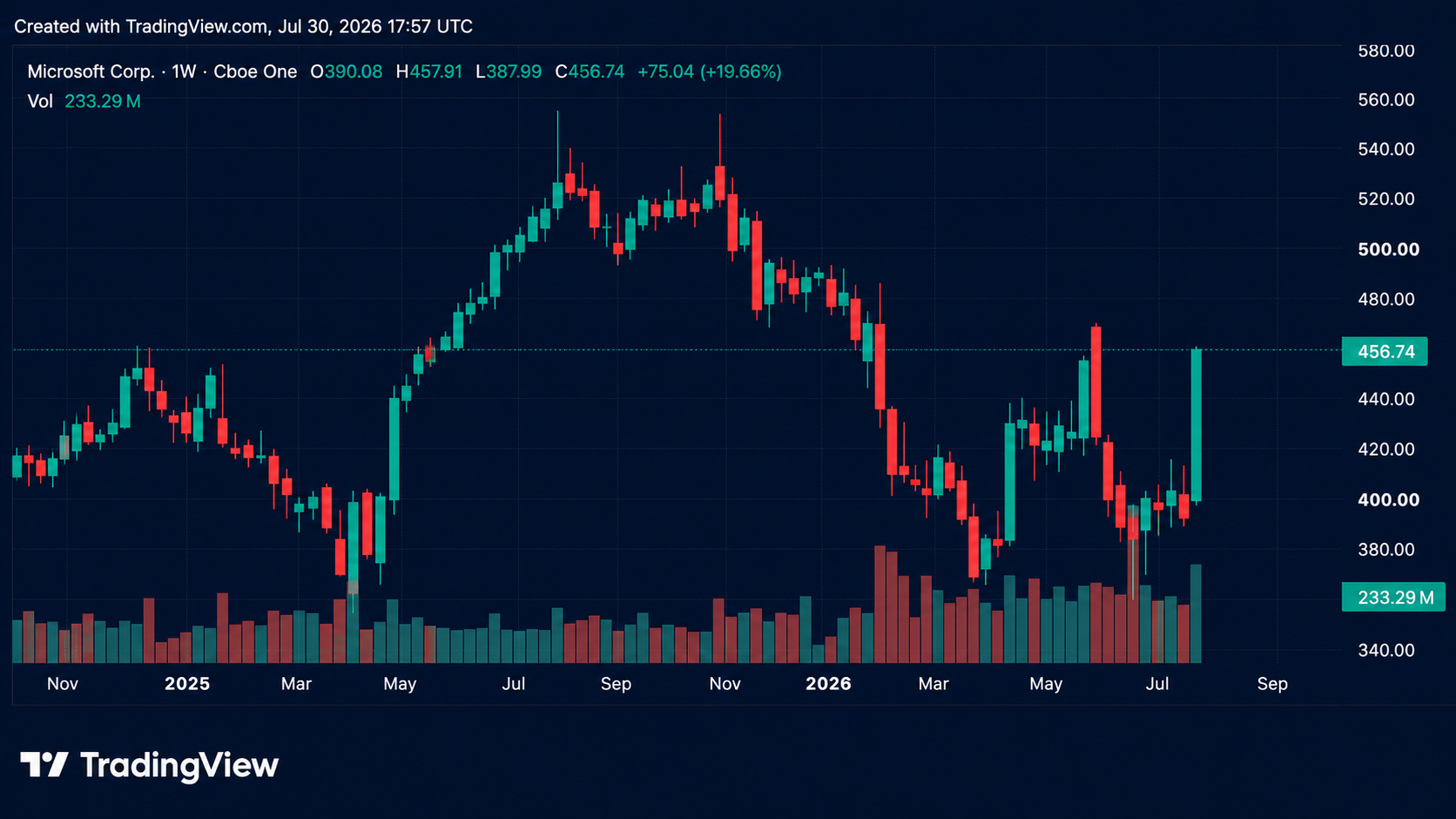
The latest Microsoft earnings report also played a role. The company's stock surged significantly after the results showed that AI-related investments are starting to generate revenue—a signal that improved sentiment on the Nasdaq and lifted shares of AI infrastructure companies.
Coreweave had its own additional catalyst. The company announced a partnership with Leidos to provide AI cloud services for the U.S. intelligence community and the Department of Defense. Under the agreement, Coreweave's compute platform will be deployed at classified sites, with Leidos responsible for security accreditation and integration into operational tasks. The contract value was not disclosed, and the partnership remains subject to finalizing agreements.
Broader Shifts
Thursday's gains continued a longer-term trend. As Bitcoin mining profits have shrunk following repeated halvings and increasing network difficulty, publicly traded mining companies have begun converting their energy-intensive facilities into AI data centers. These companies already own land, electrical substations, and power contracts—assets that would take new data center developers years to build from scratch.
Recent deals indicate this shift is accelerating. Hut 8 signed a second 15-year lease worth $9.8 billion for its Beacon Point campus in Texas. IREN reported new AI cloud service contracts worth $2.8 billion and raised its 2026 revenue target to over $4 billion. Earlier this year, Terawulf signed a long-term lease agreement with Anthropic.
Keel Infrastructure (formerly Bitfarms) has pivoted towards digital and energy infrastructure for AI workloads, including a recently approved data center project in Quebec. Nebius has repeatedly raised its capacity forecasts and attracted investment from Nvidia.
Sandisk and Micron supply memory modules crucial for AI clusters—an area where demand exceeds supply. Bloom Energy manufactures fuel cells increasingly used to power data centers. Cerebras produces AI accelerator chips. EMCOR and Babcock & Wilcox benefit from construction work related to infrastructure deployment.
What's Next
The same leverage that earlier this year led to sharp revenue increases for AI infrastructure investors resulted in significant losses in July, prior to Thursday's market recovery. Questions regarding capital expenditures, power availability, and long-term AI demand remain unresolved for many of these companies.
For now, the market views Bitcoin miners with grid-connected assets as a distinct group within the broader AI segment. Whether the gains seen on Thursday persist will depend on how many of these companies can convert their contracted power capacity into stable revenue in the coming quarters.
end-content




















