Steak ’N Shake Boosts Bitcoin Holdings After 18% Rise In Store Sales

bitcoinistPublished on 2026-01-28Last updated on 2026-01-28

Abstract

Steak 'N Shake has significantly increased its Bitcoin holdings, adding $5 million to its Strategic Bitcoin Reserve, bringing its total crypto holdings to approximately $15 million. The company attributes an 18% rise in same-store sales in 2026 partly to its crypto payment adoption, which began in May 2025. All cryptocurrency payments are directed into the reserve rather than being converted to cash. The initiative has reportedly attracted new customers and reduced payment processing fees. Additionally, the company introduced a Bitcoin bonus program for hourly employees, sparking both publicity and debate. While the move is viewed by some as a marketing success, it carries risks due to Bitcoin's price volatility. The company maintains a long-term strategy rather than short-term trading.

Steak ’n Shake said this week that it quietly beefed up its Bitcoin stash as in-store sales jumped. The chain added $5 million in BTC to what it calls a Strategic Bitcoin Reserve, bringing total crypto holdings to roughly $15 million.

Reports say the company pointed to crypto payments as one of the reasons same-store sales rose by 18% so far in 2026.

Steak ’N Shake’s Bitcoin Move

According to the brand’s social posts, every crypto payment made at its restaurants goes straight into that reserve instead of being cashed out.

This has let the reserve grow both from customer purchases and from occasional treasury buys. The latest post announced the $5 million top-up after an earlier disclosure that the reserve had been boosted by $10 million in January.

What The Numbers Mean

On paper, $15 million is small next to big corporate treasuries that hold BTC. Still, for a restaurant chain, it is a visible bet.

Reports note the company began accepting crypto across some locations in May 2025, and it claims that the payment option helped draw a certain kind of customer and cut payment fees. That combination, the company says, helped lift traffic and sales.
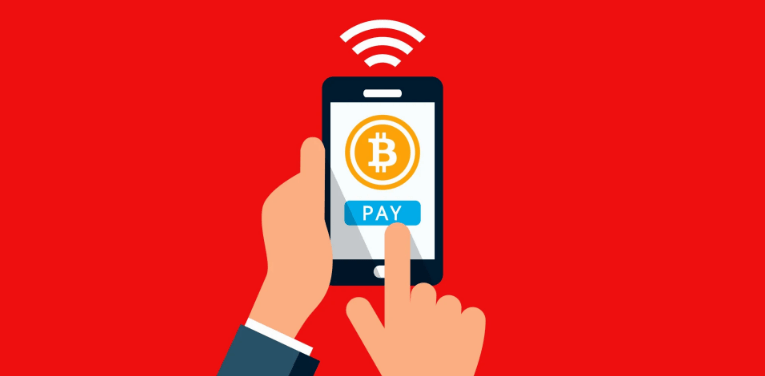
Image: Getty Images

Employee Bonuses And Publicity

The crypto story has also been used in staff talk. Steak ’n Shake announced a small BTC bonus plan for hourly workers, paid in BTC and subject to vesting rules.

That move created headlines and some debate, since paying workers in crypto raises practical and legal questions. The chain has been clear about wanting the reserve to support company goals rather than be a quick trading play.

BTCUSD trading at $89,173 on the 24-hour chart: TradingView

A Practical Experiment

This is not a tech fad. The company has been running a simple experiment: accept BTC, keep the crypto, and see if it helps sales or loyalty.

Some outlets reported the same-store sales gains as double digits in various quarters last year, and the company’s narrative ties those gains to the crypto program. Independent audits or formal filings that fully confirm the sales-to-crypto link are not yet public.

How Observers See It

Analysts and market observers have treated the move as an interesting case study. Some see a marketing win; others call it a small but symbolic treasury play.

There are risks: BTC price swings can change the value of the reserve quickly, and operational issues around crypto pay can create friction at the counter.

Still, the chain appears committed for now, and that consistency matters in a crowded retail field.

Featured image from NSU Dining Services, chart from TradingView

Related Questions

QWhat is the total value of Steak 'N Shake's Bitcoin holdings after the recent $5 million purchase?

AThe total value of Steak 'N Shake's Bitcoin holdings is roughly $15 million.

QWhat reason did the company give for the 18% increase in same-store sales in 2026?

AThe company pointed to crypto payments as one of the reasons for the 18% rise in same-store sales.

QHow does Steak 'N Shake's Strategic Bitcoin Reserve grow?

AThe reserve grows from customer crypto payments made at its restaurants and from occasional treasury buys.

QWhat additional employee benefit, related to Bitcoin, did the company announce?

AThe company announced a small BTC bonus plan for hourly workers, paid in Bitcoin and subject to vesting rules.

QWhen did Steak 'N Shake begin accepting cryptocurrency payments?

AThe company began accepting crypto across some locations in May 2025.

Related Reads

JP Morgan Mid-Year Research Report Analysis: The AI Supercycle is Not Over, Reduce Cash Holdings + Allocate to Real Assets

JP Morgan's 2026 Mid-Year Outlook argues the AI supercycle is far from over, despite market pessimism. The report advises clients to reduce cash holdings, increase allocations to real assets as an inflation hedge, and focus on emerging markets. Key conclusions include: 1. **AI Supercycle Intact**: Hyperscalers' 2026 capex forecasts exceed $650B, with AI contributing to GDP growth. However, their financial profile is shifting toward heavy investment, compressing free cash flow. 2. **SaaS Disruption**: Traditional software companies are being negatively impacted by AI, with significant stock declines and pressure in credit markets. 3. **Persistent Inflation**: Core inflation is structurally higher post-pandemic. Holding excess cash and bonds leads to real wealth erosion. Recommendations include commodities, infrastructure, real estate, and gold. 4. **Geopolitical Shocks & Opportunities**: The Hormuz Strait blockade caused a major oil shock, but JP Morgan views the subsequent equity market pullback as a buying opportunity. "Fragmentation" is creating pockets of value, notably in resource-rich Latin America, AI-supply-chain-linked East Asia, and deeply discounted Chinese equities, where a policy shift could trigger a re-rating. 5. **Regional Views**: The firm is cautious on Europe due to high energy costs and lower innovation investment, preferring US and select EM exposures. In short, JP Morgan sees market volatility as an entry point but recommends a portfolio pivot: favor AI infrastructure, real assets, and EM, while avoiding excess cash, vulnerable software firms, and traditional 60/40 stock-bond allocations.

marsbit9m ago

JP Morgan Mid-Year Research Report Analysis: The AI Supercycle is Not Over, Reduce Cash Holdings + Allocate to Real Assets

marsbit9m ago

The Post-Plunge Panorama: Institutions Cry 'Buy the Dip' as Traders Turn to U.S. Stocks

Amidst a significant market correction, Bitcoin (BTC) briefly fell below the $60,000 mark to around $59,130 on June 6th. While it later rebounded to near $63,000, breaking the key psychological level severely impacted market confidence, with the current sentiment index indicating "extreme fear." Altcoins followed the broader downturn. Market participants offer mixed views on whether this is a buying opportunity. On the bullish side, analysts from Glassnode and Strive Asset Management point to Bitcoin touching its 200-week moving average—a historically reliable buy signal—and suggest a higher-probability bottom zone between $46k and $54k. Standard Chartered's digital assets head believes the bottom is "almost in," anticipating large-scale buybacks. Analysts Darkfost and trader Killa also see current levels as a generational or long-term accumulation opportunity, citing deeply oversold technical models. Conversely, NYDIG's research highlights capital rotation from crypto into outperforming AI stocks as a headwind, noting the current ~53% drawdown is milder than historical cycles. Polymarket prediction data shows a 72% probability of BTC falling below $55k, though odds for a drop below $35k-$40k are seen as lower. Notably, some traders, like Eugene Ng, have pivoted away, citing more attractive opportunities in equities and unresolved systemic risks (referencing a major entity's BTC sales), and are avoiding attempts to "catch a falling knife." In summary, while several institutional voices and on-chain metrics suggest a nearing bottom and a strategic buying zone, significant near-term downside risk remains acknowledged. The market exhibits a clear divide between those seeing a historic entry point and those withdrawing to wait for clearer signals or better risk/reward ratios.

Foresight News44m ago

The Post-Plunge Panorama: Institutions Cry 'Buy the Dip' as Traders Turn to U.S. Stocks

Foresight News44m ago

Trading

Spot
Futures

Hot Articles

What is $BITCOIN

DIGITAL GOLD ($BITCOIN): A Comprehensive Analysis Introduction to DIGITAL GOLD ($BITCOIN) DIGITAL GOLD ($BITCOIN) is a blockchain-based project operating on the Solana network, which aims to combine the characteristics of traditional precious metals with the innovation of decentralized technologies. While it shares a name with Bitcoin, often referred to as “digital gold” due to its perception as a store of value, DIGITAL GOLD is a separate token designed to create a unique ecosystem within the Web3 landscape. Its goal is to position itself as a viable alternative digital asset, although specifics regarding its applications and functionalities are still developing. What is DIGITAL GOLD ($BITCOIN)? DIGITAL GOLD ($BITCOIN) is a cryptocurrency token explicitly designed for use on the Solana blockchain. In contrast to Bitcoin, which provides a widely recognized value storage role, this token appears to focus on broader applications and characteristics. Notable aspects include: Blockchain Infrastructure: The token is built on the Solana blockchain, known for its capacity to handle high-speed and low-cost transactions. Supply Dynamics: DIGITAL GOLD has a maximum supply capped at 100 quadrillion tokens (100P $BITCOIN), although details regarding its circulating supply are currently undisclosed. Utility: While precise functionalities are not explicitly outlined, there are indications that the token could be utilized for various applications, potentially involving decentralized applications (dApps) or asset tokenization strategies. Who is the Creator of DIGITAL GOLD ($BITCOIN)? At present, the identity of the creators and development team behind DIGITAL GOLD ($BITCOIN) remains unknown. This situation is typical among many innovative projects within the blockchain space, particularly those aligning with decentralized finance and meme coin phenomena. While such anonymity may foster a community-driven culture, it intensifies concerns about governance and accountability. Who are the Investors of DIGITAL GOLD ($BITCOIN)? The available information indicates that DIGITAL GOLD ($BITCOIN) does not have any known institutional backers or prominent venture capital investments. The project seems to operate on a peer-to-peer model focused on community support and adoption rather than traditional funding routes. Its activity and liquidity are primarily situated on decentralized exchanges (DEXs), such as PumpSwap, rather than established centralized trading platforms, further highlighting its grassroots approach. How DIGITAL GOLD ($BITCOIN) Works The operational mechanics of DIGITAL GOLD ($BITCOIN) can be elaborated on based on its blockchain design and network attributes: Consensus Mechanism: By leveraging Solana’s unique proof-of-history (PoH) combined with a proof-of-stake (PoS) model, the project ensures efficient transaction validation contributing to the network's high performance. Tokenomics: While specific deflationary mechanisms have not been extensively detailed, the vast maximum token supply implies that it may cater to microtransactions or niche use cases that are still to be defined. Interoperability: There exists the potential for integration with Solana’s broader ecosystem, including various decentralized finance (DeFi) platforms. However, the details regarding specific integrations remain unspecified. Timeline of Key Events Here is a timeline that highlights significant milestones concerning DIGITAL GOLD ($BITCOIN): 2023: The initial deployment of the token occurs on the Solana blockchain, marked by its contract address. 2024: DIGITAL GOLD gains visibility as it becomes available for trading on decentralized exchanges like PumpSwap, allowing users to trade it against SOL. 2025: The project witnesses sporadic trading activity and potential interest in community-led engagements, although no noteworthy partnerships or technical advancements have been documented as of yet. Critical Analysis Strengths Scalability: The underlying Solana infrastructure supports high transaction volumes, which could enhance the utility of $BITCOIN in various transaction scenarios. Accessibility: The potential low trading price per token could attract retail investors, facilitating wider participation due to fractional ownership opportunities. Risks Lack of Transparency: The absence of publicly known backers, developers, or an audit process may yield skepticism regarding the project's sustainability and trustworthiness. Market Volatility: The trading activity is heavily reliant on speculative behavior, which can result in significant price volatility and uncertainty for investors. Conclusion DIGITAL GOLD ($BITCOIN) emerges as an intriguing yet ambiguous project within the rapidly evolving Solana ecosystem. While it attempts to leverage the “digital gold” narrative, its departure from Bitcoin's established role as a store of value underscores the need for a clearer differentiation of its intended utility and governance structure. Future acceptance and adoption will likely depend on addressing the current opacity and defining its operational and economic strategies more explicitly. Note: This report encompasses synthesised information available as of October 2023, and developments may have transpired beyond the research period.

363 Total ViewsPublished 2025.05.13Updated 2025.05.13

What is $BITCOIN

Discussions

Welcome to the HTX Community. Here, you can stay informed about the latest platform developments and gain access to professional market insights. Users' opinions on the price of BTC (BTC) are presented below.

活动图片
















