South Korean youth have recently invented a new way of dining: first open the "Beggar Map," filter nearby restaurants by price; once a single meal costs more than 8,000 won (37 yuan RMB) and has no meat or vegetables, it's immediately deemed "unworthy of the list."
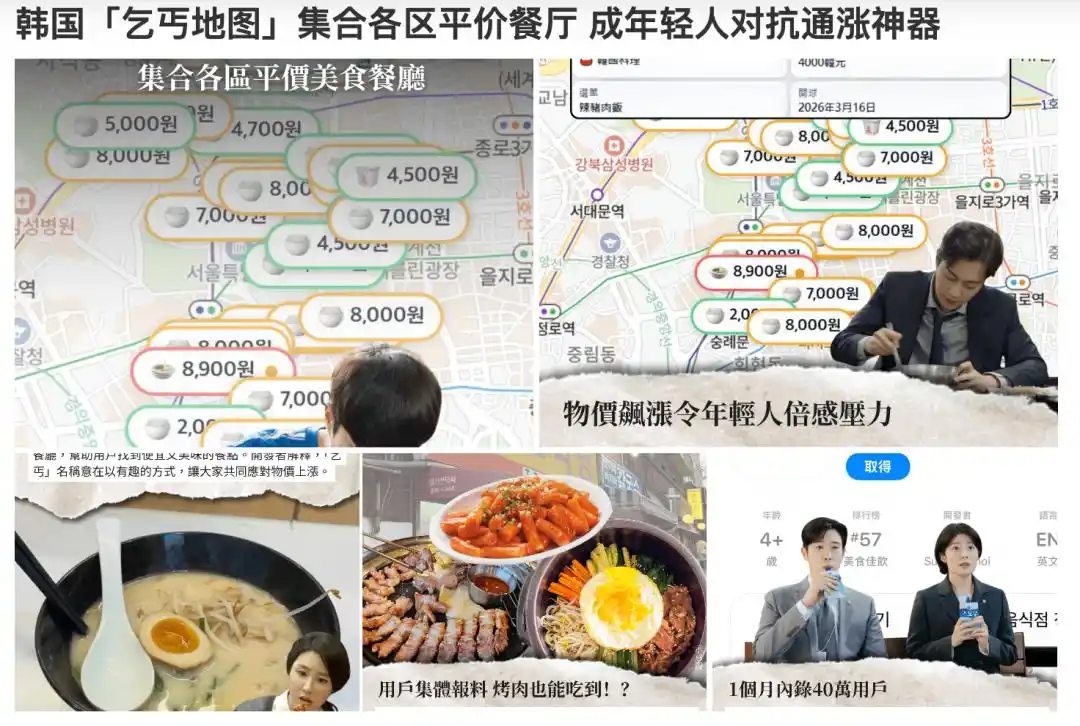
The developer of this map, Choi Seong-su, is 34 years old and lost his job due to the impact of the AI wave. Living on severance pay, he limited his daily food budget to 10,000 won. Later, using AI programming tools, he spent a weekend creating a website dedicated to finding cheap restaurants.
What made him unemployed was AI, and what helped him figure out "where to eat cheaply after becoming unemployed" was also AI—a closed-loop service in the making.
Within a month of its launch, the website reached 1.31 million visits; the app surpassed 21,000 downloads in 6 days. In a country with a GDP per capita exceeding $36,000, home to global giants like Samsung and Hyundai, "where to eat a 5,000-won meal today" has become a question studied by millions.
01: South Korean Youth Turn Saving Money into a Competitive Game
The official name of the "Beggar Map" is Geoji Map. There are no Michelin stars on this map, only prominent price figures: 3,000-won bibimbap, 3,900-won pasta, 4,000-won pork cutlet.
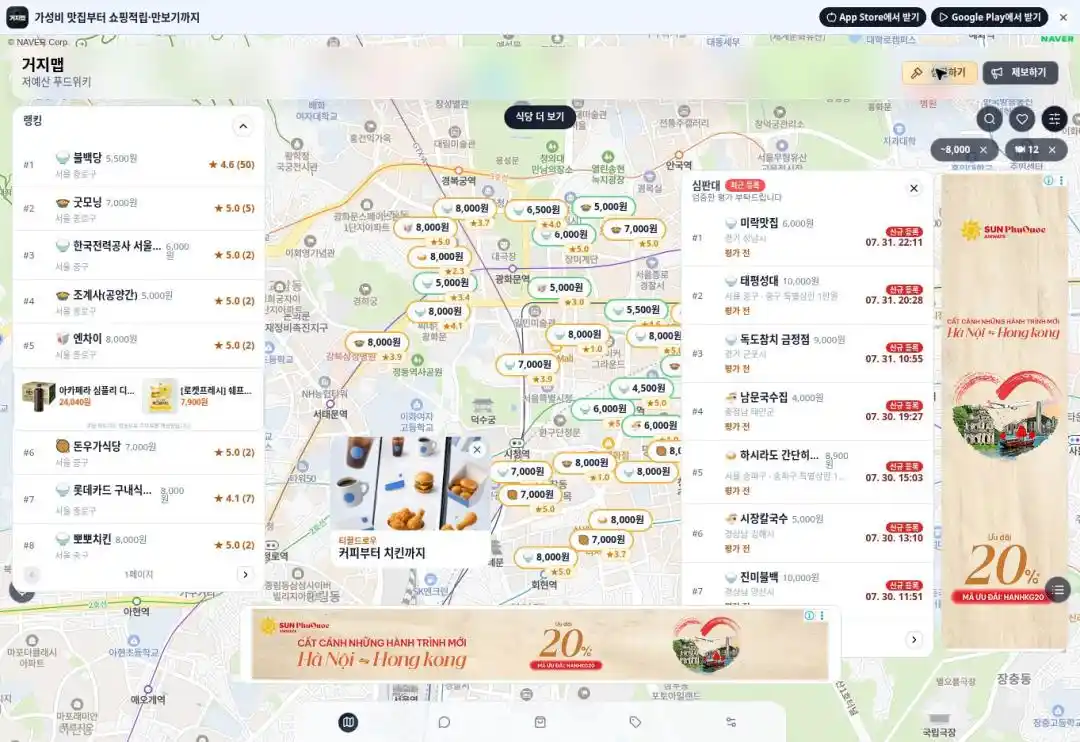
Its rules are stricter than many food guides. Initially, most areas used 8,000 won as the reference line, with high-consumption areas like Gangnam and Yeouido allowing up to 10,000 won; restaurants that exceed the price limit or use a single cheap side dish as a lure may be reported and removed by users.
Cheap isn't enough; the meal also has to be substantial. The platform emphasizes that "beggars also need" protein and dietary fiber. High-carb menus like noodles, if priced over 7,000 won, generally don't qualify; a meaty seolleongtang (ox bone soup) at the same price might pass. The platform's review rules carry a rigorous nutritional spirit of being poor but thorough.
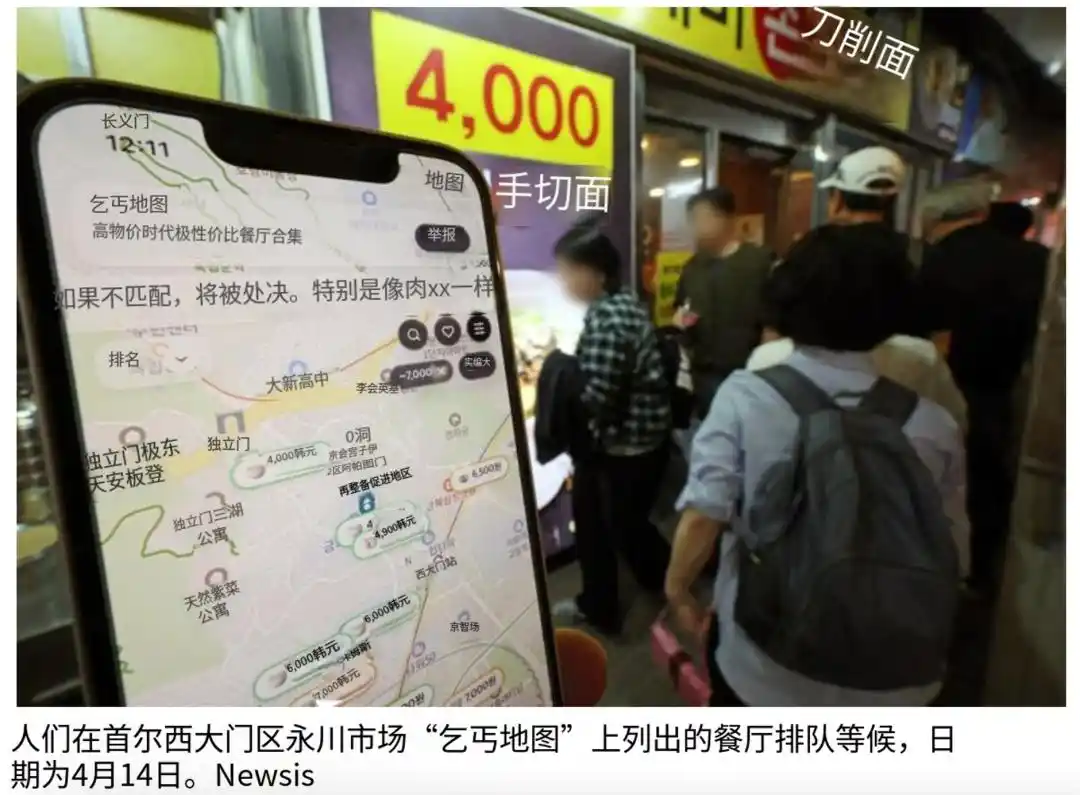
A pork cutlet shop in Sinchon, Seoul, charging only 4,000 won per portion, has long occupied a top spot on the map. Some diners, worried one piece wouldn't be enough, ordered two and ended up stuffed to the point of regret; others warned newcomers that water costs an extra 1,000 won at the shop, so true savings experts should bring their own. The list also includes a 9,500-won chicken and beer buffet. Taste, protein, free side dishes, and how much satiety you get per 1,000 won are all part of the review criteria. Food reviewing here has turned into folk cost engineering.
Restaurants are added, modified, and deleted collaboratively by users. Some upload menus, others add business hours, and some mark "mediocre hygiene." Businesses that use cheap dishes as bait to sell higher-priced items elsewhere are quickly reported. A group of highly vigilant wallets forms the internet's most difficult-to-fool review committee.
In Seoul, an average meal out easily reaches 12,000 won; finding something under 8,000 won already requires a dedicated search. Korean media recorded a 22-year-old female college student using the "Beggar Map" daily to find cheaper options than the school cafeteria. For small eateries, the map is like free advertising: without paying commissions to high-fee delivery platforms, lines form outside their doors.
Even before the "Beggar Map" appeared, South Korean youth had been rehearsing for three years in the social app KakaoTalk.
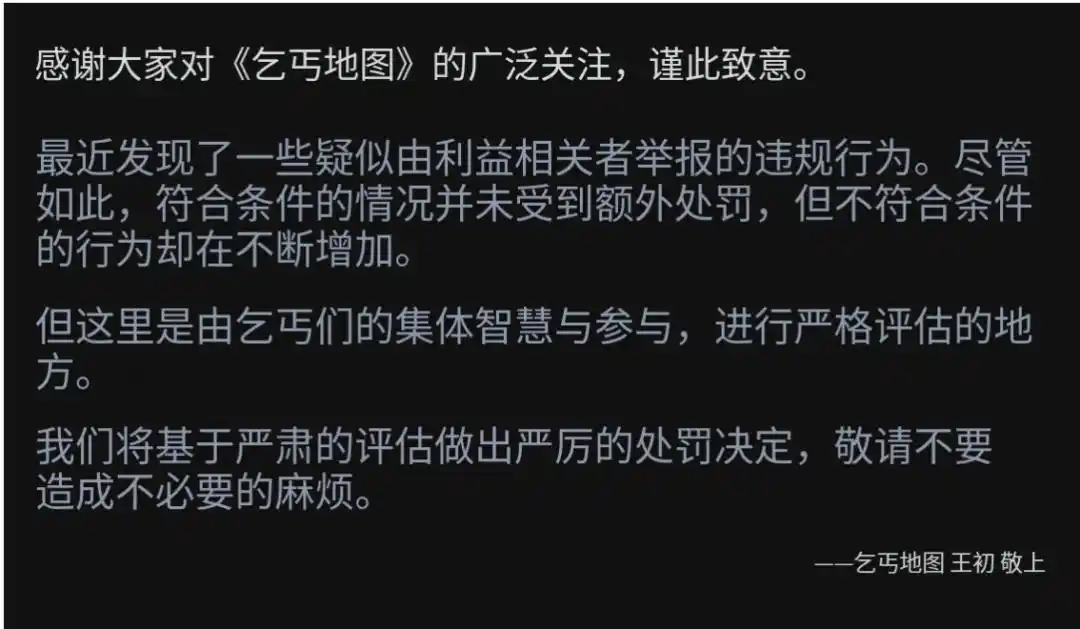
In 2023, numerous open group chats named "Beggar Rooms" became popular. Popular groups typically limit members to 300-500, with special "Standby Beggar Rooms" for when they're full. Members report daily expenses. Spending 3,000 won on an iced Americano gets you advised to drink from the office water cooler; wanting to take a bus for a 5.3 km trip gets told to trust your own legs; spending 40,000 won on a personal color test gets the suggestion to "hold a few colored papers next to your face and compare."
Some groups, like companies, have established complete rules: Spending over 30,000 won requires filling out an "Expense Application Form," answering if the item is necessary, whether it can be used weekly, if it has more than one purpose, and getting three group members to sign. Using paid emoticons can also get you kicked out, because cute emoticons stimulate spending; if you really want to use them, you have to draw your own. The person who spends the most each month must also write a 500-word reflection. According to Korean media statistics, there are hundreds of similar group chats on KakaoTalk.

This trend has a specific name: jjantech, often translated as "frugal finance," combining the word for frugality "jjan" with the term for finance management, jaetech. Young people study convenience store discounts, stack payment promotions, use gift cards to empty the fridge, and exchange steps for points.
24-year-old graduate student Jung Ye-eun walks whenever possible for trips under 40 minutes to save on transportation; 25-year-old job seeker Lee Ji-min reduces visits to her parents to save the roughly 100,000 won round-trip KTX ticket to Gimhae; 26-year-old Kim Se-rim walks 8,000 steps daily to exchange city app reward points for Seoul Pay to buy food. Someone spending 3,100 won on green tea bags gets immediate improvement suggestions from the group: brew each bag two or three times.
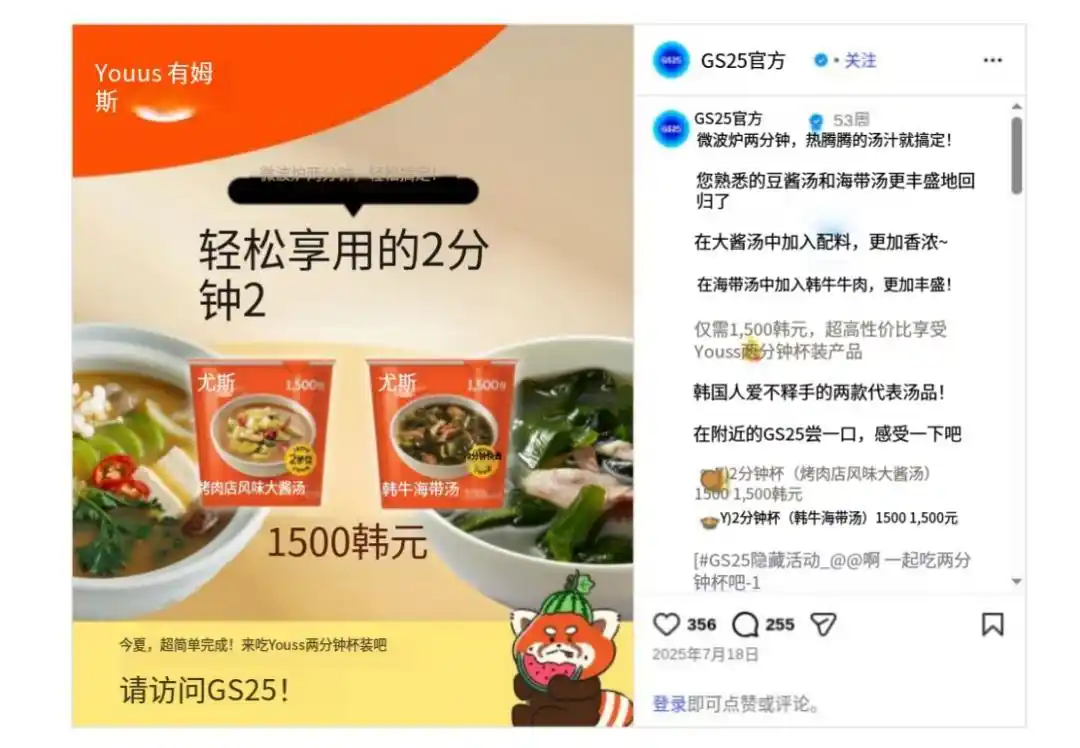
The consumer market quickly adapted. South Korea's largest convenience store chain, GS25, launched chilled cup rice meals for 3,000 to 5,000 won and instant soups for 1,500 won. In the first four months of 2026, sales grew by 33.8% and 167.4% year-on-year respectively. Supermarkets started selling 1kg bags of rice and single-meal portions of meat. Sales data shows young people care more about paying less today and whether food will spoil before they finish it.
From hunting for a 4,000-won pork cutlet to holding "consumption criticism sessions" over an iced Americano, it looks like a lively money-saving game. But behind it lies the increasingly tight living budget of South Koreans.
South Korea has already entered the ranks of developed countries with a GDP per capita over $30,000, so why do its young people have to split every few thousand won?
The answer lies in another map composed of wages, employment, housing prices, and debt.
02. How Did Young People in a Developed Country Become "Paupers"?
Looking at macro numbers, South Korea seems like a country where a "beggar lifestyle" shouldn't be popular.
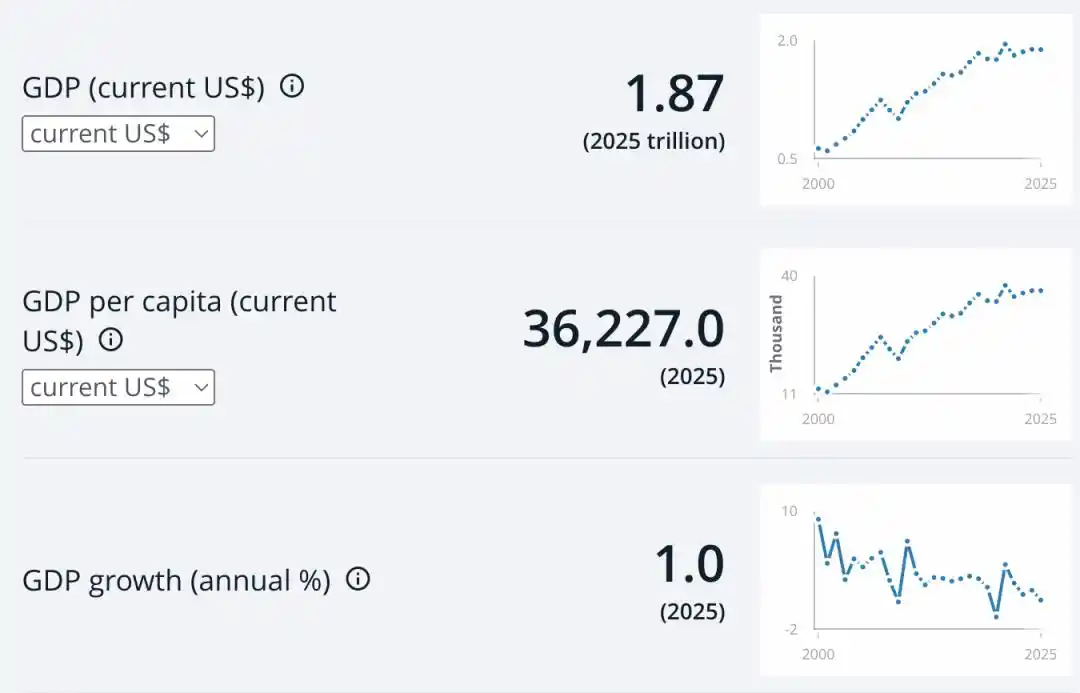
World Bank data shows South Korea's nominal GDP in 2025 was about $1.87 trillion, with a GDP per capita of $36,227; the IMF predicts it will rise to about $37,410 in 2026. It is Asia's fourth-largest economy, with mature industries in semiconductors, automobiles, shipbuilding, and chemicals. The World Bank's data on South Korea looks decent enough in any country profile.
Wage numbers don't look bad either. In 2026, the minimum hourly wage increased to 10,320 won (48 yuan RMB), equivalent to 2.157 million won per month based on 209 hours. The average nominal monthly wage for all workers in May, released by the Ministry of Employment and Labor, was 3.982 million won, about 19,000 yuan RMB.
The trouble lies beneath the average.
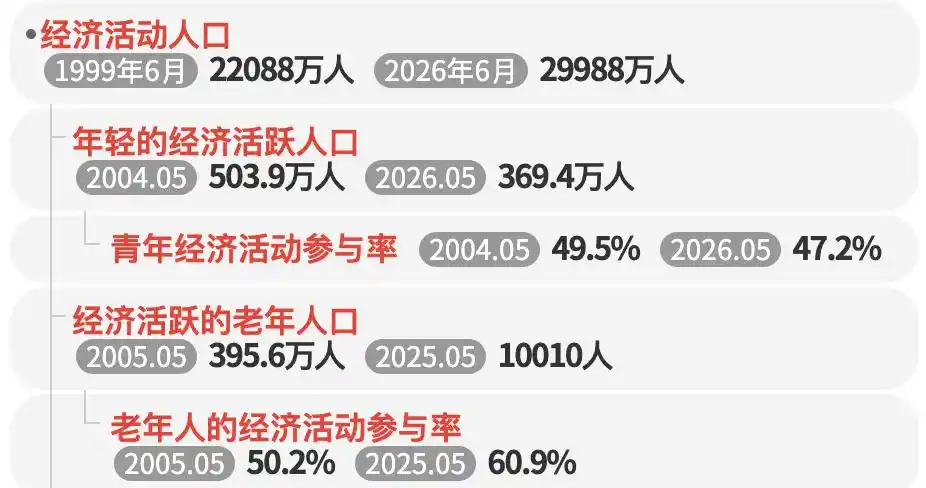
During the same period, the labor force participation rate for youth aged 15-29 fell to 47.2%; the employment rate dropped to 43.8%, with 255,000 fewer young people employed year-on-year; the unemployment rate rose to 7.2%. Including those preparing for jobs, those who have given up job hunting, and those wanting more work hours, the "extended unemployment rate" reached 16.6%. Surveys by Statistics Korea show the youth labor force is shrinking faster than the total population.
A university degree is no longer a guaranteed ticket. In Q2 2026, the number of unemployed South Koreans with college education or above reached 481,000, with those in their 20s and 30s accounting for 64.2%. Among youth aged 15-29 who have left school and are currently unemployed, 48.6% have been jobless for over a year—about 605,000 people; 19.4% have been unemployed for over three years. A July survey also showed it takes an average of 11.2 months for young people to find their first paid job.
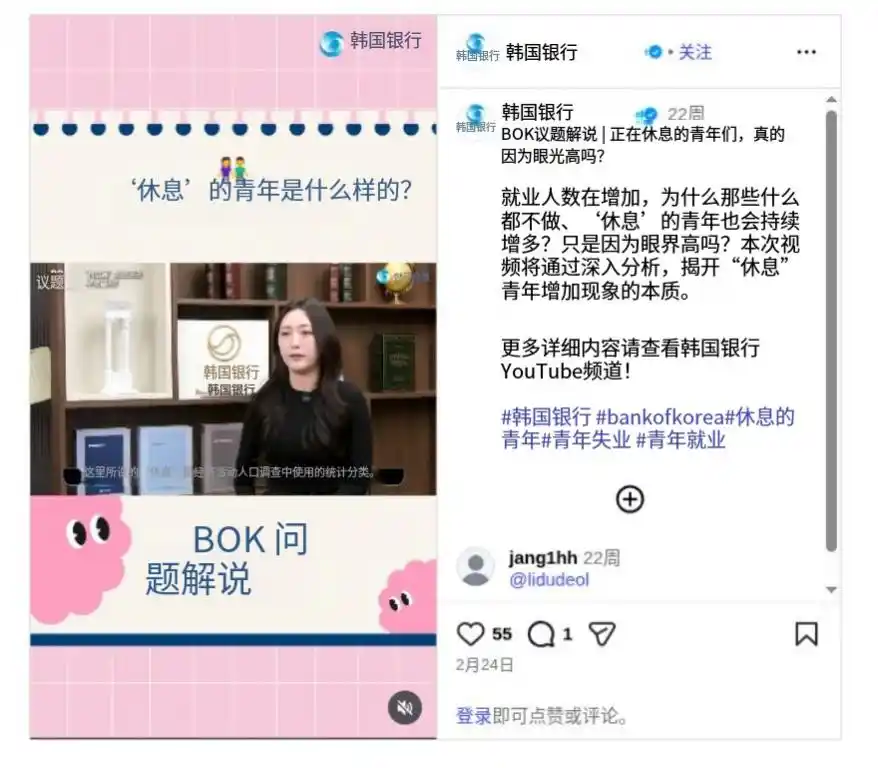
The first job is also hard to keep stable. Monthly salaries most commonly fall between 2 and 3 million won, with an average tenure of just 1 year and 6.8 months; among those who leave, 44.4% cite wages, working hours, and other labor conditions as the primary reason. The Bank of Korea also found that among the economically inactive population aged 20-34, the proportion "resting" increased from 14.6% in 2019 to 22.3% in 2025, with 450,000 explicitly stating they don't want to work. Many have work experience, making it hard to explain simply as being "choosy."
This disconnect has given rise to a term in the South Korean job market that sounds like a second-hand item: "중고신입" (jung-go-sin-ip), or "second-hand newbie"—someone who has worked for a while but is re-entering the job market as a fresh graduate.
Even if one can work steadily, housing in Seoul feels like a commodity priced in a different system.
In July 2026, the average selling price of an apartment in Seoul approached 1.595 billion won (7.46 million yuan RMB). South Korea also has a unique "jeonse" system: instead of monthly rent, the tenant pays a huge lump-sum deposit, refunded by the landlord when the lease ends. Now, the average jeonse deposit for a Seoul apartment has exceeded 700 million won.
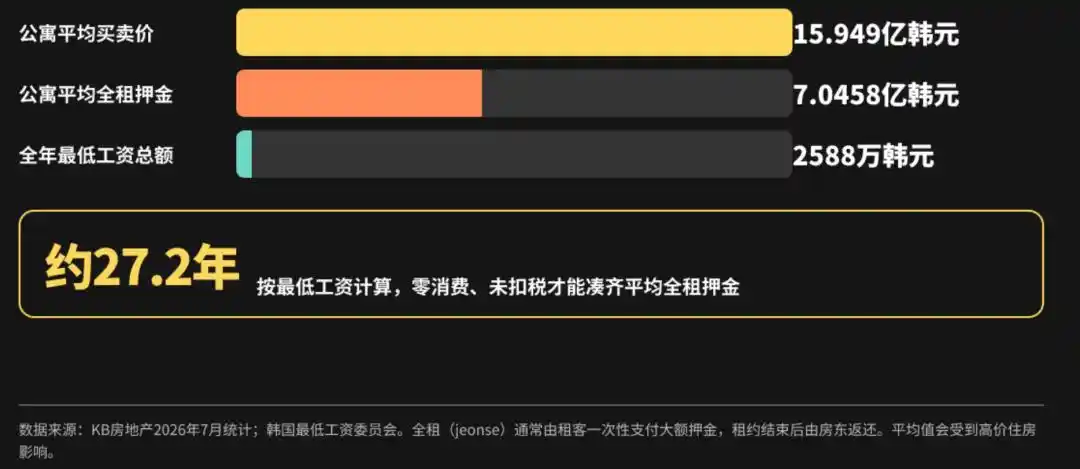
For most young people entering society, 700 million won is out of reach. At the 2026 minimum wage, someone would have to work for about 27 years without spending a penny to save that deposit. In reality, many young people end up in "gosiwons"—micro-rooms originally meant for exam takers that have become residences for low-income earners.
Late last year, a Korean journalist visited a gosiwon in Jongno, Seoul. A room about to be rented to someone in their 20s was only 2.85 square meters, with a bed 1.9 meters long and 1.5 meters wide. When lying down, your feet go under the desk, and either your head or feet still touch the wall.
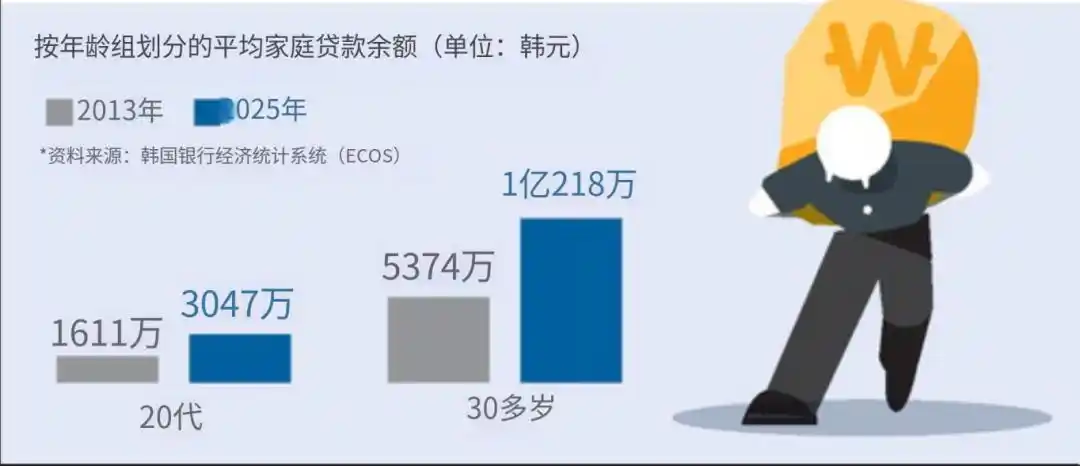
Housing is out of reach, but debt is getting closer. The average household loan for people in their 20s increased from 16.11 million won in 2013 to 30.47 million in 2025; for those in their 30s, it rose from 53.74 million to 102.18 million. Combined, these two groups saw an 89.9% increase, nearly doubling in 12 years.
The final pressure comes from food, which is unavoidable every day.
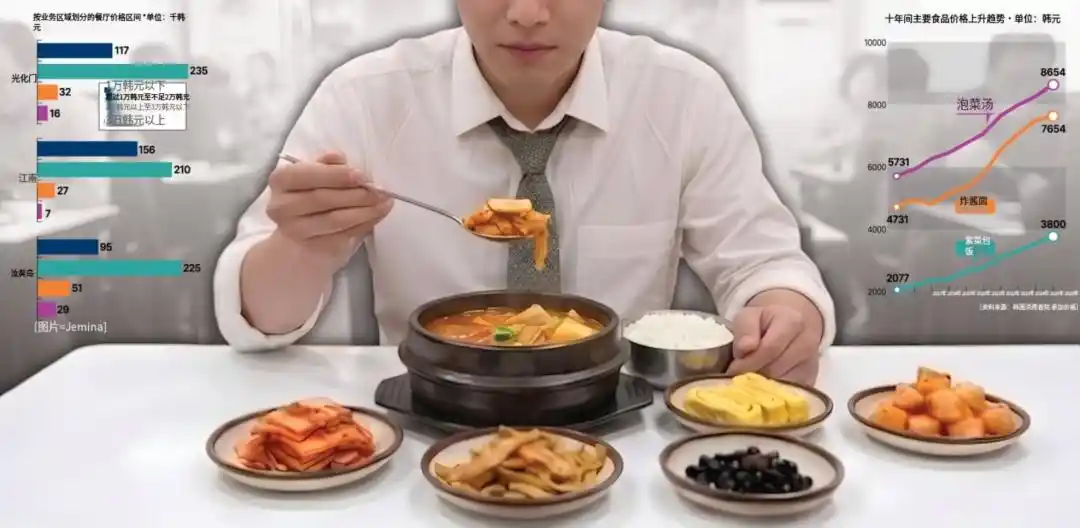
In the spring of 2026, the retail price of a 20kg bag of rice stayed above 60,000 won (280 yuan RMB) for eight consecutive months; in early May, domestic pork belly cost about 2,811 won per 100g, up 12.9% year-on-year. According to the "modified Engel coefficient," which combines food and dining out expenses, it reached 30.3% in 2025—the first time South Korea crossed the 30% mark in 31 years. This data means that for every 100 won a South Korean spends, 30 goes toward food.
Korean media surveyed about 1,200 restaurants around three major office districts in Seoul: Gwanghwamun, Yeouido, and Gangnam. The average lunch price was 14,635 won. At the then-minimum hourly wage, someone had to work about 1 hour and 25 minutes to afford an ordinary lunch.
Around 2015, South Korean youth began using "Hell Joseon" to mock job competition, class rigidity, and high housing prices. More than a decade later, GDP per capita has climbed another notch, but "Hell Joseon" hasn't faded from the lexicon.
This is the gap between South Korea's two sets of accounts.
The national account shows a GDP per capita over $36,000, booming AI chip exports, and upgraded growth expectations. The young people's account shows unemployment, high rent, high debt, and high prices. The former proves South Korea is still wealthy; the latter determines how freely young people spend today.
When an ordinary lunch requires over an hour's wage, saving a few thousand won becomes meaningful. A decade ago, South Korean youth facing stress swiped cards for bags and shouted "live for the moment." Now, they walk five kilometers to save on transportation. Wallet usage has changed, and so has their judgment of the future.
03. From Living for the Moment to the "Beggar Generation"
South Korean society once held a very solid belief in the future.
From the 1960s to the 1990s, the "Miracle on the Han River" transformed a war-torn agricultural country into an industrial powerhouse. South Korea's average annual GDP growth was 8.5% in the 60s, 7.7% in the 70s, and 9.1% in the 80s. Factory expansion, export growth, and urbanization happened simultaneously. Many families saw refrigerators, cars, and apartments become staples of middle-class life.

This period left a simple intergenerational contract: Study hard, get into a large corporation, work long-term, let wages grow with seniority, and finally own a home. The parent generation saved because they believed enduring a few years would bring a wealthier tomorrow.
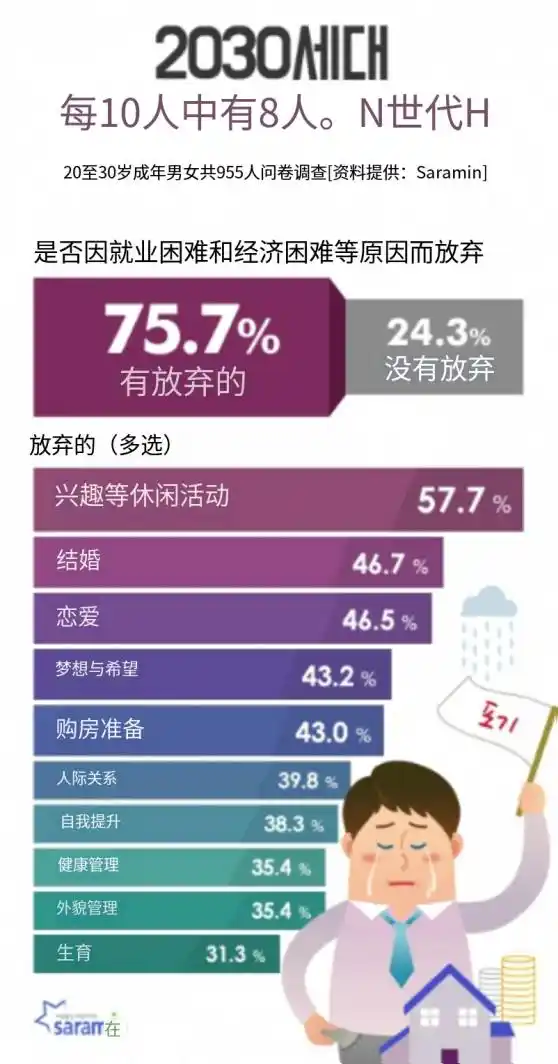
By the 2010s, this contract was loosening. Economic growth slowed, Seoul housing prices soared, big corporate hiring thresholds rose, and young people began calling themselves the "Sam-po Generation" (giving up three things), "O-po Generation" (five things), successively abandoning dating, marriage, childbirth, homeownership, and social relationships.
Back then, the residual warmth of the parents' growth era remained, and consumption and social media offered instant gratification. YOLO (You Only Live Once) gained a strong following.
The South Korean version of YOLO actually contained two mindsets. Some still believed future income would increase and were willing to spend ahead; others already doubted that savings could buy a home or achieve class mobility, so they traded distant big goals for a trip, a fancy meal, or a brand-name bag. The latter logic was almost pessimistic: Since saving for a down payment is like filling the sea with a spoon, at least buy some respectability you can afford today.
But this lifestyle of compensating for a distant future with present consumption had a hidden premise: Maybe you can't afford a house, but next month's salary will arrive on time, right?
Entering the 2020s, the pandemic, high inflation, high interest rates, shrinking hiring, and AI replacement anxiety arrived in succession. "Anything can go wrong anytime" gradually became the psychological backdrop for South Korean youth. High consumption became harder to sustain, and YOLO gave way to YONO—You Only Need One.
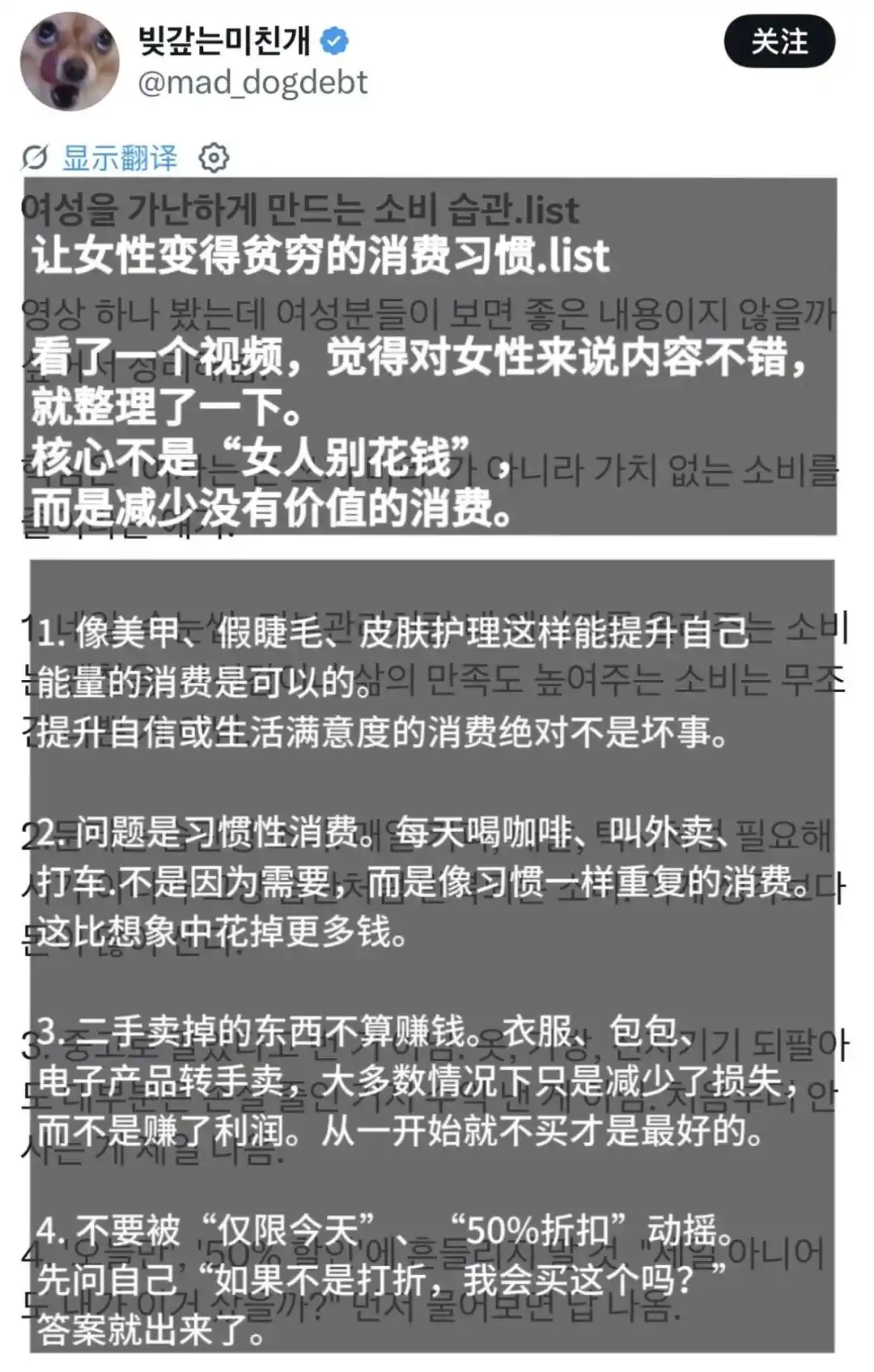
YONO emphasizes cutting unnecessary spending, paying only for things truly needed and used long-term. Many young people cut back on weekday coffee, dining out, and transport costs, but might still splurge on a trip or an item they genuinely love. The desire to consume hasn't disappeared; it's just concentrated on a few key targets.
Now, the Beggar Map pushes YONO to a more extreme version: even a single meal must pass a triple check of price, nutrition, and satiety.
From YOLO to YONO, to Beggar Rooms and the Beggar Map, the slogans of South Korean youth may seem to zigzag, but the core demand hasn't changed: To reclaim a bit of agency on an increasingly unpredictable life path.

Living for the moment uses consumption to prove "today belongs to me"; extreme saving uses the remaining balance to prove "there's still a way out tomorrow."
YOLO and YONO seem opposite, but they tackle the same puzzle: when long-term planning becomes harder, how should one arrange today. Some trade money for immediate experience; others keep money in the account for breathing room. Consumption patterns changed, but the need for a sense of certainty never disappeared.
The beggar lifestyle is the solution millions of South Koreans have rediscovered: breaking down overwhelming economic uncertainty into one meal, one bus ride, one day's budget. The 4,000-won pork cutlet, points earned from 8,000 steps, the tea bag brewed a third time—all make life tangible again. The future is still hard to predict, but at least how to spend today, they can still decide for themselves.
This article is from the WeChat public account "Cool Play Lab," author: Cool Play Lab