Securities or Commodities? A Decade-Long Tug-of-War Ends as the 'Crypto Market Structure Act' Races to the Senate

Odaily星球日报Published on 2025-12-10Last updated on 2025-12-10

Abstract

The "Cryptocurrency Market Structure Act" (CLARITY Act) is advancing to the U.S. Senate for final review after passing the House with strong support. The bill aims to resolve the long-standing regulatory debate over whether cryptocurrencies are classified as securities or commodities. It introduces a clear framework: tokens on decentralized blockchains are defined as "digital commodities" under CFTC oversight, while those meeting the Howey test remain securities regulated by the SEC. Key provisions include a "mature blockchain" exemption for highly decentralized networks like Bitcoin and Ethereum, a 360-day temporary registration pathway for trading platforms, and a fundraising exemption of up to $75 million for certain token offerings with enhanced disclosure. The bill also establishes a joint advisory committee to improve coordination between the CFTC and SEC and explicitly exempts non-custodial DeFi actors from broker-dealer regulations. This legislative effort aligns with the Trump administration's pro-crypto stance, including the appointment of industry-friendly leaders at key agencies like the SEC and CFTC, and recent moves to allow regulated spot crypto trading on CFTC-approved exchanges. If enacted, the law would provide regulatory clarity, encourage institutional adoption, and position the U.S. as a leader in the digital asset space.

Original / Odaily Planet Daily (@OdailyChina)

Author / DingDang (@XiaMiPP)
On December 10, U.S. Senators Gillibrand and Lummis stated at the Blockchain Association Policy Summit that the draft of the Crypto-Asset Market Structure Act (CLARITY Act) is expected to be released this weekend and enter the revision and hearing vote stage next week. This means this long-brewing legislative project has officially entered a decisive window.

The bill was first introduced in the U.S. House of Representatives on May 29, 2025, co-sponsored by House Financial Services Committee Chairman Patrick McHenry and Digital Assets and Innovation Subcommittee Chairman French Hill. It passed the House vote by an overwhelming majority (294 votes in favor) on July 17 and is now awaiting final review by the Senate.

Core Design of the Bill: Classification Over a One-Size-Fits-All Approach

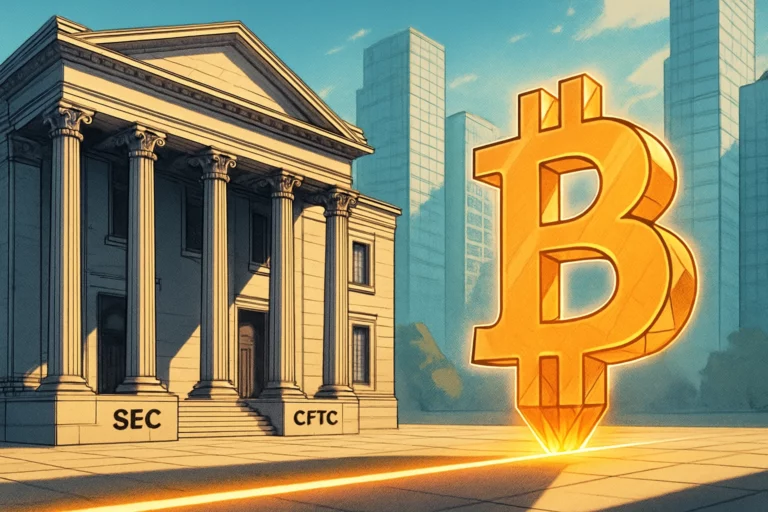
The core of the Crypto-Asset Market Structure Act lies in its attempt to end the decade-long tug-of-war between U.S. regulators and the industry over "whether it's a security or a commodity." It is the first legislation to draw a clear boundary for digital assets, avoiding a "one-size-fits-all" regulatory model in favor of a classified regulatory framework. Specifically:

Legal Distinction Between "Digital Commodities" and "Digital Securities"

The bill explicitly defines the vast majority of tokens natively issued on decentralized blockchains as "digital commodities," placing them under the regulatory purview of the Commodity Futures Trading Commission (CFTC). Only those tokens that meet the Howey Test and possess typical "investment contract" characteristics will continue to be regulated by the SEC under securities laws.

"Mature Blockchain" Exemption Path

To prevent all tokens from being forcibly classified as securities, the bill establishes a "mature blockchain system" standard: a blockchain must simultaneously satisfy conditions of "high decentralization" (no single entity controls more than 20% of the token supply or validation power) and derive its value primarily from the actual use of the network to be exempt from SEC securities registration requirements. This provides a clear path for mainstream assets like Bitcoin and Ethereum, ensuring regulation does not stifle technological progress.

Comprehensive Shift of Secondary Market Regulation to the CFTC

The bill requires all platforms engaged in spot or derivative trading of digital commodities to register with the CFTC as a "Digital Commodity Exchange" (DCE), digital commodity broker, or dealer. Acknowledging industry realities, the bill also includes a 360-day "provisional registration" channel to ensure existing compliant platforms are not forced to shut down due to technical violations during the transition period, enabling a smooth handover.

Limited Fundraising Exemption

Even for initial token offerings on mature blockchains that are still deemed "investment contracts," issuers can apply for an exemption from the registration requirements of the 1933 Securities Act. However, the total annual fundraising amount must not exceed $75 million, and stricter information disclosure obligations must be fulfilled. This design seeks to balance encouraging innovation with protecting investors.

Division of Labor Between CFTC and SEC: From Confrontation to Collaboration

The prolonged jurisdictional tug-of-war between the SEC and CFTC over digital assets has long been described as the "Achilles' heel" of the crypto industry. Regulatory uncertainty has even been considered a significant hidden cost suppressing innovation vitality in the U.S. If the Crypto-Asset Market Structure Act officially takes effect, it will彻底 (completely) end this situation through legislation, establishing a clear division of responsibilities: the CFTC becomes the core regulator of the digital commodity secondary market, while the SEC focuses on token issuance and private placement activities in the primary market that still possess security attributes.

To ensure coordination between the two agencies in overlapping areas, the bill requires the establishment of a permanent "Joint Advisory Committee". Either agency must formally respond to non-binding recommendations put forward by the committee when formulating rules that might affect the other's jurisdictional scope. This mechanism aims to prevent future regulatory gaps or overlapping regulations.

Simultaneously, the bill provides clear protection for the decentralized finance (DeFi) ecosystem: protocol front-end developers, node validators, miners, and other non-custodial, non-profit roles will be explicitly excluded from the definitions of "broker" or "dealer," significantly reducing the compliance burden at the protocol level and preserving reasonable space for technological innovation.

Supporting Actions Progressing Simultaneously: CFTC is "Implementing First"

As the Senate review of the Crypto-Asset Market Structure Act enters a critical stage, on December 5, Acting Chairman of the U.S. Commodity Futures Trading Commission (CFTC), Caroline D. Pham, announced that spot cryptocurrency products will, for the first time, be permitted to trade on CFTC-registered regulated futures exchanges.

Pham stated that this move is part of the Trump administration's commitment to making the U.S. the "crypto capital of the world," aiming to address the lack of safeguards on offshore exchanges by providing a regulated domestic market.

Furthermore, as part of the "Crypto Sprint" plan, the CFTC will also promote the use of tokenized collateral (including stablecoins) in derivatives markets and revise rules to support the application of blockchain technology in infrastructure such as clearing and settlement. This will strengthen the CFTC's leadership role in the digital asset space, highly aligning with the spirit of the bill.

Trump's Nominations Accelerate: Crypto-Friendly Leadership in Place

Since Trump's second term, the personnel layout of major U.S. financial regulatory agencies has continued to tilt towards supporting digital assets. This shift has become a key catalyst for the accelerated development of the crypto industry.

U.S. Securities and Exchange Commission (SEC) Chairman Paul Atkins stated in an interview with CNBC that the U.S. "resistance" to cryptocurrency has lasted "too long." Paul Atkins was appointed by Trump and took office in 2025. He views the Crypto-Asset Market Structure Act as part of "Project Crypto," an initiative aimed at bringing order and fairness to digital asset classification through legislation and rules.

Simultaneously, on October 25, 2025, Trump nominated Brian Quintenz to serve as CFTC Chairman and Commissioner. A former crypto lawyer, Quintenz represented numerous crypto companies (such as venture capital funds and blockchain projects) at the law firm Willkie Farr & Gallagher and has served as Chief Legal Counsel for the SEC's Crypto Task Force since March 2025, reporting directly to Atkins.

Trump also nominated Travis Hill to serve as Chairman of the Federal Deposit Insurance Corporation (FDIC); he has been serving as Acting Chairman since 2025. Hill is also crypto-friendly, having publicly supported banks' involvement in crypto custody and stablecoin issuance, believing it can enhance financial inclusion. The FDIC regulates the interface between banks and crypto (e.g., stablecoin issuers), and his appointment may facilitate banks' entry into the crypto space.

After the government resumed operations, the SEC has successively introduced optimized systems to accelerate the ETF approval pace. The overall signal is very clear: regulatory logic is transitioning from defensive management to structural acceptance.

Conclusion: The U.S. is Completing the "Crypto Rule of Law Puzzle"

More importantly, the progress of the Crypto-Asset Market Structure Act may consolidate the effectiveness of the U.S. Stablecoin Innovation Act signed by Trump earlier this year, which already provides a safety framework for stablecoin issuance. This bill further completes the legislative puzzle for the crypto industry, filling the market structure gap and propelling the U.S. from a "follower" to a "leader" in global crypto regulation.

Overall, these policy and personnel changes预示 (foreshadow) structural opportunities for the U.S. crypto ecosystem. Regulatory clarity could attract more institutional capital inflows. However, challenges have not disappeared, such as coordinating DeFi regulatory details and aligning with international standards. But for global crypto practitioners, this is not just an American story; it is a crucial window period for the entire industry.


Trending Cryptos

Related Questions

QWhat is the core design principle of the 'Cryptocurrency Market Structure Act' (CLARITY Act)?

AThe core design principle of the CLARITY Act is to end the decade-long debate over whether cryptocurrencies are securities or commodities by establishing a clear, categorical regulatory framework instead of a one-size-fits-all approach. It legally distinguishes between 'digital commodities' and 'digital securities'.

QWhich U.S. regulatory agency is given primary oversight of the secondary market for digital commodities under the proposed bill?

AThe Commodity Futures Trading Commission (CFTC) is given primary regulatory authority over the secondary market for digital commodities, including platforms trading digital commodity spots or derivatives.

QWhat is the 'mature blockchain system' exemption path outlined in the bill?

AThe 'mature blockchain system' exemption path allows a blockchain to be exempt from SEC securities registration if it is 'highly decentralized' (no single entity controls more than 20% of the token supply or validation power) and its value is primarily derived from the network's actual use.

QWho are the key political figures mentioned as driving the pro-crypto regulatory changes in the U.S.?

AKey political figures driving the pro-crypto regulatory changes include Senators Gillibrand and Lummis, who introduced the bill, and former President Trump, who appointed crypto-friendly leaders like SEC Chairman Paul Atkins and CFTC Chairman nominee Brian Quintenz.

QWhat is the significance of the CFTC's recent announcement regarding spot cryptocurrency products?

AThe significance of the CFTC's announcement is that it will, for the first time, allow spot cryptocurrency products to be traded on CFTC-regulated futures exchanges. This is part of a broader effort to provide a regulated onshore market and address the lack of safeguards on offshore exchanges.

Related Reads

South Korean Stock Market Sees Sharp Rebound After Forceful De-leveraging, SK Hynix Rises 30%

On July 31, South Korean stocks staged a historic rebound. The benchmark KOSPI index surged 18.27%, with chipmaker SK Hynix hitting a 30% gain limit. This followed a brutal, near-40% decline in the KOSPI over the previous month, driven largely by a deleveraging spiral involving leveraged ETFs. Analysts attributed the sharp sell-off to structural liquidity issues rather than deteriorating corporate fundamentals. The rally was triggered by a confluence of positive catalysts. Firstly, strong earnings from U.S. cloud giants Microsoft and Amazon alleviated fears of an "AI bubble burst," boosting global tech sentiment. Secondly, SK Group Chairman Chey Tae-won made a rare personal purchase of SK Hynix shares, seen as a strong vote of confidence. Thirdly, the South Korean government announced a 20 trillion won ($139 billion) AI investment fund. In response to the market turmoil, South Korean regulators are tightening controls on leveraged ETFs, admitting oversight shortcomings. Measures include raising minimum cash保证金 requirements for散户 investors and suspending new product launches. While the rebound signals eased liquidity pressure, analysts note deep structural issues remain. The market's future stability is seen as dependent on global tech capital expenditure trends and memory chip price cycles, with some viewing the surge as a technical correction rather than a definitive trend reversal.

marsbit15m ago

South Korean Stock Market Sees Sharp Rebound After Forceful De-leveraging, SK Hynix Rises 30%

marsbit15m ago

Cryptocurrency Company Wintermute Makes Pessimistic Statements Regarding Expected Altcoin Growth! Here are the Details

Crypto market maker Wintermute has made a pessimistic assessment regarding the anticipated altcoin season, suggesting that any upcoming rally may benefit only a limited number of projects. The company reports a record 72% of its spot OTC trading volume in H1 2026 came from institutional clients, whose capital is becoming more selective and concentrated. Data shows institutional traders act quickly on price spikes, while retail interest lasts longer. This selective behavior indicates the classic altcoin season, where hundreds of tokens rise simultaneously, may be changing. Wintermute believes only projects with strong use cases, high liquidity, and institutional appeal will stand out. Supporting this view, CryptoQuant data shows altcoin trading volume against Bitcoin is near its lowest since 2021, with the top 10 altcoins (excluding stablecoins) holding about 80.5% of the total altcoin market cap. Similarly, Kaiko reports that the top 10 altcoins now account for 63% of total altcoin trading volume, up from ~50% a few months ago, indicating capital concentration. Analysts suggest that in the current cautious institutional climate, projects with advanced technology, liquidity, and robust ecosystems will attract disproportionate attention. Therefore, any potential new altcoin season may be less broad than past bull markets, with gains concentrated in a narrower set of promising tokens.

cryptonews.ru15m ago

Cryptocurrency Company Wintermute Makes Pessimistic Statements Regarding Expected Altcoin Growth! Here are the Details

cryptonews.ru15m ago

UNI Activates Fee Switch: Uniswap Completes Commercial Debut, Faces First Test in September

Uniswap's Fee Switch activation on V4 has driven a surge in protocol revenue, with daily income jumping from $118,000 to $318,000. The newly launched Robinhood Chain has become the primary contributor, accounting for over 52% of total revenue, largely fueled by meme coin trading. This revenue fuels a new tokenomic "flywheel": fees accumulate in a pool, incentivizing arbitrageurs to buy and burn UNI tokens, creating deflationary pressure and boosting the token's price. However, concerns loom beneath the surface. Uniswap's revenue is now highly concentrated and dependent on the speculative, volatile activity on Robinhood Chain, which is currently subsidized by free gas fees. This subsidy is set to expire in late September, posing a significant test for sustained transaction volume and, consequently, protocol revenue. Furthermore, UNI's high valuation faces pressure if growth expectations aren't met. Debate also centers on the Fee Switch's impact. While Uniswap founder Hayden Adams clarified that the protocol fee is an "add-on" for traders and does not cut into Liquidity Providers' (LPs) existing share, questions remain about whether higher overall trading costs could indirectly reduce volume and LP earnings over time. Despite these challenges, Uniswap's Fee Switch marks a major step in protocol monetization, with its long-term success hinging on cultivating more sustainable usage beyond speculative trading.

marsbit24m ago

UNI Activates Fee Switch: Uniswap Completes Commercial Debut, Faces First Test in September

marsbit24m ago

Trading

Spot

Hot Articles

How to Buy DATA

Welcome to HTX.com! We've made purchasing DATA Network (DATA) simple and convenient. Follow our step-by-step guide to embark on your crypto journey.Step 1: Create Your HTX AccountUse your email or phone number to sign up for a free account on HTX. Experience a hassle-free registration journey and unlock all features.Get My AccountStep 2: Go to Buy Crypto and Choose Your Payment MethodCredit/Debit Card: Use your Visa or Mastercard to buy DATA Network (DATA) instantly.Balance: Use funds from your HTX account balance to trade seamlessly.Third Parties: We've added popular payment methods such as Google Pay and Apple Pay to enhance convenience.P2P: Trade directly with other users on HTX.Over-the-Counter (OTC): We offer tailor-made services and competitive exchange rates for traders.Step 3: Store Your DATA Network (DATA)After purchasing your DATA Network (DATA), store it in your HTX account. Alternatively, you can send it elsewhere via blockchain transfer or use it to trade other cryptocurrencies.Step 4: Trade DATA Network (DATA)Easily trade DATA Network (DATA) on HTX's spot market. Simply access your account, select your trading pair, execute your trades, and monitor in real-time. We offer a user-friendly experience for both beginners and seasoned traders.

1.1k Total ViewsPublished 2026.07.01Updated 2026.07.01

How to Buy DATA

What is ANSEM

I. Project IntroductionThe Black Bull ($ANSEM) is a transparent, community-driven memecoin on Solana built around one creed: charge forward no matter what. The project is frontend-first and fully verifiable — its website reads live on-chain and market data directly from Solana, including price, liquidity, volume, market cap, and holder distribution, so anyone can audit the claims with no login and no user-data collection. Beyond the token, it offers an Ansem-call Radar, non-custodial community liquidity Pods on PumpSwap, and a browser-based meme terminal. $ANSEM is a standard Pump.fun SPL token (6 decimals) trading against SOL and USDC.II. Token InformationToken Symbol: ANSEM(The Black Bull)III. Related LinksWebsite:https://www.blackbullsol.com/X: https://x.com/blknoiz06Contract Address: https://solscan.io/token/9cRCn9rGT8V2imeM2BaKs13yhMEais3ruM3rPvTGpumpNote: The project introduction comes from the materials published or provided by the official project team, which is for reference only and does not constitute investment advice. HTX does not take responsibility for any resulting direct or indirect losses.

2.9k Total ViewsPublished 2026.07.01Updated 2026.07.01

What is ANSEM

How to Buy ANSEM

Welcome to HTX.com! We've made purchasing The Black Bull (ANSEM) simple and convenient. Follow our step-by-step guide to embark on your crypto journey.Step 1: Create Your HTX AccountUse your email or phone number to sign up for a free account on HTX. Experience a hassle-free registration journey and unlock all features.Get My AccountStep 2: Go to Buy Crypto and Choose Your Payment MethodCredit/Debit Card: Use your Visa or Mastercard to buy The Black Bull (ANSEM) instantly.Balance: Use funds from your HTX account balance to trade seamlessly.Third Parties: We've added popular payment methods such as Google Pay and Apple Pay to enhance convenience.P2P: Trade directly with other users on HTX.Over-the-Counter (OTC): We offer tailor-made services and competitive exchange rates for traders.Step 3: Store Your The Black Bull (ANSEM)After purchasing your The Black Bull (ANSEM), store it in your HTX account. Alternatively, you can send it elsewhere via blockchain transfer or use it to trade other cryptocurrencies.Step 4: Trade The Black Bull (ANSEM)Easily trade The Black Bull (ANSEM) on HTX's spot market. Simply access your account, select your trading pair, execute your trades, and monitor in real-time. We offer a user-friendly experience for both beginners and seasoned traders.

1.2k Total ViewsPublished 2026.07.01Updated 2026.07.01

How to Buy ANSEM

Discussions

Welcome to the HTX Community. Here, you can stay informed about the latest platform developments and gain access to professional market insights. Users' opinions on the price of A (A) are presented below.

活动图片