Key Takeaways
- The SEC closed its 4-year Aave probe on December 16, 2025, with no enforcement action.
- The investigation examined whether the AAVE token or lending pools were unregistered securities.
- This marked a significant win for DeFi, signaling a reduction in regulatory pressure in 2025.
The United States Securities and Exchange Commission (SEC) has concluded its 4-year long investigation into the decentralized finance protocol Aave.
Aave is a non-custodial DeFi protocol built on blockchain, primarily Ethereum and layer-2 networks, that lets users lend and borrow cryptocurrencies through smart contracts.

XM.com


Bitunix


























































































Bitget
















Aave Founder Delivers the Good News
Aave founder and CEO Stani Kulechov announced the long-awaited good news for the DeFi community on Dec. 16, informing that the SEC had not recommended enforcement action.
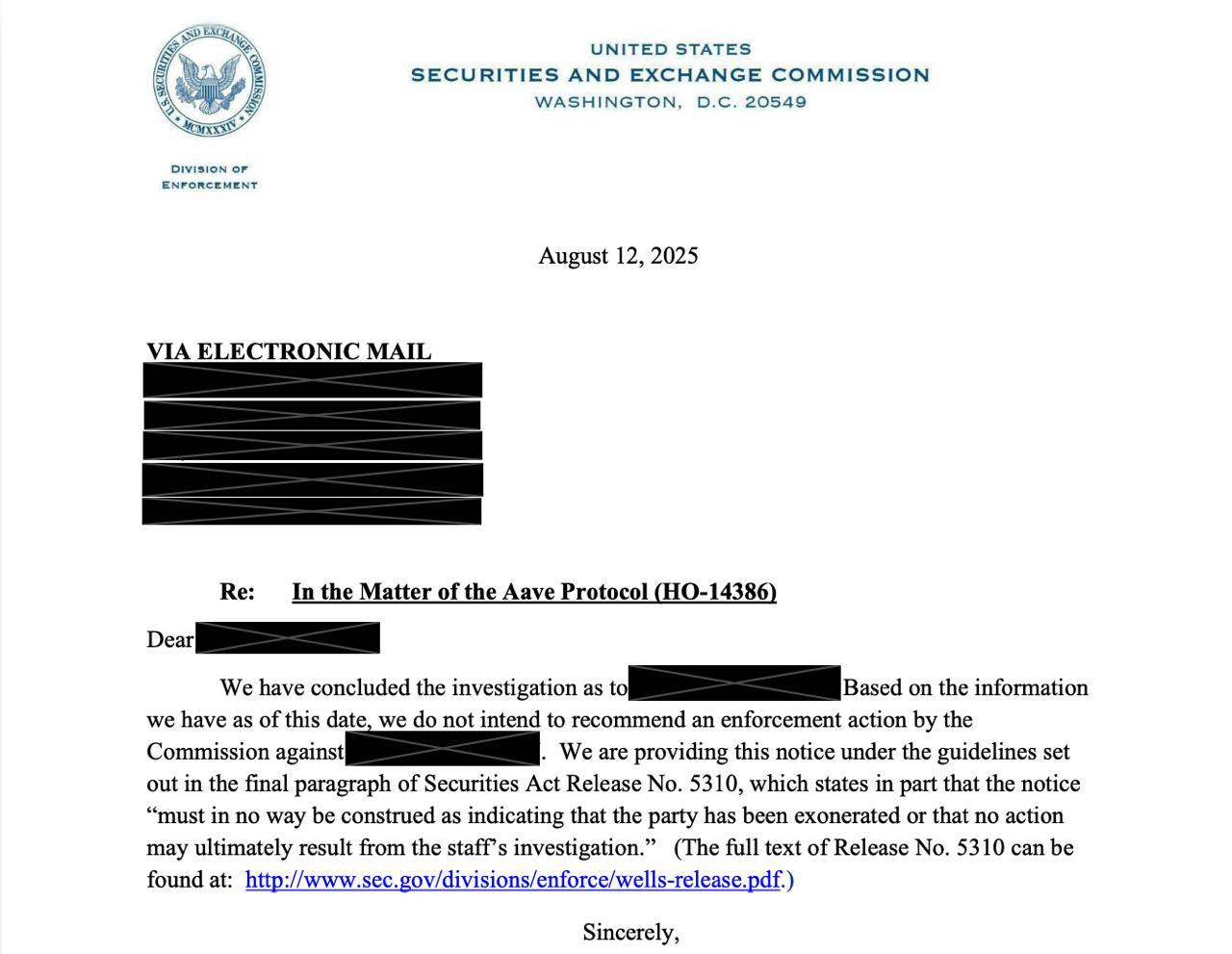
Kulechov in an X post wrote :
“This process demanded significant effort and resources from our team, and from me personally as the founder, to protect Aave, its ecosystem, and DeFi more broadly.”
“DeFi has faced unfair regulatory pressure in recent years. We’re glad to put this behind us as we enter a new era where developers can truly build the future of finance,” he added.
The SEC’s probe, which began around 2021–2022 during the height of the crypto boom, focused on whether certain aspects and product offerings by Aave violated U.S. securities laws.
This marks a significant relief for one of the largest DeFi lending platforms and signals a potential easing of regulatory pressure on the sector.
This investigation was a part of a larger effort by the SEC, led by former chair Gary Gensler, to regulate DeFi more strictly, treating various cryptocurrency-related operations as subject to conventional securities laws.
What was the Investigation About?
The probe was launched amid the DeFi boom and rising SEC scrutiny of crypto lending/staking. This era saw high-profile actions against centralized lenders and increased scrutiny of governance tokens.
The SEC never publicly detailed specific allegations, and no Wells notice, a formal warning of potential charges, was issued to Aave. Here are the possible things the SEC under Gensler was looking into based on its other Wells notices at the time:
- If the AAVE token qualified as an unregistered security (similar to cases against other tokens).
- Whether the protocol’s lending/borrowing pools functioned like unregistered investment products or securities offerings.
- Potential issues surrounding how the protocol was promoted, governed, or operated, which may require registration.
Aave’s team, including Kulechov personally, dedicated considerable time and resources to responding to inquiries and defending the protocol’s decentralized model. Kulechov described it as “unfair regulatory pressure” on DeFi overall.
With the change in regime in 2025 and a pro-crypto Trump administration in office, the SEC began closing several long-running crypto probes without action, including those into Uniswap Labs, Gemini, and Ripple. Aave’s case fits this pattern of de-escalation.
The SEC closed the case without charges, fines, or further action, a clear win for Aave. However, the agency was careful to note that this isn’t an “exoneration” or official approval; it simply means no enforcement is planned based on current information. Future action remains possible if circumstances change.