‘Orange March continues’ – Michael Saylor’s Bitcoin buys continue despite ‘Extreme Fear’

ambcryptoPublished on 2026-03-23Last updated on 2026-03-23

Abstract

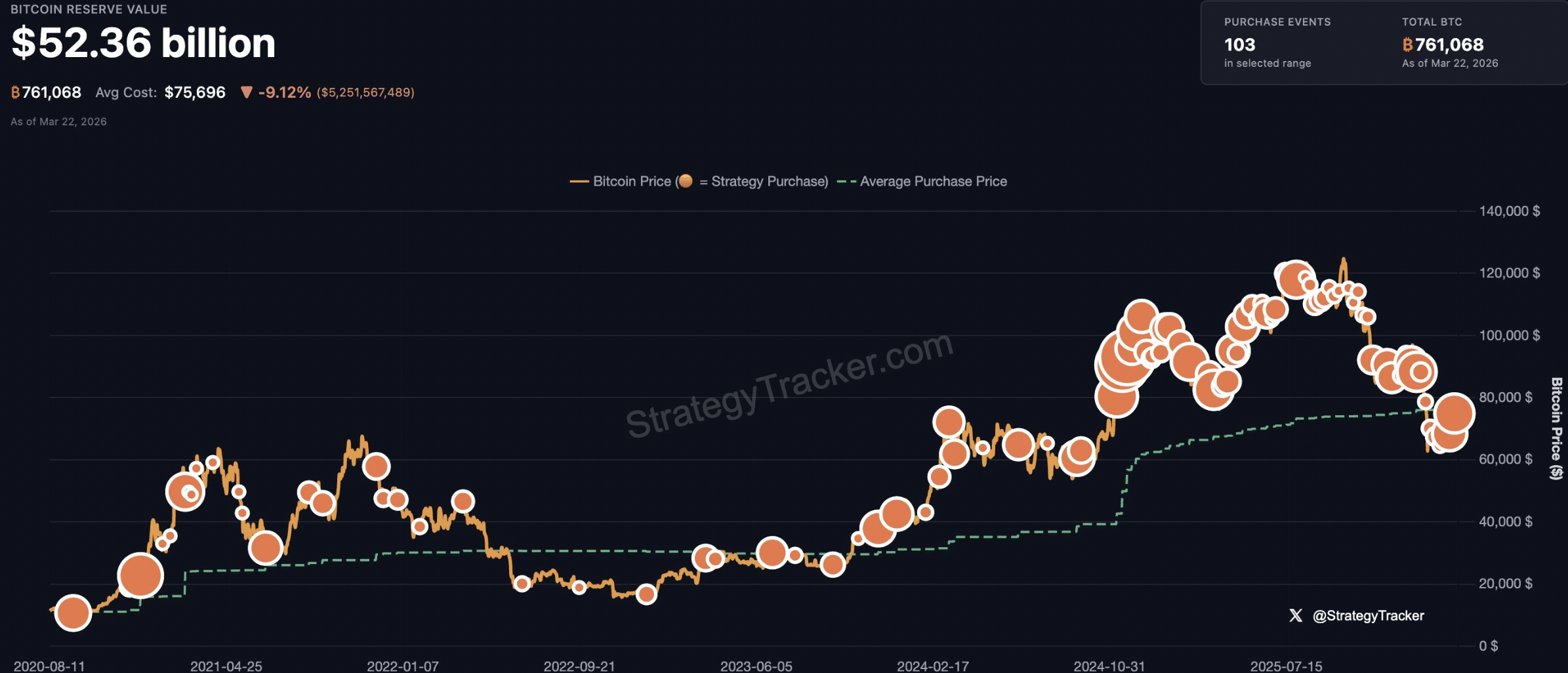
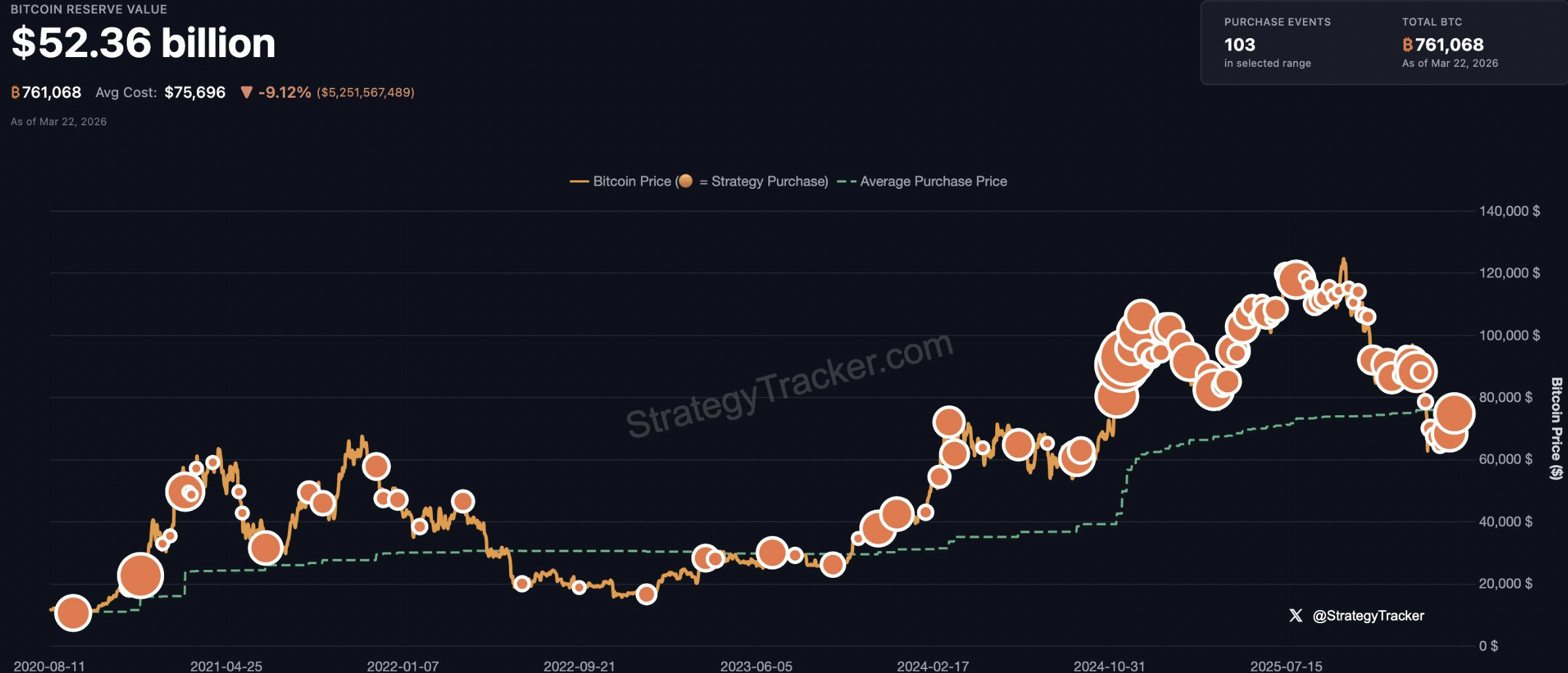
Michael Saylor's company, MicroStrategy, continues its aggressive Bitcoin accumulation strategy, dubbed the "Orange March," despite prevailing market fear. The Crypto Fear & Greed Index indicates "extreme fear," with BTC trading around $68,578 and many traders betting on a drop below $45,000. Unfazed, MicroStrategy has made 103 purchases, amassing 761,068 BTC. Although its average purchase price of ~$75,696 currently puts its $52.36 billion holdings at an unrealized loss of roughly 9%, the firm's strategy focuses on long-term accumulation, not market timing. The company raises capital, including through stock sales, to fund its purchases. Analysis of MSTR stock options shows significant put support at $80-$110 and large call bets at $140-$160, suggesting potential for a sharp upward move. Analysts project MicroStrategy could hold more Bitcoin than Satoshi Nakamoto (est. 1.1M BTC) by March 2027.

Michael Saylor’s Bitcoin [BTC] strategy continues to stand strong, no matter how much the market goes up or down. In a recent post on X, he hinted that Strategy (formerly MicroStrategy) is not done yet and plans to keep accumulating Bitcoin.

Saylor simply said,

The Orange March Continues.
Source: Michael Saylor/X

If you look closely, Saylor’s Strategy is doing more than just “buy and hold.” Behind the scenes, the company is raising money, like selling shares, to keep buying more Bitcoin.

This helps them collect a large portion of Bitcoin’s limited supply on their balance sheet. This approach shows that Saylor strongly believes in Bitcoin as a long-term asset, even when the market is uncertain.

Market conditions are raising eyebrows

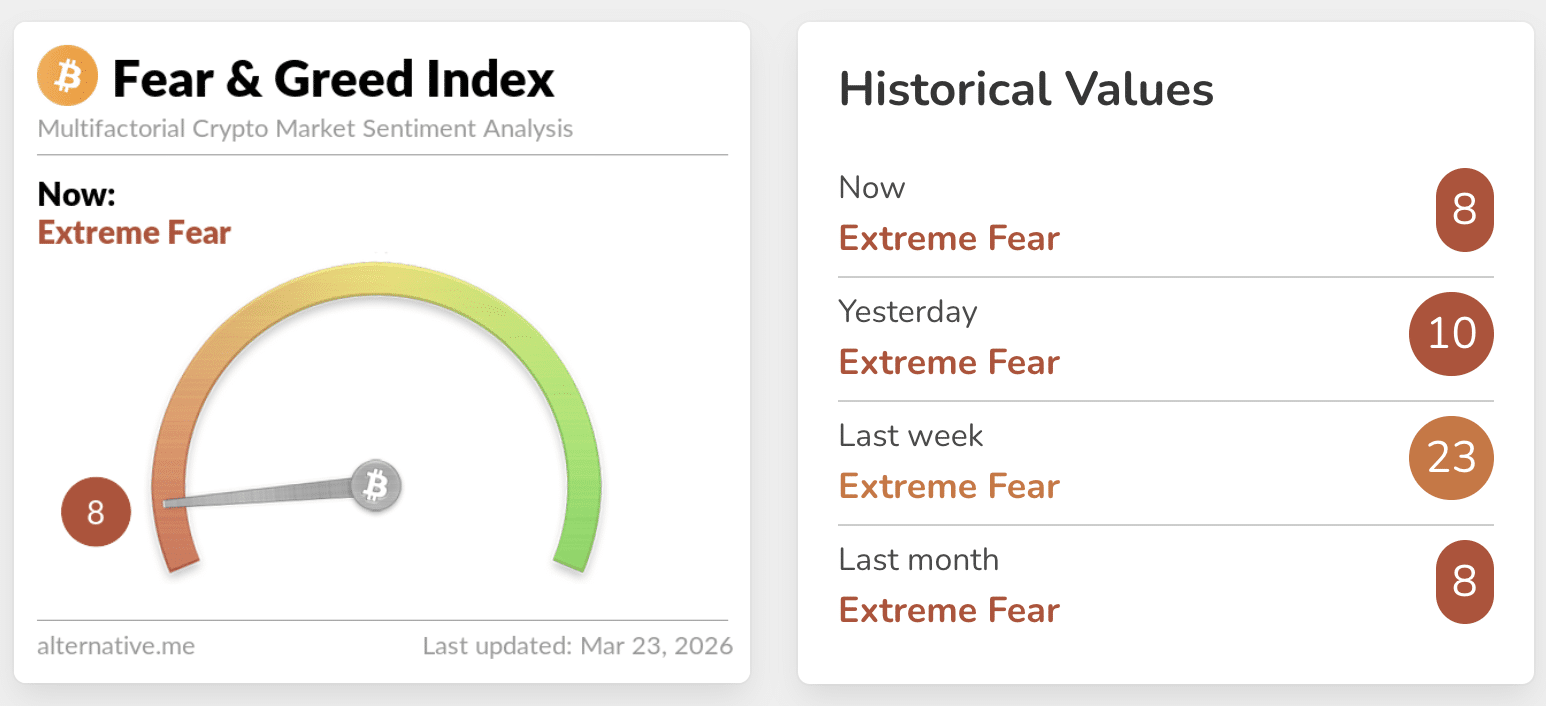
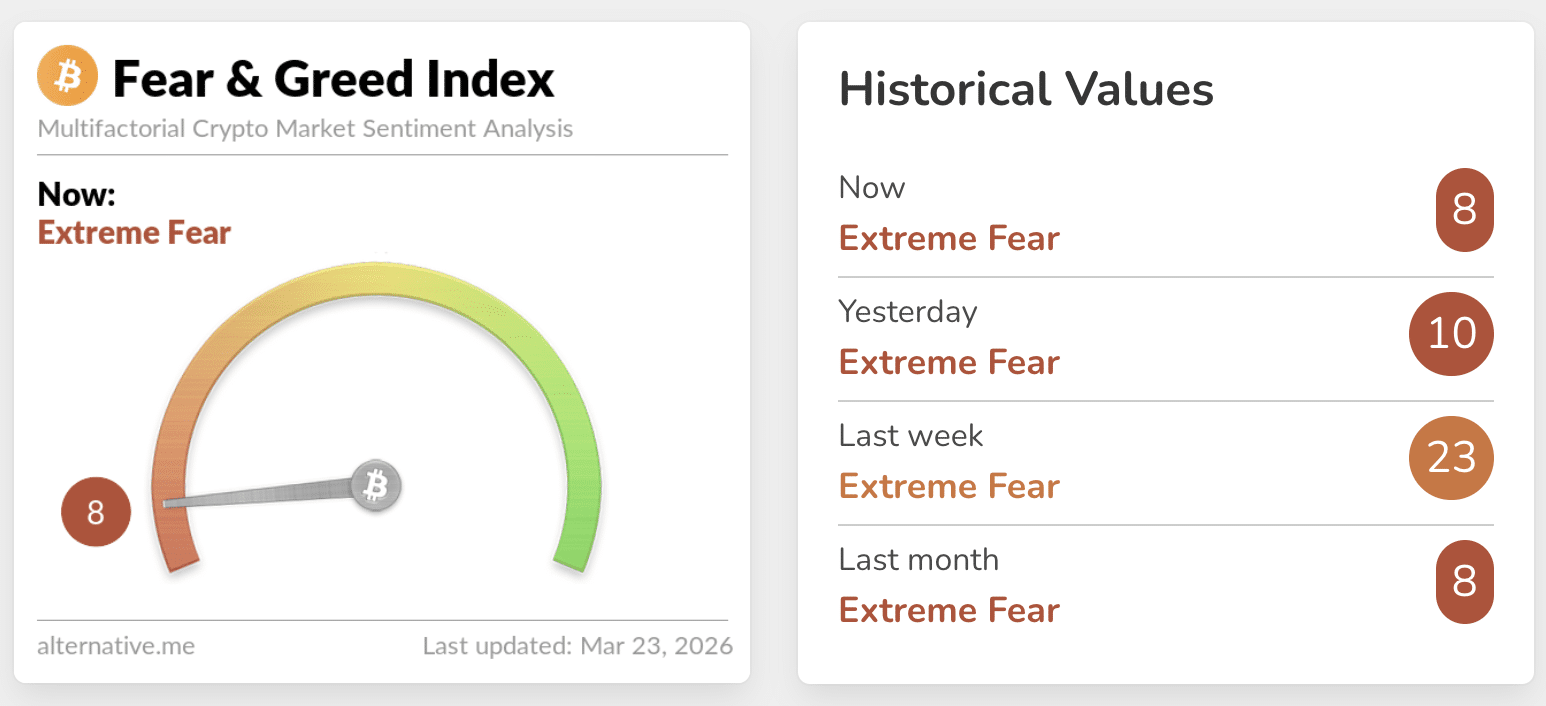
That being said, the current market reflects strong fear among retail investors, with Bitcoin hovering around $68,578 and the Crypto Fear & Greed Index firmly in the “extreme fear” zone.
Source: Alternative

Many traders are even betting on Bitcoin’s price dropping below $45,000 rather than a move toward $100,000 this year. Yet, despite this sentiment, Strategy continues to buy Bitcoin without hesitation.

So far, the company has made 103 purchases, accumulating a massive 761,068 BTC. However, due to aggressive buying at higher levels, its average purchase price stands at around $75,696, putting its $52.36 billion holdings at an unrealized loss of roughly 9%.

This clearly shows a strategy focused on accumulation rather than timing the market.

Strategy’s “buy the dip” formula

MSTR’s stock is also under slight pressure, trading at $135.66 at press time. However, looking at MSTR stock options, there’s a clear battle happening.

Many traders have placed “put” bets between $80 and $110, which suggests they believe the stock has strong support in that range and may not fall much lower.
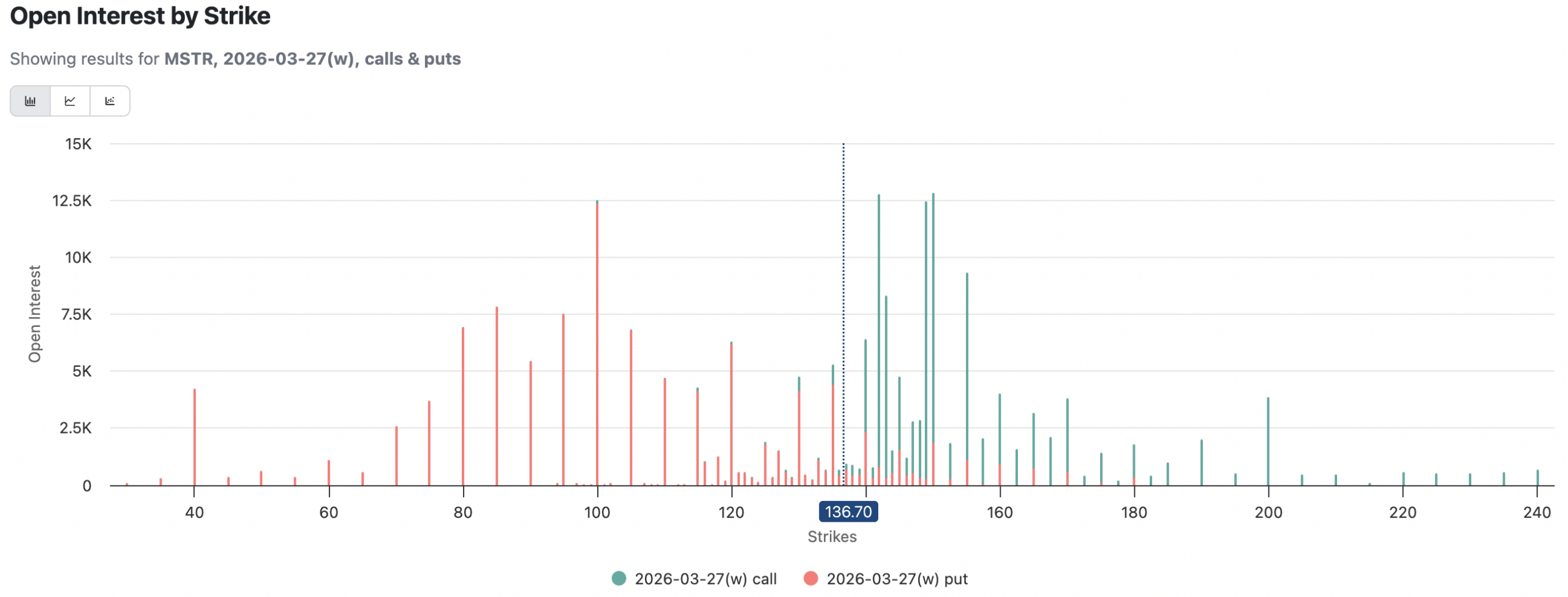
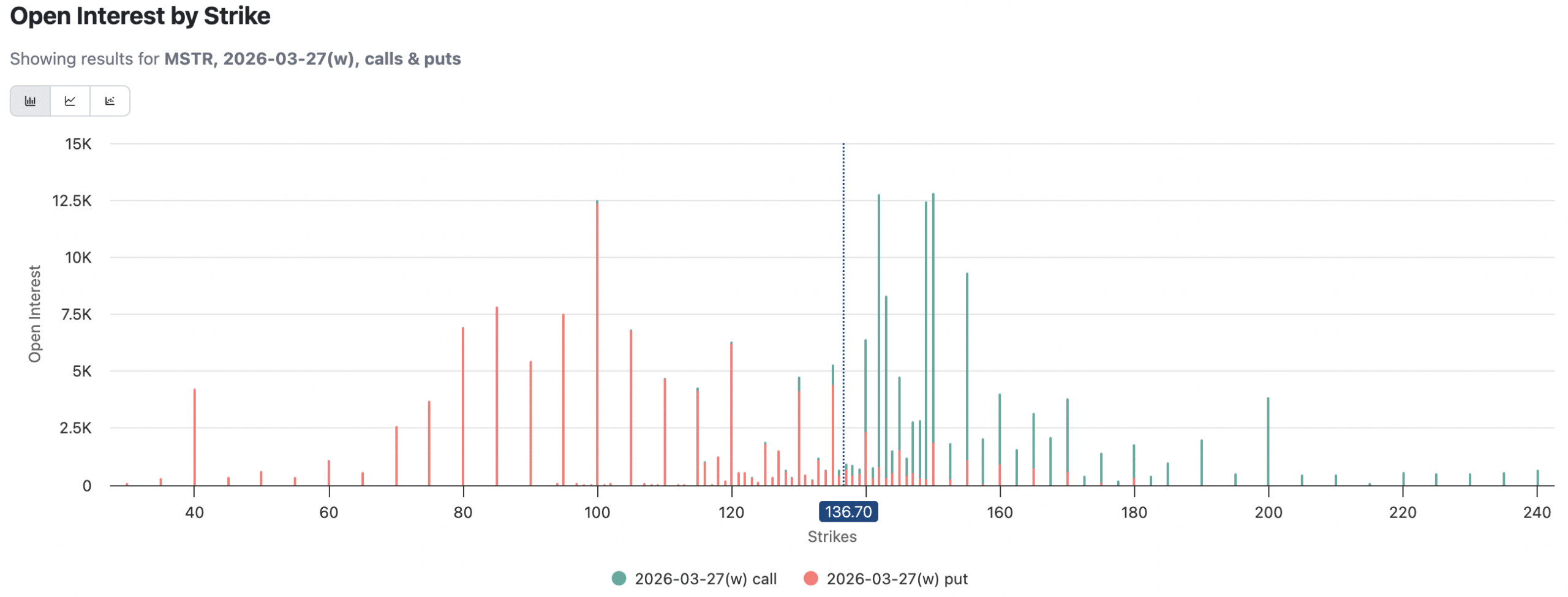
Source: OptionCharts.io

At the same time, there are even bigger “call” bets between $140 and $160. Since the stock is around $136, any upward move could push it higher quickly.

This is because market makers may need to buy more shares, which can drive the price toward $160.

At this pace, analysts believe the company could eventually hold more Bitcoin than Satoshi Nakamoto (who is estimated to own about 1.1 million BTC) by March 2027.


Final Summary

  • Strategy is not just holding Bitcoin; it is aggressively accumulating, regardless of market conditions.
  • The firm’s continued buying, even at a loss, reflects deep confidence in Bitcoin’s future value.

Related Questions

QWhat is Michael Saylor's strategy for Bitcoin despite the current market fear?

AMichael Saylor's strategy is to continue aggressively accumulating Bitcoin through his company, MicroStrategy, by raising money (like selling shares) to buy more, regardless of market conditions or price fluctuations.

QWhat is the current reading of the Crypto Fear & Greed Index mentioned in the article?

AThe Crypto Fear & Greed Index is firmly in the 'extreme fear' zone.

QWhat is MicroStrategy's average purchase price for Bitcoin and what is its current unrealized loss?

AMicroStrategy's average purchase price for Bitcoin is around $75,696, and its holdings are at an unrealized loss of roughly 9%.

QWhat do the put and call options for MSTR stock suggest about trader sentiment?

APut bets between $80 and $110 suggest traders believe the stock has strong support in that range, while larger call bets between $140 and $160 indicate expectations for a potential price surge if the stock moves upward.

QBy when do analysts believe MicroStrategy could hold more Bitcoin than Satoshi Nakamoto?

AAnalysts believe MicroStrategy could hold more Bitcoin than Satoshi Nakamoto (estimated to own 1.1 million BTC) by March 2027.

Related Reads

You Bet on the News, the Pros Read the Rules: The True Cognitive Gap in Losing Money on Polymarket

The article explains that the key to profiting on Polymarket, a prediction market platform, lies not just predicting real-world events correctly, but in meticulously understanding the specific rules that govern how each market will be resolved. It illustrates this with examples, such as a market on Venezuela's 2026 leader, where the official rules defining "officially holds" the office overruled the intuitive answer of who was in practical control. Other examples include debates over the definition of a "token" or what constitutes an "agreement." The core argument is that a "reality vs. rules" gap creates pricing discrepancies that savvy traders ("车头" or "whales") exploit. The platform has a formal dispute resolution process managed by UMA token holders to settle ambiguous outcomes. This process involves proposal submission, a challenge window, a discussion period, and a final vote. However, the article highlights a critical flaw in this system compared to a traditional court: the lack of separation between the arbiters (UMA voters) and the interested parties (traders with financial stakes in the outcome). This conflict of interest undermines the discussion phase, leads to herd mentality, and results in opaque final decisions without explanatory rulings. Consequently, the system lacks a body of precedent, making it difficult for users to learn from past disputes. The ultimate takeaway is that success on Polymarket requires a lawyer-like scrutiny of the rules to identify and capitalize on the cognitive gap between how events appear and how they are contractually defined for settlement.

marsbit34m ago

You Bet on the News, the Pros Read the Rules: The True Cognitive Gap in Losing Money on Polymarket

marsbit34m ago

Will the Fed Still Cut Interest Rates? Tonight's Data Is Crucial

The core debate surrounding the Federal Reserve's potential interest rate cuts is intensifying amid geopolitical conflict and rebounding inflation. The key question is whether high energy prices will cause persistent inflation or weaken consumer demand enough to force the Fed to cut rates. Citigroup presents a bullish case for cuts, arguing that oil supply disruptions from the Strait of Hormuz are temporary and will not lead to lasting inflationary pressure. They point to receding bond yields and oil prices as evidence the market is pricing in a short-lived shock. Citi's data also shows tightening financial conditions, a stabilizing labor market, and healthy tax returns, supporting their view that the path to lower rates remains open. Conversely, Deutsche Bank offers a starkly contrasting, more hawkish outlook. They argue the Fed's current policy is already neutral and expect rates to remain unchanged indefinitely. Their view is based on stalled disinflation progress and a shift toward more hawkish rhetoric from key Fed officials like Waller, who cited risks from prolonged Middle East conflict and tariffs. Other officials, including Williams and Hammack, signaled rates would likely stay on hold for a "considerable time." The market pricing has shifted dramatically, now forecasting zero cuts in 2026. The imminent release of the March retail sales "control group" data is highlighted as a critical test. This metric, which excludes gas station sales, will reveal if high gasoline prices are eroding consumer spending in other areas. A weak reading could support the case for imminent rate cuts, while a strong one would bolster the argument for the Fed to hold steady. This data is pivotal for determining the near-term policy path.

marsbit55m ago

Will the Fed Still Cut Interest Rates? Tonight's Data Is Crucial

marsbit55m ago

Trading

Spot
Futures

Hot Articles

Discussions

Welcome to the HTX Community. Here, you can stay informed about the latest platform developments and gain access to professional market insights. Users' opinions on the price of S (S) are presented below.

活动图片