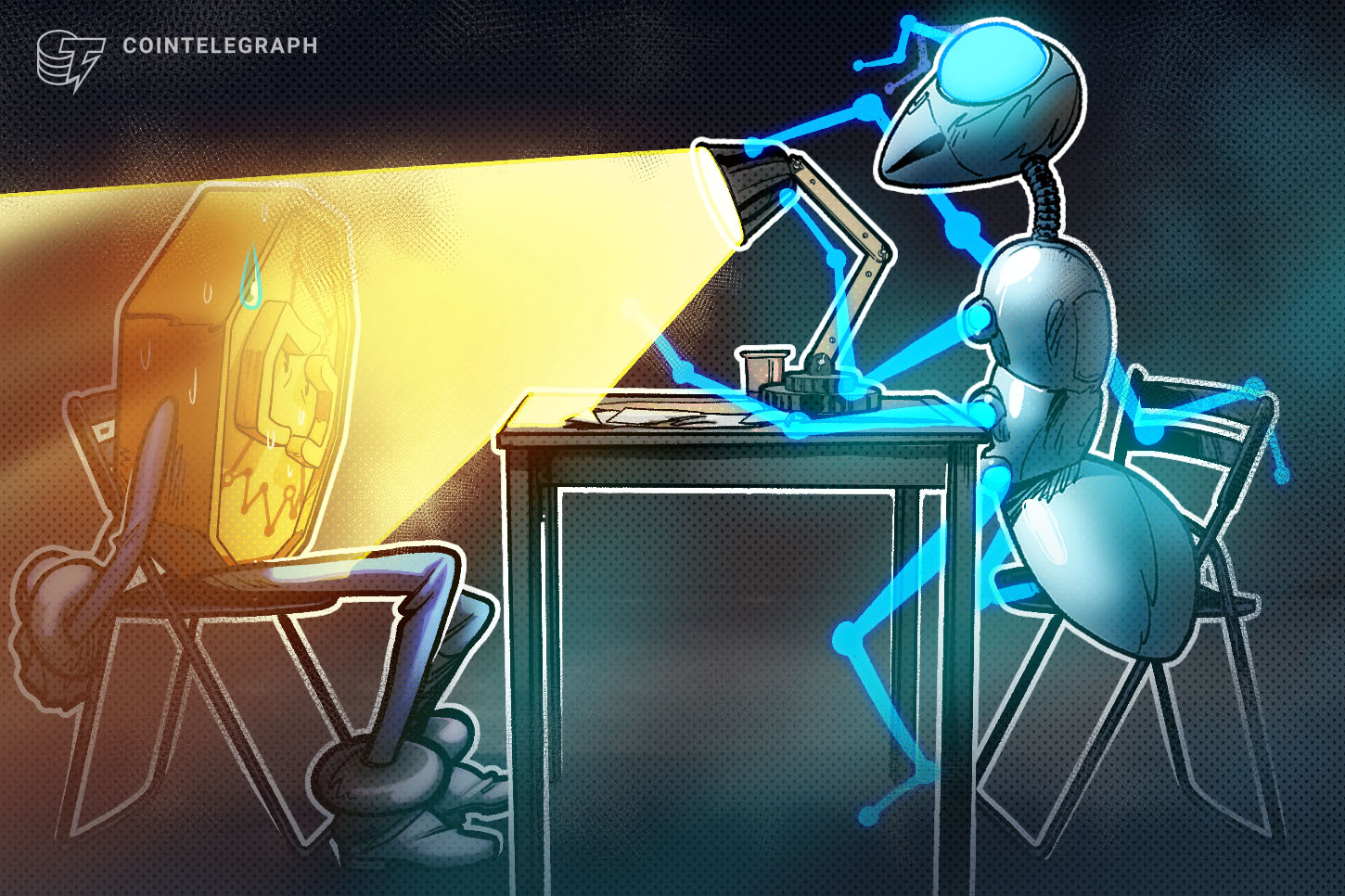
Will Solana Flip Ethereum Soon? SOL Takes First Step Toward Total Domination

bitcoinistPublished on 2026-04-21Last updated on 2026-04-21

Abstract

Solana has significantly closed the gap with Ethereum, particularly in transaction volume, processing 9 billion transactions last month compared to Ethereum's 69 million. It has also surpassed Ethereum in cumulative lifetime transactions. This highlights Solana's high-throughput, low-cost architecture designed for real-time usage. Major partnerships, such as with Visa for stablecoin settlements and Western Union's upcoming stablecoin launch, underscore its growing institutional adoption. Solana has even overtaken Ethereum in real-world asset (RWA) holders. However, a complete "flippening" depends on broader factors like capital inflows, developer activity, and network confidence. While Solana's smaller market cap suggests greater growth potential, Ethereum's Layer-2 scaling strategy strengthens its ecosystem. The outcome remains uncertain, with trade-offs on both sides.

Solana has long stood as Ethereum’s closest rival across nearly every segment, even though its price performance has not always kept pace. From DeFi to user activity, SOL has been behind Ethereum every step of the way.

What used to be a debate about potential now looks more like a measurable race. That conversation between Solana and Ethereum has grown considerably more serious in 2026, and the numbers behind it are not theoretical, especially when it comes to the number of transactions processed on each network.

Transaction Gap Between Solana And Ethereum

A single metric is changing how analysts frame the rivalry between Ethereum and Solana. The interesting metric in question is the raw transaction volume processed on each network.

SOL processed nearly 9 billion transactions last month, compared to just 69 million on Ethereum. The numbers are so lopsided that Solana, which is roughly five years younger than Ethereum, has already surpassed its rival in cumulative lifetime transactions, processing over 500 billion total to Ethereum’s 3 billion.

That difference is not just about numbers. It shows how SOL is positioning itself as a high-throughput network built for real-time usage. The architecture allows thousands of transactions per second at low cost, creating an environment where activity can grow quickly without the bottlenecks that Ethereum had. Although the Ethereum network has since been upgraded to process more transactions, it hasn’t been enough to upend SOL.

Can SOL Actually Flip ETH?

Solana has been the go-to hub for institutions looking for a faster network with high throughput. For instance, the payments giant Visa is in a stablecoin settlement partnership with Solana, placing it at the heart of the growing blockchain payments niche.

Another example is Western Union, which is on track to launch its USDPT stablecoin on SOL sometime in the first half of 2026, bringing access to its $150 billion in annual remittance volume to the network.

Recent data shows that SOL has, for the first time, recently overtook Ethereum in total real-world asset (RWA) holders. However, a true flippening goes beyond isolated metrics and speaks to a change in capital inflows, developer activity, and confidence in the network.

Solana’s smaller market capitalization compared to Ethereum means that there is more room for upside, which makes it a better buy in terms of returns. Still, the gap is not just technical, and the question of whether Solana will flip Ethereum completely is a question that currently has no obvious answer.

Ethereum developers have leaned into Layer-2 scaling, effectively outsourcing transaction load. This strategy may reduce visible activity on Ethereum itself, but it strengthens its overall ecosystem. There are also trade-offs on Solana’s side. Its quick growth has been tied in part to high-frequency activity, including memecoins on the network.

SOL trading at $85 on the 1D chart | Source: SOLUSDT on Tradingview.com

Related Questions

QWhat key metric is changing how analysts view the rivalry between Solana and Ethereum?

AThe raw transaction volume processed on each network, with Solana processing nearly 9 billion transactions last month compared to Ethereum's 69 million.

QHow does Solana's cumulative lifetime transaction count compare to Ethereum's?

ASolana has processed over 500 billion cumulative lifetime transactions, which surpasses Ethereum's 3 billion.

QWhat are two major financial institutions mentioned that are partnering with or using the Solana network?

AVisa, which has a stablecoin settlement partnership with Solana, and Western Union, which is launching its USDPT stablecoin on Solana in 2026.

QIn which specific metric did Solana recently overtake Ethereum for the first time?

ASolana recently overtook Ethereum in total real-world asset (RWA) holders.

QWhat is one potential trade-off mentioned regarding Solana's rapid growth?

AIts quick growth has been tied to high-frequency activity, including memecoins on the network.

Related Reads

Apple Also Has to Pay Rent Now

Apple Pays Rent Too: The Two-Way Flow of "Traffic Tax" and "AI Capability Rent" Between Tech Giants For over two decades, Google has paid Apple an estimated $20 billion annually to remain the default search engine on Safari, a "traffic tax" for a critical user entry point. However, in 2026, the direction of this cash flow partially reversed. Apple agreed to pay Google roughly $1 billion per year to license its Gemini AI models, as Apple's own models reportedly struggled with complex tasks. This creates a unique dynamic: Apple acts as the "landlord" in the established search ecosystem, collecting rent from Google for access. Simultaneously, in the emerging AI arena, Apple becomes the "tenant," paying Google for access to cutting-edge AI capabilities it cannot currently match internally. While Apple claims its new models are "distilled" from Gemini outputs and contain "not a drop" of Google's original code, core dependencies remain. Its knowledge base is refined using Gemini's outputs, and its most powerful cloud model runs on Google's infrastructure. Apple has structured the deal as non-exclusive, allowing it to theoretically switch AI suppliers—a hedge against over-reliance. The future hinges on whether advanced AI models become a commodity (cheap and abundant) or remain a concentrated, scarce resource (expensive and controlled by few). Apple is betting on the former, leveraging its massive device ecosystem to be a powerful, choosy customer. If the latter proves true, its bargaining power could erode. This power dynamic is extending to developers. Apple, Google, and WeChat are all pushing for apps to expose their core functions as standardized "actions" or "intents" that their respective AI assistants (Siri, Gemini, WeChat AI) can directly call. The new scarce resource is no longer just app store visibility, but "being selected by the AI." The currency of "rent" has changed from a 30% revenue share to ceding control over how users interact with an app's functions.

marsbit1h ago

Apple Also Has to Pay Rent Now

marsbit1h ago

Missed the SpaceX IPO? WEEX's "First Trade Protection" Lets You Experience US Stock Trading Risk-Free.

With the excitement around SpaceX's recent public listing reigniting interest in the US stock market, Chinese investors face significant challenges accessing compliant and convenient trading channels following regulatory actions against major online brokers. This article explores the available options, highlighting their risks and limitations. Traditional paths for US stock investments remain problematic. Qualified Domestic Institutional Investor (QDII) and Listed Open-Ended Fund (LOF) products, while compliant, suffer from high fees, significant purchase premiums, and a very limited selection of assets. Small, unregulated offshore brokers pose substantial risks, including potential insolvency. While secure, VIP accounts at banks in Hong Kong or Singapore require high minimum deposits (often 1-2 million RMB) and in-person visits, placing them out of reach for most retail investors. The article positions cryptocurrency exchanges, specifically their TradFi (traditional finance on-chain) offerings, as a compelling alternative. Platforms like WEEX are noted for providing access to a wide range of US stocks and ETFs, including SpaceX (SPCXON), through tokenized assets. This method offers advantages such as a single account for both crypto and traditional assets, USDT-based settlement avoiding fiat complexities, flexible leverage, and robust risk management. To attract users, WEEX is promoting a "First Trade Guarantee" campaign. Running from June 15 to July 8 (UTC+8), it features a $30,000 prize pool. Users who trade $500 worth of US stock contracts can qualify for a guarantee on their first eligible trade: 100% loss coverage up to $30 or a 20% bonus on profits up to $30. The campaign is presented as a low-risk opportunity for both crypto natives and traditional investors to experience US stock trading.

marsbit1h ago

Missed the SpaceX IPO? WEEX's "First Trade Protection" Lets You Experience US Stock Trading Risk-Free.

marsbit1h ago

How Difficult is Chip Making? A Division Error Costs 475 Million Dollars

How Hard Is It to Make a Chip? A Division Error Cost $475 Million Chip expert Shi Kan, a researcher at the Chinese Academy of Sciences and a popular tech creator, explains the immense challenges of chip development. Chips are foundational to modern technology, but their creation is extraordinarily difficult. The journey from sand to a functional chip involves complex design and manufacturing, but a critical bottleneck is verification—ensuring the design works flawlessly before costly production. A single, undetected bug can have catastrophic consequences, as illustrated by the infamous 1994 Intel Pentium FDIV bug. A flaw in the floating-point division unit forced a recall costing $475 million. Unlike software, chips cannot be easily patched after manufacture, making "first-time success" paramount. However, industry surveys show only 24% of chip projects achieve this; over three-quarters require at least one costly re-spin due to design flaws. Verification has thus become the dominant phase, consuming up to 70% of the design cycle. The core challenge is a "verification impossible triangle" between high performance, good debuggability, and low cost. Exhaustively verifying a modern CPU core could take 15,000 years with software simulation, or 30 years with advanced hardware emulation—timeframes utterly impractical for development. Despite being essential, verification is often seen as unglamorous "dirty work," receiving less academic attention than fields like AI. Shi and his team are tackling this by developing an agile verification research framework called ENCORE, based on FPGA technology, to improve verification efficiency and debug capability. Beyond research, Shi engages in public science communication through long-form video content, aiming to demystify chip technology, AI, and computer science. He argues for the value of pursuing "hard and long-term" endeavors, whether in the meticulous world of chip verification or in creating substantive educational content, believing such sustained effort is likely the right path forward.

marsbit1h ago

How Difficult is Chip Making? A Division Error Costs 475 Million Dollars

marsbit1h ago

Trading

Spot
Futures

Hot Articles

Discussions

Welcome to the HTX Community. Here, you can stay informed about the latest platform developments and gain access to professional market insights. Users' opinions on the price of ETH (ETH) are presented below.

活动图片