Musk and Vance Jump In: How a Spelling Error Stirred Up U.S. Politics and Crypto Sentiment?

marsbitPublished on 2025-12-29Last updated on 2025-12-29

Abstract

An investigative report by Nick Shirley exposing alleged fraud at a Minnesota daycare center has ignited a political and crypto frenzy across the U.S. The report, which revealed a daycare receiving $1.9 million in tax-free funds despite misspelling "learning" as "learing" on its sign and having no visible children, quickly went viral with hundreds of millions of views. High-profile figures like Elon Musk and Vice President JD Vance publicly engaged with the story, with Vance calling the investigation more valuable than all 2024 Pulitzer winners. The misspelling "learing" quickly became a meme, spawning a Solana-based token with a $3.34 million market cap. Shirley himself launched a creator token, $thenickshirley, on Base via Zora, which reached a $9 million market cap and earned him over $41,000 in royalties. This move was praised by Coinbase's Brian Armstrong as a successful example of on-chain content monetization. Prediction markets on Polymarket have also begun taking bets on potential legal outcomes. The event is seen as a real-world experiment in creator economies, demonstrating how public influence can be directly monetized through decentralized platforms with minimal friction and greater transparency, potentially signaling a new direction for media and content industries.

Author: Azuma

Who is the most influential person in the U.S. right now? The answer might not be the familiar names of Trump or Musk, but a man named Nick Shirley.

Who is Nick Shirley? He is an independent investigative journalist currently stirring up emotions in American society. On December 27, Nick Shirley posted several investigative videos on social media platforms like X, Instagram, and YouTube, accusing the state of Minnesota of rampant fraud and corruption.

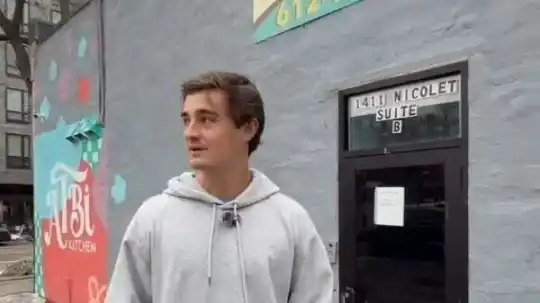
In the videos, Nick Shirley visited a daycare center in the state. Although it was supposed to be operating at the time, the center was closed, and the 99 registered students listed in public records were nowhere to be found. Nick Shirley asked a local resident who had lived in the area for 8 years, and the interviewee said: "I've lived here since 2017, but I've never seen any children."
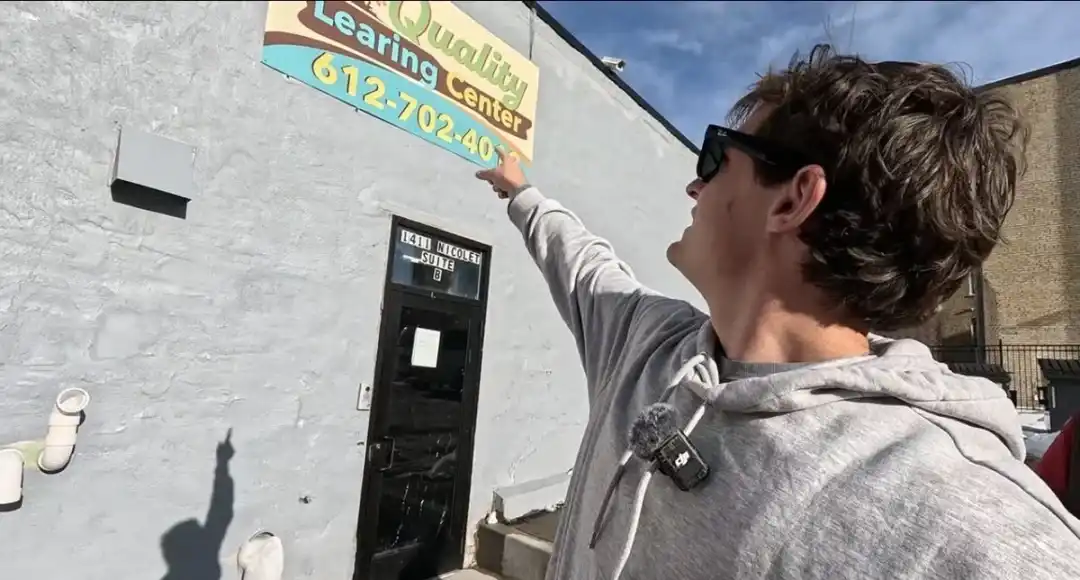
Nick Shirley said in the video: "This is one of hundreds of 'daycare centers' that have received millions of dollars in government funding. This daycare, which can't even spell 'learning' correctly (it was misspelled as 'learing'), received $1.9 million in tax-free funding... and this is just one example among thousands of businesses in Minnesota suspected of fraudulent operations... Minnesota Governor Tim Walz is aware of these fraud cases but has never reported them."

Nick Shirley's videos have sparked massive attention and discussion in the U.S. Within just two days, the total views of the videos across platforms have reached hundreds of millions, with the full 42-minute investigative video on X alone garnering over 100 million views.
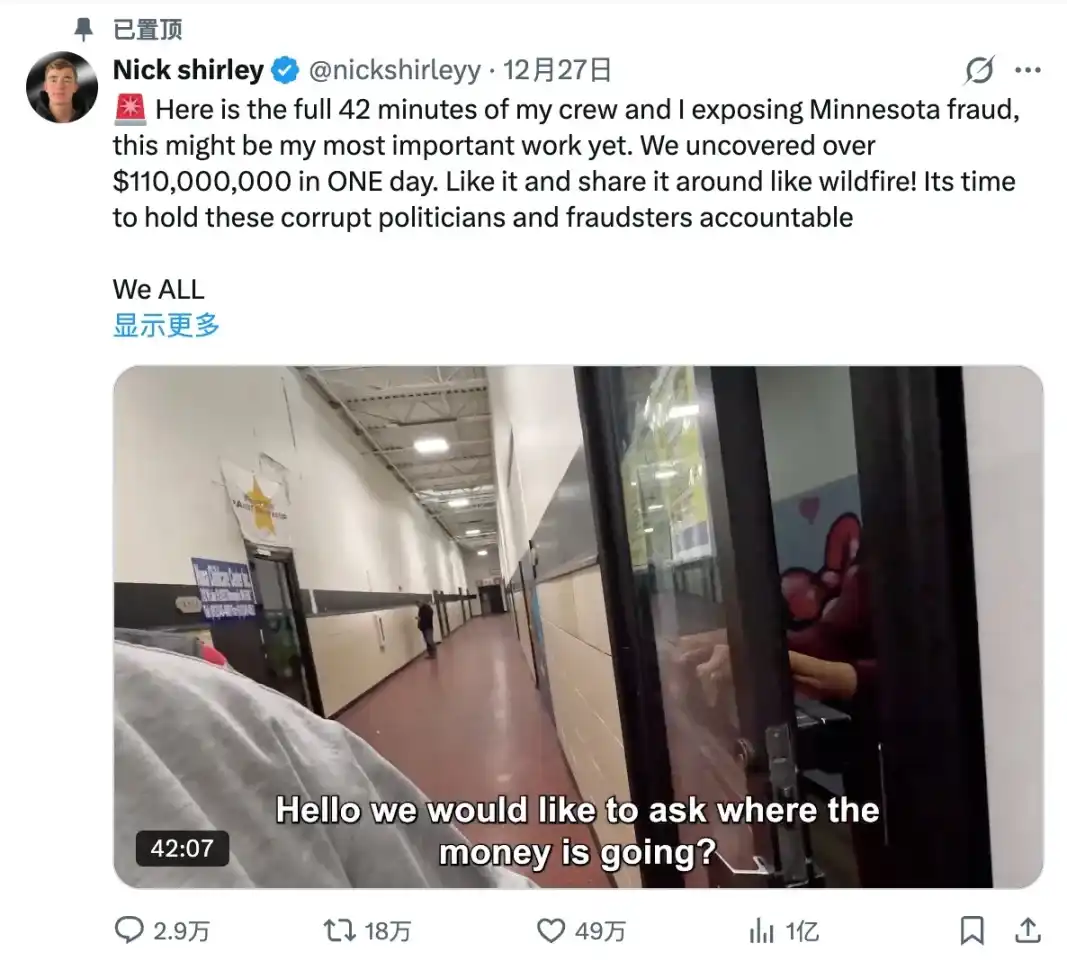
Prominent figures from politics and business have also joined the conversation with Nick Shirley. U.S. Vice President Vance repeatedly shared and replied, bluntly stating that Nick Shirley's investigation is more valuable than all the 2024 Pulitzer Prize works; Musk also followed Nick Shirley's account, highly praising his media value and calling 'learing' the 'word of the year.'

Here's some additional U.S. political context: Minnesota is typically considered a traditional Democratic stronghold in U.S. politics, but in recent years, the political landscape has significantly changed, showing characteristics of a swing state. More crucially, the current governor, Tim Walz, was Harris's running mate during the 2024 election and had the chance to hold the vice presidential position that Vance now occupies... so it's no surprise that Vance personally stepped in to criticize.

Given such a high-profile topic, coupled with the social and political attributes that Meme culture loves, the on-chain world was naturally not late to the party.

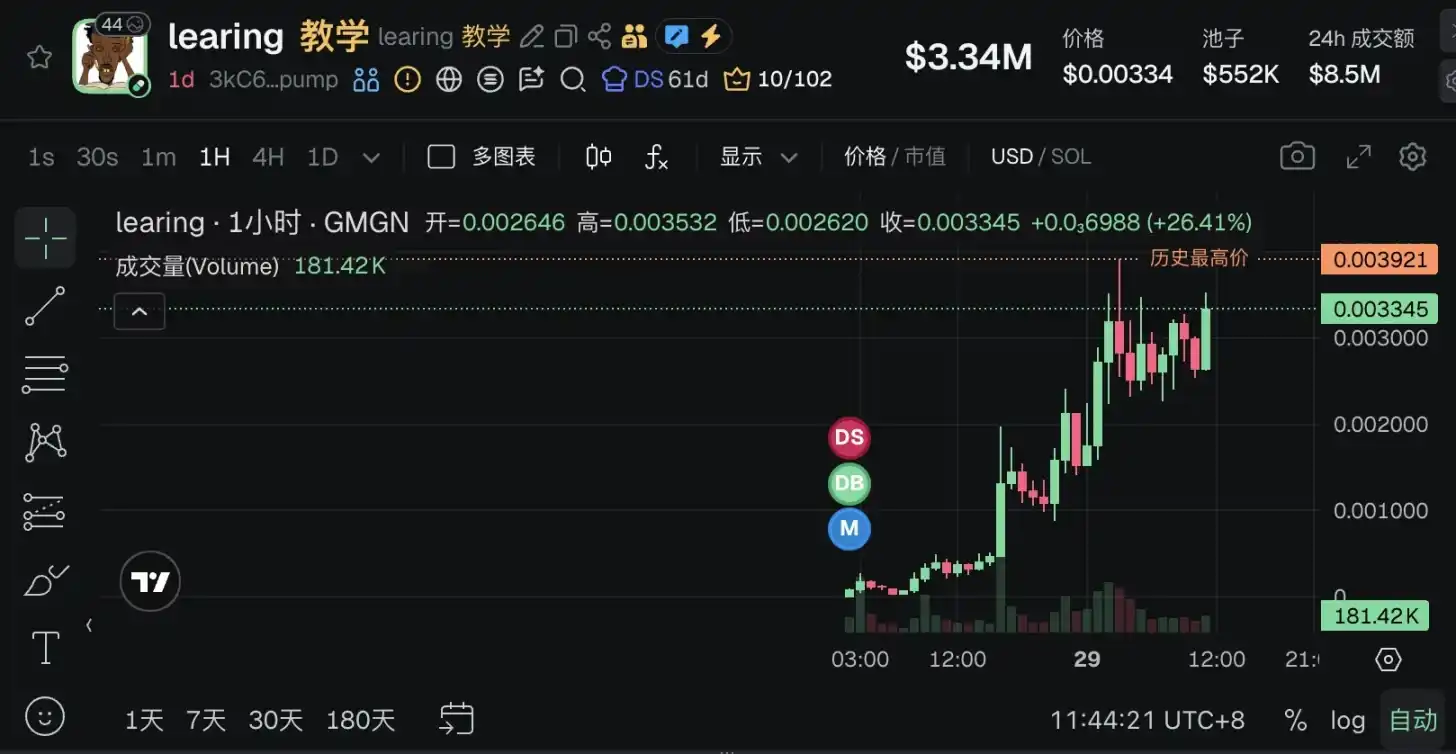
First, the community spontaneously speculated around the most abstract element of the investigation—the misspelled word 'learing.' The market cap of the Meme token on the Solana chain is temporarily reported at $3.34 million.
Next, the community discovered that Nick Shirley疑似 registered on Zora's creator platform and issued a personal creator token, $thenickshirley, on Base. Subsequent interactions in the comments between Coinbase founder Brian Armstrong and Nick Shirley confirmed that the token was indeed issued by him.
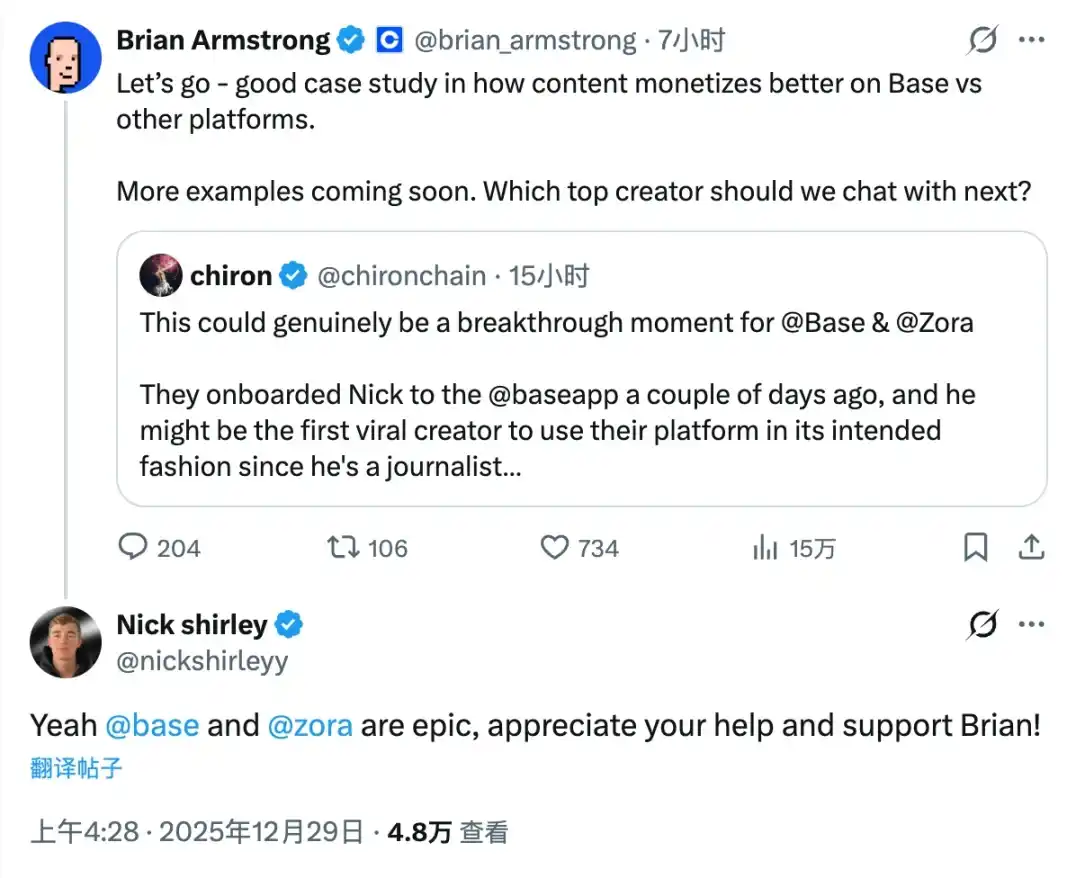
As of writing, the market cap of $thenickshirley is temporarily reported at $5.65 million (having once reached a high of $9.02 million), and Nick Shirley himself has already received $41,646 in creator earnings through royalty income.
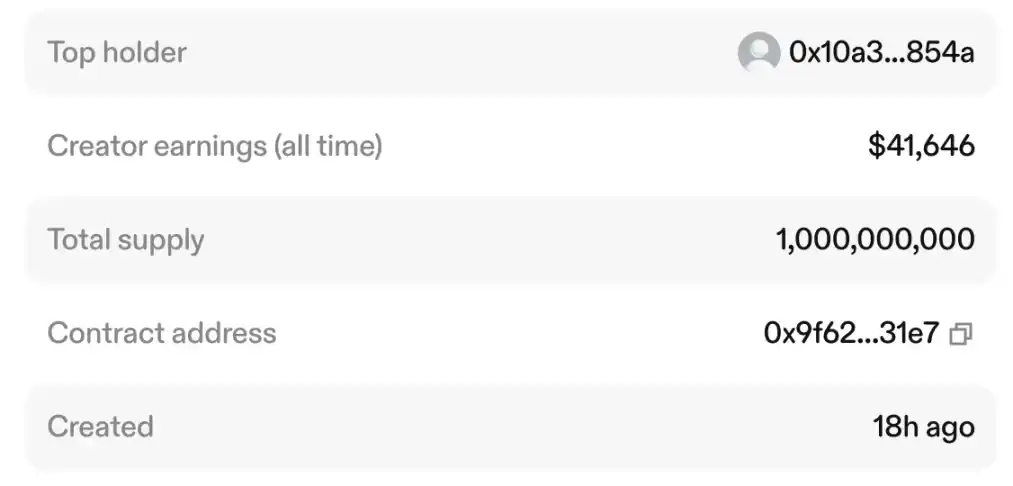
Brian Armstrong commented that this proves content monetization on Base is more effective than on other platforms. Nick Shirley didn't forget to thank Brian Armstrong after making money, praising Base and Zora as "legendary."

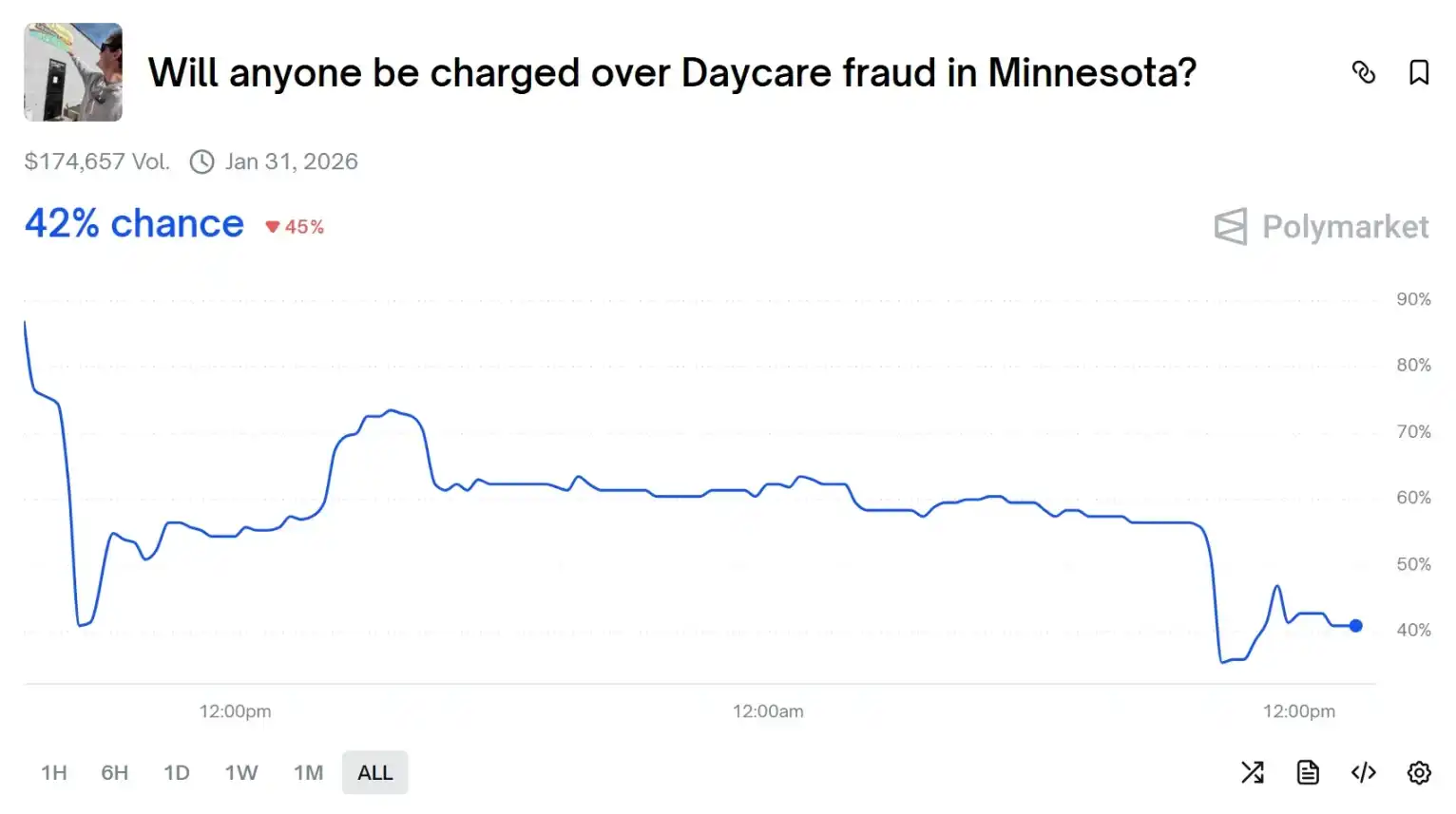
Additionally, the prediction market Polymarket quickly followed up with speculation on the subsequent "handling" of this topic. The current odds are as shown in the image below:
An hour ago, Nick Shirley posted his Venmo and crypto addresses on X, openly accepting "tips."
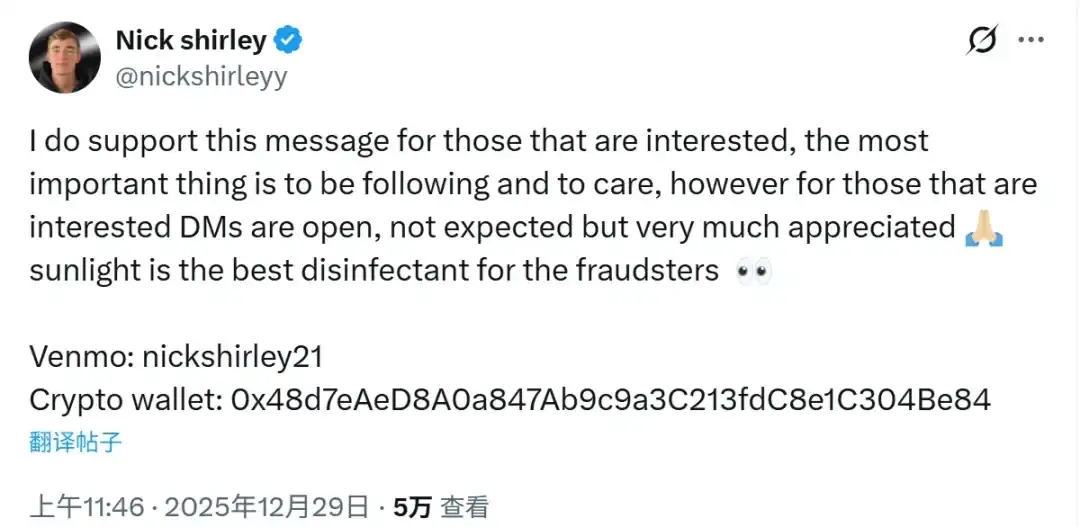
From the new Meme hotspot $thenickshirley to Nick Shirley's token issuance itself, and then to opening "full-channel crowdfunding" and continuous external catalysis, we are witnessing a performance of the dance between network media and open finance.

This is not merely a Meme speculation but更像 a real-world experiment on "creator economy + on-chain content monetization"—an individual with immense传播力 and public issue influence in the real world, without sponsors, platform revenue sharing, or advertisers, directly monetized attention through on-chain tools to complete the闭环.

What it验证 is not "how high this token can rise" but a more fundamental question: whether content can truly be monetized in a lower-friction, more transparent manner on decentralized platforms. Within this, perhaps lies the future evolutionary direction of the media industry.


Related Questions

QWho is Nick Shirley and what did he expose in his investigation?

ANick Shirley is an independent investigative journalist who exposed alleged widespread fraud and corruption in Minnesota, specifically a daycare center that received $1.9 million in tax-free funding despite having no visible children and a misspelled sign (using 'learing' instead of 'learning').

QHow did Elon Musk and J.D. Vance react to Nick Shirley's investigation?

AElon Musk praised Nick Shirley for his media impact and called the misspelling 'learing' the 'word of the year.' J.D. Vance claimed Shirley's investigation was more valuable than all 2024 Pulitzer Prize-winning works.

QWhat cryptocurrency-related activities emerged from this event?

AA meme token $LEARING was created on Solana, and Nick Shirley personally launched a creator token $thenickshirley on Base via Zora, earning over $41,000 in royalties. He also publicly shared his crypto address for donations.

QWhy is the political context of Minnesota significant in this story?

AMinnesota is a traditional Democratic stronghold turning swing state, and its governor Tim Walz was Kamala Harris's 2024 running mate. This adds political weight to the fraud allegations, explaining Vance's involvement.

QWhat broader implications does this event have for content creation and monetization?

AIt demonstrates a model for decentralized content monetization, where creators can directly profit from their influence via blockchain tools like creator tokens, reducing reliance on traditional platforms, sponsors, or ads.

Related Reads

Crypto Market Makers Are Collectively Seeking Change as Money Becomes Harder to Earn

**Summary: Crypto Market Makers Adapt as Margins Shrink** Leading crypto market maker GSR exemplifies a broader industry shift, moving beyond traditional market-making to become a full-service "Web3 investment bank." Its recent strategic acquisitions—including an SEC-registered broker-dealer, rebranded as GSR Securities—and purchases of token advisory firms aim to create an integrated platform covering token design, fundraising, listing, liquidity provision, and asset management. This includes launching an ETF and investing in tokenization platforms like Libeara, backed by a strategic investment from Standard Chartered's SC Ventures. This transformation is not unique to GSR. Other major players like Keyrock, B2C2, Wintermute, and DWF Labs are also expanding geographically, pursuing regulatory licenses (especially under frameworks like MiCA in the EU), and diversifying into over-the-counter (OTC) trading, asset management, and real-world asset tokenization. The driving force behind this collective pivot is a rapidly changing market. Profits from traditional altcoin market-making are declining due to fewer viable projects, reduced client budgets, increased competition, and smarter, more demanding clients. Simultaneously, regulatory pressures are mounting, making compliance a baseline cost. Extreme market events further expose teams lacking robust risk controls. Consequently, the crypto market-making business model is evolving from one reliant on information asymmetry and volatility to a more institutionalized, regulated, and service-diverse industry. Survival now depends on building systemic capabilities beyond mere liquidity provision.

marsbit1h ago

Crypto Market Makers Are Collectively Seeking Change as Money Becomes Harder to Earn

marsbit1h ago

Market Adjusts Following Google's $84.7 Billion Fundraising, AI Valuations Now Focus on Payback Speed

After Alphabet's announcement of an $84.75 billion equity financing round, market focus for AI investment is shifting from pure growth narratives to capital efficiency and payback periods. The core argument is that AI is being re-priced from a software-like growth story into a heavy-asset infrastructure cycle, requiring massive capital expenditure (CapEx) on chips, data centers, and power grids. While Alphabet's financing itself is not a distress signal—part of it is for administrative purposes like tax obligations on stock compensation—it highlights the enormous capital demands of AI infrastructure. This demand extends beyond tech giants to pure-play AI model companies (like OpenAI, Anthropic), data center REITs, and utilities. Major tech firms are projected to spend heavily on AI data centers in 2026, signaling a broad-based capital cycle the market must absorb. Consequently, valuation logic is changing. Investors are moving away from questions about who has the strongest AI narrative and are now prioritizing clear visibility into orders, stable cash flows, and the cost of capital. This has led to recent pressure on high-multiple AI software and semiconductor stocks, while "picks-and-shovels" hardware, data center, and power assets with firmer near-term demand may see relative support. The key going forward will be monitoring whether rising CapEx guidance across companies is matched by a timely monetization of AI investments into revenue and cash flow. The market's tolerance for high spending depends on demonstrable returns. While the long-term AI thesis remains intact, the valuation framework has fundamentally shifted to emphasize capital discipline and payback speed.

marsbit1h ago

Market Adjusts Following Google's $84.7 Billion Fundraising, AI Valuations Now Focus on Payback Speed

marsbit1h ago

Trading

Spot
Futures

Hot Articles

Discussions

Welcome to the HTX Community. Here, you can stay informed about the latest platform developments and gain access to professional market insights. Users' opinions on the price of S (S) are presented below.

活动图片