LATEST NEWS! US PPI Index Data Released! What Was Bitcoin's (BTC) Initial Reaction?

cryptonews.ruPublished on 2026-08-13Last updated on 2026-08-13

Abstract

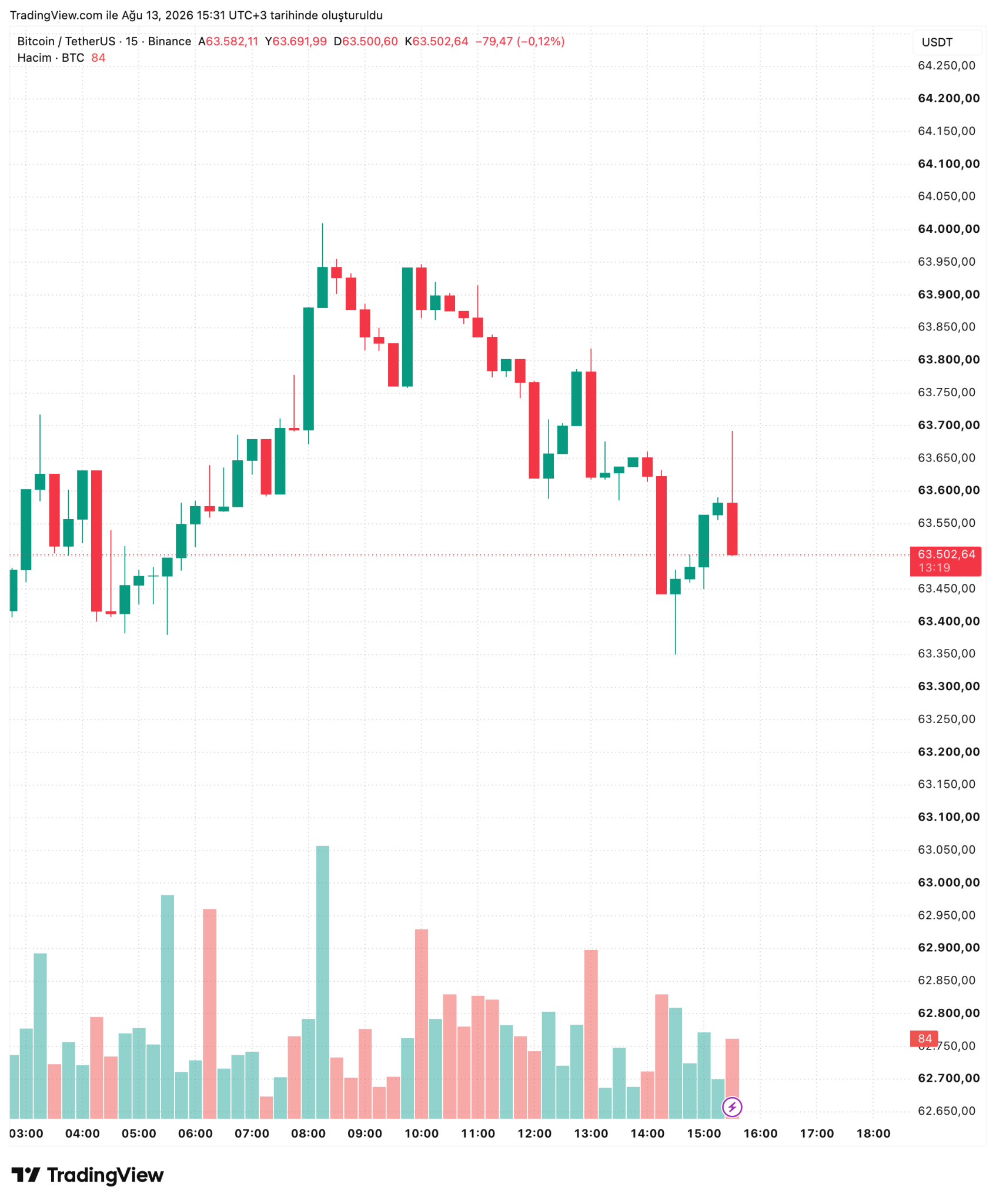
Latest News: US Producer Price Index (PPI) data for July has been published, a key metric monitored by the Federal Reserve. The market's focus is on these figures following recent US CPI data, despite expert expectations of no Fed rate hike in September. The released data showed mixed results. The monthly Core PPI came in at 0.2% (matching the previous figure but below the 0.3% expectation). The annual Core PPI was 4.2%, matching expectations and down from 4.7% prior. The monthly headline PPI was 0.0% (below the 0.2% forecast), while the annual headline PPI was 4.7%, slightly lower than the 4.9% expected. Analysts note that lower-than-expected PPI data could signal easing inflationary pressure, potentially increasing the likelihood of future Fed rate cuts—a scenario that could positively impact Bitcoin and other risk assets. Conversely, higher data would have weakened rate cut expectations, potentially pressuring Bitcoin. The initial market reaction of Bitcoin to this PPI data release is shown in an accompanying chart.

Today, Bitcoin and global markets are focused on the Producer Price Index (PPI) data following yesterday's release of US inflation figures. Although experts stated that they do not expect a Federal Reserve rate hike in September since the Consumer Price Index (CPI) data met expectations, according to FedWatchTool data, the probability of a rate hike in September is still estimated to be above 40%.

According to expert analysts, a lower-than-expected PPI figure could be interpreted as a sign of easing inflationary pressure and increasing the likelihood of a Fed rate cut. In this scenario, Bitcoin and other risk assets could react positively. Conversely, a higher-than-expected PPI figure could weaken expectations for a rate cut, creating short-term selling pressure on Bitcoin.

Today, all market attention is focused on the Producer Price Index (PPI) data, but July data for the US Producer Price Index (PPI), one of the indicators the Federal Reserve closely monitors when making decisions, was also released.

The released data is as follows:

Core Producer Price Index (monthly): Announced 0.2% - Expected 0.3% - Previous 0.2%

Core Producer Price Index (annual): Announced 4.2% - Expected 4.2% - Previous 4.7%

Producer Price Index (monthly): Announced 0.0% - Expected 0.2% - Previous -0.3%

Producer Price Index (annual): Announced: 4.7% - Expected: 4.9% - Previous: 5.5%

After the release of PPI data, Bitcoin's initial reaction was as follows:
*This is not an investment recommendation.

end-content

Trending Cryptos

Related Questions

QWhat market event did Bitcoin and global markets focus on today, according to the article?

ABitcoin and global markets focused on the U.S. Producer Price Index (PPI) data.

QWhat is the probability, based on FedWatchTool data mentioned, of a Fed rate hike in September according to the article?

AThe probability of a Fed rate hike in September is still assessed at above 40%.

QHow could a lower-than-expected PPI reading be interpreted, according to the experts cited?

AA lower-than-expected PPI could be interpreted as a sign of weakening inflationary pressure and increasing the likelihood of the Fed lowering interest rates.

QWhat was the actual announced value for the U.S. Core PPI (Monthly) in July, as published in the data?

AThe announced value for the U.S. Core PPI (Monthly) was 0.2%.

QWhat was Bitcoin's initial reaction following the publication of the PPI data, as indicated in the article?

AThe article shows an image chart indicating Bitcoin's price movement following the data, but states that no specific price reaction is described in the text. The text focuses on market interpretation of the data's implications rather than a specific price point.

Related Reads

Left Hand PYUSD, Right Hand Open USD: PayPal's Stablecoin Risk "Hedging"

PayPal recently released its Q2 2024 earnings, reporting revenue of $8.68 billion and a Total Payment Volume of $486.4 billion, both exceeding market expectations. However, GAAP profit margins declined year-over-year, with the company attributing an $81 million net loss partly to strategic investments and crypto assets. The report highlighted the strategic role of its PYUSD stablecoin, now positioned as a "major enabler" for the PayPal World platform and integrated into a newly formed "Payment Services & Crypto" business unit. PayPal aims to launch more merchant products powered by PYUSD and AI-driven "agentic payments," focusing on mainstream consumer and business use cases. Despite this strategic push and expansion to over 70 markets and nine blockchains, PYUSD's circulating supply has contracted significantly. After peaking around $4.2 billion in March 2024, its supply fell approximately 31% to roughly $2.7 billion by the end of Q2, indicating a gap between its broad integration narrative and actual sustained user demand post-incentives. The competitive landscape is evolving with the announcement of Open USD, a consortium-backed stablecoin project with over 140 partners including Visa, Mastercard, and Stripe. Unlike PYUSD's single-issuer model, Open USD proposes a shared revenue and governance model among its participants. Notably, PayPal itself is a signatory to the Open USD initiative, suggesting a hedging strategy where it continues developing PYUSD while securing a potential stake in an alternative industry-standard model. PayPal's challenge is to convert PYUSD's established distribution network into organic, subsidy-independent usage. If unsuccessful, its current supply level may represent a peak, especially as competition intensifies from established giants like USDC and new structural paradigms like Open USD.

Odaily星球日报21m ago

Left Hand PYUSD, Right Hand Open USD: PayPal's Stablecoin Risk "Hedging"

Odaily星球日报21m ago

Cryptocurrency Companies Urge AI Labs to 'Arm' Bitcoin Defenders with the Most Powerful Models

Over thirty Bitcoin and cryptocurrency companies have called on leading AI labs to provide open-source developers with early access to the most powerful cybersecurity models. In an open letter organized by the Bitcoin Policy Institute, signatories including Coinbase, Block, BitGo, Blockstream, ARK Invest, and Foundry argue that developers of critical financial infrastructure like Bitcoin Core are at a disadvantage, using less capable AI tools than potential attackers. They contend that the safety restrictions of public AI models can hinder legitimate vulnerability research. The letter requests that AI labs establish trusted access programs offering early model access, sufficient computing resources for audits, secure environments for private code analysis, and inclusion for small teams and independent developers. The signatories warn that the Bitcoin network secures over $1 trillion in assets, and infrastructure vulnerabilities pose significant risks. They cite recent incidents like the exploitation of a critical vulnerability in BTCPay Server and a major attack on Coldcard wallets, where a configuration error led to the theft of approximately 1,719 BTC ($111 million). The call comes amid a series of high-value crypto infrastructure attacks in 2026, including multimillion-dollar losses from protocols like Ostium, AFX, Summer.fi, and Bonzo Lend due to logic flaws and oracle manipulation. The companies believe advanced AI could strengthen defenses by analyzing large codebases, detecting atypical exploit scenarios, and helping developers identify issues before malicious actors can exploit them.

cryptonews.ru1h ago

Cryptocurrency Companies Urge AI Labs to 'Arm' Bitcoin Defenders with the Most Powerful Models

cryptonews.ru1h ago

Trading

Spot

Hot Articles

Discussions

Welcome to the HTX Community. Here, you can stay informed about the latest platform developments and gain access to professional market insights. Users' opinions on the price of S (S) are presented below.

活动图片