Kevin Warsh Emerges as a Surprise Contender: How Did an Inflation Hawk Become a Top Candidate for Fed Chair?

marsbitPublished on 2025-12-18Last updated on 2025-12-18

Abstract

Kevin Warsh, a former Federal Reserve governor known for his hawkish stance on inflation, has unexpectedly re-emerged as a top contender for the next Fed chair, competing against Trump’s longtime economic advisor Kevin Hassett. President Trump has indicated his next Fed pick will aggressively cut interest rates, a priority for his administration. Warsh brings a blend of Wall Street experience, academic credentials, and prior Fed service during the 2008 financial crisis. Despite his historical skepticism toward quantitative easing and concerns over inflation, Warsh has recently signaled openness to rate cuts, aligning with Trump’s demands. He has proposed a “rate cuts plus balance sheet reduction” strategy to reconcile stimulus with inflation control. Hassett, by contrast, is seen as a loyalist who would more directly implement Trump’s preference for looser monetary policy. However, some within Trump’s circle question his technical competence compared to Warsh’s deeper central banking experience. The competition reflects a broader tension between professional independence and political alignment. Warsh is viewed as more institutionally cautious, while demonstrating recent flexibility, whereas Hassett advocates for a Fed more directly responsive to the White House. The outcome will significantly influence the Fed’s future direction and perceived independence.

Author: Zen, PANews

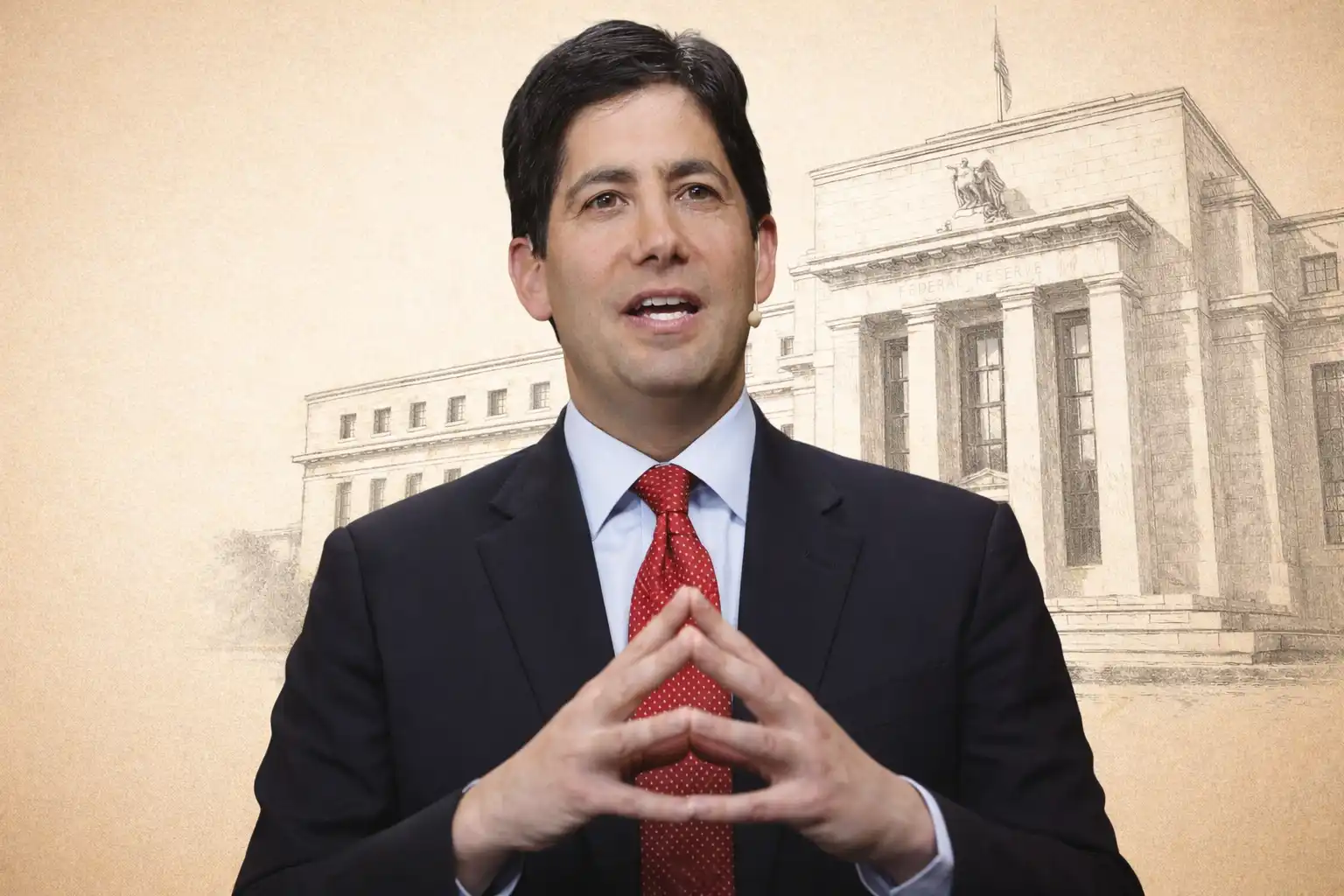
Trump recently stated that he will announce the next Federal Reserve Chair "soon" and emphasized that the new chair would significantly lower interest rates. Trump's final selection is expected to be announced in early 2026. As the White House's screening for the next Fed Chair enters its final stage, former Federal Reserve Governor Kevin Warsh has unexpectedly re-emerged as a core candidate.

Against the backdrop of the Trump team publicly advocating for faster and deeper rate cuts, Warsh's return has drawn attention. He possesses both the central banking experience of participating in decision-making during the financial crisis and a long-standing critique of the Fed's excessive balance sheet expansion and policy direction shifts.

Now, Warsh, who is poised to potentially unseat the "shadow chair," faces a more practical test: how to meet the White House's expectations for low interest rates while simultaneously ensuring market confidence in the Fed's independence.

The Making of an "Inflation Hawk"

Kevin Warsh was born in 1970 and grew up in New York State in a business-oriented family. He graduated from Stanford University and earned a Juris Doctor degree from Harvard Law School. After completing his studies, Warsh embarked on a Wall Street career, working for years in Morgan Stanley's investment banking division, specializing in mergers and acquisitions and rising to the position of Executive Director. This Wall Street experience gave him a deep understanding of financial market operations, which proved highly valuable later when he entered public service.

In 2002, Warsh left Wall Street and turned to politics. He joined the team of then-President George W. Bush, serving as Special Assistant to the President for Economic Policy and working on domestic financial and capital market policies. In 2006, at just 35 years old, Warsh was nominated by President Bush to the Board of Governors of the Federal Reserve System, becoming one of the youngest Fed governors in history.

During his tenure at the Fed, he was responsible for liaising with international entities like the G20, accumulating extensive monetary policy experience. During the 2008 financial crisis, Governor Warsh worked closely with then-Chairman Ben Bernanke and New York Fed President Tim Geithner to help financial institutions weather the storm and participated in decisions regarding the Fed's launch of unconventional measures like quantitative easing (QE).

However, Warsh consistently maintained a cautious stance towards overly accommodative monetary policy, worrying that QE could lead to inflationary risks. Shortly after the launch of the second round of QE, he resigned from the Board prematurely in March 2011, a move widely seen as related to his concerns about QE and inflation risks. Warsh's demonstration of principled independence also earned him a reputation as an "inflation hawk" in financial circles.

After leaving the Fed, Warsh returned to his roots, shifting towards academia and think tanks, remaining active on the forefront of economic policy discussions. He became a Distinguished Visiting Fellow at the Hoover Institution at Stanford University and taught at the business school, focusing his research on monetary policy and financial stability. Simultaneously, Warsh was invited to join influential institutions like the Group of Thirty, frequently authoring media articles criticizing the Fed's overly loose policy orientation.

It is worth noting that Warsh also boasts prominent connections: his wife is from the renowned Estée Lauder family, and his father-in-law, Ronald Lauder, is an old friend and major supporter of President Trump. This provides Warsh with unique networking resources in both political and business circles. Tempered by experiences in government, Wall Street, and academia, Warsh has gradually built an image combining policy expertise and market insight, laying a solid foundation for his bid for higher office.

How Did Warsh Break Through Mid-Race?

After Trump's return to the White House, the new administration began the process of identifying a successor to Jerome Powell as the next Fed Chair. Initially, it was widely believed that Trump's chief economic advisor, Kevin Hassett, had the best chances. Hassett served as Chairman of the Council of Economic Advisers during Trump's first term, had long followed Trump's lead, was seen as a close confidant of the president, and was dubbed the "shadow chair" by outsiders.

However, Warsh unexpectedly emerged mid-race as a candidate, winning the favor of Trump's team. In early December, Trump revealed that his choice for Fed Chair had narrowed down to "two Kevins"—Hassett and Warsh. Warsh's strong rise has elevated him to a position where he can rival Hassett. Trump stated, "I think both Kevins are excellent," hinting that the final choice would be between the two.

Warsh's ability to catch up is closely tied to his active efforts. Trump disclosed that he had met with Warsh at the White House in mid-December, during which Warsh directly expressed support for rate cuts. Trump claimed that Warsh believed current rates "should be lower," a view aligning with his own demand for a more accommodative monetary environment. Having both professional background and a willingness to align with policy direction, particularly迎合 (catering to) the White House's demands on interest rates, this somewhat alleviated Trump's previous concerns about his hawkish stance.

Furthermore, Warsh's network of connections also played a role. Wall Street heavyweights like JPMorgan Chase CEO Jamie Dimon expressed support for Warsh leading the Fed. Dimon indicated in private settings that while Hassett might cut rates more aggressively in the short term, Warsh, with his richer central banking experience, was the steadier choice in the long run.

Moreover, changing evaluations of the candidates within Trump's inner circle contributed to Warsh's breakthrough. Media reports disclosed that some Trump administration officials privately expressed concerns about Hassett's capabilities. These insiders believed that during his tenure as Director of the National Economic Council, Hassett had no outstanding practical decision-making ability beyond promoting Trump's policies. Such reservations led some Trump aides to question whether Hassett was suited for the highly technical role of Fed Chair.

In contrast, Warsh, with his experience as a Fed governor and market expertise, was deemed more competent. This tension between "loyalty" and "expertise" created a博弈 (game) within Trump's team: on one hand, the president's political advisors valued Hassett's absolute loyalty to Trump; on the other hand, economic officials like Treasury Secretary Scott Bessent leaned towards Warsh, who possessed professional credibility.

Mid-December reports indicated that Trump had personally interviewed Warsh; it was uncertain if he would meet other candidates. However, mainstream analysis suggested the competition had increasingly focused on the "two Kevins" by year-end. The process of breaking through mid-race also shows that Warsh is adept at strategizing, mobilizing connections, and flexibly adjusting his stance according to the situation. For the Trump camp, he brings both professional credibility and political flexibility, which is precisely why he has become a top contender for the 2025 Fed Chair position.

The Battle of the Two Kevins

Due to differences in background and orientation, the economic policy proposals and approaches of the "two Kevins" also show distinct variations.

On monetary policy, Warsh has long been known as an "inflation hawk,"始终保持警惕 (always maintaining vigilance) towards measures like quantitative easing. He strongly focuses on long-term inflation risks, emphasizing the central bank must maintain resolve in controlling prices. Hassett, coming from an academic economic advisory background and not a career central banker, has a stance on monetary policy that changes more with political needs.

Under Trump's influence, Hassett's recent remarks have trended dovish, publicly calling for the Fed to increase the pace of rate cuts to stimulate growth. Comparing the two, Warsh's image is more that of a traditional central banker, cautious and focused on long-term stability; Hassett appears more as a strategist灵活迎合 (flexibly catering to) political intentions. As JPMorgan CEO Dimon evaluated, Hassett might cut rates more aggressively in the short term, while Wash embodies deeper policy expertise and a steadier立场 (stance).

However, it is noteworthy that Warsh has recently adjusted his policy proposals to move closer to Trump. In a Wall Street Journal op-ed published in November, Warsh proposed simultaneously cutting interest rates and significantly shrinking the Fed's balance sheet, thereby兼顾 (balancing) stimulating the economy and guarding against inflation. This combination of "rate cuts + balance sheet reduction" is seen as a concession and adaptation of his traditional hawkish stance: allowing rates to fall first but回收流动性 (mopping up liquidity) by reducing the scale of bonds held by the Fed to prevent inflation from rising. In contrast, Hassett has not proposed similar technical balancing measures; he prefers direct and sweeping rate cuts, believing this can immediately boost economic growth.

There are also clear differences in their attitudes towards curbing inflation. Warsh has bluntly criticized the Powell-led Fed for "making unwise mistakes in dealing with inflation." He proposes that "inflation is a choice," arguing that the high inflation in recent years was largely due to Fed policy errors, not an unavoidable force. Therefore, Warsh advocates that the new chair must strictly adhere to the price stability goal, prioritizing inflation control.

Based on this理念 (philosophy), he opposes simply attributing economic overheating and a tight labor market as causes of inflation, criticizing the Fed's past "dogma" of blaming inflation on excessive economic growth. Instead, Warsh believes that by increasing productivity and理顺供给 (smoothing out supply), higher growth and employment can be achieved without triggering inflation. Unlike Warsh's emphasis on the Fed's own responsibility, Hassett's stance on inflation is more politically colored.

The issue of the Fed's independence and political neutrality is a point of particular external concern. The differences in their concepts will not only reflect their personal styles but also profoundly impact the reputation and functional positioning of the Federal Reserve as an institution in the coming years.

Warsh, as a former Fed official,深知 (is deeply aware of) the value of central bank independence. He emphasized professional integrity during his 2017 bid for the chair nomination and demonstrated a degree of independent principle by resigning due to policy disagreements. Even though he has compromised somewhat this time to meet Trump's demand for lower rates, Warsh is still seen as a member of the financial elite, relatively reserved and steady in style. Trump has privately expressed不完全信任 (incomplete trust) in "Bush-era elites" like Warsh, worrying that he might be too independent and too polished to be fully controllable.

In comparison, Hassett has publicly argued that the Fed has become "politicized" and needs new leadership to align with the president's agenda. Even though Hassett has recently begun to constantly emphasize that he would ensure central bank independence upon taking office, he实质上仍主张 (still essentially advocates) for monetary policy to be more closely serve the goals of the administration. This aligns highly with Trump's public demands: Trump has repeatedly stated that the next Fed Chair "should listen to me" and demanded that his opinion be sought before interest rate decisions.

In summary, Kevin Warsh,凭借 (relying on) his unique resume and flexible strategy during the selection process, has successfully跻身 (joined the ranks of) the top candidates for the 2025 Fed Chair. His experiences in government, Wall Street, and academia add significant weight, and his interactions with President Trump's camp also demonstrate a pragmatic side. In comparison with his main competitor, Kevin Hassett, Wash demonstrates stronger professional independence and monetary policy experience, while Hassett excels in loyalty and political acumen. Their分歧 (divergences) on core economic policies reflect the different paths the Fed might face in the future: adhering to the independence and steadiness of a traditional central bank, or迎合 (catering to) political demands for looser policy and growth.

In the analysis and reporting of mainstream media, this contest between the "two Kevins" is not just a personnel battle but also a博弈 (game) concerning the Fed's independence and policy orientation. Regardless of who ultimately wins, investors in the US and globally are closely watching how the final victor of this tug-of-war will define the next chapter of the Federal Reserve.

Related Questions

QWho are the two main candidates for the next Federal Reserve Chairman as mentioned in the article, and what are their respective backgrounds?

AThe two main candidates are Kevin Warsh and Kevin Hassett. Kevin Warsh is a former Federal Reserve Governor with a background in Wall Street (Morgan Stanley) and served in the Bush administration. Kevin Hassett is Trump's former chief economic advisor and former Chairman of the Council of Economic Advisers, known for his close alignment with Trump.

QWhy is Kevin Warsh, historically known as an inflation hawk, considered a candidate despite Trump's desire for lower interest rates?

ADespite his hawkish reputation, Warsh has recently adjusted his stance to align with Trump by expressing support for lower interest rates. He proposed a combination of 'rate cuts + balance sheet reduction' to stimulate the economy while controlling inflation, demonstrating flexibility that appealed to Trump's team.

QWhat role did Kevin Warsh play during the 2008 financial crisis?

ADuring the 2008 financial crisis, Kevin Warsh, as a Federal Reserve Governor, worked closely with Chairman Ben Bernanke and New York Fed President Tim Geithner. He helped financial institutions navigate the crisis and participated in decisions to implement unconventional measures like quantitative easing.

QWhat are the key differences in policy approach between Kevin Warsh and Kevin Hassett regarding the Federal Reserve's independence?

AKevin Warsh, as a former Fed official, values central bank independence and has a reputation for professional integrity. Kevin Hassett, however, has argued that the Fed has become too political and should align more closely with the presidential agenda, which matches Trump's desire for a chairman who would 'listen to him'.

QHow did Kevin Warsh's personal connections and Wall Street support influence his candidacy?

AWarsh's wife is from the Estée Lauder family, and his father-in-law, Ronald Lauder, is a longtime friend and supporter of Trump, providing valuable political and business connections. Additionally, Wall Street figures like JPMorgan CEO Jamie Dimon expressed support for Warsh, citing his extensive central banking experience as a稳健 choice.

Related Reads

Breaking: OpenAI Undergoes Major Reorganization, President Brockman Assumes Command

OpenAI has announced a major internal reorganization just months before its anticipated IPO. The company is merging its three flagship product lines—ChatGPT, Codex, and the API platform—into a single, unified product organization. The most significant leadership change involves co-founder and President Greg Brockman moving from a background technical role to take full, permanent control over all product strategy. This follows the indefinite medical leave of AGI Deployment CEO Fidji Simo. Additionally, ChatGPT's longtime lead, Nick Turley, has been reassigned to enterprise products, with former Instagram executive Ashley Alexander taking over consumer offerings. The consolidation, internally framed as a strategic move towards an "Agentic Future," aims to break down internal silos and create a cohesive "Super App." This planned desktop application would integrate ChatGPT's conversational abilities, Codex's coding power, and a rumored internal web browser named "Atlas" to autonomously perform complex user tasks. The reorganization occurs amid significant internal and external pressures. OpenAI has recently seen a wave of high-profile departures, including Sora co-lead Bill Peebles and other senior technical leaders, leading to concerns about a thinning executive bench. Externally, rival Anthropic recently secured funding at a staggering $900 billion valuation, surpassing OpenAI's own. Google's upcoming I/O developer conference also poses a competitive threat. Analysts suggest the dramatic restructure is a pre-IPO move to present a clearer, more focused narrative to Wall Street—streamlining operations and demonstrating decisive leadership under Brockman to counter internal turbulence and intense market competition.

marsbit2h ago

Breaking: OpenAI Undergoes Major Reorganization, President Brockman Assumes Command

marsbit2h ago

Two Survival Structures of Market Makers and Arbitrageurs

Market makers and arbitrageurs represent two distinct survival structures in high-frequency trading. Market makers primarily use limit orders (makers) to profit from the bid-ask spread, enjoying high capital efficiency (nominally 100%) but bearing inventory risk. This "inventory risk" arises from passive, fragmented, and discontinuous order fills in the limit order book (LOB). This risk, while a potential cost, can also contribute to excess profit if managed within control boundaries, allowing for mean reversion. Market makers essentially sell "time" (uncertainty over execution timing) to the market for price control and low fees. In contrast, cross-exchange arbitrageurs typically use market orders (takers) to exploit price differences or funding rates, resulting in lower nominal capital efficiency (requiring capital on both exchanges) and higher transaction costs. Their risk exposure stems from asymmetries in exchange rules (e.g., minimum order sizes), execution latency, and infrastructure risks (e.g., ADL, oracle drift). These exposures are active, exogenous gaps that primarily erode profits rather than contribute to them. Arbitrageurs essentially sell "space" (capital sunk across venues) for localized, immediate certainty. Both strategies engage in a trade-off between execution friction and residual risk. Optimal systems allow for temporary, controlled risk exposure rather than enforcing zero exposure at all costs. Their evolution converges towards hybrid models: arbitrageurs may use maker orders to reduce costs, while market makers may use taker orders or hedges for risk management. Ultimately, both use different forms of risk exposure—market makers exposing inventory, arbitrageurs immobilizing capital—to extract marginal, hard-won certainty from the market.

链捕手2h ago

Two Survival Structures of Market Makers and Arbitrageurs

链捕手2h ago

Who Will Define the Rules of the AI Era? Anthropic Discusses the 2028 US-China AI Landscape

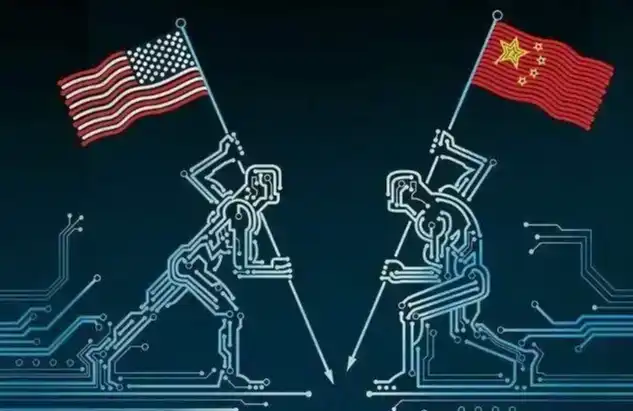
This article, based on Anthropic's analysis, outlines the intensifying systemic competition between the U.S./allies and China for AI leadership by 2028. It argues that access to advanced computing power ("compute") is the critical bottleneck, where the U.S. currently holds a significant advantage through chip export controls and allied innovation. However, China's AI labs remain competitive by exploiting policy loopholes—via chip smuggling, overseas data center access, and "model distillation" attacks to copy U.S. model capabilities—keeping them close to the frontier. The piece presents two contrasting scenarios for 2028. In the first, decisive U.S. action to tighten compute controls and curb distillation locks in a 12-24 month AI capability lead, cementing democratic influence over global AI norms, security, and economic infrastructure. In the second, policy inaction allows China to achieve near-parity through continued access to U.S. technology, enabling Beijing to promote its AI stack globally and integrate advanced AI into its military and governance systems, altering the strategic balance. Anthropic contends that maintaining a decisive U.S. lead is essential for shaping safe AI development and governance. The core recommendation is for U.S. policymakers to urgently close compute and model access loopholes while promoting global adoption of the U.S. AI technology stack to secure a lasting strategic advantage.

marsbit4h ago

Who Will Define the Rules of the AI Era? Anthropic Discusses the 2028 US-China AI Landscape

marsbit4h ago

Trading

Spot
Futures

Hot Articles

What is GENIUS

I. Project Introduction1. What Is Genius?Genius (GENIUS) is positioned as the “ultimate on-chain terminal,” a decentralized trading platform focused on privacy and speed. By integrating top-tier privacy technology, it aims to build a next-generation privacy trading infrastructure across networks such as BNB Chain, enabling users to interact on-chain with a seamless experience comparable to centralized exchanges.2. How Does Genius Work?Genius's core technical architecture is structured as follows:(1) Chain-invisible: Users do not need to manually handle multi-step approvals for cross-chain operations, asset wrapping, or complex gas management.(2) Signatureless Trading: Through integrations such as Turnkey, Genius enables instant trading without pop-up confirmations or per-transaction authorization.(3) Aggregator of Aggregators: Genius is powered by a best-in-class aggregation stack integrated with more than 150 DEXs, claiming superior quote efficiency compared with competing products.(4) Account Management: The platform adopts a non-custodial architecture and leverages Turnkey and Lit Protocol for key management, allowing users to securely access their accounts through passkeys.3. Who Created Genius?According to its official Terms of Service, Genius was developed by Shuttle Labs, Inc. Based on the project’s official X account, Ryan Myher is one of the key contributors driving product iteration, including developments such as the rollout of the Ghost protocol, as well as broader community engagement.Binance founder CZ has officially joined the project as an advisor, with the goal of helping the team build a faster and more privacy-preserving on-chain trading experience.In addition, the project has received strong backing from YZi Labs, which has invested in Genius and works alongside the Genius Foundation, responsible for maintaining the core Genius Bridge Protocol (GBP).4. Genius TokenomicsGENIUS is the native token of the Genius ecosystem. As of now, the project has not released a full tokenomics document.Based on the latest official disclosures, Genius incorporates a deflationary mechanism, and 4.6% of the total token supply had already been burned during the early launch phase.Genius Points (GP) System:(1) Trade-to-Earn: The platform has established a reward pool of 200 million Genius Points, and users earn GP for every trade executed through the terminal.(2) Tiering and Badges: Genius features a progression-based badge system ranging from Smart to God, with higher levels unlocking additional perks and benefits.(3) Native Yield: Users holding designated assets such as usdGG in the dashboard can earn native yield directly without going through complex staking.(4) Referral Incentives: Referrers can earn fee rebates of over 45% paid in USDC, along with additional GP.5. Timeline & Key MilestonesMarch 2020: The project’s official X account was created, marking the beginning of its early preparation phase.January 13, 2026: Genius announced a multi-million-dollar investment from YZi Labs and simultaneously confirmed CZ as an advisor to accelerate the buildout of its privacy trading infrastructure.April 18, 2026: The project announced that the Ghost privacy protocol would be launching soon.April 29, 2026: The Ghost protocol officially opened to its first 50 testers, marking the beginning of a new era for privacy trading on BNB Chain. At the same time, the team confirmed 4.6% of tokens have been burnt.​II. Token Information1) Basic InformationToken name: GENIUS (Genius)III. Related LinksWebsite:https://www.tradegenius.com/homeExplorers:https://bscscan.com/address/0x1f12b85aac097e43aa1555b2881e98a51090e9a6Socials:https://x.com/GeniusTerminalNote: The project introduction comes from the materials published or provided by the official project team, which is for reference only and does not constitute investment advice. HTX does not take responsibility for any resulting direct or indirect losses.

1.2k Total ViewsPublished 2026.04.29Updated 2026.05.11

What is GENIUS

How to Buy GENIUS

Welcome to HTX.com! We've made purchasing Genius (GENIUS) simple and convenient. Follow our step-by-step guide to embark on your crypto journey.Step 1: Create Your HTX AccountUse your email or phone number to sign up for a free account on HTX. Experience a hassle-free registration journey and unlock all features.Get My AccountStep 2: Go to Buy Crypto and Choose Your Payment MethodCredit/Debit Card: Use your Visa or Mastercard to buy Genius (GENIUS) instantly.Balance: Use funds from your HTX account balance to trade seamlessly.Third Parties: We've added popular payment methods such as Google Pay and Apple Pay to enhance convenience.P2P: Trade directly with other users on HTX.Over-the-Counter (OTC): We offer tailor-made services and competitive exchange rates for traders.Step 3: Store Your Genius (GENIUS)After purchasing your Genius (GENIUS), store it in your HTX account. Alternatively, you can send it elsewhere via blockchain transfer or use it to trade other cryptocurrencies.Step 4: Trade Genius (GENIUS)Easily trade Genius (GENIUS) on HTX's spot market. Simply access your account, select your trading pair, execute your trades, and monitor in real-time. We offer a user-friendly experience for both beginners and seasoned traders.

2.4k Total ViewsPublished 2026.04.29Updated 2026.05.11

How to Buy GENIUS

Discussions

Welcome to the HTX Community. Here, you can stay informed about the latest platform developments and gain access to professional market insights. Users' opinions on the price of A (A) are presented below.

活动图片