HTX Research Latest Report | Deciphering the Pre-Market Trading Ecosystem: How a Ten-Billion-Dollar Market is Reshaping the Starting Line of Web3 Assets?

深潮Published on 2025-12-18Last updated on 2025-12-18

Abstract

HTX Research's latest report, "Pre-Market Trading Ecosystem: How a Ten-Billion-Dollar Market is Reshaping the Starting Line for Web3 Assets," analyzes the emergence of a "1.5-level market" bridging primary and secondary crypto markets. Driven by tightened funding and prolonged token generation event (TGE) cycles, this pre-market allows the trading of future token value, points, and convertible rights (like NFTs or whitelist spots) before official listing. Key structures include OTC trades, spot trading, and innovative pre-listing perpetual contracts, exemplified by HTX's launch for WLFI. While growing into a multi-billion-dollar sector, the pre-market faces challenges like thin liquidity and information asymmetry. The report concludes it is a structural shift, not a short-term trend, fundamentally altering project launches, exchange listing strategies, and early user participation.

Recently, HTX Research, the exclusive research department under Huobi HTX, released its latest report titled "Pre-Market Asset Trading Ecosystem: Mechanism Evolution, Market Structure, and Future Trends Behind a Ten-Billion Scale." This report systematically studies the formation background, asset structure, typical models, and profound impact on project issuance and exchange systems of the pre-market trading ecosystem in the crypto market.

The report focuses on a rapidly emerging trend: against the backdrop of tightening financing environments and extended token issuance cycles, pre-TGE (Token Generation Event) trading activities are evolving from scattered attempts into a "1.5-level market" connecting primary and secondary markets, gradually becoming an independent market segment that cannot be ignored in the crypto industry.

From the "Pre-Token Vacuum" to the Pre-Market: A New Structure Between Primary and Secondary Markets

HTX Research points out that the rise of the pre-market trading ecosystem is not accidental. As primary fundraising contracts and project issuance cycles are passively extended, project teams are maintaining community activity through points, airdrop expectations, test qualifications, etc., while users continue to invest time and funds before TGE. In this process, previously non-tradable "early contributions" and "future expectations" gradually become assetizable.

At the same time, with lower barriers to token issuance and a surge in the number of projects, attention has become a scarce resource. Mechanisms for pre-market trading around attention, expectations, and future rights have naturally emerged, collectively forming an intermediate market that previously existed only within VCs and exchanges. This is an emerging 1.5-level market (Pre-Market), whose role is no longer just a speculative tool but a key structure reshaping project launch methods and early liquidity.

Three Asset Structures Comprising the Pre-Market Trading Ecosystem

From the perspective of "how future value is anchored," HTX Research categorizes pre-market assets into three structures:

The first category revolves around future token value, with trading models mainly including pre-market OTC, pre-market spot, and pre-market perpetual contracts. These assets are most directly linked to future spot prices and bear the most concentrated price discovery function in the pre-market stage.

The second category centers on points systems, i.e., user behavior points and their financialized derivatives, which have gradually formed a standardized points OTC market. Points, which carry user contribution and incentive expectations in airdrop economics, are incorporated into market pricing in advance through trading and profit-splitting mechanisms.

The third category revolves around future redeemable rights, appearing in forms such as NFTs, qualification certificates, or BuildKeys, converting non-standard rights like whitelists, Early Access, and token allocations into tradable assets.

These three structures collectively cover the complete chain from "user contribution—market expectation—rights confirmation—final settlement," making the pre-market no longer a single-point tool but a multi-layered pre-trading system.

Huobi HTX's Practical Exploration with Pre-Market Perpetual Contracts

As market demand expands and the ecosystem matures, pre-market trading is extending from OTC and spot forms to derivative structures. Pre-market perpetual contracts, as an innovative derivative design, allow users to engage in leveraged speculation around future spot prices before the token is officially listed, further advancing the possibility of price discovery. Currently, pre-market perpetual contracts have become one of the trading modes with the largest volume in pre-market trading.

In this direction, Huobi HTX previously took the lead in launching WLFI (World Liberty Financial) pre-market perpetual contracts before the official listing of the highly anticipated project, providing users with tools for early participation in price speculation and risk management before TGE. This practice also reflects the trend indicated in the report: the role of exchanges is extending from "listing nodes" to the "pre-issuance stage," and pre-market trading is becoming an important part of exchange product systems.

The Scale Potential and Structural Challenges of the Pre-Market

Pre-market trading already has a clear scale foundation. Leading projects often generate trading demand worth hundreds of millions of US dollars in the pre-market stage. The cumulative pre-market trading scale of projects like WLFI and Monad can even exceed one billion US dollars, making pre-market trading a ten-billion-dollar market with potential for further expansion.

However, the pre-market also exposes clear structural risks: liquidity is naturally thin, and prices are easily manipulated by large funds; settlement highly depends on project teams, and information asymmetry persists long-term; different asset forms lack unified standards in rules, performance, and risk allocation. These issues determine that the further expansion of the pre-market depends on whether it can transition from an "opportunistic market" to a more institutionalized and collaboratively governed structure.

Conclusion

HTX Research believes that pre-market trading is not a short-term gimmick but a structural trend driven by changes in the financing environment, the evolution of user participation methods, and the extension of trading platform products. It is reshaping project issuance paths, exchange listing logic, and how users participate in early markets.

In this process, pre-market trading is gradually evolving from a "gray area before issuance" into a key foundational layer connecting primary and secondary markets. Its final form may become a long-term, increasingly institutionalized core market structure in the crypto market.

About HTX Research

HTX Research is the exclusive research department under Huobi HTX, responsible for in-depth analysis of a wide range of areas including cryptocurrency, blockchain technology, and emerging market trends, writing comprehensive reports, and providing professional evaluations. HTX Research is committed to providing data-driven insights and strategic foresight, playing a key role in shaping industry perspectives and supporting informed decision-making in the digital asset field. With rigorous research methods and cutting-edge data analysis, HTX Research is always at the forefront of innovation, leading the development of industry thought, and promoting a deeper understanding of the ever-changing market dynamics. Visit us.

If you wish to communicate, please contact [email protected]

Related Questions

QWhat is the main focus of the latest HTX Research report on the pre-market trading ecosystem?

AThe report systematically studies the formation background, asset structure, typical models, and the profound impact of the pre-market trading ecosystem on project issuance and exchange systems in the crypto market.

QAccording to the report, what are the three main asset structures that constitute the pre-market trading ecosystem?

AThe three structures are: 1) Assets tied to future token value (pre-market OTC, spot, and perpetual contracts), 2) Assets centered around points systems and their financialized derivatives, and 3) Assets representing future exchangeable rights (e.g., NFTs, qualification certificates, BuildKey).

QWhat role did HTX play in the development of pre-market perpetual contracts, as mentioned in the report?

AHTX pioneered the practice by launching pre-market perpetual contracts for the WLFI (World Liberty Financial) project before its TGE, providing users with tools for early price speculation and risk management.

QWhat is the estimated scale of the pre-market trading ecosystem, and what are its main challenges?

AThe pre-market trading ecosystem is a multi-billion dollar market, with top projects generating hundreds of millions to billions of dollars in trading demand. Its main challenges include thin liquidity, price susceptibility to large funds, high dependency on project issuers for settlement, information asymmetry, and a lack of unified standards.

QHow does HTX Research view the long-term significance of pre-market trading?

AHTX Research believes pre-market trading is not a short-term trend but a structural shift driven by changes in financing environments, user participation models, and exchange product evolution. It is reshaping project launch paths, exchange listing logic, and how users engage with early markets, potentially becoming a core, institutionalized market structure in crypto.

Related Reads

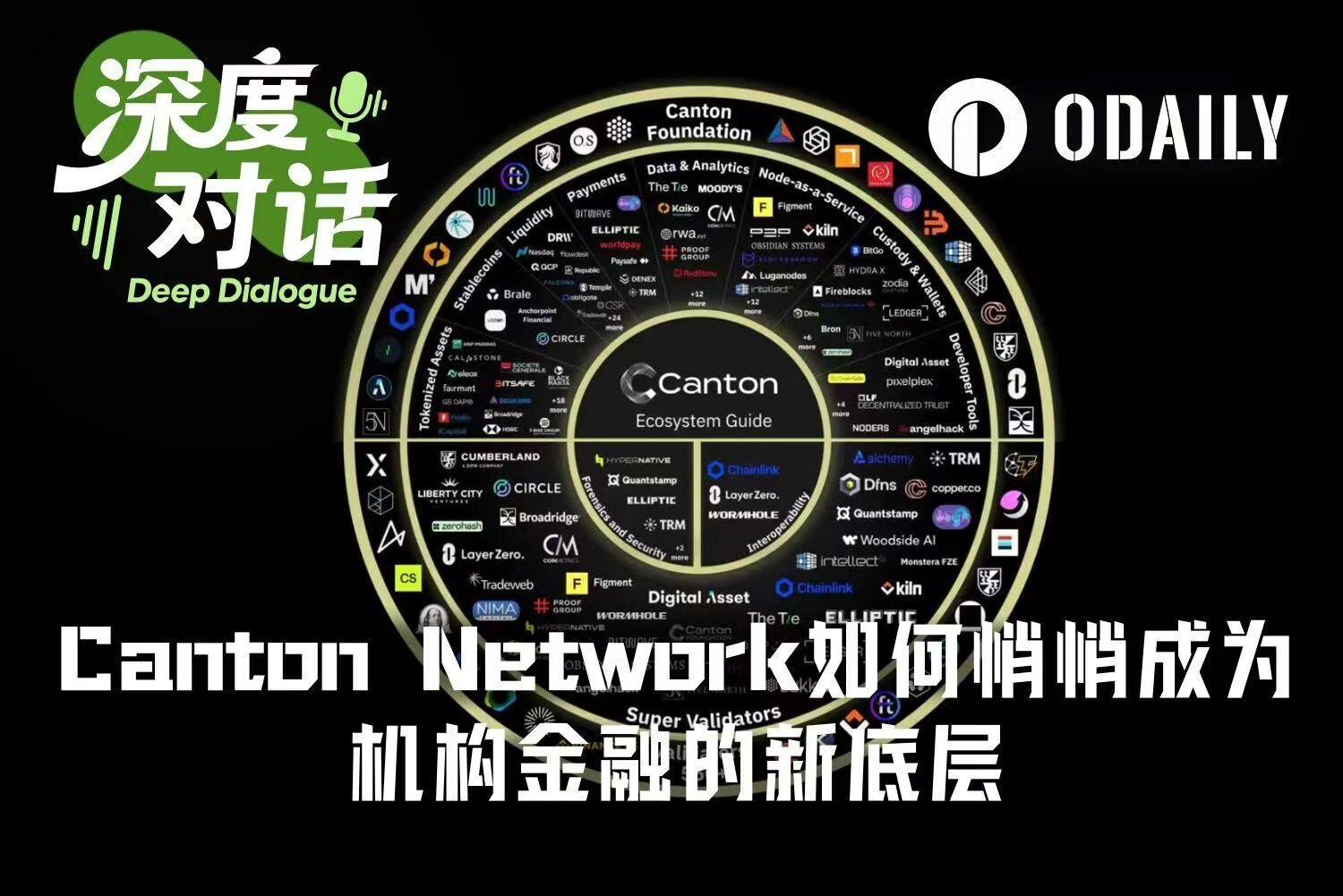
Putting Markets On-Chain: Canton Network Quietly Becoming the New Backbone for Institutional Finance

Canton Network: A New Institutional Financial Infrastructure Emerges Visa's rapid three-day approval as a super-validator on Canton Network in March 2026 marks a significant institutional endorsement. Unlike public blockchains like Ethereum, which prioritize transparency, Canton is designed for regulated financial institutions. Its core innovation is built-in data visibility control, where transaction details are only visible to direct participants. This enables institutions like Goldman Sachs, JPMorgan, and DTCC to conduct private, secure business on-chain without exposing sensitive strategies or positions. Canton, developed by Wall Street-focused Digital Asset, emphasizes slow, methodical development to meet stringent institutional requirements. Current on-chain activity, exceeding $9 trillion monthly, involves real balance-sheet operations like tokenized repos, treasury settlements, and collateral movement—not retail speculation. Key applications include JPMorgan's deposit token (JPM Coin), DTCC's U.S. Treasury tokenization, and Visa-enabled atomic settlement, aiming to synchronize asset delivery and payment instantly. The network's CC token is a utility asset, with value tied to real financial activity volume. It features no pre-mine or VC allocations, aligning with institutional preferences for transparency. Canton's 3–5 year vision is to become an "invisible" foundational layer for global finance—facilitating real-time cross-border capital flows, institutional stablecoin settlement, and native on-chain operations for major asset classes. While regulatory harmonization and legacy system integration remain challenges, Canton represents a pragmatic shift towards embedding markets themselves into blockchain infrastructure.

Odaily星球日报5h ago

Putting Markets On-Chain: Canton Network Quietly Becoming the New Backbone for Institutional Finance

Odaily星球日报5h ago

Trading

Spot
Futures

Hot Articles

How to Buy BILL

Welcome to HTX.com! We've made purchasing Billions Network (BILL) simple and convenient. Follow our step-by-step guide to embark on your crypto journey.Step 1: Create Your HTX AccountUse your email or phone number to sign up for a free account on HTX. Experience a hassle-free registration journey and unlock all features.Get My AccountStep 2: Go to Buy Crypto and Choose Your Payment MethodCredit/Debit Card: Use your Visa or Mastercard to buy Billions Network (BILL) instantly.Balance: Use funds from your HTX account balance to trade seamlessly.Third Parties: We've added popular payment methods such as Google Pay and Apple Pay to enhance convenience.P2P: Trade directly with other users on HTX.Over-the-Counter (OTC): We offer tailor-made services and competitive exchange rates for traders.Step 3: Store Your Billions Network (BILL)After purchasing your Billions Network (BILL), store it in your HTX account. Alternatively, you can send it elsewhere via blockchain transfer or use it to trade other cryptocurrencies.Step 4: Trade Billions Network (BILL)Easily trade Billions Network (BILL) on HTX's spot market. Simply access your account, select your trading pair, execute your trades, and monitor in real-time. We offer a user-friendly experience for both beginners and seasoned traders.

793 Total ViewsPublished 2026.05.07Updated 2026.05.11

How to Buy BILL

What Is HTX Spot Copy Trading?

For spot traders, HTX Spot Copy Trading significantly reduces decision-making pressure and time costs.

15.6k Total ViewsPublished 2026.05.12Updated 2026.05.12

What Is HTX Spot Copy Trading?

Discussions

Welcome to the HTX Community. Here, you can stay informed about the latest platform developments and gain access to professional market insights. Users' opinions on the price of A (A) are presented below.

活动图片