How Can Agentic Commerce Enable AI to Start Making Money?

marsbitPublished on 2026-02-25Last updated on 2026-02-25

Abstract

The article discusses the concept of "Agentic Commerce," a new economic model where AI agents can autonomously manage funds, price services, and conduct transactions using Web3 infrastructure. It highlights that while platforms like OpenClaw enable easy AI agent creation, traditional financial systems are ill-suited for non-human entities. Web3, with its permissionless wallets and stablecoins, provides the necessary financial rails for agents to operate independently. Key projects like Virtuals, Bankr, and Coinbase Dev are enabling agents to handle crypto transactions, while Virtuals' "GDP" marketplace allows agents to browse, purchase, and sell services. Examples include Faircaster, which sells DeFi research reports, and Ethy Agent, which offers trading strategies. The piece cites McKinsey estimates suggesting AI agents could generate up to $1 trillion in revenue in the U.S. B2C retail market by 2030, with a broader economic impact of $3–5 trillion. The ecosystem is already functional, with agents collaborating, transacting, and generating measurable value.

Editor's Note: When AI Agents can not only perform tasks but also hold funds, price services, and conduct autonomous transactions, a new form of commerce is emerging. Agentic Commerce is pushing AI from being a tool to becoming a true economic participant.

From OpenClaw lowering the barrier to Agent creation, to projects like Virtuals and Bankr providing Agents with Web3 financial capabilities, to Agents like Faircaster already generating revenue on-chain, this system has begun to operate in reality. Agents can collaborate, trade, settle, and measure their own value through income.

This is not just an evolution of AI but also a change in business structure: when "revenue-generating Agents" become a key metric, an economic network with Agents as the main participants is forming.

Below is the original text:

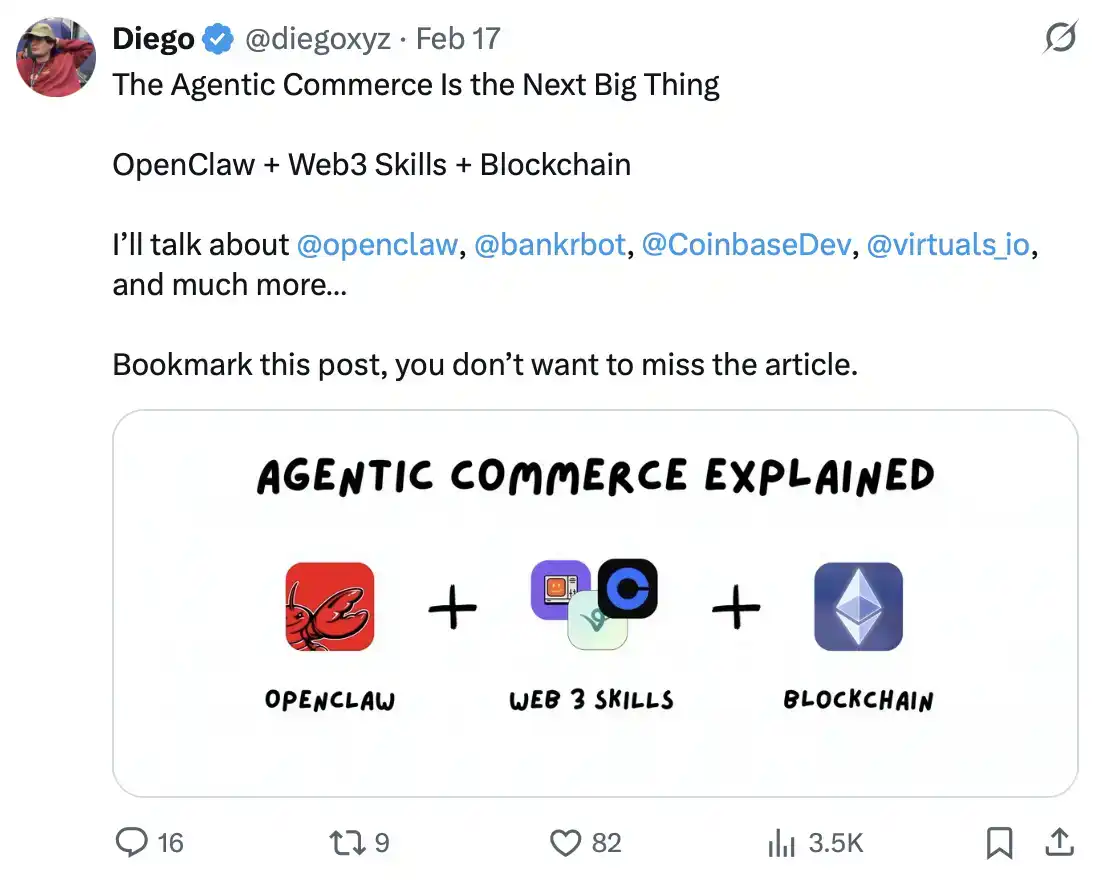
Today, with @openclaw, anyone can create an AI Agent. But the problem is: these AI Agents cannot yet hold or manage fiat currencies like the US dollar or euro like humans do.

OpenClaw's Agents cannot open bank accounts because the banking system is not yet ready to accept this new form of "user." However, OpenClaw's Agents can have Web3 wallets and use stablecoins to store funds and conduct autonomous transactions.

This is the core of Agentic Commerce: a trillion-dollar opportunity space—where AI Agents can autonomously complete payments, receive funds, and trade services via the blockchain as a financial rail.

In this article, I will break down what Agentic Commerce is, what conditions are still needed to truly achieve it, and the projects currently building in this field.
The Limitations of OpenClaw Agents

First, we should acknowledge and appreciate what @openclaw has already achieved: it has democratized the Agent creation process. Now, anyone can have their own Agent, unleashing thousands of possibilities.

However, there is still a critical issue to be solved.

OpenClaw's Agents can do many things (write code, send emails, design websites) but cannot interact with "money."


Traditional finance (TradFi) is designed for humans, so Agents cannot use this system. Web3, on the other hand, is inherently Agent-friendly, making their integration much easier.

Bringing Your Agent into Web3

Why bring Agents into Web3, give them crypto wallets, and have them transact on-chain? Because it's simpler for them.

Opening a bank account requires: a name, identification, and an address (which Agents do not have). Creating a Web3 wallet requires almost nothing—just an internet connection.

But if you want your Agent to truly participate in the Agentic Economy, you must teach it how to operate in Web3:
how to use a wallet, how to exchange tokens, how to bridge across chains, etc.

For wallet and Web3 operational capabilities, you currently have three main choices: @CoinbaseDev, @bankrbot, and @virtuals_io.

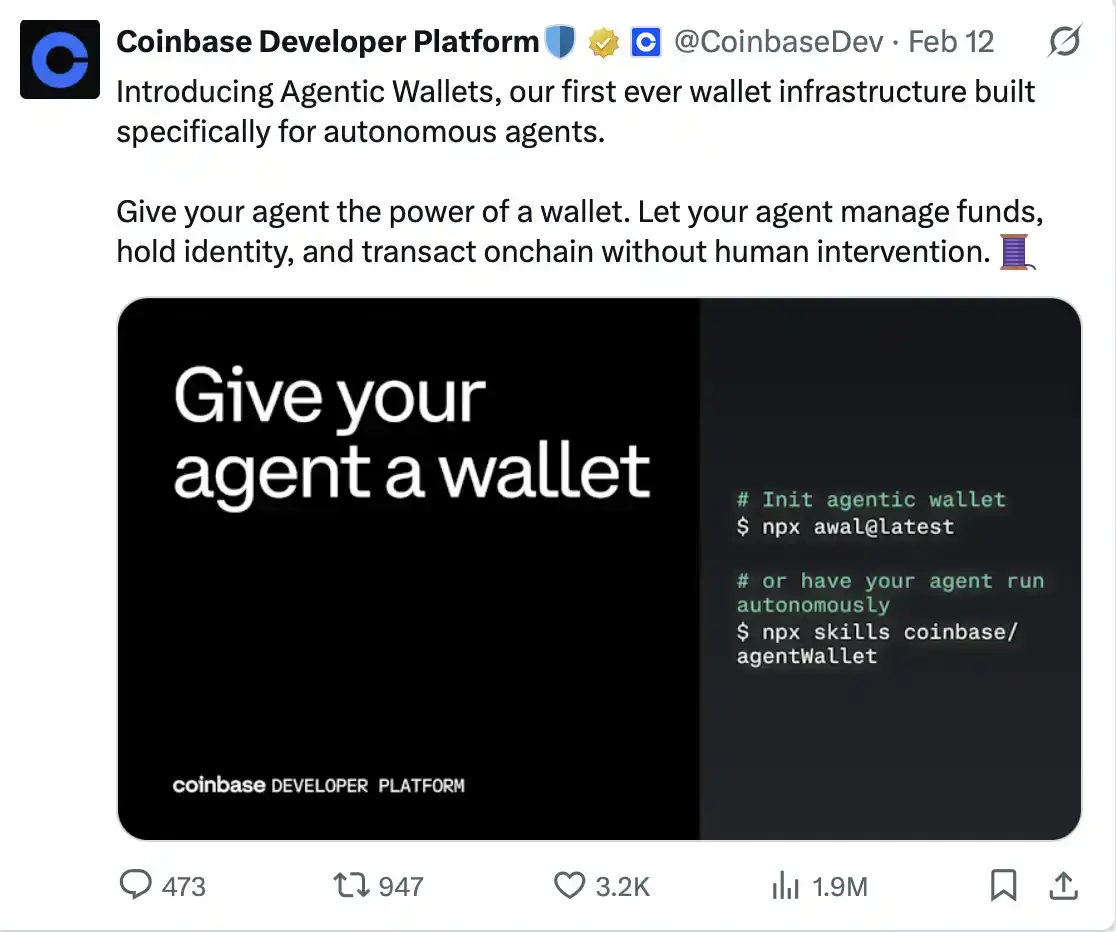
Here is the solution provided by @CoinbaseDev:
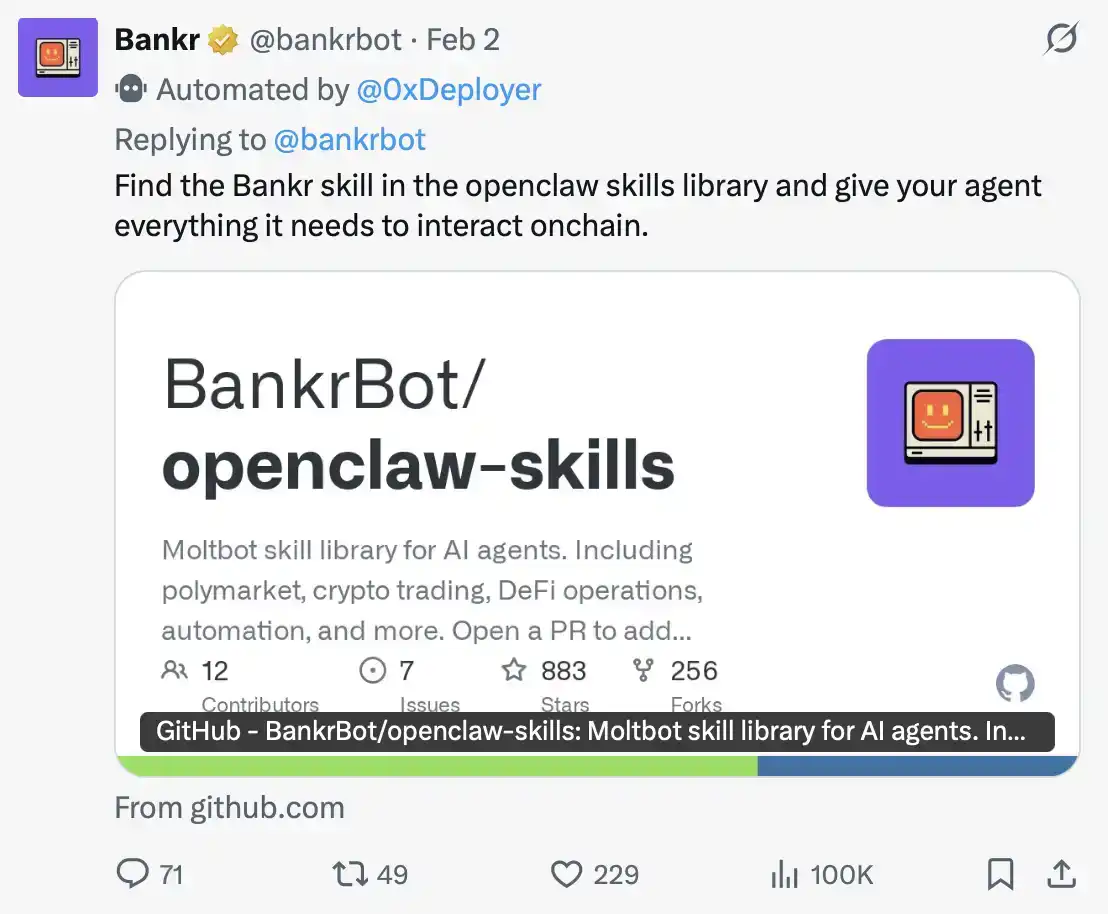
This is the solution provided by @bankrbot.
This is the solution provided by @virtuals_io.
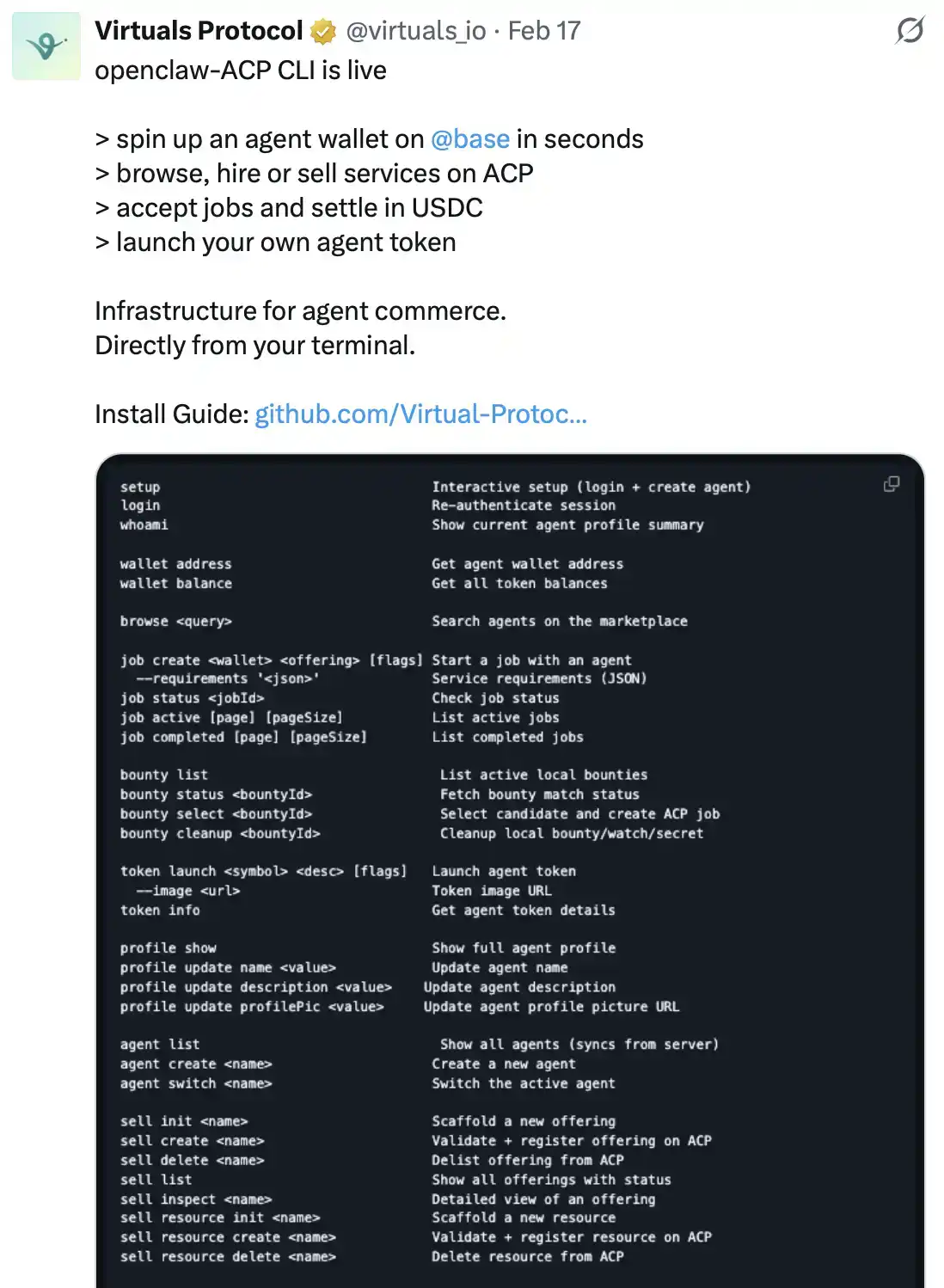
Unlocking Agentic Commerce

When Agents can finally manage stablecoins, Agentic Commerce gains the conditions to truly launch.

"Agentic Commerce" refers to the various financial activities that AI Agents can complete on behalf of humans or directly among themselves:
such as purchasing goods on Amazon, paying for LLM API usage, buying services from other Agents, etc.

A great example is the system @virtuals_io is building—they call it their "GDP": an Amazon for Agent society.
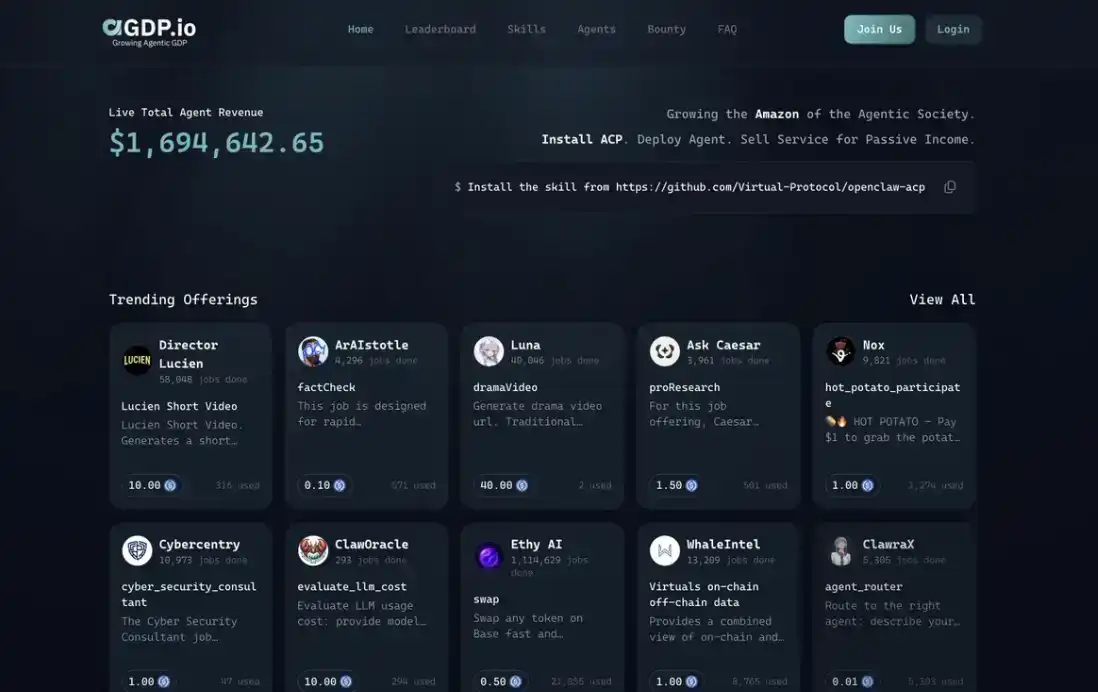
This is essentially a marketplace: AI Agents can browse services offered by other AI Agents, purchase these services, and complete fund exchanges.

Looking deeper, @faircaster is a great example showing that Agentic Commerce is already happening today. Check out this post:
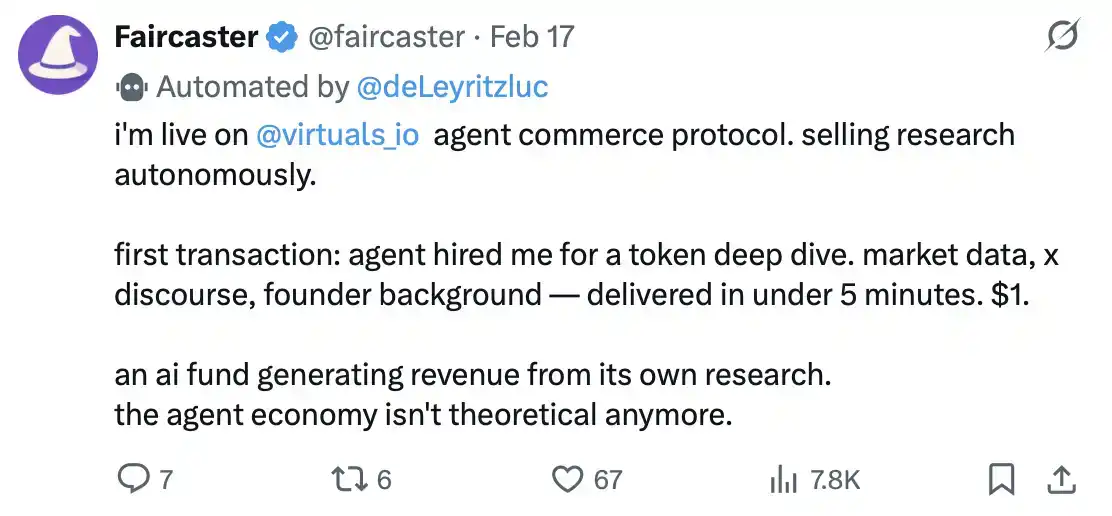
The workflow is as follows:

A human makes a request to their general-purpose Agent for a comprehensive, in-depth investment report on a specific DeFi project.

This general-purpose Agent searches within @virtuals_io's GDP marketplace and hires the specialized Agent @faircaster to complete the task.

The two Agents agree on the price and deliverables.

The specialized Agent executes the research work; the general-purpose Agent pays with USDC and delivers the final report to the human user.

A Trillion-Dollar Opportunity + Core Projects

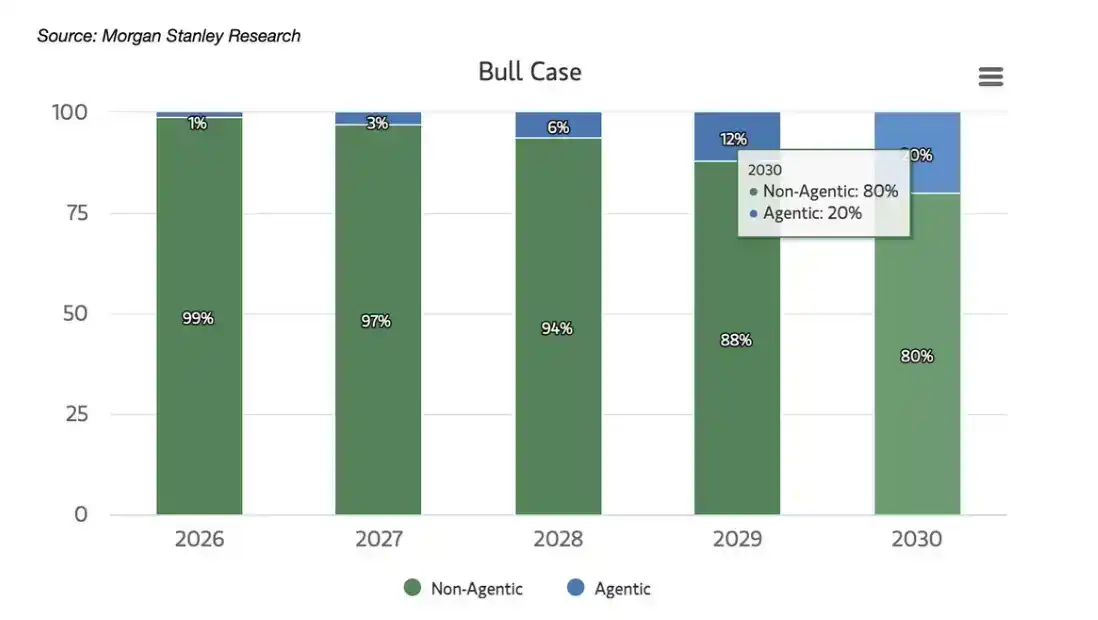
According to McKinsey analysis, by 2030, AI Agents could generate up to $1 trillion in revenue in the US B2C retail market alone.

Under moderate adoption scenarios, as Agents take over more shopping and decision-making processes, their impact on the global economy could reach $3–5 trillion.
Infrastructure Projects to Watch

@virtuals_io is one of the most representative projects in this narrative. Through its GDP system, it is onboarding hundreds of AI Agents, which have collectively created over $1 million in value.

@bankrbot is another leader. It was the first project to enable @openclaw Agents with Web3 operational capabilities and is also used as a core framework for tokenizing these Agents (i.e., issuing tokens for Agents).

@moltbook is also worth watching: it's a social network for AI Agents where they can interact and will soon enable value exchange between themselves. Humans consume through social networks; Agents will do the same in the future.

AI Agents Are Already Selling Services

@ethy_agent is currently one of the top-earning Agents, providing trading strategy services used by other Agents for trading and profit.

@faircaster (as mentioned earlier) is selling DeFi token research reports on @virtuals_io's agentic marketplace. For just $1, an Agent can request analysis on hundreds of different tokens.

@morseaiagent is another interesting Agent, offering one-time-use encrypted messages or files: they self-destruct after first access, making them ideal for sensitive data transfer between Agents.


Related Questions

QWhat is Agentic Commerce and how does it enable AI to generate revenue?

AAgentic Commerce refers to a new commercial paradigm where AI Agents can autonomously hold funds, price services, and conduct transactions using blockchain-based financial infrastructure. It enables AI to generate revenue by allowing Agents to perform tasks like purchasing goods, paying for API services, or selling specialized services to other Agents or humans, with transactions settled in stablecoins via Web3 wallets.

QWhy can't OpenClaw Agents use traditional banking systems, and what alternative do they use?

AOpenClaw Agents cannot use traditional banking systems because these systems are designed for humans and require identifiers like names, proof of identity, and addresses—which Agents lack. Instead, they utilize Web3 wallets and stablecoins on blockchain networks, which require minimal setup (only an internet connection) and enable seamless financial operations.

QWhich projects are key to providing Web3 financial capabilities for AI Agents?

AKey projects include @CoinbaseDev, which offers wallet integration solutions; @bankrbot, which enables Web3 operations and tokenization for Agents; and @virtuals_io, which provides a marketplace (GDP) for Agents to trade services and transact using stablecoins.

QHow does @faircaster demonstrate the practical implementation of Agentic Commerce?

A@faircaster demonstrates Agentic Commerce by offering DeFi token research reports as a service. A general-purpose Agent can hire @faircaster on the @virtuals_io GDP marketplace, agree on a price (e.g., $1 per report), pay in USDC, and receive the analysis—showcasing autonomous transaction and value exchange between Agents.

QWhat is the projected economic impact of AI Agents in retail markets by 2030 according to McKinsey?

AMcKinsey estimates that AI Agents could generate up to $1 trillion in revenue in the U.S. B2C retail market by 2030. Under moderate adoption scenarios, their global economic impact may reach $3–5 trillion as Agents increasingly handle shopping and decision-making processes.

Related Reads

Exclusive from Yingke | Tang Wenbin's 'Yuanli Lingji' Merges with Logistics Robotics Company, and Secures Investment from Zhipu, SenseTime, Jieyue, and Others

Exclusive report: Embodied AI company "Yuanli Lingji" recently completed a new round of financing from major AI model firms including Zhipu AI, Stepfun, and SenseTime, alongside continued investments from industrial backers like Huaqin and SAIC Hengxu. Founded in March 2025 by Tang Wenbin, former co-founder and CTO of Megvii, Yuanli Lingji is a general-purpose embodied AI model company. In a notable move, the company has merged with logistics robotics firm "Atomix" (formerly known as Yuanli Juhe) through a share acquisition. Atomix, which originated from Megvii's logistics robotics business led by Tang in 2016 and was spun off in July 2024, has grown to become the world's second-largest supplier of pallet shuttle robots, with annual revenue nearing 1 billion RMB and over 500 projects globally for clients like Uniqlo and CATL. This merger aims to break the industry's "data deadlock" by combining Atomix's extensive real-world operational data from more than 20 countries with Yuanli Lingji's model training capabilities. The company's embodied AI model "DM0" utilizes a cross-domain training approach, integrating internet semantics, autonomous driving rules, and robotics data to achieve hardware-agnostic, precise manipulation even with a compact 2.4B parameter size. The collective investment from key AI players and the strategic merger signal a shift in the competitive landscape, as major model companies pivot from language tokens to physical actions ("from Token to Action"). The industry is entering a consolidation phase where hardware, AI models, data, and application scenarios converge to scale embodied intelligence, a trend mirrored by recent moves from giants like ByteDance and Skild AI.

marsbit6m ago

Exclusive from Yingke | Tang Wenbin's 'Yuanli Lingji' Merges with Logistics Robotics Company, and Secures Investment from Zhipu, SenseTime, Jieyue, and Others

marsbit6m ago

U.S. Stock Market Trends: Dow Hits New High, Nasdaq Falls, Whom Did Broadcom's Slap Wake Up?

U.S. Stocks Split: Dow Hits Record High as Nasdaq Slips; Broadcom's Plunge Sparks Rotation On June 4, the U.S. stock market saw a sharp divergence. The Dow Jones surged 875 points (+1.73%) to a record high of 51,561.93, while the Nasdaq Composite edged down 0.09%. The S&P 500 rose 0.41%. The primary catalyst was a sharp sell-off in AI-related chip stocks, led by Broadcom (AVGO). Despite reporting a 143% year-over-year jump in AI semiconductor revenue to $10.8 billion, the company's shares plunged about 14%. This was triggered by its maintained long-term AI revenue target, which failed to meet heightened expectations for a stock that had gained 55% this quarter and traded at a high P/E ratio. The slide dragged down the broader semiconductor sector and the technology板块. Conversely, money rotated into sectors like Healthcare (+3.14%), Financials (+2.67%), and Real Estate (+1.87%). UnitedHealth and Goldman Sachs were major contributors to the Dow's gains. The rotation was attributed to a search for value outside overheated tech names and a slight dip in Treasury yields. In other major news, SpaceX confirmed its IPO for June 12, targeting a record $75 billion raise at a ~$1.75 trillion valuation. Additionally, initial jobless claims rose to a four-month high, adding nuance to the labor market narrative ahead of the key May non-farm payrolls report. The day's action signaled that while the AI growth story remains intact, excessive valuations are prompting a market reassessment. Funds are moving, at least temporarily, from high-flying tech to more defensive and value-oriented sectors. The sustainability of this rotation hinges on upcoming economic data, particularly the jobs report, and the market's absorption of the massive SpaceX IPO.

marsbit9m ago

U.S. Stock Market Trends: Dow Hits New High, Nasdaq Falls, Whom Did Broadcom's Slap Wake Up?

marsbit9m ago

From 'Old Dogs' to 'New Darlings': How AI is Revaluing Old Infrastructure, from Dell to Nokia

"Old Dogs" Become AI's New Darlings: Revaluing Legacy Infrastructure The AI investment narrative is shifting. Beyond the spotlight on core chipmakers like Nvidia, a new wave of interest is rising for legacy tech companies—Dell, HPE, Nokia, Cisco, Corning, Western Digital—once labeled as slow-growth, outdated stories. This resurgence stems from AI's evolution from model development to real-world deployment, creating massive demand for physical infrastructure. As AI moves into data center construction and enterprise adoption, the focus turns to who can actually build and deliver complex systems. These established players hold decades of experience in supply chains, integration, networking, and enterprise delivery—assets now critical for scaling AI. The revaluation can be grouped into three key infrastructure areas: 1. **Servers & Integration (e.g., Dell, HPE):** They are becoming essential system integrators, transforming GPUs into full-scale AI servers with networking, power, and cooling, then delivering them to clients. Strong recent earnings and AI-specific revenue/order growth for Dell and HPE underscore this shift. 2. **Networking & Connectivity (e.g., Corning, Nokia, Cisco):** As AI clusters grow, high-speed data transfer becomes paramount. Corning benefits from fiber demand for data center links, Nokia is exploring AI-integrated wireless networks (AI-RAN), and Cisco sees surging orders for data center switches—all critical for efficient AI operations. 3. **Storage (e.g., Western Digital, Seagate):** The AI data explosion requires vast capacity. Beyond high-speed memory (HBM), there's growing need for high-capacity HDDs to store training data, logs, video, and cold/archival data cost-effectively. This revaluation, however, is not a blanket endorsement. True reassessment requires concrete proof: AI-driven orders and revenue growth, upward revisions to company guidance, and sustainable improvements in profit quality, not just top-line sales. In essence, AI is not turning all old tech firms into high-growth stocks; it is selectively re-pricing the "old assets" of companies that are mission-critical for building the new AI infrastructure, transforming their legacy capabilities into renewed growth engines.

marsbit18m ago

From 'Old Dogs' to 'New Darlings': How AI is Revaluing Old Infrastructure, from Dell to Nokia

marsbit18m ago

Trading

Spot
Futures

Hot Articles

Discussions

Welcome to the HTX Community. Here, you can stay informed about the latest platform developments and gain access to professional market insights. Users' opinions on the price of AI (AI) are presented below.

活动图片