How Can a Single Missile Take Down Global AI Giants Instantly?

比推Published on 2026-03-03Last updated on 2026-03-03

Abstract

An Iranian missile strike on a data center in the UAE, operated by Amazon Web Services, caused a significant outage of cloud services, including the AI system Claude. The incident occurred shortly after the US and Israel conducted airstrikes in Iran, reportedly aided by Claude for intelligence analysis. This marks the first time a commercial data center has been physically destroyed in a military conflict, highlighting the vulnerability of global AI infrastructure. The event underscores how AI, despite its digital nature, relies on physical infrastructure located in geopolitically unstable regions. Major tech companies, including Amazon, Microsoft, and OpenAI, have heavily invested in data centers across the Middle East due to favorable policies and resources. However, these facilities are now exposed to physical threats in times of conflict. The attack raises critical questions about the classification of data centers as civilian or military assets when they support both commercial and defense operations. It also exposes the lack of international legal frameworks and physical security measures for protecting such infrastructure. The incident shifts the focus from fears of AI replacing humans to the fragility of AI itself in the face of real-world threats.

Author: David, Deep Tide TechFlow

Original Title: AI Within the Range of Artillery


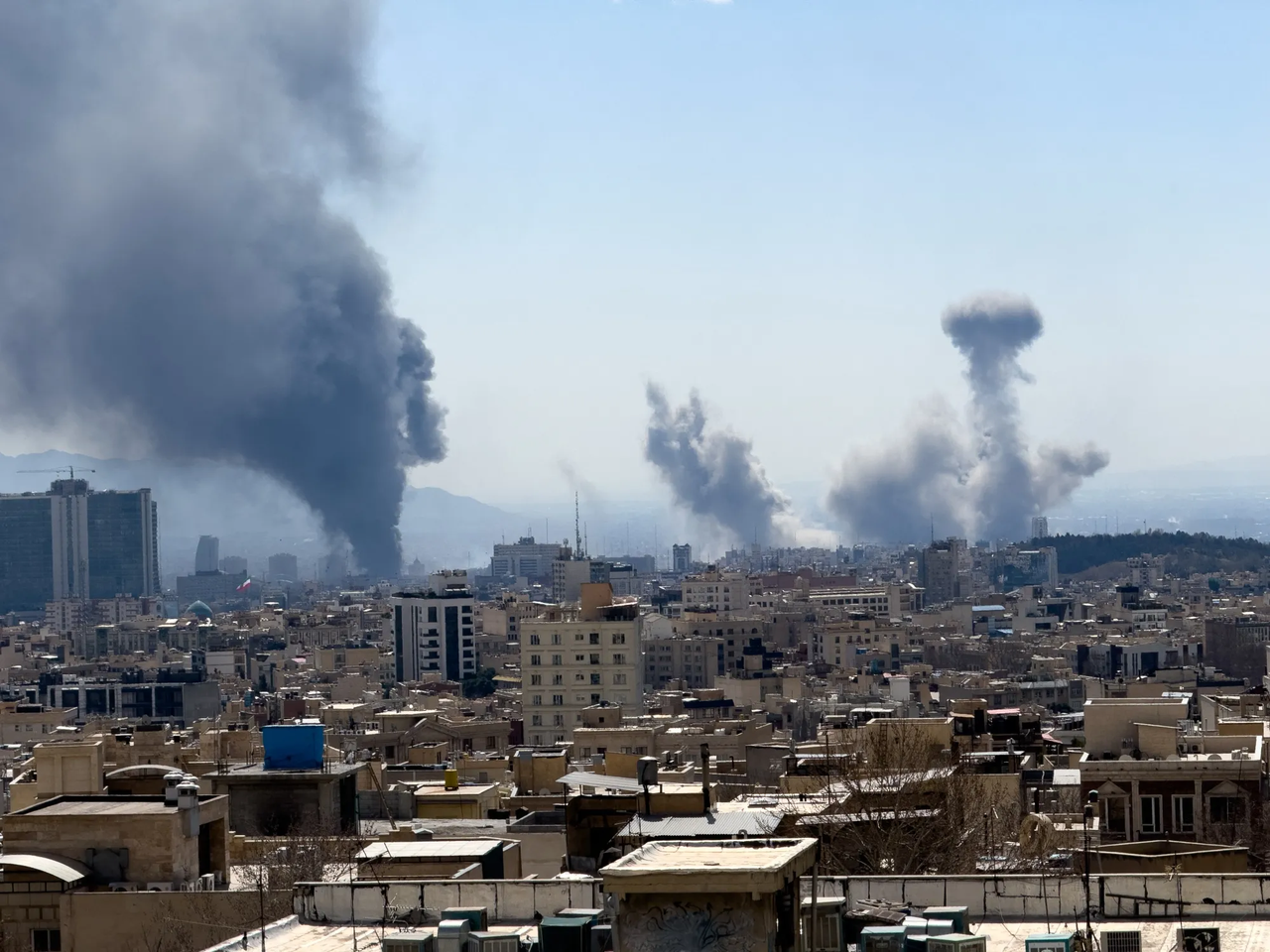
On March 1, Iranian missiles and drones struck the Gulf region, with one landing on an Amazon data center in the UAE.

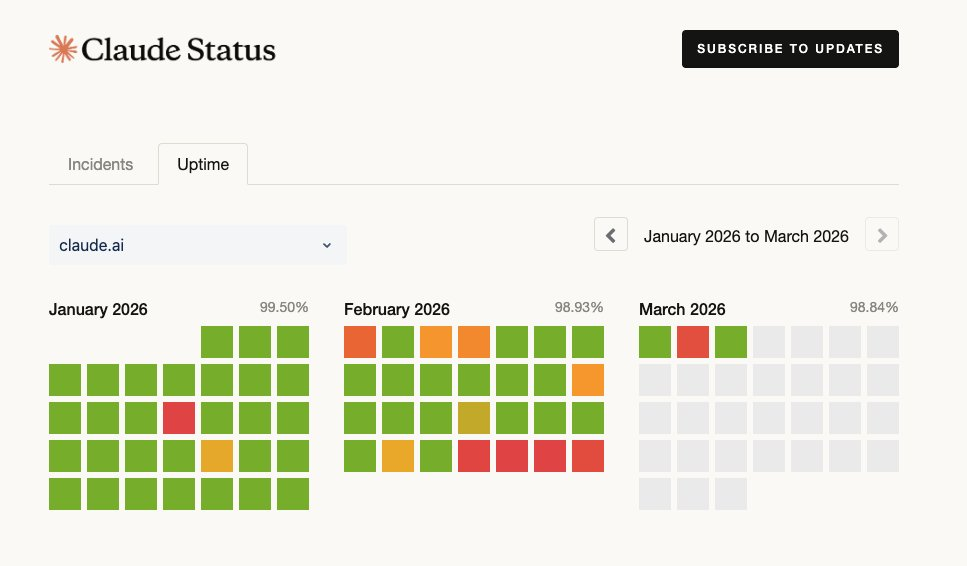
The data center caught fire, lost power, and approximately 60 cloud services were disrupted.

Claude, one of the world's most widely used AIs, runs on Amazon's cloud. On the same day, Claude experienced a global outage.

Anthropic's official explanation was a surge in users overwhelming the servers.

As of the time of writing, complaints about Claude's service being unavailable still persist on social media; the renowned prediction market Polymarket has already launched a prediction topic: "How many more times will Claude go down in March?"

If it is confirmed that Iran was responsible, this would be the first time in human history:

A commercial data center was physically destroyed in a war.

But why would a civilian data center be targeted?

Rewind two days. On February 28, the U.S. and Israel jointly launched an airstrike on Iran, killing Supreme Leader Khamenei and a number of senior officials.

A significant portion of the intelligence analysis, target identification, and battlefield simulation for this airstrike was assisted by Claude. Through collaboration between the military and data analytics company Palantir, Claude had long been integrated into the U.S. military's intelligence system.

Ironically, just hours before the airstrike, Trump ordered a comprehensive ban on Anthropic because the company refused to provide unrestricted access to its AI for the Pentagon. But despite the ban, the operation proceeded.

Publicly, it was stated that removing Claude from the military system would take at least six months.

So, before the ink on the ban was dry, the U.S. military used Claude to strike Iran. Iran then retaliated, and a missile landed on the data center running Claude AI.

Source: Bloomberg

The data center was likely not the intended target, merely collateral damage. But regardless of whether the missile was aimed at the data center, one thing is certain:

Truth lies within the range of artillery, and so does AI. Both the side firing the artillery and the side being hit by it are affected.

AI's Grand Infrastructure, Built on the Middle East Powder Keg

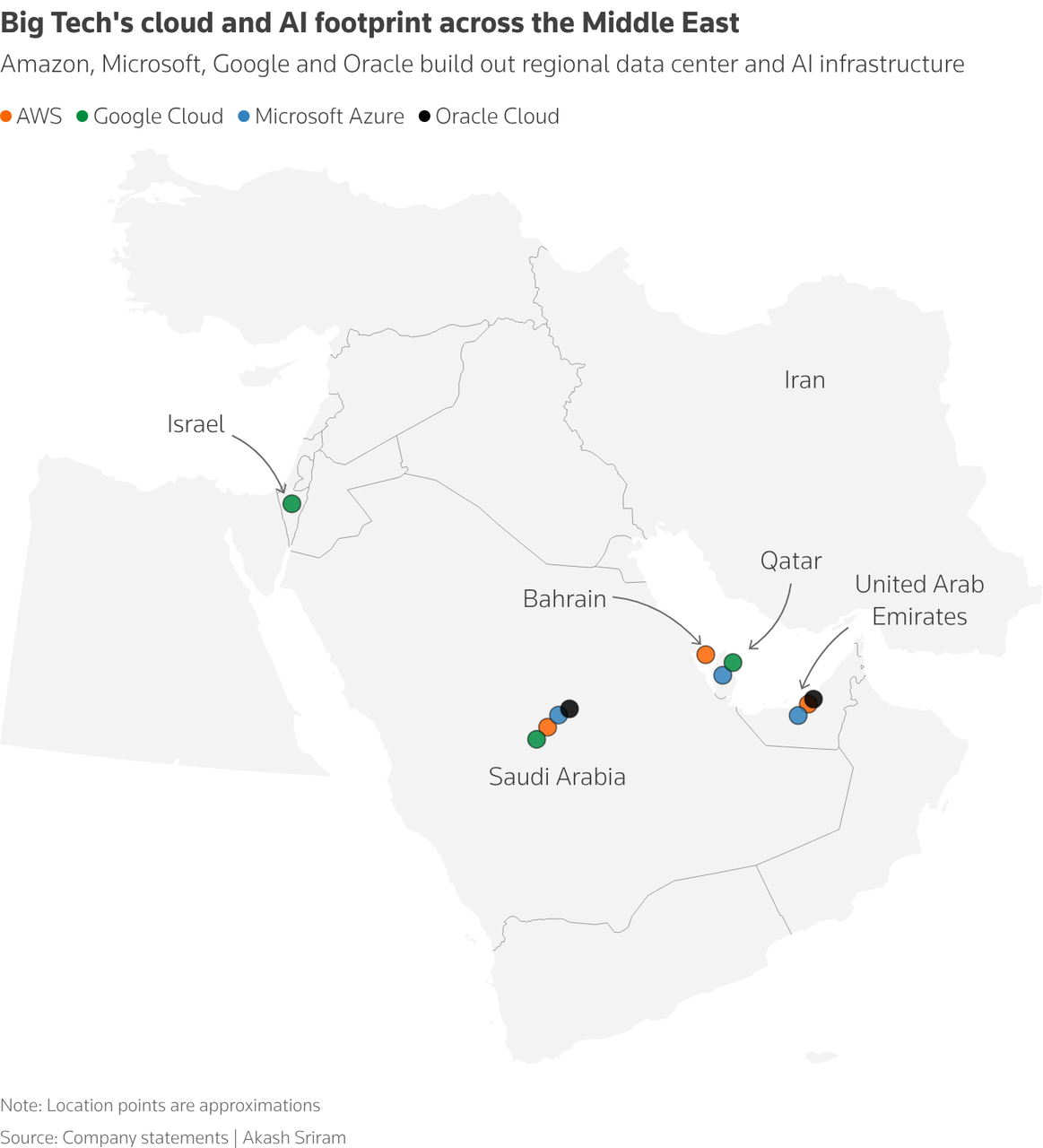
Over the past three years, Silicon Valley has relocated half of the AI industry to the Middle East Gulf.

The reason is simple. The UAE and Saudi Arabia have the world's wealthiest sovereign funds, cheap electricity, and one key regulation:

If you want to serve my customers, your data must be stored on my territory.

So Amazon opened data centers in the UAE and Bahrain, and invested $5.3 billion to build another in Saudi Arabia; Microsoft has nodes in the UAE and Qatar, with one in Saudi Arabia already completed.

OpenAI, in partnership with NVIDIA and SoftBank, is building a $30 billion AI park in the UAE, touted as the largest computing base outside the U.S.

In January of this year, the U.S. signed an agreement with the UAE and Qatar called "Pax Silica." Translated as "Silicon Peace," it sounds ideal.

The core of the agreement is to control the flow of chips, ensuring advanced chips do not fall into China's hands.

In exchange, the UAE secured permission to import hundreds of thousands of NVIDIA's most advanced processors annually. Abu Dhabi's G42 cut ties with Huawei, and Saudi AI companies pledged not to purchase Huawei equipment...

The entire Gulf's AI infrastructure, from chips to data centers to models, has fully aligned with the U.S.

These agreements considered everything: chip export controls, data sovereignty, investment reciprocity, and technology leakage risks.

But not one considered the possibility of someone bombing a data center with a missile.

An international security scholar at Qatar University made a fitting remark after the Amazon data center fire:

"These security frameworks were designed for supply chain control and political alignment. Physical security was never on the agenda."

Cloud computing has preached elasticity, redundancy, and decentralization for a decade. But data centers are physical buildings with walls, roofs, and coordinates. No matter how advanced your chips are, if the data center is bombed, it's bombed.

"Cloud" is a metaphor; data centers are not.

AI may seem virtual, running on code, floating in the cloud. But code runs on chips, chips are installed in data centers, and data centers are built on Earth.

Who Protects AI?

This time, Amazon's data center may have been collateral damage, or optimistically, mistakenly hit.

But what about next time?

In an era of escalating global geopolitical conflicts, if your data center runs AI models that help opponents with target identification, there is no reason for them not to treat your data center as a military facility.

International law has no answer to this question.

Current laws of war have provisions for "dual-use facilities," but those clauses were written for factories and bridges. No one considered data centers.

A data center that processes bank transactions by day and military intelligence analysis by night—is it civilian or military?

In peacetime, data center选址 considers latency, electricity costs, policy incentives... In war, none of that matters. What matters is how far your data center is from the nearest military base.

So, this bombing has shifted everyone's focus.

Previously, everyone was discussing the same anxiety: will AI replace my job? But no one discussed another question:

Before AI replaces you, how fragile is it itself?

A regional conflict brought down the Middle East node of the world's largest cloud service provider for an entire day; and this was just one data center.

There are nearly 1,300 hyperscale data centers worldwide today, with another 770 under construction. These centers consume increasing amounts of electricity, water, and money, and they承载 more and more—your savings, your medical records, your food delivery orders, even a country's military intelligence...

But the solutions protecting these data centers, to this day, likely still consist of fire suppression systems and backup generators.

When AI becomes a nation's infrastructure, its security is no longer just a company's concern. Who protects AI? Cloud providers? The Pentagon? Or the UAE's air defense system?

This question was theoretical three days ago. Not anymore.

AI is within the range of artillery. In fact, isn't everything in this era within the range of artillery?


Twitter:https://twitter.com/BitpushNewsCN

Bitpush TG Discussion Group:https://t.me/BitPushCommunity

Bitpush TG Subscription: https://t.me/bitpush

Original link:https://www.bitpush.news/articles/7616277

Related Questions

QWhat event on March 1st led to the global outage of Claude AI?

AA missile and drone attack by Iran on the Gulf region struck an Amazon data center in the UAE, causing a fire, power outage, and disruption of approximately 60 cloud services, which led to the global outage of Claude AI.

QWhy was the Amazon data center in the UAE targeted or affected by the missile strike?

AThe data center was likely not directly targeted but was affected because Claude AI, which was hosted on Amazon's cloud, had been used by the U.S. military and Palantir for intelligence analysis, target identification, and battlefield simulation in a joint U.S.-Israel airstrike on Iran just two days prior.

QWhat is the 'Pax Silica' agreement signed between the U.S., UAE, and Qatar?

AThe 'Pax Silica' agreement, signed in January, focuses on controlling the flow of advanced chips to prevent them from reaching China. In exchange, the UAE received permits to import hundreds of thousands of Nvidia's most advanced processors annually, and Gulf AI companies committed to cutting ties with Huawei and avoiding its equipment.

QHow does the article highlight the vulnerability of AI infrastructure in the context of geopolitical conflicts?

AThe article emphasizes that AI infrastructure, such as data centers, is physically vulnerable to attacks during conflicts. Despite being critical infrastructure, data centers are often protected only by basic systems like fire suppression and backup generators, and their physical security is not adequately considered in geopolitical or military planning.

QWhat broader implication does the incident have for the future of AI and cloud services in conflict zones?

AThe incident underscores that AI and cloud services, often seen as virtual and decentralized, are grounded in physical infrastructure that can be targeted in warfare. This raises unresolved questions about whether data centers hosting dual-use (civilian and military) AI should be considered military targets and who is responsible for protecting them—cloud providers, national militaries, or host countries.

Related Reads

How Much Debt Does Strategy Really Have? Is There a Risk of Implosion?

MicroStrategy's Debt Risk: A Turning Point in the "Never Sell" Strategy As of June 3, 2026, MicroStrategy holds 843,706 bitcoins (valued at ~$53.1B) but faces significant financial obligations. Its capital structure includes $6.75B in convertible notes and $15.48B in perpetual preferred stock (led by the $8.5B STRC series), creating an annual payout burden of ~$1.71B. With software revenue at only ~$500M, interest and dividend obligations far exceed operating income. A critical shift occurred in late May 2026 when the company sold 32 bitcoins for ~$2.5M to cover dividends, breaking CEO Michael Saylor's long-standing "never sell" pledge. This symbolic move triggered a sharp decline in both Bitcoin's price and MSTR stock, reflecting market fears about cash flow sustainability. The core of the strain is the STRC perpetual preferred stock, designed as a "permanent loan" with no maturity date but requiring high monthly dividends (currently 11.5%). Its business model relies on a three-part cycle: issuing new STRC shares, using proceeds to buy more Bitcoin and fund a USD reserve, and using that reserve to pay dividends. This cycle depends on continuous investor demand for STRC and Bitcoin's price appreciation. Analysis shows Bitcoin needs to appreciate at least 2.3% annually to cover the $1.71B in yearly obligations at current holdings. With Bitcoin price down ~22% from March 2026 highs, this pressure has intensified. The company's $900M USD reserve can only cover about 7 months of payments if STRC issuance stalls. Key risks are not immediate bankruptcy or forced Bitcoin liquidation (as BTC is not collateral), but rather: 1) The erosion of MSTR's premium to its Bitcoin holdings (mNAV), which would cripple its ability to raise cheap capital; 2) A vicious cycle where stagnant Bitcoin prices reduce STRC demand, draining the USD reserve and forcing BTC sales, further depressing prices. The period from February 2027 to September 2028 is a crucial test, with over $5.9B in convertible notes facing put options or maturity. In essence, MicroStrategy has evolved from a simple Bitcoin holder into a complex financial entity acting like a "private Bitcoin bank," leveraging its BTC holdings to create layered financial products. Its survival depends on maintaining Bitcoin's price trend, its stock premium, and market appetite for its preferred shares. The recent token sale marks not a betrayal of its Bitcoin thesis, but an admission that the leveraged strategy must eventually be paid for.

marsbit10m ago

How Much Debt Does Strategy Really Have? Is There a Risk of Implosion?

marsbit10m ago

Anthropic Cries Wolf: Is the AGI Threat Real, or Just an IPO Story?

Anthropic has published an article titled "When AI builds itself," discussing the emerging concept of "recursive self-improvement," where AI begins to actively participate in designing, training, testing, and optimizing its own subsequent versions. The company presents internal data showing that by May 2026, over 80% of code merged into its codebase was written by Claude, its AI model. Claude's capabilities have expanded to handling complex, open-ended engineering tasks, achieving a 76% success rate in such areas, and even contributing to research processes, such as optimizing code performance and conducting AI safety experiments. Anthropic outlines an evolution from human-driven development to AI-assisted workflows, culminating in the current stage where AI agents can autonomously write, run, and delegate code. The company cautions that the path toward a "closed loop," where AI continuously improves itself, is becoming visible. It calls for coordinated global mechanisms to potentially slow or pause frontier AI development to allow safety research and societal structures to catch up. However, the timing of this warning coincides with Anthropic's preparations for an IPO, framing the narrative not just as a safety concern but also as a demonstration of Claude's advanced capabilities and its integral role in accelerating Anthropic's own R&D—creating a potential "flywheel" effect for competitive advantage. This contrasts with OpenAI's recent, more policy-oriented discussion of the same risks, highlighting the competitive dynamics in the AI industry as companies position themselves in both the technological and regulatory landscape.

marsbit1h ago

Anthropic Cries Wolf: Is the AGI Threat Real, or Just an IPO Story?

marsbit1h ago

BIT Research: ETF Purchases Have Slowed, Strategy (MicroStrategy) Has Slowed, What Else Can Drive Bitcoin's Rise?

Market Refocus on Inflation and Rate Expectations Weighs on Bitcoin Currently, the market is in a phase of macro-repricing dominated by inflation and interest rate expectations. Bitcoin, which previously benefited from easy liquidity and low inflation, is seeing its core bullish drivers weaken. These drivers were market expectations for interest rate cuts and strong inflows from Bitcoin ETFs and institutions like MicroStrategy (referred to as "Strategy" in the text). The logic has shifted. Recent high inflation data (e.g., CPI hitting 3.8% in a May 2026 report) has caused the market to sharply reduce its rate cut expectations for 2025 and even price in potential hikes. This is a key constraint for Bitcoin, as it lacks cash flows and is highly sensitive to rate expectations. Concurrently, institutional capital flows have slowed significantly. Following the hot CPI data, Bitcoin ETFs saw accelerated outflows, with around $4.3 billion leaving over a period. MicroStrategy's ability to keep adding substantial Bitcoin to its balance sheet is also diminishing. Together, ETF and MicroStrategy holdings total roughly $110 billion, but their momentum as growth engines is cooling. In summary, Bitcoin's current pressure stems not from its own fundamentals but from a changing macro environment. As long as inflation stays elevated, Bitcoin is likely to remain in a consolidating phase. However, historically, inflation eventually peaks. Once it recedes and rate cut expectations rebuild, institutional capital could return, potentially fueling a new and more robust recovery phase for Bitcoin.

marsbit1h ago

BIT Research: ETF Purchases Have Slowed, Strategy (MicroStrategy) Has Slowed, What Else Can Drive Bitcoin's Rise?

marsbit1h ago

Trading

Spot
Futures

Hot Articles

Discussions

Welcome to the HTX Community. Here, you can stay informed about the latest platform developments and gain access to professional market insights. Users' opinions on the price of AI (AI) are presented below.

活动图片