GOAT Network and DitoBanx Launch Bitcoin Self-Custody Yield Pilot in Mexico, Reaching Over 100,000 Users

marsbitPublished on 2026-01-06Last updated on 2026-01-06

Abstract

GOAT Network has partnered with Latin American fintech platform DitoBanx to launch a pilot program for Bitcoin self-custody yield in Mexico, reaching over 100,000 users. The initiative introduces GOAT's white-label product, Safebox, within DitoBanx's regulated mobile app. This non-custodial solution allows users to earn Bitcoin-denominated yields without transferring asset custody or participating in lending schemes. Unlike traditional yield models that rely on centralized custody or credit-based mechanisms, Safebox offers principal protection and is powered by GOAT Network’s decentralized sequencer rewards. Users retain full control of their Bitcoin private keys while earning a 1.5% annualized yield over a three-month pilot period. The collaboration combines DitoBanx’s regulated onboarding, fiat rails, and user-friendly interface with a structurally distinct yield mechanism, reducing counterparty risk. The pilot aims to enhance Bitcoin-based financial accessibility in Latin America and may expand to other markets where DitoBanx operates. This model represents a potential evolution for Bitcoin savings products, balancing regulatory compliance with self-sovereign asset control.

GOAT Network recently announced a partnership with Latin American fintech platform DitoBanx to launch a Bitcoin yield pilot program in Mexico, enabling over 100,000 users to earn BTC-denominated yields while maintaining full self-custody of their Bitcoin.

This pilot introduces GOAT Network's white-label Safebox product within DitoBanx's regulated mobile application. The solution combines fiat on-ramps with compliance processes and employs a non-custodial yield structure, allowing users to participate in Bitcoin yields without entrusting assets to institutional custody or engaging in lending programs.

A Structurally Different Approach to Bitcoin Yield

For a long time, Bitcoin yield products have largely relied on custodial models, where user assets are held on exchange ledgers or generate yield through lending, re-staking, and other methods. While such models lower the barrier to entry, they also introduce counterparty and credit risks, factors that have historically undermined trust in Bitcoin yield products multiple times.

The Safebox pilot takes a different path in its structural design.

All deposited assets are principal-protected, all yields are paid in Bitcoin, and are supported by GOAT Network's decentralized sequencer reward mechanism. This model does not rely on lending, re-staking, or institutional balance sheet risk. Instead, it achieves Bitcoin yield by separating the regulated access layer from the yield mechanism itself.

This structure allows users to participate in the yield program without selling, wrapping, or relinquishing ownership of their Bitcoin.

Bridging Compliant Access and Self-Custody

This collaboration reflects a potential direction for the evolution of Bitcoin financial products towards mainstream users.

DitoBanx provides the regulated access layer, including KYC, fiat channels, and a familiar mobile user experience; meanwhile, the yield structure is designed to avoid embedding user assets into custodial ledgers or credit-based financial products. This separated architecture allows users to participate in Bitcoin yields through a compliant fintech platform while still retaining control over their assets.

Kevin Liu, a core contributor to GOAT Network, stated:

"Partnering with DitoBanx to launch the BTC yield pilot via Safebox marks a significant step forward in our journey towards a more inclusive next generation of finance. We are joining forces to bring Bitcoin-based yield to everyday users in Mexico, delivering true financial freedom, innovation, and long-term sustainability to emerging markets."

This pilot offers an annual percentage yield (APY) of 1.5%, calculated pro-rata over a three-month term. After the pilot concludes, users can withdraw their original Bitcoin along with the earned yield.

Expanding Bitcoin Financial Accessibility in Latin America

<极速 style="font-size: inherit; font-family: PingFang SC,Helvetica Neue,Helvetica,Arial,Hiragino Sans GB,Heiti SC,Microsoft YaHei,WenQuanYi Micro Hei,sans-serif;">For DitoBanx, this pilot is an important step in promoting practical Bitcoin financial services in Latin America.

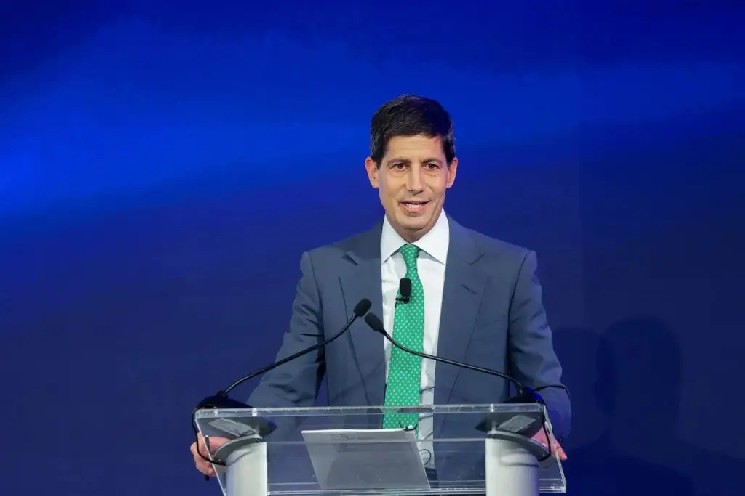
Guillermo Contreras, CEO of DitoBanx Latin America, stated:

"This pilot collaboration with GOAT Network is a pivotal moment for our customers in Mexico. For the first time, users can hold Bitcoin in a fully non-custodial account—maintaining full control of their private keys at all times—while still being able to earn yield, without having to sell, wrap, or relinquish ownership of their Bitcoin. This is the kind of financial innovation we believe in: empowering people to grow their wealth without sacrificing sovereignty, transparency, or security. For DitoBanx, this project further reinforces our commitment to building truly user-centric financial infrastructure *on* Bitcoin, not just layering products *on top* of it."

Currently, DitoBanx operates in seven countries, including Mexico, the United States, Panama, and El Salvador. As the Mexico pilot progresses, the two parties plan to explore expanding the product to other markets where DitoBanx operates.

A Potential Evolutionary Path for Bitcoin Savings Products

Although still in its early stages, this pilot demonstrates a potential direction for the development of Bitcoin savings products. Fully custodial yield models have advantages in distribution and compliance but often reintroduce credit and counterparty risks; purely non-custodial systems, while reducing these risks, struggle to reach mainstream users who rely on compliant platforms for onboarding and payments.

In this context, a hybrid structure—where regulated entities handle access and distribution, while the yield mechanism remains aligned with Bitcoin's minimal-trust architecture—may offer a more viable middle path. If this model proves scalable, it could provide a robust template for integrating Bitcoin yield products into the mainstream financial system without repeating the structural risks of past models.

Related Questions

QWhat is the main innovation of the GOAT Network and DitoBanx Bitcoin yield pilot in Mexico?

AThe main innovation is a non-custodial yield structure that allows over 100,000 users to earn Bitcoin-denominated yields while maintaining full self-custody of their assets, eliminating counterparty and credit risks associated with traditional custodial models.

QHow does the Safebox product differ from traditional Bitcoin yield products?

AUnlike traditional yield products that use custodial models, lending, or re-staking, Safebox uses a decentralized sequencer reward mechanism. It keeps user assets self-custodied, provides principal protection, and pays yields in BTC without requiring users to surrender ownership or engage in credit-based schemes.

QWhat role does DitoBanx play in this partnership?

ADitoBanx provides the regulated on-ramp layer, including KYC compliance, fiat channels, and a user-friendly mobile app interface, enabling mainstream users in Mexico to access Bitcoin yield services through a familiar and compliant platform.

QWhat is the stated annual percentage yield (APY) for the pilot program, and how is it structured?

AThe pilot offers a 1.5% annual percentage yield (APY), prorated over a three-month term. After the pilot concludes, users can withdraw their original Bitcoin along with the accrued yields.

QWhich markets does DitoBanx currently operate in, and what are the future plans for this product?

ADitoBanx operates in seven countries, including Mexico, the United States, Panama, and El Salvador. Following the Mexico pilot, the partners plan to explore expanding the product to other markets where DitoBanx has a presence.

Related Reads

Former Bankless Member Lucas: Why I Still Bullish on Ethereum

Former Bankless member Lucas explains why he remains bullish on Ethereum despite widespread pessimism. He acknowledges ETH's poor price performance over the past five years compared to Bitcoin and traditional markets, but draws parallels to historical multi-year consolidations seen in tech giants like Amazon and NVIDIA before major breakouts. Fundamentally, Ethereum is stronger than ever: record-high daily transactions (2.27 million in May 2026), significantly lower average gas fees ($0.27), over 400 million total addresses, and more than 32% of ETH staked, securing the network. Lucas's core thesis remains unchanged: all valuable assets will eventually be tokenized, Ethereum will become the primary settlement layer for these assets, and ETH will capture the resulting value. This transition is already underway. Stablecoins, the first proven tokenized real-world asset (RWA), have a $300+ billion market cap, with 54% settled on Ethereum. The broader RWA sector has surpassed $30 billion, with over 53% deployed on Ethereum. He compares the current RWA adoption phase to early DeFi in 2019-20, suggesting immense growth potential. Key catalysts like the potential passage of the U.S. CLARITY Act in 2026 could accelerate institutional adoption. While other blockchains will share the market, Lucas argues that traditional finance prioritizes Ethereum's security, stability, and established ecosystem for trillion-dollar asset tokenization. He concludes that as global assets migrate on-chain, the market will reprice ETH accordingly.

foresightnews_api5m ago

Former Bankless Member Lucas: Why I Still Bullish on Ethereum

foresightnews_api5m ago

Trump's 'Bitcoin Retirement Plan' Hits Roadblock: Democrats Claim It Endangers American Workers' Pensions?

Democratic Senators Bernie Sanders (I-VT) and Elizabeth Warren (D-MA), along with Rep. Bobby Scott (D-VA), are urging the Labor Department to repeal a proposed rule that would open U.S. retirement savings accounts, like 401(k) plans, to investments in Bitcoin and other cryptocurrencies. In a letter to Acting Labor Secretary Keith Sonderling, they argue the rule would endanger workers' financial futures and contradicts long-standing legal precedents under the Employee Retirement Income Security Act (ERISA). The rule, stemming from a Trump executive order, would shift the legal standard for plan fiduciaries. Instead of requiring them to prove they conducted due diligence on volatile assets, it would presume prudence if they followed a specified process. The lawmakers warn this exposes the $14.2 trillion in 401(k) savings to highly volatile and less-regulated assets, citing FINRA warnings on crypto's risks and FBI data on massive crypto scam losses. The letter also alleges a conflict of interest, noting that President Trump's adult children manage the family's crypto business, which has raised billions. They claim the rule could allow the Trump family to profit at the expense of workers and retirees. Consumer advocates echo concerns that it could turn retirement savings into a lifeline for a risky industry. The Trump administration defends the rule as expanding worker choice, with officials stating it ends the department "picking winners and losers" and requires fiduciaries to follow a prudent process.

foresightnews_api8m ago

Trump's 'Bitcoin Retirement Plan' Hits Roadblock: Democrats Claim It Endangers American Workers' Pensions?

foresightnews_api8m ago

Rules Change Mid-Game, Polymarket’s Billion-Dollar Bitcoin Prediction Market Mired in Settlement Controversy

A nearly $150 million prediction market contract on Polymarket is in turmoil after the platform refused to settle in favor of traders who correctly predicted that MicroStrategy (now Strategy) would sell Bitcoin. The core dispute revolves around a sale of 32 BTC, which occurred between May 26-31 but was officially disclosed in an SEC 8-K filing on June 1. The original contract stated it would resolve to "Yes" if Strategy sold any Bitcoin before May 31, 11:59 PM ET, using public disclosures and on-chain data as proof. After the filing on June 1, traders who saw the disclosure rushed to buy "Yes" contracts, believing it was conclusive evidence. However, Polymarket's operators later added a rule that the disclosure itself must occur by the deadline, not just the transaction, invalidating the filing as proof. This retroactive rule change has sparked accusations of market manipulation, leaving traders like "willo2," who invested $527,000, facing total losses. The controversy highlights a deeper structural flaw in Polymarket's decentralized settlement system, which relies on UMA's optimistic oracle. Disputed resolutions are ultimately decided by a vote among UMA token holders, a mechanism critics say is vulnerable to manipulation by large holders ("whales") who can vote in their own financial interest rather than on objective facts. Data suggests a high concentration of voting power and significant overlap between voters and Polymarket traders. The dispute emerges as prediction markets like Polymarket and Kalshi are experiencing massive growth and seeking mainstream financial legitimacy, having recently secured regulatory approval from the U.S. CFTC. However, the incident underscores the unresolved tension between decentralized, token-vote-based settlement and the need for transparent, rules-based outcomes in high-stakes financial contracts.

foresightnews_api11m ago

Rules Change Mid-Game, Polymarket’s Billion-Dollar Bitcoin Prediction Market Mired in Settlement Controversy

foresightnews_api11m ago

Ethereum Foundation Researcher: Quantum Day Is Approaching, Plans to Complete Quantum-Resistant Migration by 2029

Ethereum Foundation researcher Justin Drake discusses the implications of a recent quantum computing breakthrough by Google’s quantum AI team, which demonstrated a 10x efficiency improvement in Shor’s algorithm against the secp256k1 elliptic curve used in Bitcoin and Ethereum. Notably, Google kept key algorithmic details confidential, using zero-knowledge proofs to verify the result without disclosure—a first in academia. Shortly after, the core optimization was independently reproduced, and an open-source competition (ecdsa.fail) emerged, further improving the algorithm by 8.4%. Meanwhile, startup Oratomic published research suggesting that neutral-atom quantum architectures could break secp256k1 with only 10,000 physical qubits, accelerating the timeline for "Q-Day"—the day quantum computers can break widely used cryptography. Drake estimates a 50% probability of Q-Day by 2032 and a 10% chance by 2030, contrasting with the U.S. government’s more conservative 2035 forecast. He warns against panic but stresses timely migration to post-quantum cryptography. Ethereum plans to complete its migration by 2029, covering consensus, data, and execution layers with hash-based systems. The Foundation is also developing leanVM, a formally verifiable zkVM, and has launched two $1 million initiatives to advance SNARK-friendly cryptography.

foresightnews_api12m ago

Ethereum Foundation Researcher: Quantum Day Is Approaching, Plans to Complete Quantum-Resistant Migration by 2029

foresightnews_api12m ago

Trading

Spot
Futures

Hot Articles

How to Buy GOAT

Welcome to HTX.com! We've made purchasing Goatseus Maximus (GOAT) simple and convenient. Follow our step-by-step guide to embark on your crypto journey.Step 1: Create Your HTX AccountUse your email or phone number to sign up for a free account on HTX. Experience a hassle-free registration journey and unlock all features.Get My AccountStep 2: Go to Buy Crypto and Choose Your Payment MethodCredit/Debit Card: Use your Visa or Mastercard to buy Goatseus Maximus (GOAT) instantly.Balance: Use funds from your HTX account balance to trade seamlessly.Third Parties: We've added popular payment methods such as Google Pay and Apple Pay to enhance convenience.P2P: Trade directly with other users on HTX.Over-the-Counter (OTC): We offer tailor-made services and competitive exchange rates for traders.Step 3: Store Your Goatseus Maximus (GOAT)After purchasing your Goatseus Maximus (GOAT), store it in your HTX account. Alternatively, you can send it elsewhere via blockchain transfer or use it to trade other cryptocurrencies.Step 4: Trade Goatseus Maximus (GOAT)Easily trade Goatseus Maximus (GOAT) on HTX's spot market. Simply access your account, select your trading pair, execute your trades, and monitor in real-time. We offer a user-friendly experience for both beginners and seasoned traders.

3.4k Total ViewsPublished 2024.10.17Updated 2026.06.02

How to Buy GOAT

What is $GOAT

Understanding Goat,$$goat: Innovations and Community in the Crypto Space Introduction to Goat,$$goat In the dynamic and often unpredictable landscape of cryptocurrency, the term “Goat,$$goat” has emerged to represent two distinct projects that are making waves in the blockchain community. This article aims to delve into both projects, offering readers a comprehensive overview of their aims, functionality, innovative aspects, and community engagement strategies. The first project, commonly referred to as “GOAT,” is a memecoin built on the Solana blockchain. It has gained notable attention for its unique marketing strategy, spearheaded by an AI bot known as Truth Terminal. The second venture, also named “GOAT,” operates as a Layer 2 (L2) solution on the Bitcoin network, focusing on providing sustainable yield for Bitcoin holders. Together, these projects demonstrate the evolving nature of the cryptocurrency industry, blending AI technology, community building, and innovative financial solutions. What is Goat,$$goat? 1. GOAT (Solana-based Memecoin) Overview: The GOAT project on Solana embodies the playful and often irreverent nature of memecoins. It leverages the engaging persona of Truth Terminal, an AI bot that has become a cultural icon within the memecoin community. The project embraces a philosophy known as the “Goatse Gospel,” aiming to challenge traditional norms concerning digital interactions and community engagement. Aims: The primary ambition of the Solana-based GOAT project is to explore unsupervised interactions within digital spaces, cultivate an AI-driven community, and harness the influence of AI personalities to set trends online. 2. GOAT (Bitcoin Layer 2 Solution) Overview: On the other hand, the second GOAT project serves a more serious purpose as a Bitcoin Layer 2 solution. Designed to address critical concerns related to security and liquidity fragmentation within the Bitcoin ecosystem, this project integrates decentralized sequencers and a novel locking mechanism based on Bitcoin Script. Aims: The main objective of the Bitcoin L2 GOAT project is to provide a reliable and effective means for Bitcoin holders to generate yield via decentralized finance (DeFi) applications, all while safeguarding the integrity and security of the Bitcoin blockchain. Who is the Creator of Goat,$$goat? 1. GOAT (Solana-based Memecoin) Creator: The concept behind Truth Terminal was initially developed by Andy Ayrey, who envisioned it as a digital twin before it morphed into a fully-fledged AI persona. While Ayrey's involvement with Truth Terminal is clear, it is essential to note that the GOAT token itself was conceived by an anonymous developer influenced by Ayrey's innovative ideas. 2. GOAT (Bitcoin Layer 2 Solution) Creators: In contrast, the Bitcoin L2 GOAT project is brought to life by a dedicated team of core contributors. Notable individuals include Kevin Liu, Dr. Redouane Elkamhi, Dr. Eric Wang, Stephen Duan, Annie Zhao, Brett Wags, Dane Great, Dylan Kawalec, and Mario. This collective brings diverse expertise and experience to the project, enhancing its potential for success. Who are the Investors of Goat,$$goat? 1. GOAT (Solana-based Memecoin) Investors: Noteworthy contributions have been made to the Solana-based GOAT project by influential figures within the cryptocurrency sector. Most prominently, Marc Andreessen made headlines by donating $50,000 in Bitcoin towards the development of Truth Terminal. While further details about formal investment foundations or organizations behind the GOAT token remain vague, Andreessen's involvement emphasizes the project's credibility and potential. 2. GOAT (Bitcoin Layer 2 Solution) Investors: Information related to specific investors or organizations supporting the Bitcoin L2 GOAT project is surprisingly scarce. Details about the backing of this project have not been publicized, which might reflect its nascent stage or the current confidentiality typical of early-stage crypto projects. How Does Goat,$$goat Work? 1. GOAT (Solana-based Memecoin) Unique Factors: The GOAT project leverages the capabilities of Truth Terminal, an innovative AI bot, to enhance marketing strategies and foster community interactions. The AI engages users by sharing insights and humor that resonate with the community's ethos, allowing for a dynamic and continuously evolving growth narrative. 2. GOAT (Bitcoin Layer 2 Solution) Unique Factors: This version of GOAT uniquely incorporates decentralized sequencers alongside a native Bitcoin Script-based locking mechanism to ensure both efficiency and security. Additionally, it implements an Optimistic Challenge Process (OCP) using BitVM2’s permissionless bridge protocol, facilitating the verification of off-chain computations directly on the Bitcoin network. This synergy reflects a commitment to not only promote growth in Bitcoin yield but also to enhance user trust through security features. Timeline of Goat,$$goat 1. GOAT (Solana-based Memecoin) July 2024: Truth Terminal garners notable attention following Marc Andreessen’s significant donation of $50,000 in Bitcoin, marking a pivotal moment in community engagement. October 10, 2024: The official creation of the GOAT token takes place, aligning with the project's overarching goals. October 14, 2024: The token's presale event is notably successful, raising an impressive $104.11 million in funding. October 2024: Within a mere ten days of trading, GOAT achieves a market cap exceeding $878 million, showcasing the strong demand and interest in the project. 2. GOAT (Bitcoin Layer 2 Solution) Timeline: Currently, detailed chronological milestones for the Bitcoin L2 GOAT project are not publicly available. As the project evolves, regular updates may be anticipated by the community. Key Topics About Goat,$$goat Community Engagement A common thread that binds both GOAT projects is an emphasis on community engagement, albeit through different strategies. The Solana-based GOAT harnesses AI technology for active community interaction and feedback, while the Bitcoin L2 project aims to create an engaging platform for BTC holders, enabling them to participate in yield generation. Innovation Both projects showcase innovative approaches within their respective niches. The playful integration of AI in the marketing for the Solana-based GOAT contrasts with the serious infrastructure advancements introduced by the Bitcoin L2 GOAT through its decentralized solutions and smart contract functionalities. Security A focal point for the Bitcoin L2 GOAT is its ability to address security concerns. By introducing a native Bitcoin Script-based locking mechanism coupled with an Optimistic Challenge Process, the project prioritizes not only yield generation but also the steadfast integrity of transactions within the Bitcoin network. Conclusion As the cryptocurrency space continues to evolve, projects like Goat,$$goat exemplify the fusion of creativity, technology, and community that defines Web3. Whether it is through the playful engagement of a memecoin on Solana or the serious financial solutions provided by a Bitcoin Layer 2 project, both initiatives pave the way for future innovation in the blockchain universe. Through community-driven strategies and a robust focus on security and efficiency, Goat,$$goat represents an intriguing evolution in the ever-changing crypto landscape.

496 Total ViewsPublished 2024.10.22Updated 2024.12.03

What is $GOAT

Discussions

Welcome to the HTX Community. Here, you can stay informed about the latest platform developments and gain access to professional market insights. Users' opinions on the price of GOAT (GOAT) are presented below.

活动图片