# Transition İlgili Makaleler

HTX Haber Merkezi, kripto endüstrisindeki piyasa trendleri, proje güncellemeleri, teknoloji gelişmeleri ve düzenleyici politikaları kapsayan "Transition" hakkında en son makaleleri ve derinlemesine analizleri sunmaktadır.

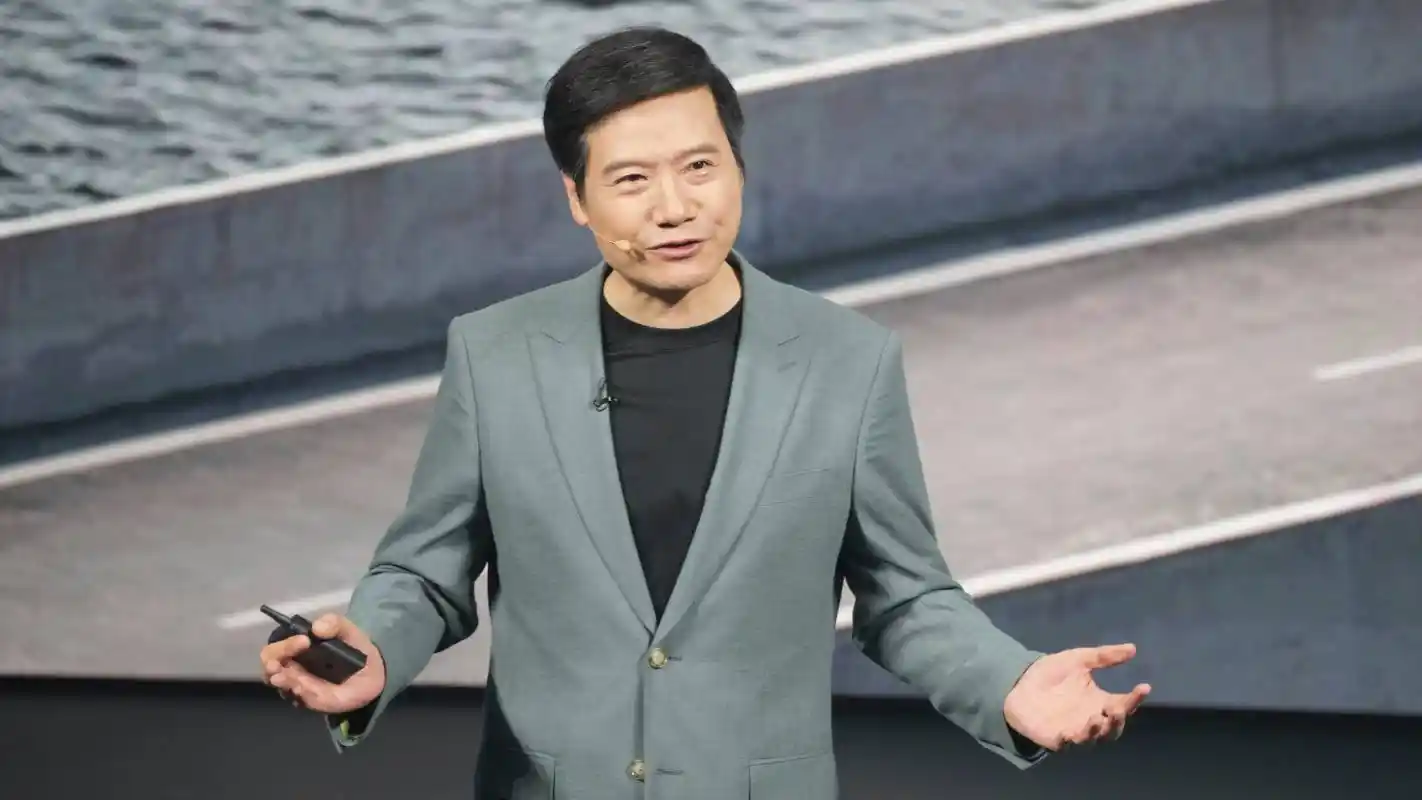
Xiaomi Defended Its Smartphone Gross Margin, Yet to Find a Profit Successor

Xiaomi's Q2 2026 financial report reveals a company navigating a complex transition. While smartphone gross margin held steady at 8.5% through strategic product mix and a record-high average selling price (ASP), this came at the cost of a 26.5% year-over-year decline in global shipments, pressuring its core user acquisition engine. This illustrates Xiaomi's central challenge: managing the "timing gap" between its established and emerging growth engines. Its smartphone business is pivoting from scale to premiumization, but it's unclear if high-end models can fully offset the volume loss from more price-sensitive segments, especially in markets like India and Africa. Meanwhile, the electric vehicle segment has become a significant revenue contributor, delivering 104,200 units and generating ¥23.9 billion. However, its profit contribution remains unclear as it, along with AI investments, is still in a scaling and investment phase. The AI and humanoid robot initiatives, though strategically prioritized and tested in Xiaomi's own factories, are in early-stage validation with no near-term commercialization timeline. Financially, the company remains stable, supported by a robust cash position and its high-margin internet services business, which hit a new high in monthly active users. Management emphasized continued heavy investment in AI, chips, and robotics to fuel the next growth cycle. The key question is whether these new engines—cars, AI, robotics—can achieve commercial scale and profitability before the smartphone engine's growth slows further.

marsbit08/21 10:41

Xiaomi Defended Its Smartphone Gross Margin, Yet to Find a Profit Successor

marsbit08/21 10:41

Bitcoin Miners Invest Billions in AI as Capital Expenditure Outpaces Revenue by 15 to 1

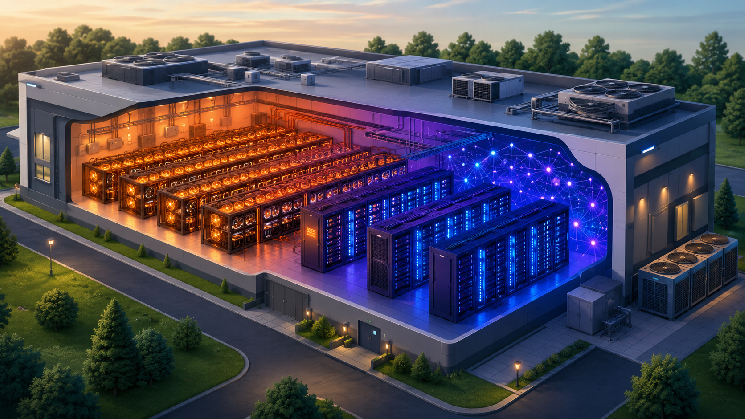
Public Bitcoin miners are investing billions to diversify into artificial intelligence (AI) and high-performance computing (HPC), but their revenues from these new ventures are not keeping pace with the massive capital expenditures. According to BlocksBridge Consulting, a group of 15 mining and AI data center companies spent $30.7 billion on capital assets in recent periods of 2026, a 42.6% increase from 2025. For nine comparable Bitcoin miners specifically, the gap is stark: they spent $5.11 billion on capital assets in the first half of 2026 while generating only $341.2 million in disclosed AI/HPC revenue, a capital-to-revenue ratio of approximately 15 to 1. Despite this initial disparity, AI and HPC revenues are growing rapidly, jumping 52% quarter-over-quarter in Q2 2026 for these nine miners. The transition from Bitcoin mining to AI infrastructure requires significant upfront investment in substations, buildings, cooling systems, networking gear, and in some cases, GPUs, even for miners with advantages like power contracts. The recent recovery in Bitcoin's price, which surged over 13% to surpass $72,000, may provide some relief to companies still holding major mining operations. In a related strategic shift, CoinShares has rebranded its industry-tracking ETF to focus on "companies powering the digital economy," including Bitcoin miners, AI data center operators, and semiconductor makers.

cryptonews.ru08/20 20:16

Bitcoin Miners Invest Billions in AI as Capital Expenditure Outpaces Revenue by 15 to 1

cryptonews.ru08/20 20:16

What Is the Cost of Bitcoin Mining Companies Going All-In on AI?

Bitcoin mining companies are undergoing a massive transformation, pivoting from cryptocurrency mining to AI infrastructure and high-performance computing (HPC) services. This shift is driven by the severe profitability crisis in Bitcoin mining following the 2024 halving and the October 2025 market crash, which pushed mining costs as high as $140,000 while Bitcoin's price fell to around $63,000. In response, major public miners like Core Scientific and TeraWulf are rebranding as "energy infrastructure platforms" or "AI cloud service providers." Their revenue structures have flipped, with AI/HPC hosting now constituting over 70-80% of quarterly revenue, dramatically surpassing declining Bitcoin mining income. They are securing massive, long-term contracts worth tens of billions of dollars with tech giants like AMD, CoreWeave, and Anthropic, locking in future cash flow. However, this all-in bet on AI carries significant risks. The AI compute market lacks Bitcoin's self-correcting mechanism, where unprofitable miners exit, reducing network difficulty and boosting profitability for those who remain. An AI compute supply glut could rapidly drive prices down, making today's lucrative long-term contracts burdensome. Furthermore, the transition is largely one-way; retrofitting facilities for AI and signing decade-plus contracts makes it nearly impossible to return to mining when its profitability eventually rebounds. Some companies, like Marathon Digital and Hut 8, are taking a more hedged approach. They are funding AI expansion through debt secured by Bitcoin holdings or by spinning off mining into separate subsidiaries, rather than completely divesting. This strategy maintains the optionality to shift power load back to Bitcoin mining if it becomes profitable again, positioning them as flexible power operators rather than being captive to a single, unproven market cycle. The article concludes that while the pivot to AI is a necessary survival move for many, abandoning Bitcoin mining entirely for long-term AI contracts is a risky gamble that could backfire.

marsbit08/18 10:57

What Is the Cost of Bitcoin Mining Companies Going All-In on AI?

marsbit08/18 10:57

A Glimpse into Crypto Miners in Q2: Rushing into AI Data Centers – Are They Profiting?

Mining companies presented mixed Q2 results as they navigate the shift towards AI data centers alongside their core Bitcoin mining operations. While mining output increased for some, declining Bitcoin prices and rising network difficulty pressured revenues. For instance, MARA mined more Bitcoin year-over-year but saw a 27% revenue drop and a significant net loss, partly due to unrealized losses on Bitcoin holdings. The standout trend is the growing contribution of AI/high-performance computing (HPC) hosting revenue. Core Scientific now derives over 80% of its revenue from high-density hosting, while TeraWulf generates about 71% from HPC leasing. However, the transition is at varying stages. Companies like Riot Platforms and Cipher Digital are in earlier phases, with AI-related revenue still a smaller portion of their total income. The article cautions against conflating massive, long-term AI hosting contracts (often valued in billions) with current quarterly revenue, as income recognition depends on capacity delivery and lease commencement. Financially, net losses were common but driven by different factors: some by Bitcoin price revaluations or warrant fair value changes, others by operational costs exceeding revenue. The sector is diverging into three paths: pure-play miners focusing on efficiency, companies successfully transitioning to AI hosting, and those in a challenging transitional phase where legacy mining income is declining before new AI revenue scales up. The key to future performance lies in reliable power access, timely data center delivery, and converting long-term contracts into consistent quarterly income.

marsbit08/14 04:59

A Glimpse into Crypto Miners in Q2: Rushing into AI Data Centers – Are They Profiting?

marsbit08/14 04:59

Goldman Sachs Stakes a Clear Position: This Is the Largest Capital Demand Cycle in Human History, and the Fed Is Just an Observer

Goldman Sachs argues that the world is entering the most capital-intensive investment cycle in history, driven by concurrent massive demands from AI infrastructure, reindustrialization, defense reinvestment, power grid rebuilding, supply chain realignment, and sovereign debt financing. This structural competition for capital is pushing its cost higher, fundamentally altering investment paradigms. Goldman's Mark Wilson states that the Federal Reserve is merely a "passenger, not the driver" in this shift, with rising yields rooted in these real economy demands rather than just monetary policy. While major indices appeared calm in July, underlying market movements were historic, featuring extreme stock dispersion and a severe momentum factor crash, leading to significant de-risking by fund managers. Wilson cautions against expecting a quick reversal in August, citing ongoing digestion of higher rates, disrupted risk models, and typically muted market performance ahead of US midterm elections. Corporate fundamentals remain robust with strong earnings, though growth rates are peaking in the US while accelerating in Europe. Notably, hyperscale cloud companies like Amazon and Microsoft are announcing staggering capital expenditure projections for 2027-2028, justified by explosive AI-related revenue growth and high returns. Amazon revealed its AI revenue run-rate exceeds $25 billion, growing triple-digits annually, and expressed confidence that AWS could become a trillion-dollar revenue business. The report concludes that a transitional period is underway, marked by a growing tension between aggressively investing private tech giants and increasingly capital-constrained sovereign governments. The AI super-cycle continues, with August likely being a consolidation phase.

marsbit08/03 09:46

Goldman Sachs Stakes a Clear Position: This Is the Largest Capital Demand Cycle in Human History, and the Fed Is Just an Observer

marsbit08/03 09:46

活动图片