Author: Ma He, Foresight News
Original Title: President Trump, the 'Yuan Shikai' of the Crypto Industry
On a winter night in 1915, beneath the red walls of Xinhua Gate in Beiping, China was engaged in a high-stakes gamble concerning its national destiny.
The elites who had once championed the republic, the tycoons fearful of turmoil, and even the capital giants from across the oceans held their breath, watching the man sitting on the chair in Zhongnanhai—Yuan Shikai. Four years prior, the revolutionary army had overthrown the Qing dynasty, yet the foreign powers chose Yuan, not Sun Yat-sen, to be the helmsman of the nation.
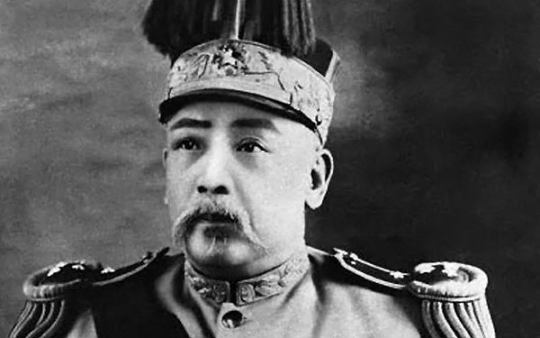
But Yuan Shikai was not the savior people had hoped for. Urged on by his close associates, he changed the era name to "Hongxian," plunging China back into imperial rule. However, after just 83 days, his Chinese Empire collapsed amidst widespread scorn, and China descended into decades of warlord strife.
A hundred years later, in the emerging financial frontier of cryptocurrency, people are also searching for their own "strongman." The 2024 US presidential election saw Trump hailed by the crypto industry as the savior who could break regulatory shackles and lead the industry into the mainstream. From venture capitalists in New York to crypto nouveau riche in Silicon Valley, from traditional financial institutions on Wall Street to retail investors in Southeast Asia, everyone placed their bets on this "Crypto President."
Yet, barely a year later, when the tariff war he wielded became the trigger for the crash on October 11, 2025, panic swept through the entire crypto market. As countless leveraged long positions were ruthlessly liquidated, people suddenly awoke: the Trump who had been so highly anticipated might just be the chief culprit of this crypto winter.
The relationship between Trump and the crypto industry is best described by the phrase, "Success also Xiao He, failure also Xiao He."
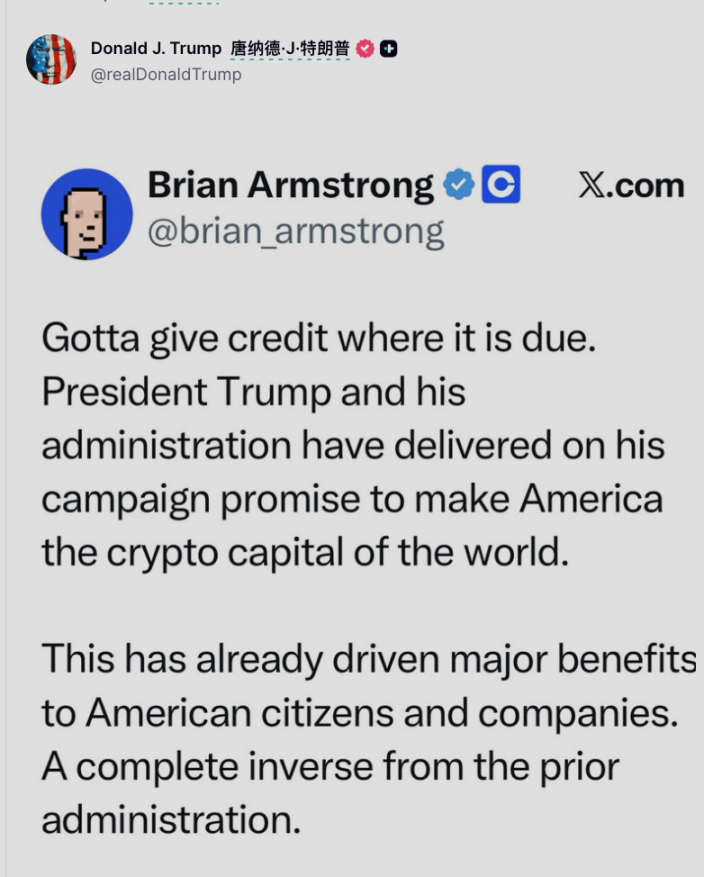
On March 4, Trump reposted a tweet from the Coinbase CEO, reiterating his commitment to making the US the global cryptocurrency capital. His slogans were loud and appealing, but does reality match his words?
The last person Trump favored provides a contrary answer. When the sweet cooperation between Musk and Trump at the White House ended in a rift after just a few months, you understand that the future of cryptocurrency Trump painted is also an illusion.
After taking office, Trump did act. The notorious SEC Chairman Gensler resigned disgraced in early 2025, replaced by the more crypto-friendly Paul Atkins. SEC lawsuits against several crypto companies were suspended or dropped, giving exchanges like Coinbase and Kraken a sigh of relief. Trump also signed an executive order to establish a dedicated task force to study how to incorporate cryptocurrency into the US financial regulatory framework.
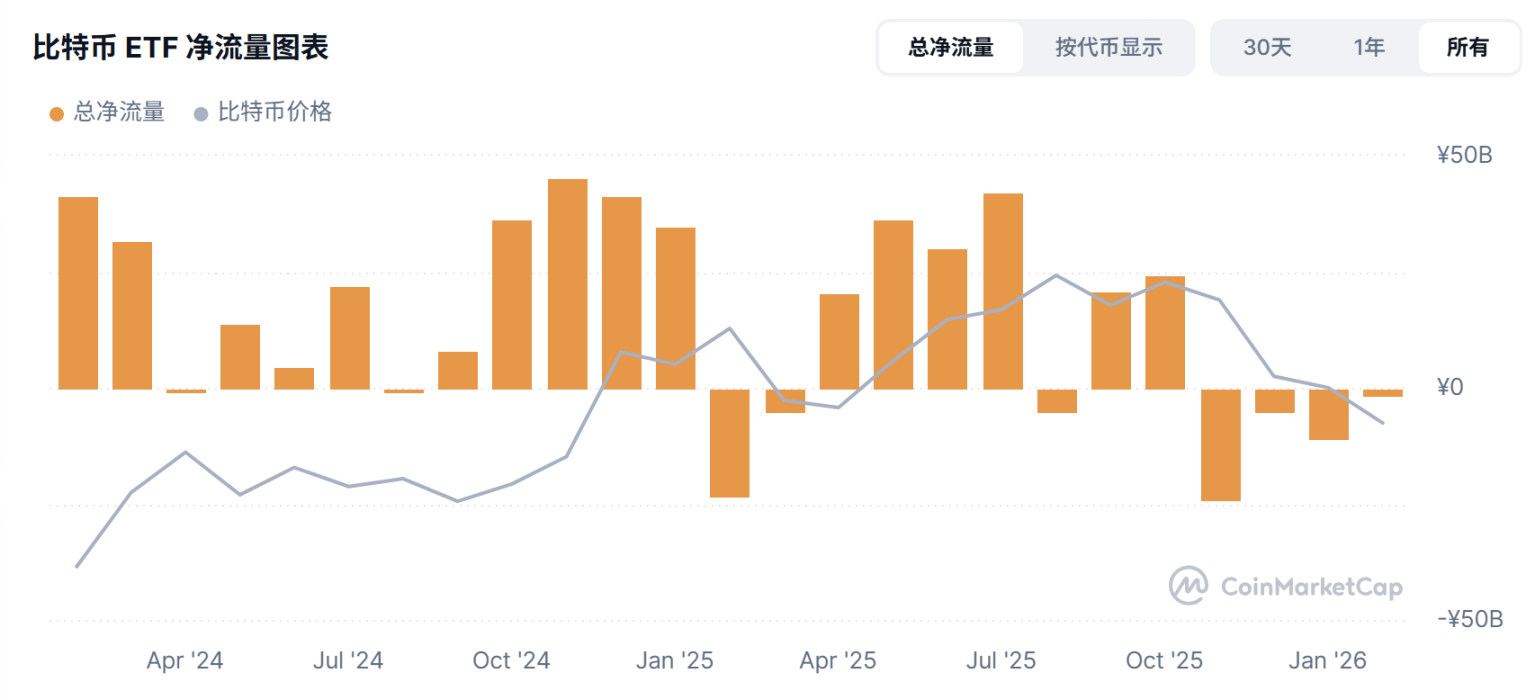
These measures did provide a short-term boost to the market. Bitcoin's price rose steadily from $52,000 in September 2024, and by early October 2025, BTC once broke through $126,000 to set a new all-time high. People began talking about an "institutional bull run" and an "ETF bull run," as if a new golden age was dawning. Although Ethereum performed weakly, it also hit a new all-time high after a significant correction and months of consecutive gains.
As of March 3, 2026, US Bitcoin spot ETFs had accumulated total net inflows of $55 billion, and Ethereum spot ETFs had accumulated total inflows of $11.62 billion.
However, this optimism was short-lived. Just as Yuan Shikai's initial republican experiment ultimately led to the restoration of the monarchy, Trump's "friendliness" towards the crypto industry gradually revealed its true colors.
The Carnival of Family Wealth Extraction
In January 2025, just before Trump's inauguration, a meme token named "TRUMP" quietly launched. This token, named after the president himself, saw its price soar to $77 within days of launch, with its market cap skyrocketing to tens of billions of dollars, creating an exaggerated wealth effect. Some players in Chinese-speaking communities made millions or even tens of millions of dollars in profits from this meme coin in a short period.
From a tokenomics perspective, the Trump family held a significant portion of these two tokens. According to on-chain data analysis, Trump himself and associated entities held a considerable share of the total supply of TRUMP tokens.
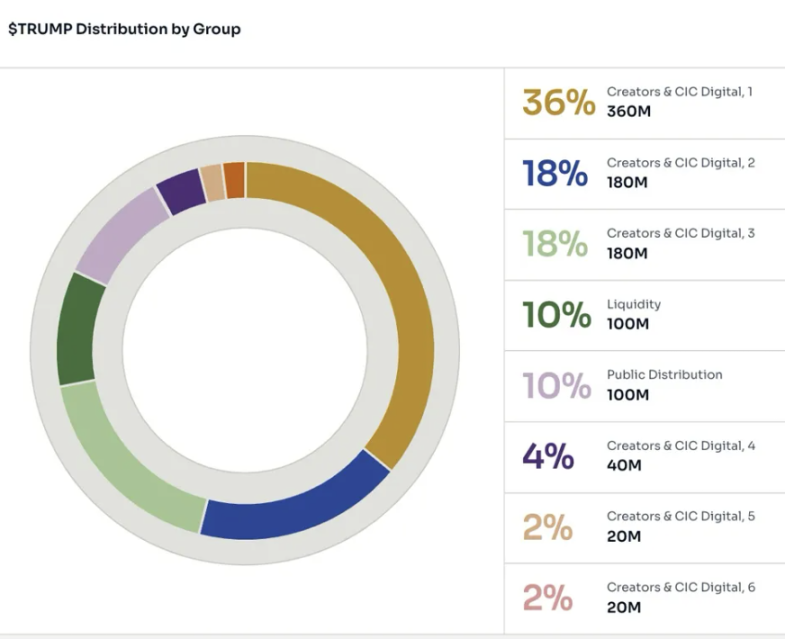
These "Creators & CIC Digital" groups total 80% (800 million tokens) and are the main holding portion of the token. According to official and reliable sources, these portions are controlled by two entities related to the Trump family:
-
CIC Digital LLC: This is an affiliate of The Trump Organization, directly linked to the Trump family.
-
Fight Fight Fight LLC: Owned by Celebration Cards LLC, an entity also linked to Trump-related projects.
These entities collectively hold the remaining 80% of the tokens.
Its price has now fallen to around $3.50, a drop of approximately 20 times.
Following closely, First Lady Melania also launched her own token, "MELANIA." The token's market cap exceeded $10 billion on its first day but quickly crashed due to insider selling, shrinking to less than $2 billion. In June 2025, according to Lookonchain monitoring, the team behind the official Melania meme token MELANIA sold a cumulative 821,800 MELANIA (8.22% of the total supply) through 44 wallets over the past 4 months, cashing out a total of 244,934 SOL (approximately $35.76 million).

Those who bought in became the bagholders.
For a time, the Trump family seemed to become the "token-issuing family" of the crypto world.
In October 2025, according to an investigation published by the Financial Times, the Trump family had earned over $1 billion in pre-tax profits through various cryptocurrency-related products and companies in the past 12 months.
This kind of using political influence for personal enrichment is extremely rare in American history.
19th-century President Ulysses S. Grant shared a commonality with Trump: they both entered the political arena as "outsiders" or "saviors." Grant, a hero of the Civil War, was highly anticipated by the public; Trump, a business magnate, promised to "Make America Great Again."
However, the Grant administration became one of the most corrupt in US history. Although Grant himself may not have been subjectively greedy, he was extremely protective of his associates, condoning large-scale enrichment by family members and subordinates. The most famous among these was the "Gold Corner" of 1869—Grant's confidants attempted to manipulate the price of gold, nearly causing the US financial market to collapse.
Trump's meme coin operations bear a striking resemblance to the scandals of the Grant era. Although there is currently no evidence that Trump directly manipulated the market, using the presidential身份 to endorse family tokens is essentially a monetization of power. Worse, this behavior sets a dangerous precedent for the entire industry.
Following the Trump couple's token issuance, imitators emerged one after another. Argentine President Javier Milei, this self-proclaimed "anarcho-capitalist" leader, also launched his own meme coin in 2025. However, this token farce ended in scandal—extensive insider trading was exposed, early investors (including Milei's relatives and friends) sold at the token's peak, while ordinary retail investors lost everything.
Meme coins, a crypto category originally tinged with banter and community culture, gradually became "cash machines" under Trump's demonstration effect.
More and more politicians, influencers, and celebrities began issuing their own tokens, converting fans' trust into personal wealth. The accelerated inflation of this bubble not only weakened the credibility of the crypto industry but also increasingly associated the term "cryptocurrency" with "scam" and "speculation" in mainstream discourse.
It was also from that time that a $70 billion FDV became an insurmountable hurdle for meme coins, and many began to decline.
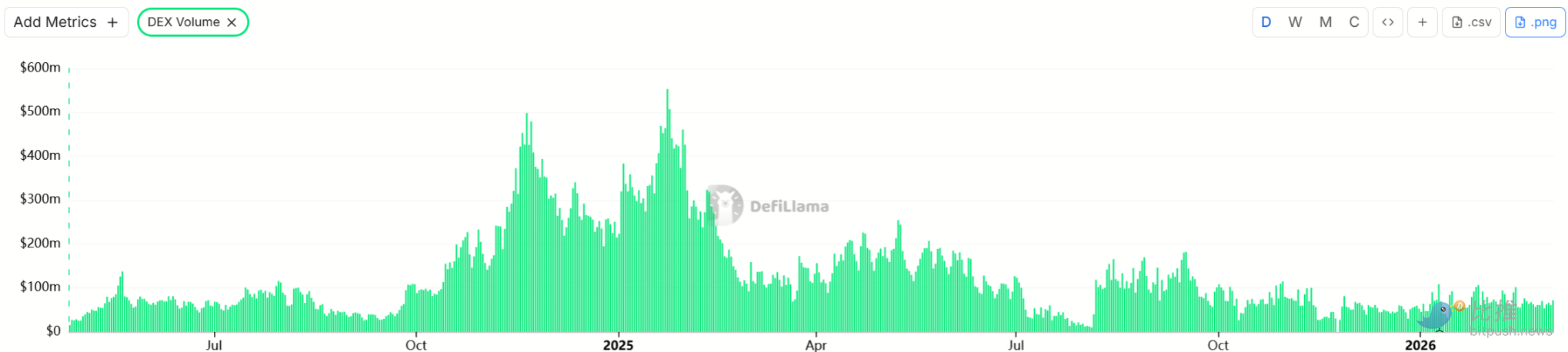
Data from DefiLlama shows that January 2025 was the peak moment for Pump.fun trading volume, which subsequently began to decline sharply, with activity plummeting. In January 2025, the highest daily trading volume could reach $550 million; now, it hovers around $60 million per day.
Even though so-called "Binance Life" and other once-hotly speculated meme coins later emerged on BNB Chain, their FDV failed to break through $1 billion.
After October 11, as the crypto market turned bearish, meme coin performance also slumped.
Market liquidity was carved up by token-issuing cliques and savvy traders.
Another crypto project, WLFI, has a management team composed of the Trump family and the Witkoff family. Among the Trump family, including eldest son Donald Trump Jr., second son Eric Trump, and the nominal youngest son Barron, are all listed.
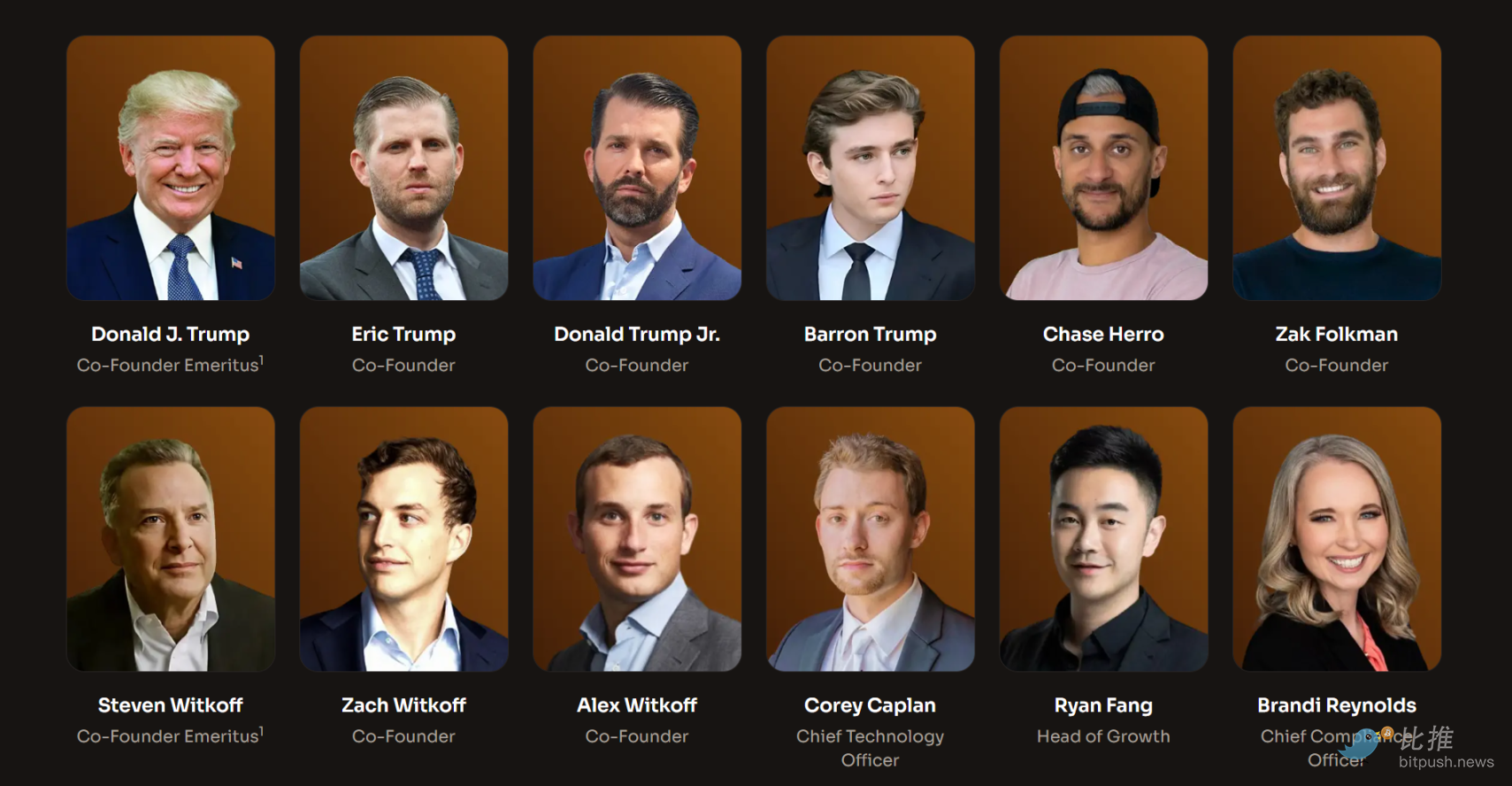
Currently, under a series of incentive activities, the market cap of the stablecoin USD1 has jumped to $4.6 billion. The Trump family, through the DT Marks DEFI LLC entity, holds approximately 38% of the equity in WLF Holdco LLC, and WLF Holdco LLC is the sole member of World Liberty Financial, Inc. (the company responsible for developing the WLF protocol and operating the governance platform). DT Marks DEFI LLC is held by Trump family-related entities, with Trump himself holding about 70% of the equity in this entity.
After June 2025, their equity share was further reduced to about 40%, recently stabilizing at around 38% (according to the latest official statement, related to an investment party associated with UAE Sheikh Tahnoon bin Zayed Al Nahyan acquiring a 49% equity stake; this transaction was completed in early 2026, bringing $500 million in funding, with the Trump family entity receiving $187 million).
Additionally, the Trump family and its affiliates hold 22.5 billion WLFI tokens (total supply 100 billion tokens,占比 22.5%). At the current price of $0.10, this is worth $2.25 billion. On the other hand, the family is entitled to 75% of the net proceeds from WLFI token sales (after deducting reserves, fees, etc.) according to a service agreement.
Cryptocurrency is a Tool, Not a Goal
If meme coins became a cash machine for the Trump family, then the subsequent series of tariff wars exposed Trump's true attitude towards cryptocurrency: in his eyes, crypto might be just a tool, not a major innovation worthy of attention.
Although the Trump administration was indeed more lenient than its predecessor in terms of regulation, this leniency was selective and utilitarian. For areas that could bring direct benefits to the Trump family (like meme coins), regulation was almost non-existent, also leading to endless chaos within them.
The essence of this "selective friendliness" was to garner votes and reward supporters, not to genuinely promote the healthy development of the crypto industry. Trump needed the support of crypto industry voters, so he made various promises during the campaign; but he did not truly understand, nor did he truly care about, the long-term value of this technology. Once the interests of the crypto industry conflicted with Trump's political agenda, the former was often sacrificed.
Cryptocurrency has a short history. With its dual attributes of finance and technology, holders are mostly young people, the tech nouveau riche. Before the election, the voices and shouts of young people were crucial for votes. Trump did not miss this opportunity, gaining the好感 of industry voters through promises and attending crypto summits. By loudly promising to "end the crackdown on the crypto industry" in his campaign speeches, he successfully packaged himself as the guardian of technological innovation.
On the other hand, Trump's image has never been well-received on Wall Street. From multiple bankruptcies and liquidations to legal disputes, traditional banking institutions have never stopped being wary of him. Even after taking office, some top capitals on Wall Street, as supporters of the Democratic Party, were naturally unwilling to become his financial alchemists. In this context, cryptocurrency could not only become a "financial backdoor" to avoid traditional regulation and bypass bank scrutiny but also a handy weapon for him to build a family economic empire. By pushing the family business into the crypto industry, he is trying to create a "Trump financial empire" independent of the existing financial order.
Thus, it is evident that what Trump favors is not cryptocurrency, but a new weapon that can help him bypass regulation and expand his voter base. Whether this divine weapon is cryptocurrency or AI, he doesn't care. But looking back at the crypto industry, as an emerging industry, does cryptocurrency's current situation most need the sugar-coated bullets of President Trump? The most棘手的问题—the current innovation drought in cryptocurrency—was overlooked amidst this superficial victory.
Reviewing the development history of the crypto industry, every bull run has been accompanied by major technological innovations. The 2013 bull run originated from Bitcoin's first mainstream attention; the 2017 bull run saw Ethereum's smart contracts开启 the ICO frenzy; the 2021 bull run brought new application scenarios with DeFi (Decentralized Finance) and NFT (Non-Fungible Token).
However, by 2025, the crypto industry had hit an innovation bottleneck. DeFi玩法 had been chewed over repeatedly, yields were getting lower and lower, and risks were getting higher and higher; the NFT market, after experiencing a bubble burst, has yet to find real value support; numerous tracks were proven false one after another, with token launches becoming the starting point of project death.
In contrast, innovation in the AI field is in full swing. Companies like OpenAI, Google, and Anthropic continue to launch astonishing new models, and AI applications are渗透 into various industries. From content creation to code generation, from medical diagnosis to financial analysis, AI has demonstrated enormous potential to change the world.
This contrast is残酷的. In the battle for capital and talent, AI is comprehensively crushing the crypto industry. In 2025, global venture capital investment in AI reached a record high, while funds flowing into the crypto industry continued to shrink. More and more developers are moving from Web3 to AI, and more and more investors are shifting funds from cryptocurrency to AI stocks.
The Trump government was also indifferent to this. Although Trump promised during the campaign to make the US the "crypto capital," his administration did not introduce any substantive policies to cultivate the crypto industry. No tax incentives, no R&D subsidies, no talent training programs. In contrast, Trump once announced that Japan's SoftBank Group, OpenAI, and Oracle would invest $500 billion in building infrastructure to support AI development in the US.
The innovation drought in the crypto industry, coupled with the siphon effect of AI, plunged the entire sector into an unprecedented predicament in 2025. And Trump's tariff war was another step on this fragile foundation.
The "Fatal Blow" of the Tariff War: Market Plunge and Crash
If the meme coin controversy was a slow poison, then the tariff war launched by Trump was a heavy blow to the crypto market.
The rationale for Trump's trade war was "protecting American manufacturing" and "reducing the trade deficit"—goals unrelated to the crypto industry. However, the financial turmoil triggered by the trade war severely hit the crypto market. Trump seemed毫不在意—on his list of priorities, the interests of the crypto industry clearly ranked behind trade policy.
On February 1, 2025, Trump signed an executive order, announcing an additional 10% tariff on all Chinese imports under the pretext of combating the influx of fentanyl. After negotiations failed to meet expectations, Trump launched a comprehensive tariff escalation in early April, dubbed "Liberation Day."
On April 2, Trump announced a 34% tariff on Chinese goods. Within a few days, tariff rates in some areas soared to 100% or even higher. China immediately announced retaliatory tariffs of equivalent proportions (34% and subsequent) on US goods.
BTC also fell from $88,000 to $74,500, hitting the lowest point in the first half of 2025.
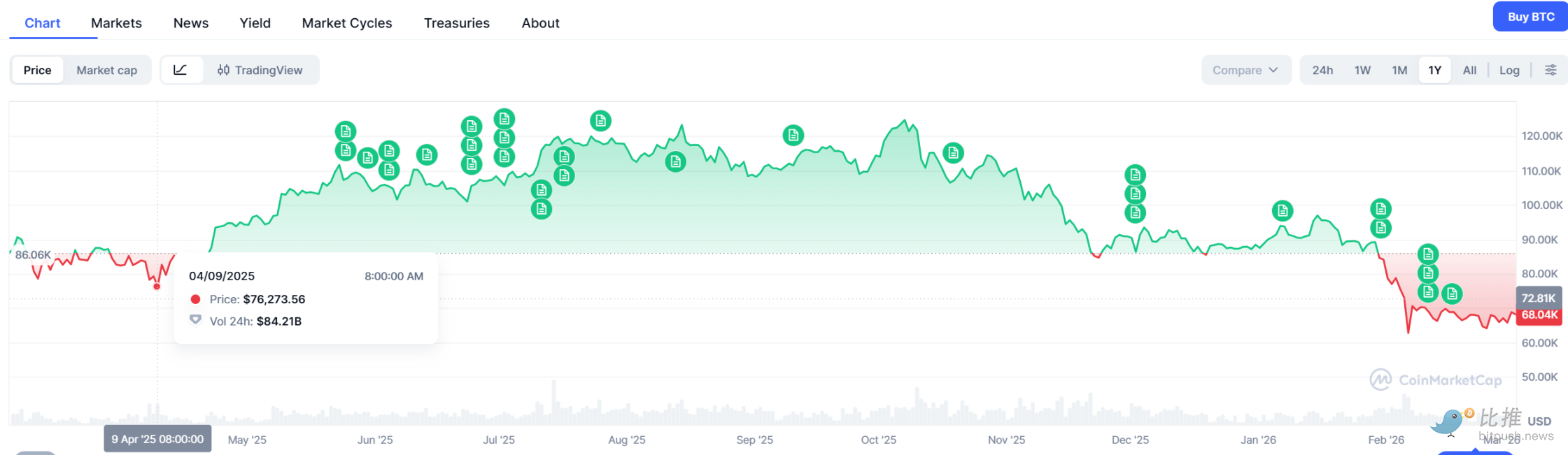
The sensitivity of the crypto industry stems from the fact that when the macro environment deteriorates and risk assets are sold off, the crypto market is often the first to be affected. And Trump's tariff policy恰恰 created such a恶劣的 macro environment.
However, this tariff war was just the prelude. Who could have thought that on October 10, Trump would suddenly announce via social media that, due to China's restrictions on the export of critical minerals (rare earths), the US would impose punitive tariffs of 100% to 130% on all Chinese imports.
The news caused剧烈震荡 in global financial markets. The Dow Jones Industrial Average opened down over a thousand points, and the Nasdaq fell even more sharply. In the crypto market, panic sentiment was amplified infinitely.
On the evening of October 10, BTC continued to fall, sliding from $120,000. Around 4 a.m. on October 11, the market changed suddenly. BTC suddenly dropped to $113,000, and soon after探至 $102,000. Affected by BTC, ETH also once探至 $3,435, SOL once探至 $168.79, SUI even插针至 $0.5597, and ATOM on the Binance exchange fell to $0.001. On-chain Gas also once soared to 450 Gwei. Backpack experienced malfunctions due to market volatility, and the Kraken exchange was temporarily inaccessible.
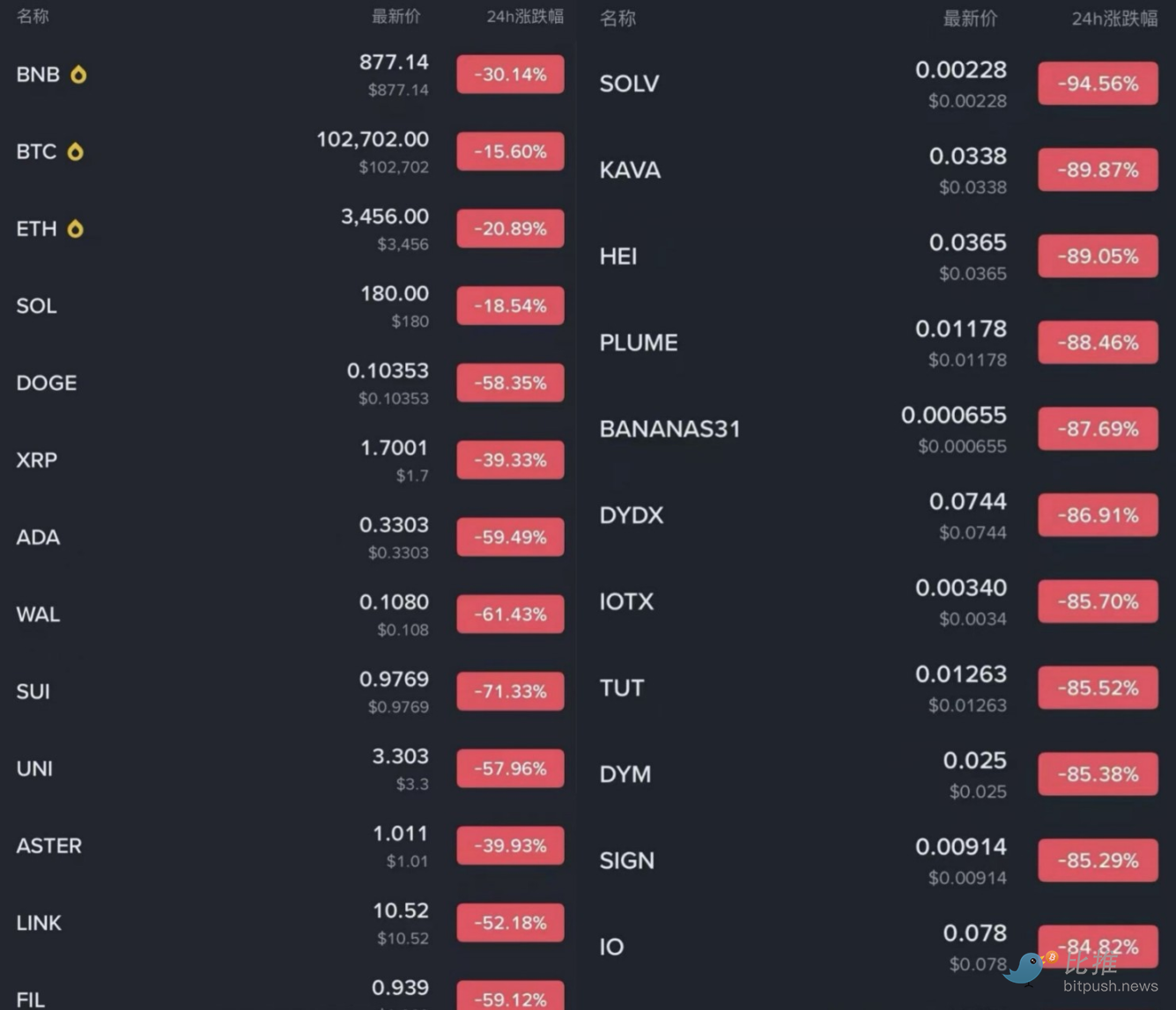
Even more惨烈 were the highly leveraged derivative markets—according to Coinglass data, that day's open interest data showed that in the past 24 hours,全网爆仓 reached $19.179 billion, a historical record. Among them, long positions爆仓 amounted to $16.715 billion. Globally, 1,633,245 people were liquidated. The largest single liquidation order occurred on Hyperliquid – ETH-USDT, worth $203 million. By platform, Hyperliquid saw over $10.2 billion in liquidations, Bybit over $4.6 billion, and Binance over $2.3 billion.
Exchange servers frequently宕机 under the huge访问量, many investors were unable to close positions in time and could only watch their positions get liquidated. Social media was filled with desperate voices: some lost their down payment for a house, some lost their children's tuition fees, and some even contemplated suicide.
The chain effect of this crash was profound. Many crypto projects were forced to shut down due to broken funding chains, exchange layoffs spread throughout the industry, and regulators began to re-examine their lenient policies towards the crypto industry. Once bustling crypto summits became deserted, and once意气风发的 crypto KOLs fell silent or left the circle.
The market officially entered a bear market from that moment.
And Trump? He made no mention of the crypto market's惨状.
At this moment, the crypto industry finally recognized reality: the highly anticipated "Crypto President" was never their friend. Trump used the crypto industry to gain political capital and used meme coins to amass family wealth, that's all.
Over a hundred years ago, Yuan Shikai went from "republican savior" to "usurper of the nation," dealing a heavy blow to China's modernization process. Today, Trump's term is not over yet, and no one knows if he is the "Crypto President" or the "Black Hand of the Industry."
However, genuine technological innovation will not die because of the betrayal of a political figure. Those in the crypto industry who have experienced all this understand that only technological progress and value creation are the true moat of an industry.
Twitter:https://twitter.com/BitpushNewsCN
Bitpush TG Discussion Group:https://t.me/BitPushCommunity
Bitpush TG Subscription: https://t.me/bitpush