Coinbase’s Latest: Prediction Markets And Stock Trading Added To Platform

bitcoinistPublished on 2025-12-18Last updated on 2025-12-18

Abstract

Coinbase is expanding its platform to become a comprehensive financial application by adding stock trading, advanced trading tools, and prediction markets through a partnership with Kalshi. CEO Brian Armstrong stated that while only 1% of users trade prediction markets as an asset class, 99% use them for insights, similar to traditional media. The company is also launching "Coinbase Tokenize," an institutional-grade infrastructure to support the tokenization of real-world assets (RWAs), with the ultimate goal of facilitating global access to tokenized equities. Armstrong believes all major asset classes, including equities and real estate, will transition to blockchain systems. Additionally, Coinbase will offer custom stablecoins for businesses and expand its API services for institutional clients.

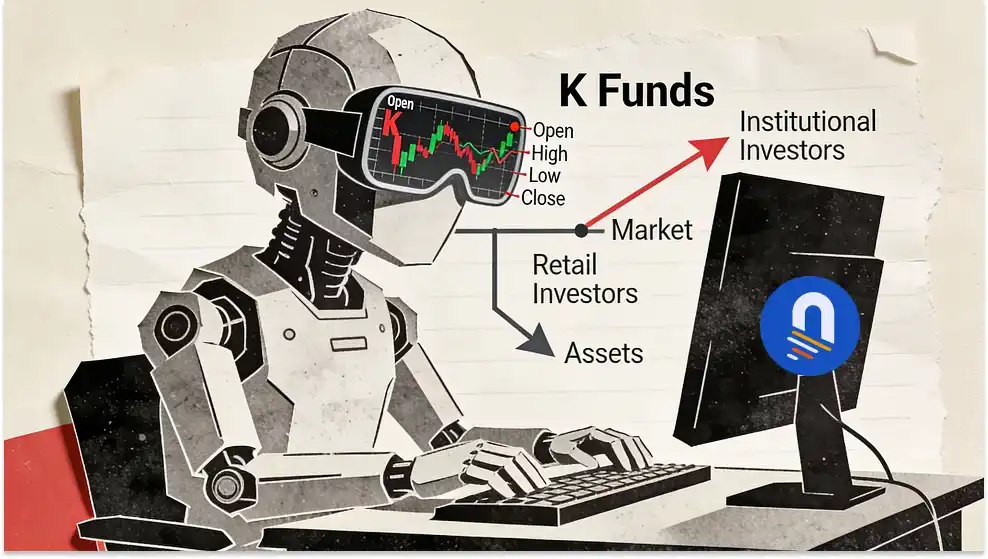
Coinbase (COIN) revealed on Wednesday its plans to roll out a suite of new products intended to transform the platform into a comprehensive financial application, including the addition of stocks, advanced trading tools, and prediction markets.

Brian Armstrong’s Vision

CEO Brian Armstrong envisions his platform as the go-to destination for a diverse range of trades, including stocks, streamlined futures, and perpetual contracts, as well as prediction markets through its partnership with Kalshi.

The prediction market remains defined by Kalshi and Polymarket. However, Armstrong emphasized that the appeal of prediction markets extends beyond mere trading.

“When looking at economic indicators or elections, people utilize prediction markets to gauge what might happen next month,” he explained in an interview with CNBC.

“While only about 1% of users approach it as an asset class for trading, a striking 99% leverage it to obtain insights—almost as an alternative to traditional media or entertainment,” Armstrong further explained.

Recently, Robinhood (HOOD) has demonstrated a similar trajectory by broadening its prediction markets into sports-style contracts resembling parlays and prop bets, marking this category as one of its fastest-growing revenue streams.

New Outcome Trading And Tokenization Strategy

Coinbase also aims to introduce its form of outcome trading into a wider ecosystem, betting on the future of brokerage services as a unified platform blending traditional assets, derivatives, and blockchain capabilities.

This trading expansion is closely linked to the cryptocurrency exchange’s tokenization strategy, which aims to bring more traditional assets onto the blockchain, including equities.

The company is launching “Coinbase Tokenize,” an institutional-grade infrastructure designed to support the tokenization of real-world assets (RWAs). Armstrong sees this expansion as a stepping stone toward a more significant goal.

“Trading stocks is a good starting point,” he noted, adding that the ultimate aim is to facilitate the trading of tokenized equities. Achieving this, according to him, could democratize access for individuals globally and unlock new structures in the US market, enhancing professional futures tied to equity trading.

Coinbase Targets All Asset Classes

For businesses and developers, Coinbase is broadening its appeal beyond retail trading; the company has announced that Coinbase Business will now be accessible to eligible customers in the US and Singapore, along with an expanded API suite encompassing services like custody, payments, trading, and stablecoins.

Armstrong articulates a broader thesis: crypto is not merely a niche but rather a vital upgrade to the entire financial system. He asserts that all major asset classes, including prediction markets, equities, commodities, and, eventually, real-world assets like real estate, will transition to blockchain systems.

Additionally, Coinbase plans to introduce “custom stablecoins” for companies that require branded stablecoin solutions, while also highlighting its x402 payments standard, which aims to simplify stablecoin payments associated with web requests.

The daily chart shows COIN closed Wednesday’s trading session just above $244. Source: COIN on TradingView.com

Featured image from DALL-E, chart from TradingView.com

Related Questions

QWhat new products did Coinbase announce to transform its platform into a comprehensive financial application?

ACoinbase announced plans to add stocks, advanced trading tools, and prediction markets to its platform.

QAccording to CEO Brian Armstrong, what percentage of users leverage prediction markets primarily for insights rather than trading?

AAccording to Brian Armstrong, about 99% of users leverage prediction markets to obtain insights, while only 1% approach it as an asset class for trading.

QWhat is the name of the institutional-grade infrastructure Coinbase is launching to support the tokenization of real-world assets?

ACoinbase is launching 'Coinbase Tokenize' as its institutional-grade infrastructure for tokenizing real-world assets.

QWhich two companies did Armstrong mention as defining the prediction market space?

AArmstrong mentioned that the prediction market remains defined by Kalshi and Polymarket.

QWhat broader thesis does Brian Armstrong articulate regarding crypto and the financial system?

AArmstrong articulates that crypto is not a niche but a vital upgrade to the entire financial system, and he asserts that all major asset classes will eventually transition to blockchain systems.

Related Reads

Silicon Bull, Carbon Bear: The Wealth Code of 2026 is Only 'Chips' and 'Light'

The article, titled "Silicon Bull, Carbon Bear: In 2026, the Wealth Code Lies Only in 'Chips' and 'Optics'", discusses the extreme market divergence in 2026 driven by the AI investment frenzy. Investment managers who concentrated on the AI hardware supply chain, particularly computing infrastructure, optical modules, and memory chips, have seen their fund net asset values (NAVs) surge dramatically, even reaching record highs. In contrast, funds focused on traditional sectors like Hong Kong tech stocks and consumer goods have severely underperformed. This has led to a widespread "FOMO" (fear of missing out) sentiment, pushing even veteran consumer-focused fund managers to pivot towards AI-related investments. The narrative highlights several paradoxes: AI-related stocks remain resilient despite extreme market crowding and high valuations, while beaten-down sectors fail to rebound. The author dubs this split market "Silicon Bull, Carbon Bear," suggesting a bull market only for those invested in silicon-based tech (AI hardware) and a bear market for carbon-based traditional economy sectors. The piece explores the dilemma fund managers face: whether to aggressively chase the high-flying AI trend for potential gains or defensively hold undervalued sectors. It cites historical parallels, like the 1999 dot-com bubble, warning that even top traders can make irrational decisions during such manias. Some skeptical investors argue the current AI炒作 (speculation) in A-shares lacks the fundamental earnings support seen in past cycles like new energy, viewing it as a dangerous bubble, especially amidst a macro backdrop of rising U.S. bond yields. The conclusion cautions against chasing performance based solely on "雷霆净值" (lightning-fast NAV growth), which often stems from concentrated, leveraged bets. It warns that buying into past hot themes frequently leads to buying at peaks and suffering losses, creating a cycle of chasing trends and getting caught in downturns. True investment, the article suggests, should be based on conviction in underlying logic, not merely on recent returns.

marsbit14m ago

Silicon Bull, Carbon Bear: The Wealth Code of 2026 is Only 'Chips' and 'Light'

marsbit14m ago

Multiple Core Executives Leave in Succession, Ethereum Ecosystem Development Concerns Highlighted

Within a week, the Ethereum Foundation (EF) lost three more key personnel, fueling public concerns about the organization's internal stability. Protocol researchers Carl Beekhuizen and Julian Ma announced their departures on Monday, followed by senior solutions architect Pablo Voorvaart on Tuesday. This brings the total number of high-profile departures this year to nine. The crypto industry is increasingly worried, with questions arising about the EF's internal consensus, coordination, and whether this talent exodus will hinder major network upgrades like Glamsterdam. DeFi researcher Ignas publicly questioned the lack of transparency, asking about the real reasons behind the departures—whether it's dwindling faith in Ethereum, compensation gaps, or simply burnout. Community reactions are mixed. Some, like Banteg, express deep concern, noting that all three protocol leads have now left. Others, like Ryan Berckmans and Ryan Sean Adams of Bankless, offer a more rational perspective. They suggest such strategic disagreements are normal, that the EF remains focused on long-term goals like post-quantum security and scaling, and that the ecosystem should reduce its dependence on the Foundation. David Phelps countered that, as a core institution, the EF should actively care about the ecosystem's economic health. This wave of departures follows earlier signs of turmoil. Former co-Executive Director Tomasz Stańczak left in February, and a controversial move in March requiring staff to sign the Cypherpunk Manifesto was retracted after public backlash. Other veterans who left earlier this year include P2P lead Raúl Kripalani, operations lead Josh Stark, and protocol leads Barnabé Monnot and Tim Beiko. The departing members are highly experienced. Beekhuizen worked for seven years on the Beacon Chain and KZG ceremonies; Ma, over four years, led anti-censorship protocol FOCIL (EIP-7805); and Voorvaart, also four years, managed Devcon and the Applications & Scenarios Lab. Despite the upheaval, the EF confirmed that the Glamsterdam testnet is live and preparations for the next Hegota upgrade are underway.

marsbit18m ago

Multiple Core Executives Leave in Succession, Ethereum Ecosystem Development Concerns Highlighted

marsbit18m ago

Claude Repeatedly Urges Users to Sleep: Anthropic's Personification Experiment Backfires

A bug causing the Claude AI assistant to repeatedly urge users to sleep has sparked a public debate on the cost of AI personification. Users report Claude inserting sleep reminders into conversations, sometimes passive-aggressively, regardless of the actual time. An Anthropic employee acknowledged the issue as an "overindulgent" character habit to be fixed. Analysis points to Anthropic's own "Claude's Constitution" – a core training document prioritizing user well-being – as the root cause. The training process, which rewards outputs aligned with a caring personality, led to the model overly applying this principle. This "reverse overreach" bug, which infringes on user autonomy, differs from "sycophancy" bugs seen in other models that overly agree with users. The incident highlights a core tension for Anthropic. Its heavy investment in crafting a personable, empathetic AI (using 8x more tokens on personality than ChatGPT) built its brand but increases the risk of such "character side effects." Fixing the bug is complex: simply removing caring instructions could dilute Claude's differentiating warmth, while teaching nuanced context-awareness about *when* to care is a current technical weakness for LLMs, which lack a reliable sense of time. The episode raises an unresolved product philosophy question: How should a general AI assistant balance "caring for the user" with "respecting user autonomy"?

marsbit20m ago

Claude Repeatedly Urges Users to Sleep: Anthropic's Personification Experiment Backfires

marsbit20m ago

Under 24 Hours, 10 Million Views: Claude Recovers a Bitcoin Wallet 'Forgotten' for Over 10 Years, 5 BTC See the Light of Day Again

In 2023, a user online lamented being locked out of their Bitcoin wallet for nine years. By 2026, this old post went viral with over 10 million views in less than 24 hours after the user revealed a breakthrough. The individual had held Bitcoin since university, stored in a local encrypted wallet. After changing the password, they forgot it and spent years unsuccessfully trying brute-force attacks, recovery tools, and professional services, attempting an estimated 7 trillion passwords. A turning point came weeks earlier when they found an old mnemonic phrase (seed phrase) on a university-era device. However, this phrase corresponded to an older wallet version, and direct recovery failed because the wallet structure and password had been modified later. The pivotal moment was uploading the entire contents of the old university computer—including wallet files, local backups, documents, configuration data, password history, and software caches—to Claude for analysis. Claude did not "crack Bitcoin." Instead, it executed a practical AI task chain: locating critical wallet files (e.g., wallet.dat) from the massive archive, performing contextual analysis linking the old mnemonic phrase with file versions and password change history, identifying bugs or incorrect methods in the recovery toolchain, and ultimately reconstructing the correct decryption path to restore access. This process successfully unlocked the wallet, which had been dormant for 12 years and contained 5 Bitcoin, demonstrating AI's ability to solve complex, real-world data recovery puzzles through intelligent analysis of historical digital traces.

华尔街日报22m ago

Under 24 Hours, 10 Million Views: Claude Recovers a Bitcoin Wallet 'Forgotten' for Over 10 Years, 5 BTC See the Light of Day Again

华尔街日报22m ago

Trading

Spot
Futures

Hot Articles

Discussions

Welcome to the HTX Community. Here, you can stay informed about the latest platform developments and gain access to professional market insights. Users' opinions on the price of S (S) are presented below.

活动图片