Author: KarenZ, Foresight News
Original Title: CFTC's New Chair Takes Office! Can He Uphold Half of U.S. Financial Regulation?
The U.S. Commodity Futures Trading Commission (CFTC) has officially welcomed its new leader.
According to a statement released by the CFTC on December 22, 2025, Michael Selig Sworn was officially sworn in that day, becoming the 16th Chairman in the agency's history.
Appointment Background
Michael Selig Sworn was nominated by U.S. President Trump on October 27, 2025, and was confirmed by the U.S. Senate on December 18. This appointment marks the Trump administration's readjustment of the financial regulatory system, particularly in establishing a regulatory framework for the emerging digital asset market.
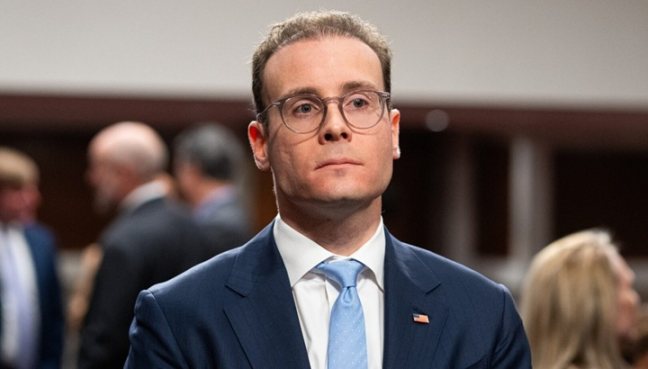
However, the nomination process was not smooth sailing. Trump initially nominated Brian Quintenz, a former CFTC Commissioner and former head of policy at a16z crypto, but ultimately withdrew the nomination due to resistance from the cryptocurrency industry. One reason was a dispute between Gemini's Tyler Winklevoss and Cameron Winklevoss and Brian Quintenz. Additionally, an informed source told The Block that some concerns were also focused on a16z's lobbying activities, which led to Brian Quintenz being excluded.
Subsequently, Michael Selig Sworn, in his role as Chief Legal Counsel of the U.S. Securities and Exchange Commission (SEC) Crypto Task Force, emerged as the new nominee. The Senate Agriculture Committee advanced his nomination along party lines, and it was ultimately confirmed by the full Senate.
Michael Selig Sworn's appointment comes after a prolonged period of interim leadership at the CFTC. Former Acting Chairman Caroline D. Pham announced her resignation on the same day, subsequently joining MoonPay as Chief Legal Officer and Executive Director.
Who is Michael Selig Sworn?
Prior to assuming the role of the new CFTC Chairman, Michael Selig Sworn accumulated considerable experience in both the public and private sectors.
According to the official statement, he served as Chief Legal Counsel of the SEC's Crypto Asset Task Force starting in March 2025, and was also a Senior Advisor to SEC Chairman Paul S. Atkins.
In this role, Michael Selig Sworn assisted in developing a clear regulatory framework for digital asset securities markets, coordinated the rule systems of the SEC and CFTC, promoted the modernization of agency rules to adapt to emerging technologies, and ended the practice of regulation by enforcement. Furthermore, he participated in the work of the President’s Working Group on Digital Assets and contributed to the "Strengthening U.S. Leadership in Digital Financial Technology" report.
It is worth noting that the "Strengthening U.S. Leadership in Digital Financial Technology" report is a presidential executive order issued by the White House on January 23, 2025. This executive action aims to promote U.S. leadership in the digital asset and financial technology fields while protecting economic freedom. Core contents include supporting the responsible development and use of digital assets, blockchain technology, and related technologies across all economic sectors; prohibiting CBDC; protecting dollar sovereignty and supporting dollar-backed stablecoins. Additionally, this executive order promoted the establishment of the President’s Working Group on Digital Assets, providing clear policy direction and strong legal support for the development of the U.S. digital asset industry.
Extended Reading: "Prohibiting CBDC, Upholding Dollar Sovereignty, Trump Signs First Crypto Executive Order"
Prior to this, from September 2015 to March 2025, Michael Selig Sworn worked as an Associate at three different law firms, later serving as Legal Counsel and then Partner at Willkie Farr & Gallagher LLP starting in 2022. According to the CFTC official release, Michael Selig Sworn primarily focused on derivatives and securities regulatory matters. During his private practice, he represented numerous clients regulated by the CFTC, including commercial end-users, futures commission merchants, commodity trading advisors, swap dealers, designated contract markets, derivatives clearing organizations, and digital asset companies. Selig advised clients on compliance with the Commodity Exchange Act and CFTC rules, covering registration applications and obligations, enforcement matters, and complex transactions, among other areas.
Notably, Michael Selig Sworn began his career in 2014 as a legal assistant to then-CFTC Commissioner J. Christopher Giancarlo, before transitioning to private practice at law firms.
Academically, Michael Selig Sworn holds a law degree from the George Washington University Law School, where he served as an articles editor for The George Washington Law Review. He also holds an undergraduate degree from Florida State University.
The New CFTC Chair's Regulatory Vision: Centered on "Made in America" Innovation, Consolidating Crypto Leadership
In his inauguration statement, Michael Selig Sworn thanked President Trump for the nomination and outlined his understanding of the CFTC's future direction, emphasizing the importance of balancing innovation and regulation.
He pointed out that this is a critical period for the CFTC's development, with numerous new technologies, products, and platforms emerging, and retail investor participation in commodity markets reaching record highs. Selig specifically emphasized the importance of the digital asset market structure legislation soon to be submitted to the President by Congress, stating it would consolidate the U.S.'s position as the "crypto capital of the world." He also直言 stated, "The CFTC will conquer these important areas, ensuring future innovation is 'Made in America.'"
Regarding the CFTC's role, Michael Selig Sworn gave a clear定位: "In the new markets of America's golden financial age, no institution is better suited than the CFTC to establish common-sense rules."
Meanwhile, former Acting Chairman Caroline D. Pham, in her departure statement, welcomed Michael Selig Sworn's appointment, describing him as pragmatic, results-oriented, and capable of balancing innovation with market integrity. Additionally, Caroline D. Pham mentioned that in 2025, the CFTC had already listed "promoting responsible innovation and fair competition" as a core mission, particularly with expanded regulatory scope in emerging areas like digital assets, cryptocurrency, and prediction markets, which will lay the groundwork for Michael Selig Sworn's subsequent work.
Potential Impact: Regulatory Shift, Accelerated Coordination, and Coexisting Challenges
How will Michael Selig Sworn's appointment reshape the U.S. financial regulatory landscape, especially the regulatory ecosystem of the digital asset领域? From his hearing statements, past experience, and industry trends, the direction of impact is becoming clear.
Regulatory Logic Shift: From "Strict Enforcement" to "Emphasis on Rules," Reducing "Technical Compliance" Burden
Michael Selig Sworn repeatedly emphasized during his hearings that the CFTC is the appropriate regulator for spot digital commodity trading and supports Congress's rapid advancement of digital asset market structure legislation. This aligns highly with the Trump administration's goal of "making America the crypto capital."
At the Senate confirmation hearing, according to WilmerHale报道, Selig多次 emphasized vigilance against "over-regulation" and "over-reliance on enforcement." He坦言 that he had personally witnessed regulatory agencies, by ignoring the practical impact of their actions and沉迷于 regulation by enforcement, ultimately push businesses overseas and burden entrepreneurs with red tape. To support this view, he shared a personal experience: assisting an agricultural company dealing with a massive CFTC investigation triggered merely by a "harmless error in swap data reporting," which forced the company to divert significant time and resources from its core business, severely impacting normal operations.
This direction is highly consistent with the adjustment of enforcement focus promoted by Pham during her tenure, aiming to avoid unnecessary regulatory burdens.
Will Rapidly Advance the Implementation of Digital Asset Market Structure Legislation
Michael Selig Sworn clearly stated that the CFTC will rapidly advance the implementation of digital asset market structure-related legislation and keep pace with market developments.
Coordinate SEC and CFTC, Promote a Unified Framework
From a broader perspective, Michael Selig Sworn's SEC background will help coordinate differences between the two major regulatory agencies (SEC and CFTC), reduce duplicate regulation, and promote a unified framework. This may accelerate the standardization of the spot crypto market.
According to the 166-page "Strengthening U.S. Leadership in Digital Financial Technology" report from the previous "President’s Working Group on Digital Assets," the SEC and CFTC should coordinate to ensure an efficient rulemaking process and solicit public comments on rulemaking proposals. Simultaneously, the report指出, the CFTC should clearly obtain regulatory authority over the spot market for non-security digital assets. SEC and CFTC registered entities could conduct diverse businesses under an efficient licensing framework, avoiding regulatory arbitrage. SEC-registered entities should be able to provide digital asset securities trading and engage in non-security digital asset trading according to the licensing structure defined by Congress. CFTC-registered entities should be able to provide digital commodity derivatives trading, retail digital commodity trading, and other CFTC-regulated products, as well as non-security digital assets designated by Congress.
Extended Reading: "White House Report Hides 100+ Legislative Recommendations, Also a Crypto Weather Vane"
What Challenges Does He Face?
Michael Selig Sworn also faces tangible challenges, such as resource and staffing gaps, and an imbalanced committee composition.
Several senators expressed concerns about the CFTC's resources and staffing. According to WilmerHale's报道, since the beginning of Trump's second term, the CFTC's staff has decreased by approximately 20%, currently standing at around 600 employees. If Congress grants the CFTC more crypto regulatory authority, additional funding and personnel support will be needed. Regrettably, Selig was vague in his hearing承诺 regarding specific resource needs.
Another issue worth noting is the composition of the CFTC Commission. According to official website information, the CFTC Commission consists of five commissioners appointed by the President with the advice and consent of the Senate, serving staggered five-year terms. However, after the acting chairman stepped down, the newly appointed Michael Selig Sworn found himself in the unusual situation of being the "lone commissioner." Currently, Michael Selig Sworn is the only Commissioner at the CFTC. This "single commissioner"格局打破了常规制衡机制 and significantly increases the Trump administration's policy control over the CFTC. This "single commissioner dominance" has also sparked discussions about regulatory neutrality.
When asked whether the vacant seats set a bad precedent, Michael Selig Sworn declined to comment, stating that nomination decisions should be made by the President. This evasive response somewhat reflects the sensitivity of this abnormal situation. When asked whether the vacant seats set a bad precedent, Selig declined to comment, stating that nomination decisions should be made by the President. This evasive response somewhat reflects the sensitivity of this abnormal situation.
A key question is whether Michael Selig Sworn will continue the reform pace initiated by Caroline D. Pham. Judging from the remarks made during the power transition, this seems highly likely. Caroline D. Pham's evaluation of Michael Selig Sworn indicates considerable consistency in regulatory logic between these two leaders, both emphasizing the balance between innovation and market integrity.
Furthermore, Michael Selig Sworn's focus on digital assets and emerging market structures, and his role in developing a coordination framework between the SEC and CFTC, suggest he may promote further coordination between these two key financial regulatory agencies.
How Michael Selig Sworn balances encouraging innovation with risk prevention, and how he advances broader regulatory responsibilities with limited resources, will be key看点 for the U.S. financial market in 2026.
Twitter:https://twitter.com/BitpushNewsCN
Bitpush TG Discussion Group:https://t.me/BitPushCommunity
Bitpush TG Subscription: https://t.me/bitpush