Industry News

Tracks company news, strategic changes, funding activities, and personnel adjustments across the blockchain and crypto industries, delivering a full-spectrum industry overview for our users.

Dialogue with Vitalik, Xiao Feng, Aya Miyaguchi, and Joseph Chalom: From the 'Subtraction Principle' to the Agent Economy

Conversation with Vitalik Buterin, Xiao Feng, Aya Miyaguchi, and Joseph Chalom: Highlights from the Ethereum Application Summit on key future directions. Vitalik Buterin discussed the concept of "Full Stack Open Source Security," extending security from the protocol to hardware layers like wallets and chips. He predicted AI will simplify blockchain interaction, enabling natural language commands for complex operations. He emphasized that Ethereum's future focus should be on security, decentralization, and trustless infrastructure—the areas where it holds its core competitive edge. The fusion of AI, Fully Homomorphic Encryption (FHE), and blockchain is seen as crucial for real-world applications requiring privacy, such as healthcare. Xiao Feng underscored the importance of simplifying technology for mass adoption. He drew parallels to the evolution from command lines to GUIs and apps, suggesting that AI-driven natural language interfaces will be key to bringing more users into Web3. He stressed that while performance is important, Ethereum must continue to uphold its foundational principles of decentralization and user sovereignty. Aya Miyaguchi, Chair of the Ethereum Foundation, explained the evolving role of the Foundation through the "Principle of Subtraction." As the ecosystem matures, the EF is stepping back from areas where the community can take the lead, acting as one of many "gardeners" rather than a central driver. She highlighted that real applications are built on Ethereum's core values: censorship resistance, open source, security, and privacy. The concept of "Local-first" initiatives, like the Ethereum Applications Guild (EAG), was also emphasized for leveraging regional strengths to create global impact. Joseph Chalom, CEO of SharpLink, positioned Ethereum as the future infrastructure for global capital markets, differentiating it from Bitcoin through its "productivity" via staking yields. He envisioned the rise of an "Agent Economy" by 2027, where AI agents, powered by Web3 wallets, will autonomously manage financial tasks like yield optimization and RWA investments. The summit concluded that with core infrastructure maturing, the application layer is now the key driver for Ethereum's next phase of growth and real-world adoption.

marsbit05/12 09:43
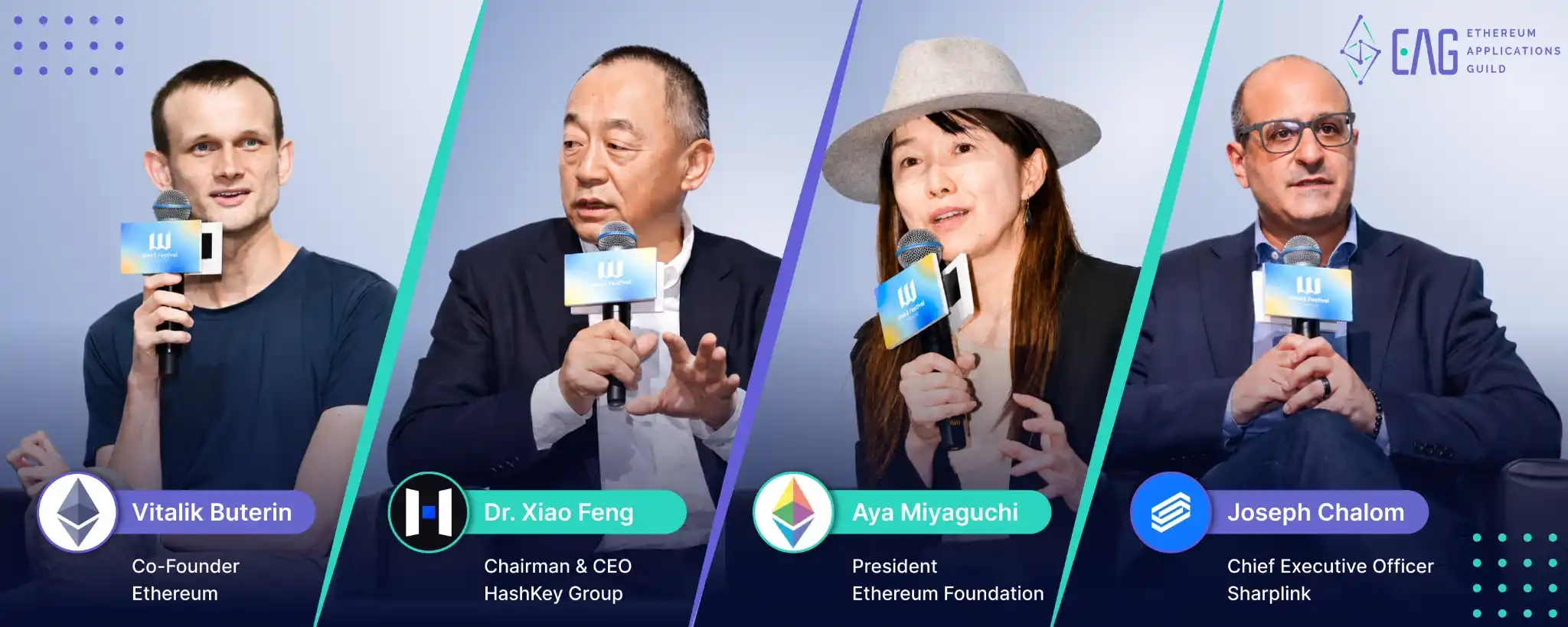
Dialogue with Vitalik, Xiao Feng, Aya Miyaguchi, and Joseph Chalom: From the 'Subtraction Principle' to the Agent Economy

marsbit05/12 09:43

MARA Reports Q1 Revenue Below Expectations, Net Loss of $1.3 Billion, Stock Plunges After Hours

Bitcoin mining firm MARA Holdings reported disappointing Q1 2024 results, causing its stock to erase all daily gains and fall 3.44% in after-hours trading. Revenue dropped 18% year-over-year to $174.6 million, missing Wall Street estimates of $192.7 million. The company posted a net loss of $1.3 billion, a significant increase from a $533.4 million loss a year ago, primarily driven by unrealized losses on its holdings of 38,689 Bitcoin, which depreciated in value during the quarter. MARA also sold over 15,100 BTC in late March to repurchase debt at a discount. The broader mining environment remains challenging due to a 35% decline in Bitcoin's price from its all-time high and a nearly 30% increase in mining difficulty over the past year. MARA's market cap ranking among U.S. miners has slipped to seventh. Critically, the company announced a strategic pivot away from Bitcoin mining expansion. It stated it has no plans to purchase new mining equipment and is fully transitioning toward AI data centers. Its strategy involves retrofitting existing mining sites for AI and high-performance computing (HPC) and leveraging its recent $1.5 billion acquisition of Long Ridge Energy & Power, a gas-fired power plant and data center. This infrastructure could eventually support 600 MW of AI compute capacity, allowing MARA to redeploy up to 90% of its non-custodial mining power for AI and IT workloads.

marsbit05/12 08:35

MARA Reports Q1 Revenue Below Expectations, Net Loss of $1.3 Billion, Stock Plunges After Hours

marsbit05/12 08:35

600 People, $66 Billion: The First Major Cash-Out in the Era of Large Models

The first systematic "big cash-out" of the AI era occurred in October 2025, when over 600 current and former OpenAI employees sold a total of $6.6 billion in shares via a secondary market. Approximately 75 individuals maxed out a $30 million per-person sale limit, while around 525 others cashed out an average of $8.3 million each. This event, exceeding the scale of any 2024 US IPO, functioned as a "shadow IPO." It marked a radical departure from the traditional Silicon Valley path of waiting for a public listing, instead allowing employees to convert equity to cash after just two years of tenure—a direct retention tool in a fiercely competitive talent market where rivals like Meta have offered packages worth hundreds of millions. This massive liquidity event presents a dual-edged sword for OpenAI. While it helps retain talent, it also risks triggering a brain drain as newly wealthy employees may depart. Furthermore, it creates a dilemma for those who sold: they forfeited potential future gains as the company's valuation soared from $400 billion to $852 billion within months. In stark contrast, employees at rival Anthropic demonstrated greater reluctance to sell during their own secondary offering. The financial narratives of the two labs also diverge sharply. OpenAI, while achieving over $20 billion in annualized revenue by 2025, faces massive projected losses (up to $14 billion in 2026), a long path to cash flow positivity, and significant revenue-sharing payments to Microsoft. Anthropic reports rapid revenue growth, improving gross margins, and a faster path to profitability. OpenAI's trajectory is thus balanced precariously between skyrocketing valuation based on funding narratives and the pressures of sustained financial losses post-cash-out. The event underscores that the AI race has evolved into a capital and human experiment, where immense wealth crystallizes the complex calculations of greed, fear, and ambition within the industry.

marsbit05/12 07:46

600 People, $66 Billion: The First Major Cash-Out in the Era of Large Models

marsbit05/12 07:46

Anthropic and OpenAI Have Single-Handedly Severed the Logic of Pre-IPO Stock Tokenization

The pre-IPO stock token market is experiencing significant turmoil following strong statements from AI giants Anthropic and OpenAI. Both companies have updated their official policies, declaring that any transfer of their company shares—including sales, transfers, or assignments of share interests—without prior board approval is "invalid" and will not be recognized in their corporate records. This means buyers in such unauthorized transactions would not be recognized as shareholders and would have no shareholder rights. A major point of contention is the use of Special Purpose Vehicles (SPVs), which are legal entities commonly used by pre-IPO token platforms to pool investor funds and indirectly acquire shares from employees or early investors. The companies explicitly state they do not permit SPVs to acquire their shares, and any such transfer violates their restrictions. They warn that third parties selling shares through SPVs, direct sales, forward contracts, or stock tokens are likely engaged in fraud or are offering worthless investments due to these transfer limits. This stance directly threatens the core model of many pre-IPO token platforms, which rely on SPV structures. The announcement revealed additional risks within this model, such as complex "SPV-within-SPV" layering that obscures legal transparency, increases management fees, and creates a chain reaction risk of invalidation. Following the news, tokens like ANTHROPIC and OPENAI on platforms like PreStocks fell sharply (over 20%). The market reaction highlights a divergence: while asset-backed pre-IPO tokens plummeted, purely speculative pre-IPO futures contracts, which are bilateral bets on future IPO prices with no claim to actual shares, remained relatively stable as they are unaffected by the transfer restrictions. The industry is split on the implications. Some believe the fundamental logic of pre-IPO token trading is broken if leading companies reject SPV-held shares, potentially causing a domino effect. Others, like Rivet founder Nick Abouzeid, argue that buyers of such unofficial tokens always knowingly accepted the risk of non-recognition by the company. The statements serve as a stark risk warning and a corrective measure for a market where valuations for some AI-related pre-IPO tokens had soared to irrational levels, far exceeding recent funding round valuations.

marsbit05/12 05:04

Anthropic and OpenAI Have Single-Handedly Severed the Logic of Pre-IPO Stock Tokenization

marsbit05/12 05:04

Anthropic and OpenAI Personally Sever the Logic of Pre-IPO Crypto-Stocks

The pre-IPO token market has been rocked by strong statements from Anthropic and OpenAI. Both AI giants have updated official warnings, declaring that any sale or transfer of their company shares without explicit board approval is "invalid" and will not be recognized on their corporate records. This directly targets Special Purpose Vehicles (SPVs), the common legal structure used by pre-IPO token platforms. These platforms typically use an SPV to acquire shares from employees or early investors, then issue blockchain-based tokens representing a claim on the SPV's economic benefits. Anthropic and OpenAI's position means that if an SPV's share purchase lacked authorization, the underlying asset could be deemed worthless, nullifying the token's value. Anthropic explicitly warned that any third party selling its shares—via direct sales, forwards, or tokens—is likely fraudulent or offering a valueless investment. The crackdown highlights risks in the popular SPV model, including complex multi-layered "Russian doll" SPV structures that obscure legal ownership, add fees, and concentrate risk. If one layer is invalidated, the entire chain could collapse. Following the announcements, tokens like ANTHROPIC and OPENAI on platforms like PreStocks fell sharply (over 20%). In contrast, purely speculative pre-IPO prediction contracts remained stable, as they involve no actual share ownership. The move is seen as a corrective measure amid a market frenzy where some pre-IPO token valuations (e.g., Anthropic's token hitting a $1.4 trillion implied valuation) far exceeded recent official funding rounds. Opinions are split: some believe this undermines the core logic of pre-IPO token trading if top companies reject SPVs, while others argue buyers always assumed this legal risk when accessing unofficial channels. The statements serve as a stark warning and a potential catalyst for market de-leveraging and clearer boundaries.

Odaily星球日报05/12 05:00

Anthropic and OpenAI Personally Sever the Logic of Pre-IPO Crypto-Stocks

Odaily星球日报05/12 05:00

Tech Stocks' Narrative Is Increasingly Relying on Anthropic

The narrative of tech stocks is increasingly relying on Anthropic. Anthropic, the AI company behind Claude, has become central to the financial stories of major tech giants. Elon Musk dissolved xAI, merging it into SpaceX as SpaceXAI, and secured an exclusive deal to rent the massive "Colossus 1" supercomputing cluster to Anthropic. In return, Anthropic expressed interest in future space-based compute collaborations. Google and Amazon are also deeply invested. Google plans to invest up to $40 billion and provide significant compute power, while Amazon holds a 15-16% stake. Both companies reported massive quarterly profit surges largely due to valuation gains from their Anthropic holdings. Crucially, Anthropic has committed to multi-billion dollar cloud compute contracts with both Google Cloud and AWS. This creates a clear divide: the "A Camp" (Anthropic-Google-Musk) versus the "O Camp" (OpenAI-Microsoft). The A Camp's strategy intertwines equity, compute orders, and profits, making Anthropic a "systemic financial node." Its performance directly impacts its partners' financials and stock prices. In contrast, OpenAI, while leading in user traffic, faces commercialization challenges, lower per-user revenue, and a recently restructured relationship with Microsoft. The AI industry is shifting from a race for raw compute (symbolized by Nvidia) to a focus on monetizable applications, where Anthropic currently excels. However, this concentration of market hope on one company amplifies systemic risk. The rise of powerful open-source models like DeepSeek-V4 poses a significant threat, as they could undermine the value proposition of closed-source models like Claude. The article suggests ongoing geopolitical efforts to suppress such competitors will be a long-term strategic focus for Anthropic's allies.

marsbit05/12 01:14

Tech Stocks' Narrative Is Increasingly Relying on Anthropic

marsbit05/12 01:14

IREN's Insanity: Selling Miners, Buying GPUs, Stock Price Up 16%

IREN, a Bitcoin mining company, saw its stock price surge 16% after releasing its quarterly earnings on May 8th. The surge was not driven by Bitcoin's price, but by the company's radical strategic shift away from cryptocurrency mining and towards AI infrastructure. The company reported a $140 million impairment charge after decommissioning and listing for sale 5,800 of its Bitmain S21 Pro mining rigs. It also maintains a policy of selling all mined Bitcoin daily, holding zero crypto assets. Despite this dismantling of its core business, investor sentiment was positive due to IREN's aggressive pivot into AI. This shift is backed by massive, long-term contracts. IREN announced a new 5-year, $3.4 billion collaboration with NVIDIA, which includes an equity investment commitment. This follows a previously secured 5-year, $9.7 billion GPU cloud services agreement with Microsoft. To support these deals, IREN acquired European data center capacity and cloud software capabilities. Management targets 480 megawatts of AI capacity, 150,000 GPUs, and $3.7 billion in annual recurring revenue by late 2026. While other North American miners are exploring hybrid "mining + AI" models, IREN is making a clean break, betting entirely on the booming demand for AI compute power. The move highlights a broader industry trend where the value of mining hardware is declining while GPU-based AI infrastructure is in critically short supply.

marsbit05/11 15:00

IREN's Insanity: Selling Miners, Buying GPUs, Stock Price Up 16%

marsbit05/11 15:00

The AI Agent Era Accelerates Its Arrival: Questflow Defines a New Paradigm of Financial Intelligence with On-Chain AI Brokerage

The AI Agent era is accelerating, with the CB Insights AI 100 list highlighting global investment confidence. The focus has shifted from whether AI works to its speed of deployment and ability to manage complex workflows, with autonomous AI Agents driving this transformation. At the forefront is Questflow, a Singapore-based startup redefining financial intelligence through its on-chain AI brokerage. Unlike tools that merely provide data dashboards, Questflow deploys AI Agents that proactively scan markets, form judgments, and execute trades via a conversational interface—operating 24/7 without requiring manual confirmation for each decision. This embodies the new AI paradigm of agents capable of executing multi-step workflows autonomously. Questflow's mission is to democratize institutional-grade trading intelligence. Historically reserved for the ultra-wealthy, this capability is now accessible starting from just $1 through Questflow's "AI Clone + Copy Trade" model. The platform charges only a 1% execution fee, aligning its incentives directly with users and eliminating traditional management or performance fees. The timing is opportune, aligning with key trends identified by CB Insights: the scalable deployment of AI Agents, accelerated AI adoption in financial services, and the maturation of on-chain infrastructure. With robust liquidity on platforms like Hyperliquid and Polymarket, alongside advancements in AI reasoning and non-custodial wallet security, Questflow is positioned to merge the roles of broker, fund, and exchange into a single, accessible platform for millions.

链捕手05/11 13:19

The AI Agent Era Accelerates Its Arrival: Questflow Defines a New Paradigm of Financial Intelligence with On-Chain AI Brokerage

链捕手05/11 13:19

活动图片